Morakniv Garberg Review: The Full-Tang Beast You’ve Been Waiting For?
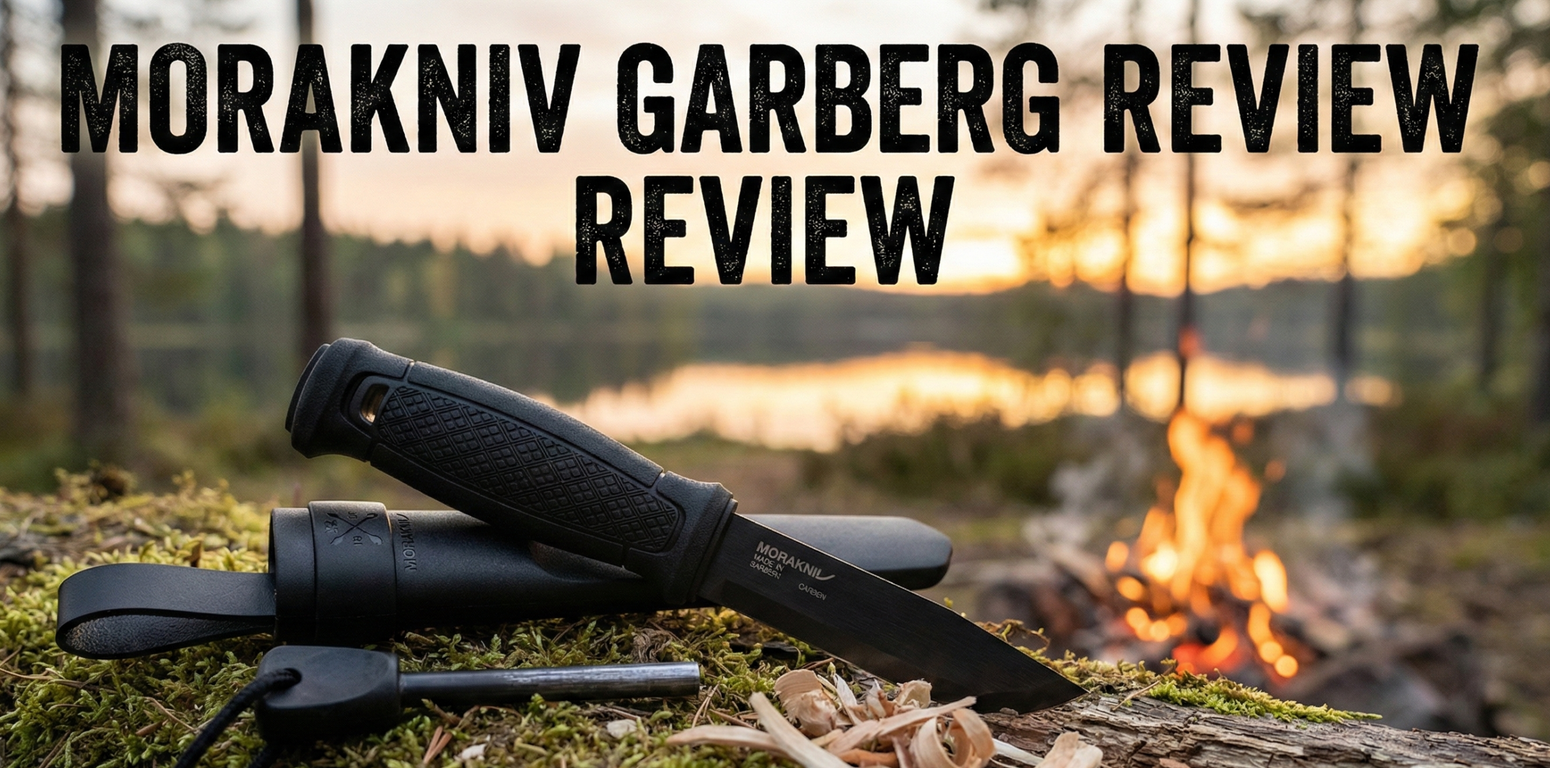
For decades, the name Morakniv has been synonymous with incredible value. You spend $15, you get a knife that cuts like a laser, and if it breaks, you buy another one. But for years, hardcore bushcrafters whispered a single complaint: “If only it were full tang.”
The Morakniv Garberg is the Swedish company’s answer to that prayer. It is the first—and currently only—full tang knife in their lineup. It’s beefier, heavier, and significantly more expensive than the Morakniv Companion. But with a price tag hovering around $80-$90, it enters a fiercely competitive arena dominated by American and Japanese blades.
Is the Garberg just an overpriced Mora, or is it the ultimate survival tool that bridges the gap between budget beaters and premium bushcraft knives? We took it into the deep woods to find out.

Finally, a Mora you can’t break. Experience the legendary Swedish quality in a bombproof package.
Check Price on AmazonTechnical Specifications
The Garberg is built like a tank compared to its siblings. It swaps the delicate rat-tail tang for a slab of steel that runs the full length and width of the handle, protruding at the pommel.
| Blade Length | 4.3 inches (109 mm) |
|---|---|
| Overall Length | 9.0 inches (229 mm) |
| Blade Thickness | 0.13 inches (3.2 mm) |
| Weight | 9.6 ounces (272 g) with sheath |
| Blade Material | Sandvik 14C28N (Stainless) or Carbon |
| Handle Material | Extra Rugged Polyamide |
| Grind | Scandi Grind |
| Tang Style | Full Tang (Exposed Pommel) |
Why “Full Tang” Matters
In the knife world, “full tang” means the metal of the blade extends all the way through the handle to the back. Most Moras use a “rat-tail” tang, which is perfectly fine for carving but risks snapping if you baton through knotty wood or use the knife as a pry bar.
The Garberg solves this. You can abuse this knife. You can hammer it through logs, pry open crates, and strike the exposed metal pommel with a rock if needed. This structural integrity turns the Garberg from a “bushcraft” knife into a true “survival” knife. It provides peace of mind that your primary tool won’t fail when you are miles from civilization.
Blade Performance: 14C28N Steel
The stainless version of the Garberg uses Sandvik 14C28N steel. This is a significant upgrade from the basic stainless found on cheaper models. It is extremely tough, takes a terrifyingly sharp edge, and holds it reasonably well.
The Scandi Grind
The blade features a classic Scandi grind. This geometry is optimized for wood processing. It bites deep into timber, making feather sticks and shelter building effortless. However, Scandi grinds can be fragile on ultra-hard materials (like hitting a rock), so you should learn the difference between using a sharpening stone vs. honing steel to maintain that zero-edge geometry.
Some users debate between the Carbon and Stainless versions. Unless you are obsessed with forcing a patina, we recommend the Stainless 14C28N. It is tougher than most carbon steels and virtually maintenance-free in wet environments.

Go Stainless. The 14C28N steel offers incredible toughness without the rust anxiety.
Check Price on AmazonHandle Ergonomics & Durability
The handle is made from an extra-rugged polyamide plastic. It features a diamond pattern texture that provides excellent grip, even when wet or muddy. Unlike the rubberized grip of the Companion, this hard plastic feels indestructible.
The shape fills the hand nicely, allowing for long periods of carving without creating hot spots. The lack of a large finger guard allows you to get right up close to the blade for detailed work, although beginners should be careful not to slip.
Sheath Options: Multi-Mount vs. Leather
When buying the Garberg, you have to make a choice regarding the carry system. This significantly affects the price.
The Multi-Mount System
This is a tactical, modular system. It includes a plastic sheath that snaps into a MOLLE-compatible backplate. You can strap it to your pack, your truck’s visor, or your belt. It is incredibly secure and versatile, though a bit bulky.
The Leather Sheath
For traditionalists, the heavy-duty black leather sheath is a beauty. It is a fold-over style with a snap closure. It rides lower on the belt and looks much more “bushcraft” than the tactical plastic version.
The Ultimate Fire Starter
One of the Garberg’s best features is often overlooked: the 90-degree spine. Most knives have rounded spines that slide off ferro rods. The Garberg’s spine is ground to a sharp, crisp 90-degree angle.
When you scrape a ferrocerium rod with this spine, it throws a massive shower of sparks. It saves your blade edge from damage and makes fire lighting incredibly efficient. It is widely considered one of the best fire-starting knives on the market.
Garberg vs. The Competition
Morakniv Garberg vs. Morakniv Companion
The Companion is $15; the Garberg is $90. Is it 6 times better? If you are just slicing sausages and whittling sticks, no. But if you need a knife that can be batoned through a log to split wood for a fire, the Companion might break. The Garberg won’t. It’s about insurance.
Morakniv Garberg vs. Gerber Strongarm
The Gerber Strongarm is its main rival. The Strongarm looks more “tactical” and has a flat grind (better for slicing food). The Garberg has a Scandi grind (better for wood). The Garberg’s 14C28N steel is generally considered superior to the Strongarm’s 420HC in terms of edge retention.
If you prefer folding knives for EDC, neither of these is for you—check out the Ontario RAT 1 for a rugged folder option.
Pros & Cons
The Pros
- Full tang construction is bombproof.
- 14C28N steel is tough and corrosion-resistant.
- 90-degree spine is a fire-starting machine.
- Multi-mount sheath is incredibly versatile.
- Made in Sweden quality control.
The Cons
- Expensive for a Morakniv (~$90).
- Scandi grind is poor for food prep (wedges in apples).
- Handle material is hard, less grippy than rubber.
- Heavier than traditional Moras.
Frequently Asked Questions
Is the Morakniv Garberg worth the high price?
Yes, if you view it as a “forever knife.” You are paying for the full tang construction, premium steel, and upgraded sheath options. It competes with knives costing $150+.
Should I choose Carbon or Stainless for the Garberg?
We recommend the Stainless (14C28N). It is exceptionally tough and won’t rust. The Carbon version requires oiling and doesn’t offer a significant performance advantage in this specific model.
Can I baton wood with the Garberg?
Absolutely. That is what it was designed for. The full tang and 3.2mm thick spine can handle heavy batoning through seasoned logs without issue.
Does the Garberg fit in the Companion sheath?
No. The Garberg has a thicker blade and a different handle shape. It requires its own specific sheath.
Is the handle slippery when wet?
The polyamide handle has a diamond texture that provides good grip. However, it is not as “sticky” as the rubberized handle on the Companion Heavy Duty.
How do I sharpen the Scandi grind?
The Scandi grind is easy to sharpen. Lay the wide bevel flat against the stone and push. No angle guessing is required. It is ideal for field sharpening.
Is it legal to carry?
It is a fixed blade with a 4.3-inch blade. Open carry laws vary by state and country. It is generally legal for camping/hiking but may be restricted in urban environments.
Does it spark a ferro rod well?
Yes, it is widely considered the best in class. The spine is ground to a sharp 90-degree angle specifically for this purpose.

Stop buying cheap replacements. Buy the Garberg once, and pass it down to your grandkids.
Check Price on AmazonMorakniv’s Swedish Heritage: From Mora Town to Global Icon
To understand why the Garberg represents such a significant departure for Morakniv, you have to understand where the company came from. The town of Mora, sitting on the shores of Lake Siljan in Sweden’s Dalarna region, has been a center of knife production since the late 1800s. Local blacksmiths in the area had access to high-quality iron ore and abundant timber, and they built a cottage industry around producing simple, functional knives for farmers, foresters, and fishermen who needed a reliable cutting tool for daily chores.
What began as dozens of small, independent workshops eventually consolidated. Several of these historic firms — including Frosts, KJ Eriksson, and others — merged over the decades to form what we now know as Morakniv. The company kept the philosophy of the original blacksmiths intact: build a knife that does its job extremely well, keep the manufacturing process efficient, and pass the savings on to the customer. This is precisely why a basic Companion model can retail for under $20 while still using a genuinely good stainless steel blade.
For most of the twentieth century, this formula worked perfectly for the intended audience. Loggers, hunters, and outdoorsmen in Scandinavia didn’t need a pry bar; they needed a knife that took a wickedly sharp edge and stayed out of the way. The rat-tail tang construction — where a thin rod of steel runs partway into the handle rather than the full width — was never a flaw in this context. It was simply optimized for a different kind of use than modern bushcraft and survival communities eventually demanded of it.
The Shift Toward the Global Bushcraft Market
Things changed in the 2000s and 2010s as the bushcraft and prepping movements exploded in popularity, largely driven by internet forums, YouTube channels, and a renewed cultural interest in self-reliance skills. Morakniv’s affordable, exceptionally sharp knives became a gateway product for an entire generation of new outdoorsmen. The company suddenly found itself with a passionate international fanbase that was pushing its rat-tail-tang knives far beyond their original design intent — batoning through logs, prying, chopping, and generally treating them like heavy-duty survival tools rather than the light utility knives they were designed to be.
Morakniv listened. Rather than simply reinforcing an existing model, the company engineered the Garberg from the ground up as a dedicated full-tang product, first released in 2015. It was a deliberate signal that Morakniv intended to compete directly in the premium bushcraft and survival segment, not just dominate the budget end of the market. The name itself, “Garberg,” refers to a mountain near the town of Mora, tying the flagship product back to the company’s geographic and cultural roots.
This history matters for buyers because it explains the Garberg’s personality. It isn’t a knife built by a tactical gear company trying to break into bushcraft, nor is it a traditional Scandinavian puukko maker dabbling in survival gear. It’s a company with more than a century of blade-grinding experience applying that expertise to a genuinely new product category, which is part of why the fit and finish feels so dialed in despite the relatively recent release date.
Rockwell Hardness (HRC) Explained: How Hard Is the Garberg’s Steel?
One of the most common questions buyers ask, and one that the original spec sheet often glosses over, is the Rockwell hardness rating of the blade. Rockwell hardness (abbreviated HRC, for the “C” scale of the Rockwell test) measures a steel’s resistance to indentation, which correlates strongly with edge retention and, to a lesser extent, brittleness.
The Morakniv Garberg’s Sandvik 14C28N stainless steel is typically heat-treated to a Rockwell hardness in the 57-59 HRC range. This is a genuinely well-considered number for a general-purpose outdoor knife, and it explains a lot about how the blade behaves in the field.
Why 57-59 HRC Is the Sweet Spot for Bushcraft Knives
Steel hardness exists on a spectrum, and neither extreme is ideal for a knife meant to be batoned, carved with, and used for fire-starting. Kitchen knives and premium folding blades often push into the 60-64 HRC range, prioritizing edge retention above all else. Machetes and axes, by contrast, are often tempered much softer, in the 45-52 HRC range, prioritizing toughness and resistance to chipping over raw edge-holding ability.
The Garberg’s 57-59 HRC rating sits deliberately in the middle. At this hardness, the steel is hard enough to hold a working edge through a full day of carving, notching, and food prep, but it retains enough flexibility to absorb the shock of batoning through a knotty log without chipping or rolling the edge. If Morakniv had pushed the hardness higher to compete with premium knives on paper specs alone, the Garberg would likely be far more prone to micro-chipping when used the way its target audience actually uses it — which would have been a poor engineering decision disguised as a marketing win.
It’s worth noting that hardness numbers can vary slightly batch to batch, as is normal in mass manufacturing, and Morakniv doesn’t publish an official HRC figure on most retail packaging. The 57-59 HRC range comes from independent testing performed by knife reviewers and metallurgy enthusiasts who have sent Garberg blades to third-party labs for Rockwell testing, and it’s consistent with what you’d expect from a knife tuned for general bushcraft use rather than pure edge-holding performance.
How Hardness Compares to the Carbon Steel Variant
The carbon steel version of the Garberg uses a similar heat-treatment target, landing in a comparable HRC range, though many users report the carbon variant takes a marginally sharper edge out of the box and is slightly easier to touch up in the field with a simple stone, at the cost of the corrosion resistance the stainless version offers.
Blade Geometry Deep Dive: Scandi Grind vs. Other Grind Styles
We touched on the Scandi grind earlier, but given how much confusion exists around blade geometry terminology, it’s worth spending real time unpacking exactly what makes this grind different, and why it’s the right (or wrong) choice depending on what you’re doing with the knife.
What Exactly Is a Scandi Grind?
A Scandinavian grind, or “Scandi grind,” is a single, flat bevel that runs from partway up the blade all the way down to the edge, with no secondary micro-bevel. Picture the cross-section of the blade as a wedge with one flat angled face on each side meeting at the edge, rather than a curved or multi-angled convex or hollow grind. This simplicity is exactly what makes it so beloved by bushcrafters.
Scandi vs. Flat Grind
A flat grind tapers evenly from the spine all the way to the edge across the entire width of the blade, typically with a small secondary bevel added at the very edge for durability. Flat grinds, like the one found on the Gerber Strongarm we compared earlier, tend to slice more efficiently through food and rope because there’s less material behind the edge creating drag. However, they’re noticeably harder to resharpen in the field without a guide, since you have to maintain a consistent angle freehand.
Scandi vs. Convex Grind
A convex grind curves gently outward from spine to edge, distributing more material behind the edge for exceptional strength — this is the grind you’ll typically find on high-end axes and heavy choppers. Convex grinds are extremely durable but are notoriously difficult to sharpen without specialized equipment like a leather strop or belt sander, making them a poor choice for a knife you need to maintain with nothing but a pocket stone in the backcountry.
Scandi vs. Hollow Grind
A hollow grind is concave, ground on a wheel to create a thin, extremely sharp edge, common on straight razors and some hunting knives designed for fine skinning work. Hollow grinds are razor-sharp but comparatively fragile, making them a poor match for the abuse the Garberg is designed to withstand.
Why Morakniv Chose Scandi for the Garberg
Given all these alternatives, Morakniv’s decision to stick with the Scandi grind on a knife explicitly marketed for survival use might seem counterintuitive at first. But the reasoning becomes clear once you consider the knife’s primary use case: wood processing. The wide, flat bevel of a Scandi grind acts almost like a built-in sharpening guide, and it bites deeply and predictably into wood fibers when carving feather sticks, notching traps, or building shelter components. For a knife whose main jobs are carving, notching, batoning, and striking a ferro rod, the Scandi grind’s field-sharpening simplicity outweighs the food-prep and slicing advantages of a flat or convex grind.
The tradeoff, as we mentioned in the cons section, is that the Garberg is a mediocre kitchen knife. The wide bevel tends to wedge inside dense foods like apples or potatoes rather than slicing cleanly through them, which is worth keeping in mind if you’re hoping for a true do-it-all blade for a car camping trip that also involves meal prep.
Left-Handed Use: Is the Garberg Ambidextrous?
A surprisingly common search query for this knife involves left-handed compatibility, so it deserves a dedicated answer rather than a passing mention.
The Blade and Handle
The good news is that the blade grind itself is symmetrical, meaning the actual cutting geometry works identically whether you’re right- or left-handed. The handle shape is also symmetrical and doesn’t include any right-hand-specific ergonomic scalloping, so grip comfort is a non-issue for left-handed users.
Where Handedness Actually Matters: The Sheath
The real consideration is the sheath, specifically the Multi-Mount plastic sheath. Out of the box, it’s configured for right-handed carry with a standard draw. Left-handed users have two practical options. First, many users simply flip the sheath and re-thread the belt loop or MOLLE backplate to mount it for a left-handed cross-draw or reversed carry, which the modular design accommodates without much difficulty. Second, the leather sheath variant, being a simple fold-over design with a snap closure, is naturally more adaptable to either-handed carry since it doesn’t rely on a directional retention mechanism the way the plastic Multi-Mount system does.
In community forums and gear-review comment sections, left-handed users consistently report that after a small amount of sheath reconfiguration, the Garberg performs identically for them as it does for right-handed users. There’s no structural or ergonomic disadvantage baked into the knife itself, which isn’t something you can say for every fixed-blade design on the market — some knives include asymmetrical finger grooves or handle contours that genuinely disadvantage left-handed users, and the Garberg avoids that pitfall entirely.
Warranty & Customer Support: What Happens If Something Goes Wrong?
Given the price jump from Morakniv’s budget lineup, it’s reasonable to ask what kind of protection you’re getting on your investment if a defect shows up.
Morakniv’s Standard Warranty Coverage
Morakniv backs the Garberg, like the rest of its fixed-blade lineup, with a limited warranty against manufacturing defects in materials and workmanship. This covers things like a genuinely flawed heat treatment, a handle that separates from the tang under normal use, or a sheath with a structural failure straight out of the box. It does not cover normal wear and tear, edge dulling from use, cosmetic scratching, or damage resulting from abuse or improper use — which, given how often people baton and pry with this specific knife, is worth keeping in mind before you assume every broken tip is covered.
How to File a Claim
If you do run into a legitimate defect, the process generally starts with the retailer you purchased from. If you bought through Amazon, most sellers will handle a straightforward replacement within the standard return window without requiring you to go through Morakniv directly. For issues discovered after that window closes, Morakniv’s customer service team handles warranty claims directly, typically asking for proof of purchase and photos documenting the defect before authorizing a repair or replacement.
How Morakniv’s Support Compares to Competitors
Compared to premium American makers like ESEE, which famously offers a no-questions-asked lifetime replacement policy regardless of how the knife was damaged, Morakniv’s warranty is noticeably more conservative. This is a direct tradeoff for the lower price point — ESEE builds the cost of unconditional replacement into a higher retail price, while Morakniv keeps costs down by offering a more traditional defects-only warranty. Gerber’s warranty policy on the Strongarm sits somewhere in between, covering defects but handling wear-related claims on a case-by-case basis.
For most buyers, this distinction won’t matter much in practice. The Garberg’s full-tang construction and quality control mean legitimate defects are rare, and the knife is durable enough that most owners never need to file a claim at all. But if lifetime no-questions-asked replacement is a priority for you specifically, it’s a meaningful point in favor of ESEE’s lineup over the Garberg.
Maintenance & Rust Prevention: Keeping Your Garberg in Top Shape
Even the stainless 14C28N version of the Garberg benefits from basic maintenance, and the carbon steel version requires it. Here’s how to keep either variant performing at its best for years of use.
Cleaning After Use
After field use, especially anything involving food, sap, or blood from game processing, wipe the blade down with a damp cloth and dry it thoroughly before storing it in the sheath. Moisture trapped inside a sheath is one of the most common causes of corrosion issues, even on stainless steel, since 14C28N is corrosion-resistant rather than fully corrosion-proof.
Caring for the Carbon Steel Variant
If you opted for the carbon steel Garberg, plan on applying a light coat of mineral oil or a dedicated knife oil to the blade after each use and before extended storage. Carbon steel will develop a protective patina naturally over time with use, which many bushcraft enthusiasts actually prefer since it provides a layer of passive rust resistance and gives the blade character. If you’d rather force an even patina immediately rather than wait for one to develop naturally, a vinegar or mustard bath applied for a few minutes will do the job, though you should always test on a small section first.
Sharpening Maintenance
Because of the Scandi grind, maintaining the edge is simpler than on most knives. Lay the flat bevel against a sharpening stone at the natural angle the grind establishes, and make consistent passes on each side. A basic combination stone with a coarse and fine side is sufficient for most touch-ups, and a leather strop afterward will help polish out any remaining burr for a cleaner final edge. Avoid pull-through sharpeners with fixed carbide angles, since they’ll cut a secondary bevel into the blade and destroy the zero-edge geometry that makes the Scandi grind so easy to maintain in the first place.
Sheath and Handle Care
The polyamide handle and plastic Multi-Mount sheath require essentially no maintenance beyond occasional cleaning, which is one of the quieter advantages of synthetic materials over natural wood or leather. If you opted for the leather sheath instead, treat it periodically with a leather conditioner to prevent the material from drying out and cracking, particularly if you store or use the knife in dry climates.
Hunting, Fishing & Bushcraft: Real-World Application Scenarios
Beyond the spec-sheet numbers, how does the Garberg actually perform across the specific activities its target buyers care about most?
Field Dressing and Game Processing
For hunters, the Garberg’s blade length and Scandi grind make it a capable, if not specialized, field dressing tool. The 4.3-inch blade is long enough to open up a deer or hog without excessive effort, though dedicated hunting knives with a drop-point or gut-hook design will outperform it for detailed skinning work. Where the Garberg shines is versatility: after field dressing is complete, the same knife can be used to baton kindling for a camp fire, notch tent stakes, or process firewood — tasks a dedicated skinning knife simply isn’t built for.
Fishing and Camp Cooking
For filleting fish, the Scandi grind is a genuine disadvantage compared to a thin, flexible fillet knife, since the wide bevel doesn’t glide as smoothly along fish bones. Anglers who fish frequently as part of their trips often carry a dedicated fillet knife alongside the Garberg rather than relying on it exclusively. That said, for basic camp cooking tasks like slicing vegetables or cutting rope and cordage, the Garberg handles the job adequately even if it’s not a specialist tool.
Shelter Building and Bushcraft Fundamentals
This is where the Garberg is genuinely in its element. Carving tent stakes, notching for a simple lean-to frame, creating feather sticks for fire tinder, and batoning small-to-medium logs for a fire are all tasks the knife handles with confidence. The full tang construction means you can strike the spine with a baton without worrying about the handle separating from the blade, a failure mode that has ended more than a few trips for owners of rat-tail-tang knives used the same way.
Trapping and Survival Skills
For carving trap triggers, notches, and other fine survival-skill work, the Scandi grind’s precision and the knife’s manageable weight make it a solid choice, comparable to purpose-built bushcraft knives costing considerably more.
Professional & Community Perspectives: What Bushcraft Instructors Say
Beyond our own testing, it’s worth considering how the broader bushcraft and survival instruction community views the Garberg, since many of these individuals put knives through far more rigorous, repeated use than a typical review cycle allows for.
The Case for the Garberg Among Instructors
Several well-known wilderness skills instructors have adopted the Garberg as a recommended entry point for students specifically because it bridges an awkward gap in the market. Before the Garberg’s release, students choosing a first “serious” bushcraft knife typically had to choose between inexpensive rat-tail-tang Moras that some instructors were hesitant to recommend for batoning-heavy coursework, or considerably pricier American-made full-tang knives that represented a bigger financial commitment for a student who wasn’t yet sure bushcraft was a long-term hobby. The Garberg’s price point and full-tang durability made it a natural recommendation for exactly this audience.
Common Community Criticisms
The most frequently repeated criticism from experienced users centers on the handle material. While the polyamide grip is nearly indestructible, some long-time Mora owners who are used to the brand’s rubberized handles find the harder plastic less comfortable during extended carving sessions, particularly in cold weather when the material stiffens further. A smaller subset of critics note that at nearly $90, the Garberg is competing against used premium knives on the secondhand market, and some experienced buyers with more disposable income skip it entirely in favor of a lightly used ESEE or Bark River knife instead.
Consensus View
Despite these criticisms, the overwhelming consensus across bushcraft forums, YouTube reviews, and instructor recommendations is that the Garberg represents an unusually good value proposition at its price point, and that its full-tang construction genuinely changes what the knife is capable of compared to the rest of the Morakniv lineup. It’s rarely anyone’s single favorite knife in a large collection, but it’s consistently recommended as one of the smartest first purchases for someone building a serious bushcraft kit on a moderate budget.
Buying Guide: Which Garberg Variant Should You Choose?
With multiple steel options and two distinct sheath systems, picking the right Garberg configuration can be more confusing than it needs to be. Here’s a practical breakdown based on how you plan to use the knife.
Choose Stainless (14C28N) If:
- You live in a humid or coastal climate where rust is a genuine concern.
- You want a low-maintenance knife you can throw in a bag without regular oiling.
- You’ll be using the knife around water frequently, such as fishing or canoe trips.
- You’re buying this as a gift for someone who may not maintain a carbon blade properly.
Choose Carbon Steel If:
- You’re an experienced knife user who doesn’t mind a brief maintenance routine.
- You want a slightly easier field-sharpening experience.
- You appreciate the aesthetic of a developed patina.
- You primarily use the knife in dry conditions.
Choose the Multi-Mount Sheath If:
- You want to mount the knife to a backpack, MOLLE vest, or vehicle.
- You prioritize security and modularity over classic aesthetics.
- You’re using the knife in a tactical or overlanding context.
Choose the Leather Sheath If:
- You prefer a traditional bushcraft aesthetic.
- You want a lower-profile carry option on a standard belt.
- You don’t need modular mounting options.
Gift-Buying Considerations
If you’re purchasing a Garberg as a gift for an outdoorsman, hunter, or aspiring bushcrafter, the Stainless version with the Multi-Mount sheath is the safest all-around choice, since it requires the least maintenance knowledge and adapts to the widest range of carry preferences. For a more experienced recipient who already owns several knives, the carbon steel version paired with the leather sheath makes a more distinctive, traditional gift that stands out from a typical starter knife.
Final Verdict
The Morakniv Garberg is a statement piece from Sweden. It proves that they can build a hardcore survival tool that stands toe-to-toe with the best in the world. It is no longer just a “cheap backup knife.”
If you are serious about bushcraft, survival, or just want a camp knife that will never let you down, the Garberg is the gold standard. It is rugged, reliable, and ready for anything.