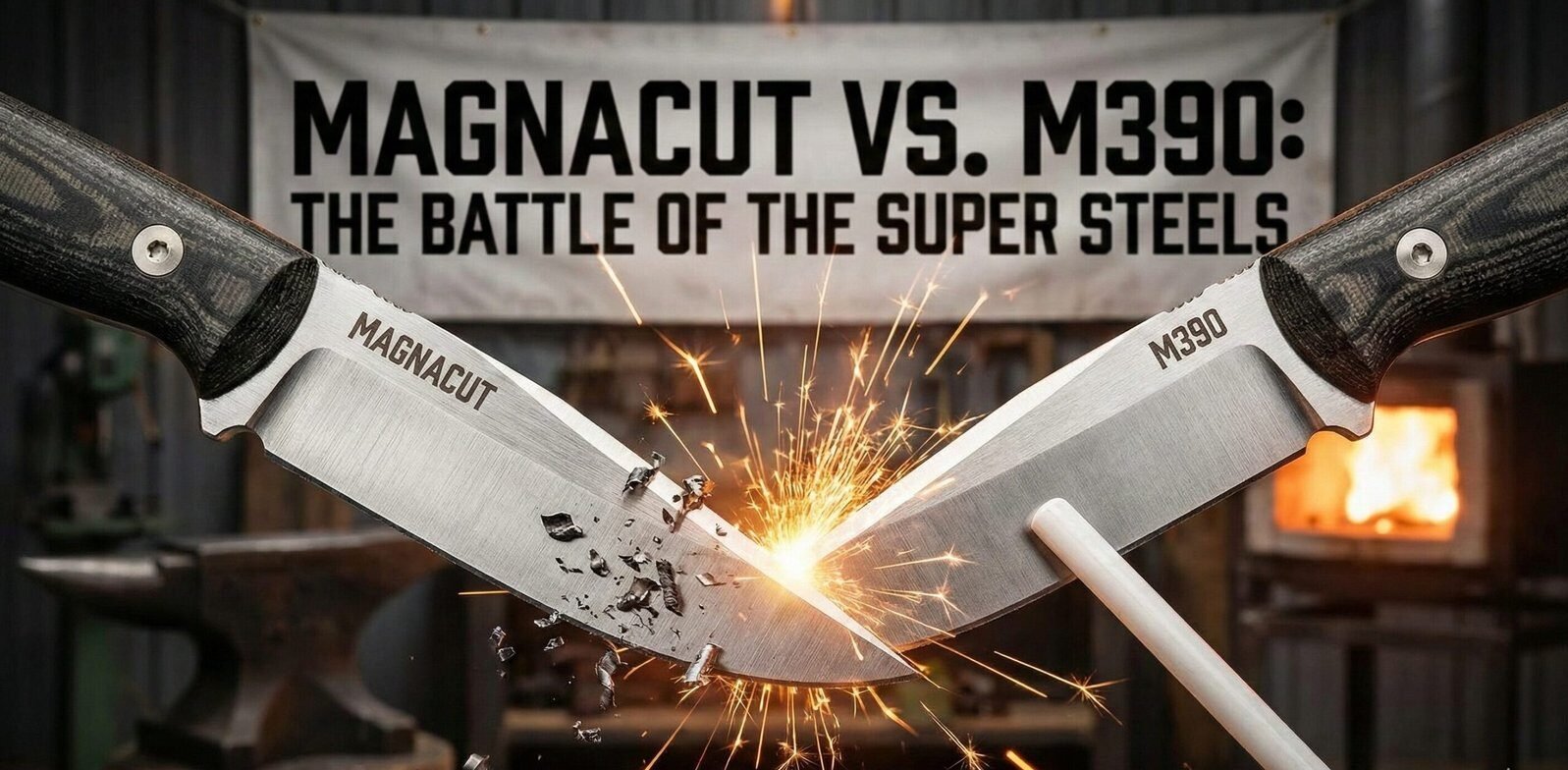
MagnaCut vs. M390: The Ultimate Battle of the Super Steels
The Contestants: Old King vs. New Challenger
If you have purchased a premium, high-end pocket knife at any point over the last decade, you are almost certainly familiar with the reigning monarch of the industry. For years, Böhler M390 (and its American twin, Crucible’s CPM-20CV) has acted as the absolute gold standard for luxury production folders. If you unboxed a flagship, $300+ blade from Zero Tolerance (ZT), Microtech, or LionSteel, chances were incredibly high that it was forged from M390. It offered a seemingly unbeatable combination of extreme edge retention and near-perfect stainless properties.
However, the knife industry experienced a monumental paradigm shift in early 2021. Dr. Larrin Thomas, a renowned metallurgist and knife steel researcher, changed the game forever with the highly anticipated release of his brainchild: CPM MagnaCut.
MagnaCut promised the theoretically impossible: it claimed to offer the brutal, indestructible toughness of a non-stainless high-carbon tool steel (like CPM-4V), combined with the extreme corrosion resistance of a dedicated maritime dive knife (like LC200N), all while holding a highly respectable working edge. But is it all just clever marketing hype, or is M390 officially obsolete? We must look beyond the spec sheets and directly into the carbide structures to find out.
What Exactly is CPM MagnaCut?
CPM MagnaCut is a highly advanced powder metallurgy steel manufactured by Crucible Industries in the USA. What makes MagnaCut so revolutionary is its origin story: unlike virtually every other famous knife steel on the market (which were originally adapted from industrial ball bearings, plastic mold injectors, or aerospace turbines), MagnaCut was meticulously engineered from the molecular level up specifically and exclusively for knives.
Dr. Larrin Thomas designed it to definitively solve the infamous “Stainless Trade-Off.” Historically, if a metallurgist wanted to make a steel stainless, they had to add massive amounts of Chromium. However, this excess Chromium binds with Carbon during heat treatment to form massive, blocky “Chromium Carbides.” These large carbides make the steel inherently brittle and highly prone to edge chipping under lateral stress.
MagnaCut’s genius lies in effectively eliminating those Chromium Carbides. By reducing the overall Chromium content to just 10.7% but keeping it entirely “in solution” (free from bonding with carbon), MagnaCut achieves absurd levels of rust resistance without the brittleness, resulting in a steel that is incredibly tough yet virtually rust-proof. Major brands like Spyderco, Hinderer, and Chris Reeve Knives have aggressively adopted it for their flagship models.
What is Böhler M390?
Manufactured by the Böhler-Uddeholm corporation in Austria, M390 is widely considered a “Super Steel” from the illustrious 3rd generation of powder metallurgy. It was originally engineered to withstand severe wear and tear in industrial plastic injection molding machines, where continuous, abrasive friction is the primary enemy.
To achieve this extreme wear resistance, M390 is heavily packed with Chromium (20%) and Vanadium (4%). This distinct recipe forces the creation of a massive volume of ultra-hard carbides.
The Result: M390 produces a knife that will slice through hundreds of yards of abrasive cardboard, sisal rope, and carpet and still cleanly shave hair off your arm. It stays aggressively sharp for an incredibly long time and resists rust exceptionally well. However, those exact same massive, hard carbides make it notoriously stubborn to sharpen and highly prone to micro-chipping if the thin edge violently strikes a hidden staple or a rock.
The Chemistry: A Tale of Two Recipes
To truly understand how these super steels perform, we must briefly look at their chemical compositions.
- Carbon (C): M390 has 1.9%, while MagnaCut has 1.15%. M390 uses this extra carbon to create more wear-resistant carbides.
- Chromium (Cr): M390 has a massive 20%, whereas MagnaCut has only 10.7%. However, because MagnaCut’s chromium isn’t tied up in carbides, it is actually more stainless in real-world testing.
- Vanadium (V) & Niobium (Nb): MagnaCut utilizes 4% Vanadium and 2% Niobium to create extremely fine, small, and evenly distributed carbides. This micro-structure is the secret to its extreme toughness.
Head-to-Head Stats: The Performance Metrics
Let’s look at the raw, standardized testing data. Understanding these specific differences starts with knowing the absolute basics of stainless vs. carbon steel characteristics.
| Performance Category | CPM MagnaCut | Böhler M390 (or 20CV) | Clear Winner |
|---|---|---|---|
| Toughness (Impact Resistance) | 9/10 (Exceptionally High) | 4/10 (Relatively Low/Brittle) | MagnaCut (By a massive margin) |
| Edge Retention (Wear Resistance) | 7.5/10 (Great) | 9/10 (Elite) | M390 |
| Corrosion Resistance (Rust) | 9.5/10 (Virtually Immune) | 8/10 (Excellent) | MagnaCut |
| Ease of Sharpening | 7/10 (Very Manageable) | 3/10 (Notoriously Stubborn) | MagnaCut |
Toughness: The Unprecedented Game Changer
This specific metric is precisely where MagnaCut absolutely destroys M390, and it is the primary reason the knife industry is obsessed with it. In metallurgy, “Toughness” explicitly measures a steel’s physical ability to resist chipping, cracking, snapping, or catastrophic failure under heavy lateral impact or twisting pressure.
M390 is inherently brittle. If you use a thin M390 blade to aggressively pry open a paint can lid, or if you accidentally drop the knife point-down onto a concrete floor, the tip is highly likely to snap clean off. MagnaCut, however, possesses shock-absorbing toughness levels rivaling legendary non-stainless tool steels like CPM-CruWear and CPM-4V.
This massive leap in toughness fundamentally changes how a knife can be designed. It allows knife makers to grind MagnaCut blades insanely thin behind the edge (creating a laser-like slicer) without the fear of the edge crumbling. It also makes MagnaCut perfectly suitable for large, heavy-duty fixed blade camp knives and choppers, whereas M390 should strictly be reserved for delicate, light-duty folding slicers.
Edge Retention: The Enduring M390 Stronghold
If your sole, absolute goal in life is to cut through endless miles of abrasive double-walled cardboard boxes, fiberglass zip-ties, and dirty Manila rope all day without stopping to hone your blade, M390 still firmly holds the crown. The incredibly high volume of vanadium and chromium carbides in M390 makes it essentially impervious to abrasive wear.
Make no mistake, MagnaCut is no slouch—in standardized CATRA testing, it comfortably holds an edge significantly better than classic premium steels like S30V, S35VN, and Elmax—but it objectively falls slightly short of the sheer, marathon-level longevity of M390.
However, many professional users heavily argue that because MagnaCut’s edge is more structurally “stable,” it actively resists the microscopic chipping that plagues M390. Therefore, while M390 might win in a controlled laboratory slicing test, a MagnaCut edge might actually feel sharper for longer in rough, unpredictable real-world use because the apex remains smooth and un-fractured.
Corrosion Resistance: Surviving the Saltwater
M390 has long been praised for being highly stain-resistant. You can use it to slice acidic foods like lemons or tomatoes, wipe it on your jeans, and rarely see a spot of rust. It is a fantastic steel for sweaty pockets.
However, MagnaCut takes this to an entirely different dimension. In rigorous, controlled salt-spray fog testing designed to replicate harsh marine environments, MagnaCut frequently outperformed almost every other premium stainless steel on the market, directly rivaling specialized, rust-proof diving steels like LC200N and Vanax. If you are an offshore fisherman, a sweaty hiker, or you simply live in a highly humid coastal city like Miami or Honolulu, MagnaCut is virtually invincible to the elements.

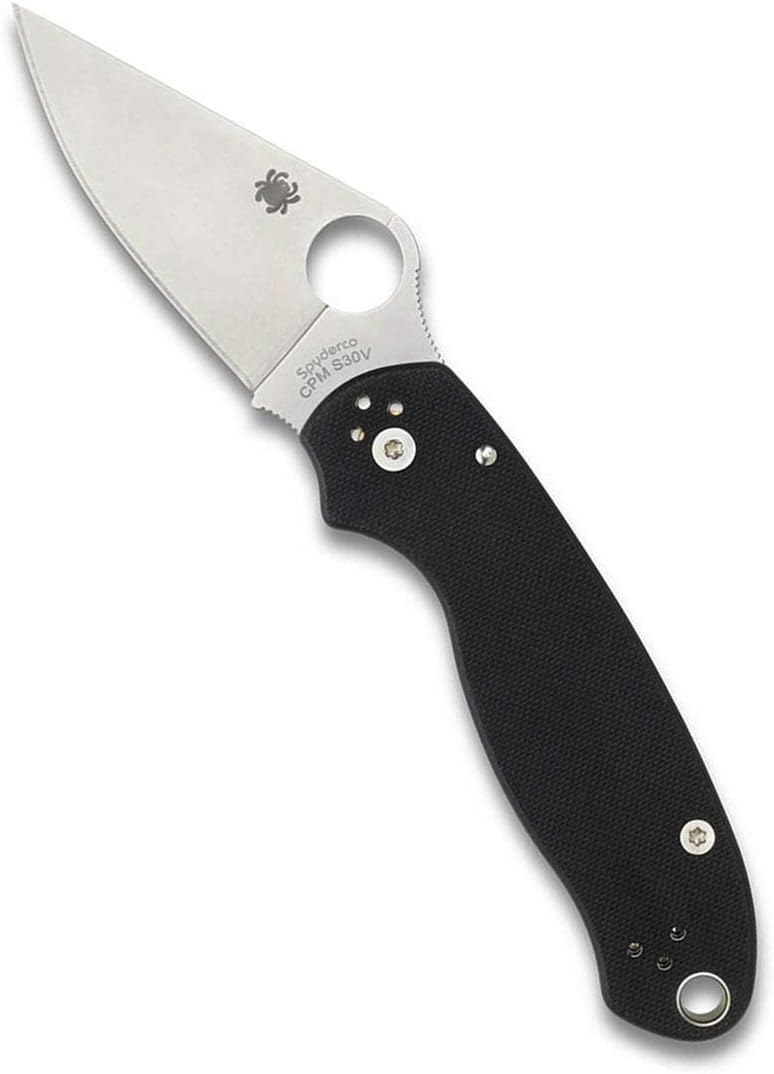
The legendary, combat-proven PM2 platform (famous for its perfect ergonomics and proprietary Compression Lock) has finally been paired with the undisputed new king of steels. Featuring a highly durable, saltwater-proof “Salt Series” yellow handle, this specific configuration is currently widely considered by enthusiasts to be the ultimate, perfect EDC (Everyday Carry) pocket knife for both urban and outdoor survival.
Check Availability on AmazonSpecific Use Case Scenarios
Still torn? Let’s apply these super steels to highly specific, real-world tasks:
- The Warehouse / Logistics Worker: You cut miles of dirty, abrasive cardboard, strapping tape, and plastic wrap all day. You don’t pry, you just slice. Winner: M390. The pure edge retention will save you from constantly sharpening.
- The Offshore Fisherman / Boater: You process fish on a rocking boat covered in highly corrosive saltwater, cutting through scales and occasionally hitting bone. Winner: MagnaCut. It will never rust, and the toughness prevents the edge from chipping on a fish spine.
- The Hardcore Bushcrafter / Camper: You use your knife to fiercely carve hardwood feather sticks, baton through kindling, and strike ferro rods in the rain. Winner: MagnaCut. M390 is far too brittle for the heavy lateral impact of batoning wood and will likely snap.
Final Verdict: Which Super Steel Should You Buy?
Choose CPM MagnaCut If:
- You desire the ultimate “do-it-all” knife that genuinely will not rust, snap, or chip under pressure.
- You routinely use your folding knife for unexpectedly hard tasks (camping, wood carving, light construction).
- You live in a humid, tropical, or highly corrosive coastal environment (the saltwater resistance is elite).
- You prefer to sharpen your own knives and heavily value ease of maintenance on standard whetstones over pure, marathon edge retention.
Choose Böhler M390 If:
- You strictly prioritize absolute, marathon edge retention above all other metallurgical metrics.
- You use your pocket knife purely as a dedicated slicer (opening packages, fine food prep, cutting tape) and never use it to pry.
- You don’t mind spending extra time and effort sharpening (or you regularly pay a professional service to do it for you).
- You highly desire a flawless, mirror-polished finish on your blade (M390 takes a stunning, jewelry-like polish).
MagnaCut vs. M390 vs. Vanax: Bringing a Third Steel Into the Fight
No modern discussion of premium blade steel is complete without addressing the steel that keeps coming up in the same breath as MagnaCut and M390: Uddeholm’s Vanax. If MagnaCut is the balanced all-rounder and M390 is the polish-and-edge-life specialist, Vanax is the dedicated corrosion specialist, and understanding where it fits helps clarify exactly what MagnaCut is (and isn’t) trying to be.
Vanax achieves its jaw-dropping corrosion resistance through an entirely different mechanism than either of our two main contenders. Instead of relying on carbon to form carbides, Vanax substitutes nitrogen, producing extremely fine nitride particles rather than the larger carbides found in conventional stainless steels. This nitrogen-based microstructure delivers corrosion resistance that rivals dedicated dive steels like LC200N, and in some independent salt-fog tests it edges out even MagnaCut in the most punishing marine environments.
The trade-off is hardness and cost. Vanax typically tops out around 60-61 HRC even with a full cryogenic heat-treatment cycle, noticeably softer than the 62-64 HRC range both MagnaCut and M390 are commonly run at. That softer working hardness translates to comparatively modest edge retention on abrasive material like cardboard. Vanax also commands a steep price premium, frequently costing two to three times as much as S30V and significantly more than either MagnaCut or M390 per finished blade, which is why you mostly see it on boutique custom fixed blades, high-end fishing and diving knives, and surgical-grade cutlery rather than mainstream production folders.
So where does that leave the three-way comparison? Think of it less as a ranking and more as three answers to three different questions:
- “I want one knife that does everything well” → MagnaCut. It is the modern balanced steel, built to combine strong toughness, strong corrosion resistance, and useful edge retention without leaning too hard into any single property.
- “I want the longest possible working edge and I don’t mind babying the knife” → M390. Nothing in this comparison out-slices it on abrasive material.
- “I need a knife that can live in saltwater and never see a drop of oil” → Vanax. It is purpose-built for divers, offshore anglers, and anyone who can’t realistically maintain a blade after every use.
For the vast majority of EDC buyers and outdoorsmen, MagnaCut remains the more sensible purchase than Vanax simply because it delivers 90% of the corrosion resistance at a noticeably higher working hardness and a friendlier price point. Vanax earns its premium only in genuinely extreme, sustained saltwater exposure scenarios.
Hardness, Rockwell (HRC), and Charpy Toughness Numbers Explained
Marketing copy loves to throw around vague words like “tough” and “hard,” but these are two completely different, and often opposing, physical properties. Understanding the actual lab numbers behind MagnaCut and M390 removes a lot of the guesswork from buying a premium knife.
Rockwell Hardness (HRC): Resistance to Deformation
Hardness measures how well a steel resists denting, scratching, and rolling at the edge. Both of our contenders are typically run somewhere in the 60 to 64 HRC range depending on the manufacturer’s chosen heat treatment. Böhler officially rates M390’s practical hardness ceiling similarly to MagnaCut, and in finished consumer knives you will usually see both steels land between 61 and 62 HRC, with some boutique makers pushing MagnaCut as high as 64 HRC to maximize edge stability.
Charpy Toughness: Resistance to Fracture
Toughness is measured differently, usually through a Charpy V-notch impact test that essentially smashes a small notched bar of steel with a swinging pendulum and records how much energy it absorbs before snapping. This is where the two steels diverge dramatically. MagnaCut posts genuinely exceptional numbers in independent Charpy testing, commonly cited in the 8 to 10+ foot-pound range, putting it in the same territory as dedicated non-stainless tool steels like CPM-4V and CruWear. Böhler’s own published toughness rating for M390, by contrast, sits at roughly 2 out of 5 on their internal scale, reflecting the real risk of micro-chipping when a thin M390 edge meets something unexpectedly hard.
The practical takeaway: hardness tells you how well an edge resists wearing down over thousands of cuts, while toughness tells you how well the blade survives a single bad impact. MagnaCut essentially achieves M390-adjacent hardness while posting toughness numbers four to five times higher, which is precisely why it has become the go-to choice for hard-use fixed blades as well as folders.
Real-World Price Comparison: What Are You Actually Paying For?
Steel type is only one input into a knife’s final retail price, but it is often the single biggest lever a brand pulls when justifying a premium price tag. Here’s how the economics actually break down.
M390 has been in mass production for well over a decade. Böhler-Uddeholm’s supply chain for the raw powder is mature, and dozens of Asian and European factories have refined their heat-treatment protocols for it. That maturity keeps costs relatively contained, which is why you can find perfectly respectable M390 production folders from brands like CIVIVI or Kizer for well under $150, alongside flagship $300-plus versions from Zero Tolerance and Microtech.
MagnaCut, on the other hand, is still a comparatively young, high-demand steel manufactured in smaller production runs by Crucible in the USA. Raw material costs are higher, heat-treatment tolerances are tighter (getting the carbide structure right matters enormously for this steel), and demand from enthusiast buyers has consistently outpaced supply since its 2021 release. The result is a noticeable price premium: expect to pay roughly 15-30% more for a MagnaCut version of the same knife platform compared to an equivalent M390 model, and boutique custom makers often charge substantially more on top of that.
Vanax sits above both, frequently landing at two to three times the cost of a mainstream premium steel like S30V, which is why it remains largely confined to the custom and semi-custom knife market rather than mass-produced EDC folders.
Is the MagnaCut premium worth paying? For buyers who genuinely use their knives hard, plan to keep them for decades, or live somewhere humid or coastal, most enthusiasts would argue yes. For someone who wants a knife purely to open mail and break down the occasional box, the price difference may not translate into a noticeably better ownership experience.
Best Knife Brands and Models Using Each Steel
Steel choice matters, but so does who is heat-treating it. Here are the brands and specific models most consistently praised by the knife community for getting the most out of each steel.
Top MagnaCut Producers
- Spyderco — The Para Military 2, Endura, and Manix 2 are all available in MagnaCut and are widely regarded as some of the most consistent heat treatments on the market.
- Chris Reeve Knives (CRK) — The Sebenza and Umnumzaan in MagnaCut are considered by many collectors to be the benchmark for what this steel can do when paired with obsessive quality control.
- Hinderer Knives — The XM-18 and XM-24 in MagnaCut are favorites among hard-use enthusiasts who want maximum toughness in a tactical folder.
- Benchmade and QSP — Both offer more accessible, mid-tier MagnaCut options that bring the steel to a wider audience without a custom-shop price tag.
Top M390 Producers
- Zero Tolerance (ZT) — Flagship models like the ZT0450 and ZT0392 are M390 mainstays known for excellent factory heat treatment.
- LionSteel — The TiSpine and M4 series pair M390 with beautifully finished titanium handles and a mirror-polished blade.
- Microtech — Nearly the entire automatic and out-the-front knife lineup relies on M390 for its combination of edge retention and stainless polish.
- CIVIVI and Kizer — Budget-friendly production houses that bring M390 down to a genuinely accessible price point without cutting corners on heat treatment.
As a general buying rule: reputable heat treatment matters more than the brand name on the blade. Both steels are unforgiving of sloppy, inconsistent factory processes, so stick to manufacturers with a documented track record on independent hardness testing before trusting the marketing copy alone.
If you only ever buy one premium folder, the Para Military 2 in MagnaCut is the single most recommended EDC in the enthusiast community right now, thanks to its rare combination of proven ergonomics and a steel that genuinely resists rust, chipping, and dulling all at once.
Check Availability on AmazonKitchen Knife Performance: A Different Battlefield Entirely
Folding EDC knives and kitchen cutlery place very different demands on a steel, and the MagnaCut vs. M390 conversation shifts noticeably once you move into the kitchen. Kitchen knives are almost never used to pry, baton, or absorb a hard lateral impact; they are used for thousands of repetitive, controlled slicing and chopping motions against a cutting board, and they are washed constantly, sometimes with acidic citrus juice, tomato pulp, and dish soap.
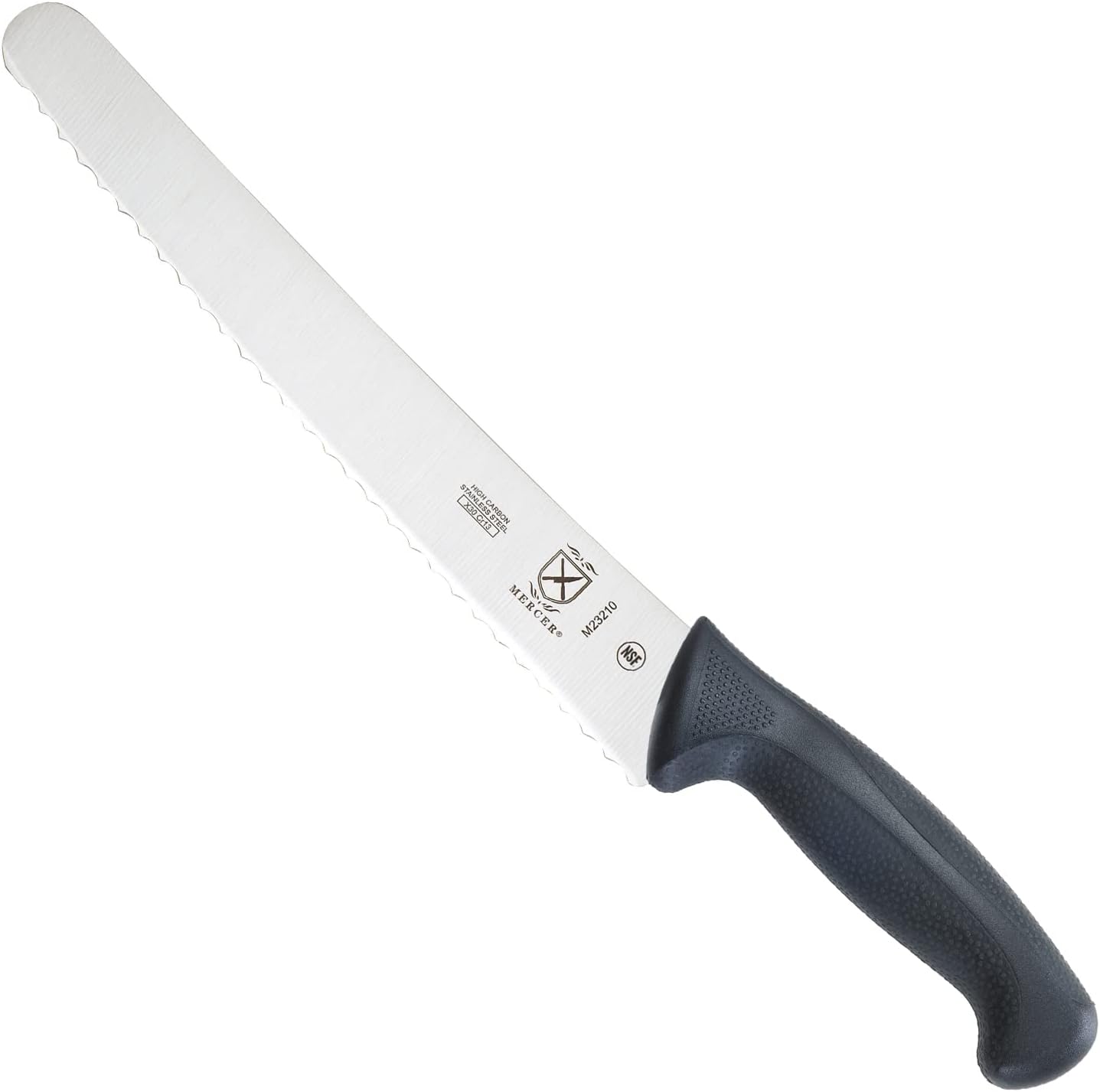
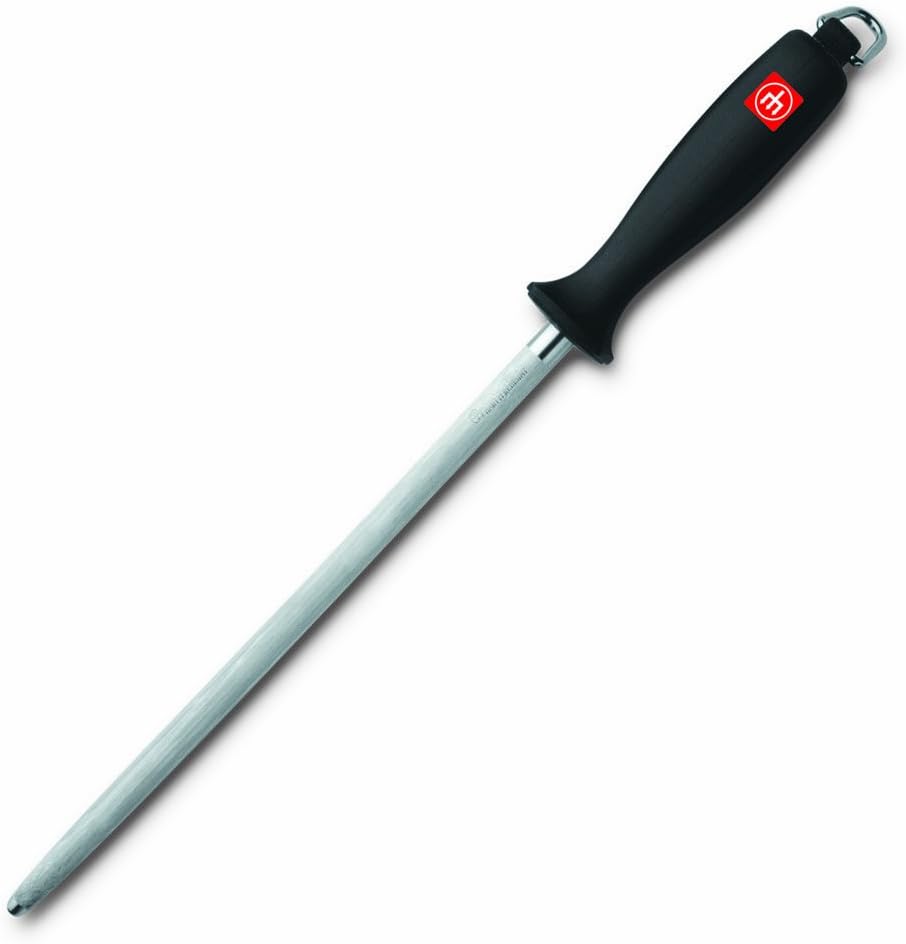
In this environment, M390’s headline weakness — brittleness under lateral stress — almost never comes into play, which lets its elite edge retention shine without much of a downside. A gyuto or santoku ground from M390 will comfortably out-slice a MagnaCut equivalent through onions, herbs, and proteins over a long prep session before needing a touch-up on a honing steel.
MagnaCut still holds real appeal in the kitchen, primarily because of two things: its superior corrosion resistance around acidic ingredients and dishwasher-adjacent humidity, and its noticeably easier at-home sharpening on a standard whetstone, which matters enormously to home cooks who don’t own diamond plates. A handful of boutique kitchen knife makers have begun releasing MagnaCut gyutos specifically marketed at cooks who want a “sharpen it yourself” experience without sacrificing much edge life.
The bottom line for kitchen use: M390 remains the more traditional, edge-retention-first choice for serious cooks who already own quality sharpening equipment, while MagnaCut is the more forgiving option for anyone who wants an easier at-home maintenance routine and added peace of mind around rust.
The Batoning Torture Test: Why Toughness Wins in the Field
Batoning — driving a fixed blade through a piece of firewood by striking the spine with another log — is one of the most brutal, repeatable stress tests you can put a knife through, and it is where the toughness gap between these two steels becomes impossible to ignore.
When a blade batons through wood, the edge experiences repeated, sudden lateral shock as it meets knots, grain irregularities, and uneven resistance. A steel with low Charpy toughness, like M390, is structurally more prone to developing micro-chips along the edge under this kind of repeated impact, and in worst-case scenarios a thin M390 edge can crack or roll entirely if it strikes a particularly hard knot.
MagnaCut was specifically engineered with scenarios like this in mind. Its fine, evenly distributed carbide structure absorbs impact energy far more gracefully, which is why bushcraft and survival knife makers overwhelmingly favor it (or comparable high-toughness steels like CPM-3V and CruWear) for fixed blades intended for wood processing. In side-by-side batoning tests conducted by knife reviewers and YouTube testers, MagnaCut fixed blades routinely emerge from heavy batoning sessions with a clean, unchipped edge, while M390 blades of comparable geometry show visible micro-chipping after the same abuse.
The practical rule of thumb: if a knife in your kit might ever be asked to baton wood, split kindling, or pry, choose MagnaCut (or another high-toughness tool steel) without hesitation. M390 should be reserved strictly for slicing tasks where the edge never contacts anything harder than the material being cut.
Common Myths About Super Steels, Debunked
Myth #1: “Higher Chromium Always Means More Stainless”
This is the single most repeated misconception in knife forums, and MagnaCut is the perfect steel to debunk it. MagnaCut contains roughly half the chromium of M390 by percentage, yet it frequently matches or beats M390 in standardized salt-fog corrosion testing. What actually determines stainless performance is how much chromium remains dissolved in the steel’s matrix rather than locked up in carbides — a subtlety that raw percentage figures on a spec sheet completely fail to capture.
Myth #2: “A Harder Steel Is Always a Better Steel”
Hardness (HRC) and toughness are frequently inversely related, and pushing any steel too hard without a matching heat treatment strategy sacrifices toughness for marginal edge-retention gains. Both MagnaCut and M390 are engineered to hit a sensible hardness ceiling; overshooting it just makes either steel more brittle without meaningfully improving real-world performance.
Myth #3: “MagnaCut Has Made M390 Obsolete”
Despite MagnaCut’s massive popularity surge, M390 remains the better choice for anyone who values pure, uncompromising edge retention above all else and rarely subjects their blade to lateral stress. Obsolete would be the wrong word; “specialized” is far more accurate.
Myth #4: “All Powder Metallurgy Steels Sharpen the Same Way”
Carbide size and density, not just the powder-metallurgy manufacturing process itself, dictate how a steel feels on the stones. MagnaCut’s fine carbide structure makes it noticeably friendlier to sharpen than M390’s larger, harder carbides, even though both are produced using comparable third-generation PM techniques.
Long-Term Maintenance Schedule for Both Steels
Whichever steel you choose, a sensible maintenance routine will dramatically extend the working life of your blade and keep it performing the way it did on day one.
Daily / After Each Use
- Wipe the blade dry with a clean cloth, especially after cutting acidic foods or exposure to salt air.
- Apply a very light coat of a non-gumming knife-specific oil to the blade and pivot if the knife will sit unused for more than a few days.
Monthly
- Inspect the edge under bright light or magnification for any early signs of micro-chipping, particularly on M390 blades that have seen hard use.
- Strop both steels on a leather or balsa strop loaded with fine compound to maintain apex sharpness between full sharpening sessions.
Quarterly or As Needed
- Fully re-sharpen on diamond plates (essential for M390) or a standard whetstone (sufficient for MagnaCut) once the edge no longer reliably shaves arm hair.
- Disassemble and deep-clean the pivot and lockbar on folding knives to remove pocket lint and grit buildup.
Following this cadence, both steels will comfortably provide decades of reliable service, and the maintenance gap between them narrows considerably once an owner has invested in proper diamond sharpening equipment.
The Origin Stories: How Each Steel Came to Be
Understanding why these steels behave the way they do requires understanding why they were created in the first place, and the two origin stories could not be more different.
M390 was never designed with a knife in mind. Böhler-Uddeholm developed the alloy primarily to serve heavy industrial applications: plastic injection molding tooling, extrusion dies, and other manufacturing components that face constant abrasive wear from molten plastic and composite materials moving across a hardened surface at high pressure. The knife industry essentially discovered M390 as a happy accident, realizing that a steel engineered to resist industrial abrasion also happened to make an outstanding, long-lasting cutting edge. This “borrowed” origin explains a lot about M390’s personality: phenomenal wear resistance because that’s what it was built for, and comparatively poor toughness because impact resistance was never part of the industrial design brief.
MagnaCut represents a fundamentally different design philosophy. Dr. Larrin Thomas, who holds a PhD in metallurgical engineering and has spent years publicly documenting comparative steel testing data on his Knife Steel Nerds research blog, set out from day one to solve a knife-specific problem: the industry’s reliance on repurposed industrial and aerospace alloys that were never truly optimized for a cutting edge. Using computational modeling of the CALPHAD thermodynamic simulation type, Thomas iterated through dozens of theoretical compositions before landing on the specific balance of chromium, vanadium, niobium, molybdenum, and nitrogen that became MagnaCut. The steel’s public, transparent development process, including openly published Charpy and CATRA test data, is part of why it earned enthusiast trust so quickly after its 2021 commercial release through Crucible Industries.
This history matters practically: because MagnaCut was purpose-built for knives from a blank sheet of paper, it doesn’t carry the compromises that come from repurposing an industrial alloy. M390, despite being a phenomenal performer, is still fundamentally doing a job it wasn’t originally designed for.
Where MagnaCut and M390 Fit in the Broader Super Steel Family
Newcomers to premium knife steels are often confused by the sheer number of similarly-performing alloys on the market. Here’s how the two steels in this comparison relate to their closest relatives.
The M390 Clone Family
M390 belongs to a tight cluster of nearly identical “3rd generation” powder metallurgy steels that share almost the same chemical recipe: roughly 20% chromium, 4% vanadium, and around 1.9% carbon. Crucible’s CPM-20CV and Carpenter’s CTS-204P are manufactured to essentially the same specification, just by different companies using slightly different production facilities. In day-to-day use, sharpening, and edge performance, these three steels are functionally indistinguishable, and buyers should treat “M390,” “20CV,” and “204P” on a spec sheet as interchangeable marketing labels for the same underlying alloy.
Steels MagnaCut Is Often Compared To
MagnaCut doesn’t have a direct clone the way M390 does, since it remains a Crucible exclusive, but it’s frequently benchmarked against other high-toughness tool steels used in hard-use fixed blades: CPM-3V (non-stainless, even tougher but rusts easily), CPM-4V, and CruWear. What sets MagnaCut apart from this group is that it achieves comparable toughness numbers while remaining genuinely stainless, a combination none of those older tool steels can match.
The Mid-Tier Steels Both Are Compared Against
Buyers researching this comparison often also encounter S30V, S35VN, and Elmax in the same breath. These represent a step down in both edge retention and toughness compared to MagnaCut and M390, but they remain popular because they are cheaper to produce and easier to source, making them the default choice for mid-priced production knives in the $80-150 range.
How Blade Geometry Changes the Equation
Steel chemistry only tells half the story. The actual grind and edge geometry a maker chooses has an enormous, often underappreciated impact on how a given steel performs in practice, and it’s a major reason two knives in the same steel can feel completely different to use.
Because MagnaCut can absorb far more lateral stress before chipping, makers can afford to grind it noticeably thinner behind the edge without sacrificing durability. A thin, acute edge slices more efficiently through material with less resistance, which is part of why many MagnaCut knives feel disproportionately sharper in everyday cutting tasks than the CATRA lab numbers alone would suggest. This is sometimes called “geometry doing the work that steel chemistry can’t.”
M390, by contrast, often gets a slightly more conservative, thicker edge geometry specifically to compensate for its lower toughness and reduce the risk of chipping in everyday carry. This is a sensible engineering trade-off, but it does mean an out-of-the-box M390 knife may not always feel as effortlessly sharp as its raw edge-retention numbers imply, since some of that wear resistance is being “spent” compensating for a less aggressive grind.
The practical lesson for buyers: don’t judge a knife purely by its steel type. A well-ground M390 blade with a maker who trusts the steel’s edge stability can slice beautifully, and a poorly ground MagnaCut blade with an overly obtuse edge angle will squander much of its toughness advantage. Always check maker-specific reviews and edge geometry specs, not just the steel name, before buying.
Understanding CATRA Testing: How These Numbers Are Actually Generated
Most of the edge-retention claims thrown around in knife reviews trace back to a standardized machine called a CATRA (Cutlery and Allied Trades Research Association) tester. Understanding how it works helps put the MagnaCut vs. M390 numbers into proper context.
A CATRA machine mounts a sharpened blade and repeatedly draws it through a stack of standardized silica-laden cardboard media under a fixed, consistent pressure, counting exactly how many cuts the blade can make before it can no longer sever a set thickness of material. Because the media, pressure, and stroke length are all held constant, CATRA results allow for a genuinely apples-to-apples comparison between different steels, edge angles, and hardness levels, something that’s almost impossible to achieve through informal cardboard-slicing videos alone.
In CATRA testing, M390 consistently posts higher raw cut counts than MagnaCut, typically by a meaningful but not enormous margin, confirming its reputation as the harder-wearing steel on purely abrasive material. However, CATRA testing intentionally does not measure toughness, edge stability under lateral load, or corrosion resistance, which is exactly why relying on a single CATRA number to declare an overall “winner” between these two steels is misleading. A complete performance picture requires looking at CATRA results, Charpy toughness data, and salt-fog corrosion testing together, which is precisely the three-metric approach this guide has taken throughout.
The Collector’s Perspective: Resale Value and Long-Term Desirability
For buyers who view premium knives as part investment, part tool, steel choice also carries implications for long-term resale value and collectibility, an angle that pure performance comparisons often miss.
M390 has over a decade of proven market history behind it. Collectors know exactly what to expect from it, secondary market prices are stable and predictable, and because so many respected brands have offered it for years, a well-cared-for M390 knife rarely struggles to find a buyer. It is, in a sense, the “blue chip stock” of premium blade steels.
MagnaCut, still riding the wave of its post-2021 popularity surge, has shown strong demand and, in some limited-run collaborations and boutique custom pieces, has actually appreciated meaningfully on the secondary market. However, because it remains a comparatively newer steel, its very long-term collector reputation (10, 20, or more years out) is still being written. Enthusiasts who got in early on MagnaCut releases from makers like Chris Reeve Knives have generally seen strong resale demand, but this is a younger data set than M390’s track record.
For pure collectors rather than daily users, this suggests a sensible approach: M390 pieces from established, blue-chip brands remain the safer long-term store of value, while MagnaCut pieces from in-demand makers carry more upside potential but also more uncertainty simply because the steel hasn’t been on the market as long.
A Climate-Based Buying Guide: Matching Steel to Where You Live
One of the most overlooked factors in this whole debate is simply geography. Where you live and how your knife will actually be exposed to moisture should weigh heavily on which steel makes more sense for your next purchase.
- Humid, coastal, or tropical climates (Gulf Coast, Southeast Asia, Pacific Islands, the Caribbean): MagnaCut’s superior corrosion resistance provides genuine, measurable peace of mind against constant ambient humidity and salt air, even for a knife that never touches actual saltwater.
- Dry, arid, or temperate inland climates (much of the American Southwest, Central Europe): The corrosion resistance gap matters far less here, since ambient rust risk is already low for either steel, which shifts the decision back toward pure edge retention and toughness needs.
- Marine, offshore, and diving use: Neither M390 nor standard MagnaCut is truly purpose-built for constant saltwater submersion; serious marine users should strongly consider a dedicated dive steel like LC200N or Vanax instead, reserving MagnaCut for knives that see occasional, not constant, saltwater exposure.
- Cold weather and winter sports use (mountaineering, snowboarding, ice fishing): Toughness becomes disproportionately important at low temperatures, since many steels become more brittle in cold conditions, giving MagnaCut’s already-high toughness margin an even bigger practical advantage.
Advanced Stropping and Edge-Refinement Techniques for Super Steels
Getting the most out of either steel isn’t just about which sharpening stones you own — technique matters just as much, especially once you’re trying to maximize edge retention on abrasion-resistant steels like these.
For M390, patience on the coarse stone is everything. Because the carbides are large and hard, rushing the initial bevel-setting stage with too little pressure or the wrong grit progression tends to leave an uneven, “toothy” edge that looks sharp but performs inconsistently. Diamond stones in the 400-600 grit range are strongly recommended for the initial apex work, followed by a progression up through 1000, 3000, and finally a leather strop loaded with 1-micron diamond or chromium oxide compound for the final polish. Skipping grits on M390 is one of the most common mistakes home sharpeners make, since the large carbides need a full progression to properly refine.
MagnaCut is considerably more forgiving of an abbreviated sharpening progression. Its fine, evenly distributed carbide structure means you can often go straight from a 1000-grit stone to a strop and still achieve a genuinely refined, hair-shaving edge, which is a large part of why enthusiasts consistently describe it as “easy” to maintain compared to M390. That said, MagnaCut still rewards a full progression if you have the time, particularly for kitchen use where a keener apex noticeably improves food-slicing performance.
One technique that benefits both steels equally is regular micro-stropping between full sharpening sessions. A quick 10-15 pass touch-up on a bare leather strop (no compound needed) after each use realigns any microscopic rolling at the apex before it develops into a true dull spot, extending the interval between full resharpenings substantially for either steel.
Expert Frequently Asked Questions (FAQ)
While technically no steel is 100% rust-proof under impossible conditions, it is exceedingly difficult to rust MagnaCut. In highly aggressive, standardized salt spray fog testing, it comprehensively outperformed almost every other premium stainless steel on the market, including LC200N and Vanax. It is arguably the most perfectly balanced, highly corrosion-resistant knife steel available today.
Yes, for all practical intents and purposes. CPM-20CV (manufactured by Crucible in the USA), M390 (manufactured by Böhler in Austria), and CTS-204P (manufactured by Carpenter) share virtually identical chemical compositions. They are essentially competing clones of the same recipe. In daily practical use and sharpening, they are completely indistinguishable from one another.
MagnaCut is an ultra-premium, boutique powder metallurgy steel that is currently in immensely high demand across the entire industry. Because it requires expensive, specialized manufacturing processes and tight heat-treatment protocols, knives featuring MagnaCut naturally command a premium luxury price tag, often costing significantly more than knives using S30V, S35VN, or even older batches of M390.
Absolutely Not. Cheap carbide pull-through sharpeners physically rip and tear the delicate carbide matrix of the steel, leaving a jagged, structurally weak, and functionally ruined edge. For high-hardness super steels like M390 and MagnaCut, you must use a proper water whetstone, a ceramic rod, or a guided diamond angle system to maintain the integrity of the apex.
Vanax uses nitrogen instead of carbon to form its microstructure, giving it corrosion resistance that can edge out even MagnaCut in extreme saltwater conditions. The trade-off is a lower working hardness of around 60-61 HRC and a significantly higher price, which is why Vanax mostly appears in boutique custom and dive knives rather than mainstream folders.
Most reputable makers run both steels between 61 and 64 HRC. Anything noticeably below 60 HRC likely indicates an underdeveloped heat treatment that will sacrifice edge retention, while properly heat-treated MagnaCut can safely be pushed toward the higher end of that range without the brittleness that would come with pushing M390 that hard.
For typical EDC use, M390 usually only needs a full resharpening every few months even with regular cutting tasks, thanks to its elite wear resistance. MagnaCut needs slightly more frequent touch-ups but is much faster and easier to bring back to a working edge, so total maintenance time often ends up similar or lower for MagnaCut owners.
Spyderco and CIVIVI are widely praised for delivering consistent, well-controlled heat treatments on both steels at accessible price points, while Chris Reeve Knives and Zero Tolerance are the go-to choices for buyers willing to pay more for premium fit, finish, and long-term collectibility.