
The Art of the Edge: A Guide to the Best Japanese Kitchen Knives
If German knives are the powerful, indestructible workhorses of the kitchen, then Japanese knives are the precision-tuned racecars. Forged from a centuries-old tradition of samurai sword-making, a Japanese kitchen knife is an object of exquisite beauty and terrifying sharpness. It’s a tool designed not for brute force, but for finesse. Holding one is a different experience—they are lighter, harder, and thinner, capable of gliding through food with an eerie, surgical precision that has to be felt to be believed. Today, we explore this world of legendary sharpness to find the best Japanese knives for the modern American kitchen.
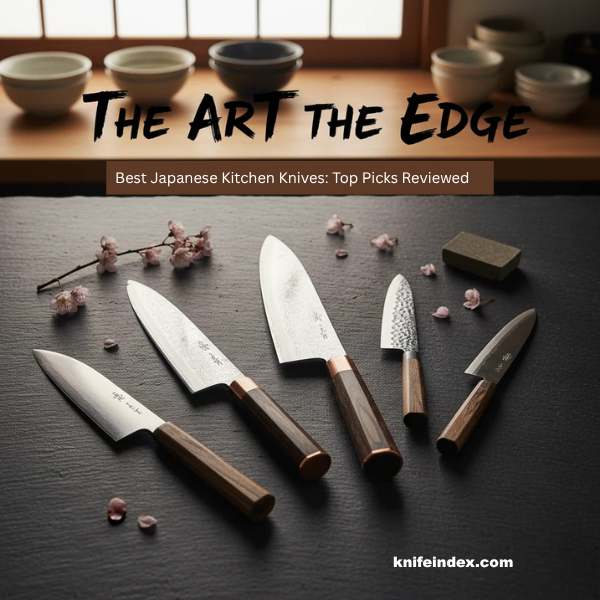
The Onion That Changed Everything: My First Cut with a Shun
I cooked for years with a trusty German chef’s knife. It was a fantastic tool, and I thought it was the sharpest a knife could be. I was wrong. My “eureka” moment happened at a friend’s house, a serious foodie who had just bought himself a beautiful Shun Classic chef’s knife. He asked for help prepping for dinner and handed it to me. The first thing I noticed was the weight—it was so much lighter and more nimble than my German blade. Then he handed me an onion.
I placed the blade on top and pushed down. There was no resistance. The knife didn’t split the onion; it simply *fell* through it, creating two perfectly silent, glassy-smooth halves on the board. I proceeded to dice it, and the knife produced tiny, uniform cubes with an effortless grace I had never experienced. It was like I’d been driving a pickup truck my whole life and someone had just handed me the keys to a Ferrari. That single experience sent me down the rabbit hole of Japanese cutlery, and this guide is the culmination of that passion—a deep dive into the art and science of the sharpest knives on Earth.
Decoding the Blade: How We Evaluated Japanese Knives
Japanese cutlery is a world of nuance, with a dizzying array of steel types, blade shapes, and forging techniques. To find the best, we had to go deep, evaluating these knives on the unique characteristics that define their legendary performance.
Our Core Philosophy: A great Japanese knife must deliver on its promise of superior sharpness and precision. It should feel light and agile in the hand, and its craftsmanship and materials should justify its premium status. It is a specialist’s tool that makes delicate tasks feel effortless.
- Steel Hardness & Type (The Cutting Core): This is the heart of a Japanese knife. We prioritized knives with a hard, high-carbon steel core, such as VG-10, VG-MAX, or SG2 (powdered steel). A high Rockwell hardness (60+ HRC) is essential for the blade’s ability to take and hold a razor-sharp, acute-angle edge.
- Edge Angle & Geometry: A key differentiator. We tested the factory edge, looking for a highly acute angle, typically between 12 and 16 degrees per side. The thinness of the blade behind the edge is also critical for reducing friction and allowing the knife to glide through food.
- Blade Construction & Cladding: Many high-end Japanese knives use a *san mai* construction, with a hard steel core protected by softer, stain-resistant steel cladding. We looked for beautiful and functional Damascus or hammered (*tsuchime*) finishes, which not only look stunning but also help reduce food sticking.
- Blade Shape & Type: We focused on the most versatile Japanese shapes for the Western kitchen, primarily the **Gyuto** (the Japanese equivalent of a chef’s knife) and the **Santoku** (a smaller, all-purpose knife). We evaluated how the shape lent itself to different cutting styles.
- Handle & Balance (The Wa-Handle): We assessed the handle’s material, shape, and comfort. Many Japanese knives feature a traditional octagonal or D-shaped “Wa-handle,” which offers excellent control. The balance is typically more blade-forward than German knives, which aids in a slicing or chopping motion. The famous rivalry between the top Japanese and German brands is a central theme in our popular Shun vs. Wüsthof deep dive.
Beyond the Gyuto: A Complete Guide to Japanese Knife Shapes
One of the things that surprises newcomers most about Japanese cutlery is just how specialized it is. Where a Western kitchen might get by with a single chef’s knife for almost everything, traditional Japanese cooking developed an entire family of blades, each shaped for a specific task. Understanding these shapes isn’t just trivia—it’s the key to building a knife collection that actually improves the way you cook, rather than just looking impressive on a magnetic strip. Below, we break down the shapes you’re most likely to encounter, and where each one earns its keep.
The Gyuto: Japan’s Answer to the Chef’s Knife
We’ve already touched on the Gyuto above, but it deserves a closer look because it’s the shape most home cooks should start with. Literally translating to “cow sword,” the Gyuto was developed in the late 19th century as Japan opened up to Western food culture and beef became more common in the Japanese diet. It borrows the curved belly of a French chef’s knife, which makes it excellent for the rocking chop motion many Western cooks are used to, but it’s thinner, lighter, and ground to a much more acute angle than its European cousin. If you only ever own one Japanese knife, a 210mm (8-inch) Gyuto is almost always the right call. It handles vegetables, proteins, and herbs with equal grace, and it’s the shape every knife brand in our review above builds its flagship model around.
The Santoku: The People’s Knife
The Santoku, whose name means “three virtues” (referring to its aptitude for meat, fish, and vegetables), was designed specifically for Japanese home kitchens in the mid-20th century. It’s typically shorter than a Gyuto, between 165mm and 180mm, with a much flatter edge profile and a distinctive sheepsfoot tip where the spine curves down to meet the edge rather than the edge curving up to meet the spine. This flatter profile means the Santoku isn’t built for rock-chopping; instead, it excels at an up-and-down chopping motion, sometimes with a slight push-pull. Many Santoku knives also feature Granton edges—the small dimples along the blade face—which create air pockets that help delicate slices of cucumber or potato release cleanly instead of sticking to the steel.
The Nakiri: A Vegetable Specialist
If your cooking leans heavily plant-based, the Nakiri deserves a spot in your knife roll. This rectangular, double-beveled vegetable knife looks almost like a small cleaver, with a flat edge that runs the entire length of the blade and squared-off corners at both the tip and the heel. That flat profile means the entire edge contacts the cutting board at once, which is ideal for a straight up-and-down chop through cabbage, carrots, or daikon radish. Unlike the single-bevel Usuba it evolved from (more on that below), the Nakiri’s double bevel makes it approachable for both left- and right-handed cooks, and far less intimidating to sharpen. It won’t replace your Gyuto for protein, but if you find yourself doing a lot of prep work—chopping big batches of vegetables for stocks, stir-fries, or pickling—a Nakiri will change the way that work feels.
The Bunka: A Hybrid for the Home Cook
The Bunka is often described as a Santoku with an attitude. It shares the Santoku’s flatter belly and general size, but swaps the rounded sheepsfoot tip for an angular, reverse-tanto point (sometimes called a “kengata” tip). That sharper point gives the Bunka an edge for detail work—scoring fish skin, trimming silverskin, or making precise cuts near bones—that a standard Santoku can’t quite match. It’s a popular choice among knife enthusiasts who want a do-it-all blade with a bit more personality and utility than the ubiquitous Santoku shape.
The Petty Knife: The Indispensable Backup
Every Japanese knife collection needs a Petty knife, which functions as the Japanese equivalent of a Western paring knife, though usually a bit larger, typically between 100mm and 150mm. It’s the knife you reach for to hull strawberries, devein shrimp, trim the fat from a small cut of meat, or handle any task too fiddly for a full-sized Gyuto. Because Petty knives are made using the same premium steels as their larger siblings, a quality Petty can hold an edge every bit as sharp as your main chef’s knife, just in a more maneuverable package.
The Deba: Built for Breaking Down Fish
The Deba is a heavy, thick-spined, single-bevel knife designed specifically for breaking down whole fish—separating heads from bodies, cutting through small bones, and filleting. Its substantial spine gives it the heft needed to get through cartilage and small bones without chipping, something a thin-bladed Gyuto simply isn’t built to survive. If you regularly buy whole fish rather than pre-cut fillets, a Deba is a worthwhile specialist tool, though it does take practice to use correctly given its single-bevel grind.
The Yanagiba: The Sashimi Specialist
Long, slender, and single-beveled, the Yanagiba (“willow blade”) is designed for one job: slicing raw fish into clean, translucent sheets for sashimi and sushi. Its extended length (typically 240mm to 300mm) allows a sushi chef to draw the blade through a fillet in a single, continuous pulling motion rather than sawing back and forth, which would tear the delicate flesh and ruin the texture. This is a specialist’s tool through and through—wonderful if you’re serious about preparing raw fish at home, but overkill for the average weeknight cook.
The Usuba: The Traditional Vegetable Knife
The Usuba is the traditional, single-bevel ancestor of the Nakiri, still used by professional Japanese chefs for the most refined vegetable work, including the paper-thin ribbon cuts used in decorative garnishes like katsuramuki (rotary peeling). Its single bevel allows for an exceptionally clean, almost polished cut face, but it requires real skill to use correctly and to sharpen, since all of the bevel work happens on one side of the blade.
Quick Buying Tip: If you’re building a Japanese knife collection from scratch, the most practical order is usually: Gyuto (or Santoku) first for everyday cooking, a Petty knife second for detail work, and then a Nakiri third once you know you want a dedicated vegetable specialist. Single-bevel knives like the Deba, Yanagiba, and Usuba are worth adding only once you’re ready to invest time in learning their specific sharpening and handling techniques.
Single Bevel vs. Double Bevel: Understanding the Edge
Nearly every knife sold in the West, Japanese or otherwise, uses a double bevel edge, meaning both sides of the blade are ground down symmetrically to meet at the cutting edge. It’s an intuitive, forgiving design that works equally well for right- and left-handed cooks and is relatively simple to sharpen. All five knives in our reviews above—the Shun, Miyabi, Global, Tojiro, and MAC—use double bevels, which is exactly why they’re such a comfortable entry point into Japanese cutlery.
Traditional Japanese knives like the Yanagiba and Usuba, however, are ground with a single bevel: one side of the blade is flat, while all of the cutting angle is ground into the other side. This asymmetric grind allows for an extraordinarily thin, precise edge and produces exceptionally clean cut surfaces, which is why it’s the standard for professional sashimi and vegetable work in Japan. The tradeoff is that single-bevel knives are handed—a knife ground for a right-handed user will actually curve the cut away from a left-handed user, making the technique considerably harder to learn. Sharpening is also more involved, since maintaining that single flat face requires a different stone technique than the symmetric strokes used on a double-bevel edge.
For the vast majority of home cooks, a double-bevel Gyuto or Santoku is the right choice. Single-bevel knives are a rewarding next step for cooks who want to go deeper into traditional technique, particularly those with a serious interest in preparing raw fish, but they’re not a requirement for enjoying everything Japanese cutlery has to offer.
The Science of Steel: VG-10, SG2, and Carbon Steel Explained
If blade shape determines what a Japanese knife is good at, steel determines how well it performs at that job over the long run. Our reviews above mention VG-MAX, VG-10, FC61, CROMOVA 18, and SG2—and if those names mean nothing to you yet, this section will make sense of the alphabet soup.
Rockwell Hardness: The Number That Matters Most
Steel hardness is measured on the Rockwell C scale (HRC). Most Western knives fall in the 56–58 HRC range, prioritizing toughness and chip resistance over ultimate sharpness. Japanese knife steel typically runs from 60 HRC up to 65 HRC or higher in premium powdered steels. Higher hardness allows a blade to be ground to a thinner, more acute edge and to hold that edge far longer between sharpenings, but it comes at a cost: harder steel is also more brittle, meaning it’s more prone to chipping if it strikes a bone, hits a frozen surface, or gets twisted while cutting.
| Steel Type | Typical HRC | Character | Found In |
|---|---|---|---|
| VG-10 | 60–61 | Stainless, fine grain, excellent all-around balance of sharpness and toughness | Tojiro DP, many mid-range Japanese knives |
| VG-MAX | 60–61 | Shun’s proprietary evolution of VG-10 with added cobalt, tungsten, and vanadium for improved edge retention | Shun Classic and premium Shun lines |
| SG2 / R2 (powdered steel) | 62–63 | Powder-metallurgy stainless steel with an extremely fine, even grain structure for superior edge retention | Miyabi Kaizen II and other high-end lines |
| Aogami (Blue Steel) | 62–64 | Carbon steel with added chromium and tungsten; takes an exceptionally keen edge but requires diligent drying to prevent rust | Traditional artisan-forged knives |
| Shirogami (White Steel) | 62–64 | Very pure carbon steel with minimal alloying; considered the purist’s choice for edge sharpness but the most reactive to moisture | Traditional artisan-forged knives, sushi blades |
| CROMOVA 18 | ~56–58 | Global’s proprietary molybdenum/vanadium stainless steel, tuned for a balance of sharpness and stain resistance rather than maximum hardness | Global G-2 and other Global knives |
Stainless vs. Carbon: The Rust Question
Stainless steels like VG-10, VG-MAX, and SG2 include enough chromium to resist staining and rusting under normal kitchen use, which is why they dominate the knives most home cooks buy. Traditional carbon steels like Aogami and Shirogami contain little to no chromium, meaning they take a slightly sharper, more responsive edge but will develop a patina—and eventually rust—if left wet or dirty. Professional sushi chefs often prefer carbon steel precisely because of how keen an edge it can hold, but it demands a level of post-use care (an immediate wipe-down and thorough drying after every use) that most home kitchens aren’t set up for. If you’re not ready to commit to that maintenance ritual, a stainless Japanese knife will give you the vast majority of the performance with a fraction of the fuss.
San Mai Construction: Why the Layers Matter
Many of the knives in our review, including the Shun Classic and Miyabi Kaizen II, use *san mai* (three-layer) construction: a hard, high-carbon core sandwiched between two layers of softer, more flexible steel. This isn’t just about the visual drama of a Damascus pattern. The soft outer layers act as a shock absorber, flexing slightly under stress to protect the brittle core from chipping, while the exposed edge of that core still delivers the sharpness and edge retention of the harder steel. It’s a clever compromise that lets manufacturers push hardness higher than a monosteel blade could safely tolerate.
The Great Knife-Making Regions of Japan
Just as Sheffield built a reputation for English steel and Solingen became synonymous with German cutlery, Japan has its own storied knife-making centers, each with a distinct history and specialty. Knowing where a knife comes from can tell you almost as much about it as its steel type.
Sakai: The Sushi Chef’s Choice
Located near Osaka, Sakai has been producing blades since the 16th century, when its swordsmiths began making tobacco-cutting knives and eventually pivoted to culinary cutlery as sword demand declined. Sakai is closely associated with single-bevel professional knives—the Yanagiba and Usuba in particular—and remains the region most professional sushi chefs in Japan turn to for their tools. Brands like Misono and many artisan forges trace their roots to Sakai’s centuries-old apprenticeship traditions, where a single knife might pass through the hands of a forger, a sharpener, and a handle-maker before it’s finished.
Seki: The Solingen of Japan
Seki, in Gifu Prefecture, has been a center of blade-making for over 700 years, originally producing katana for samurai thanks to its access to high-quality iron sand, clean river water, and abundant charcoal. When Japan’s sword culture declined after the Meiji Restoration, Seki’s swordsmiths redirected their skills toward cutlery, and the city is now home to major manufacturers including Kai (parent company of Shun), as well as countless smaller forges. Seki-made knives tend to blend traditional forging technique with more modern, mass-manufacturable production, which is part of why the region produces so many of the knives that make it into Western kitchens.
Tsubame-Sanjo: Precision Metalwork
Tsubame-Sanjo, in Niigata Prefecture, built its reputation on nail-making and metal tableware before becoming a hub for precision cutlery and flatware production. Knives from this region, including Global’s stamped, single-piece designs, often showcase a more industrial, design-forward approach to blade-making, leaning on advanced metallurgy and manufacturing precision rather than the hand-forged traditions associated with Sakai or Seki.
From Samurai Swords to Sushi Counters: A Brief History of Japanese Cutlery
The story of the modern Japanese kitchen knife begins, somewhat unexpectedly, with the end of the samurai era. For centuries, Japan’s finest metalworkers devoted their skill almost entirely to swordmaking, developing techniques for folding and differentially hardening steel that produced blades of legendary sharpness and resilience. When the Meiji Restoration of 1868 abolished the samurai class and banned the public carrying of swords, this concentrated pool of master smiths suddenly needed a new outlet for their craft.
Many swordsmiths in Sakai, Seki, and other traditional forging centers pivoted toward tools with clearer civilian utility: farming implements, scissors, razors, and kitchen knives. The same metallurgical knowledge that had gone into katana—differential hardening, folded steel, and obsessive attention to the geometry of an edge—was redirected toward the humble task of cutting fish and vegetables. It’s a lineage you can still feel today: pick up a well-made Yanagiba and you’re holding a direct technical descendant of a samurai sword, just reshaped for a very different purpose.
For much of the 20th century, this tradition remained largely confined to Japan, known mostly to professional chefs and serious home cooks within the country. That began to change in the postwar decades as Japanese cuisine—first sushi, then a broader wave of Japanese culinary culture—gained popularity abroad, and Western chefs training in or visiting Japan brought both techniques and tools home with them. Brands like Global, founded in 1983, deliberately designed knives with Western kitchens in mind, while more traditional houses like Shun (a division of Kai, itself founded in 1908) built dedicated lines aimed at introducing Damascus-clad, high-hardness steel to an international audience. By the early 2000s, Japanese knives had moved from a niche interest among culinary insiders to a mainstream fixture in serious home kitchens across the United States and Europe, a trajectory that continues as more cooks discover just how dramatically a sharper, thinner blade can change everyday cooking.
Getting the Most from Your Edge: Grip, Motion, and Technique
A Japanese knife’s thinness and sharpness reward a slightly different technique than a heavier Western blade, and a few adjustments can make a real difference in both performance and safety.
The Pinch Grip
Most professional cooks, regardless of what knife they’re using, hold the blade with a pinch grip: the thumb and index finger pinch the blade itself just above the handle, while the remaining three fingers wrap around the handle. This grip provides far more control than gripping the handle alone, since it puts your fingers closer to the knife’s center of balance and lets you feel exactly where the edge is making contact. With a lighter, more blade-forward Japanese knife, the pinch grip becomes even more important, since it lets you guide the blade’s natural forward balance rather than fighting against it.
Guiding Hand and the Claw
Your non-cutting hand should curl into a claw shape, with fingertips tucked behind your knuckles, which become the guide the flat of the blade rides against as you cut. This keeps fingertips safely out of the blade’s path while still allowing precise control over the thickness of each slice. Given how effortlessly a sharp Japanese edge moves through food, this habit matters even more than it does with a duller Western knife—there’s simply less resistance to warn you if your fingers drift into the wrong spot.
Push Cuts vs. Rock Chops
A curved Gyuto handles a rock-chop motion, where the tip stays in contact with the board while the heel rises and falls, reasonably well, but many Japanese cutting styles favor a push cut instead: the blade moves forward and down through the food in a single continuous motion, rather than rocking back and forth. Flatter blades like the Santoku, Nakiri, and Bunka are built around this motion specifically, and using a rocking motion with them can actually cause the tip or heel to contact the board unevenly. Matching your cutting motion to the blade’s geometry, rather than defaulting to whatever motion you learned on a Western knife, will noticeably improve your results.
Let the Blade Do the Work
Perhaps the single biggest adjustment for cooks coming from heavier Western knives is resisting the urge to apply downward force. A properly sharpened Japanese edge should glide through most produce and boneless proteins under its own weight, guided rather than forced. If you find yourself pressing hard to get through a piece of food, that’s usually a sign the edge needs sharpening, not a sign you need to push harder.
The Broader Brand Landscape: Beyond Our Top Five
The five knives in our main reviews represent an excellent cross-section of what’s available at mainstream retail, but they’re far from the only respected names in Japanese cutlery. If you fall in love with this category, these are some of the other brands worth knowing.
Misono
Based in Seki, Misono is often described by professional chefs as the standard against which other production knives are measured. Its UX10 line, made from a proprietary stainless steel, is a favorite in professional kitchens for offering hand-forged performance at a semi-production price point, though it can be harder to find at mainstream retailers than brands like Shun or Global.
Yaxell
Yaxell has built a reputation for eye-catching, heavily layered Damascus knives, with some lines featuring well over one hundred layers of steel around a VG-10 or SG2 core. Beyond the visual drama, Yaxell knives are known for comfortable, often micarta-handled designs that stay secure even with wet hands, making them popular for both indoor and outdoor cooking use.
Masamoto
One of the most respected names in traditional Sakai-style cutlery, Masamoto specializes in single-bevel professional knives, particularly Yanagiba and Usuba blades used by sushi chefs. Their knives are less commonly marketed to Western home cooks but are held in extremely high regard within professional Japanese kitchens.
Kikuichi
With roots tracing back over 700 years to sword forging, Kikuichi is one of the oldest continuously operating blade makers in Japan, now producing both traditional single-bevel knives and more accessible double-bevel Western-style shapes, bridging old-world craftsmanship with modern kitchen needs.
Exploring these additional brands is a natural next step once you’ve settled on the blade shape and steel type that suits your cooking style, and many enthusiasts eventually build a small collection that mixes a production knife for everyday use with an artisan piece reserved for special occasions or particular tasks.
Buying a Japanese Knife as a Gift
Japanese knives make memorable gifts for the cook in your life, but a few considerations will help you choose well. First, think about how experienced the recipient is: a beginner or casual cook will get more enjoyment from an approachable, forgiving knife like the Tojiro DP or Shun Classic than from a delicate, high-maintenance artisan piece that demands careful sharpening and handling. Second, consider their existing collection—if they already own a Gyuto, a Nakiri or Petty knife makes a thoughtful complementary gift rather than a redundant one. Third, pay attention to handle size and grip preference, since hand size and grip style are genuinely personal, and a knife that feels perfect to one cook can feel awkward to another. Finally, remember that a knife is one of the few kitchen gifts that can last a lifetime with proper care, so it’s worth spending a bit more for genuine steel quality rather than a knife that looks the part but won’t perform or hold up over years of use.
The Cutting Edge: Top 5 Japanese Knives
If you’re ready to experience the pinnacle of sharpness, these five knives are the best in their class.
| Knife | Image | Brand | Best For | Check on Amazon |
|---|---|---|---|---|
| Shun Classic 8″ Gyuto |  |
Shun | Best Overall & Aesthetics | View Price |
| Miyabi Kaizen II 8″ Gyuto |  |
Miyabi | Best for Sharpness (SG2 Steel) | View Price |
| Global G-2 8″ Chef’s Knife |  |
Global | Best Modern Design & Hygiene | View Price |
| Tojiro DP 8.2″ Gyuto |  |
Tojiro | Best Value & Performance | View Price |
| MAC MTH-80 8″ Chef’s Knife |  |
MAC | The Professional’s Workhorse | View Price |
Masters of Steel: In-Depth Reviews of the Best Japanese Knives
We put these precision instruments to the test on everything from delicate herbs to dense root vegetables. Here is our detailed analysis of the finest blades from Japan.
1. Shun Classic 8-Inch Gyuto (Best Overall & Aesthetics)
For many Americans, the Shun Classic is their introduction to the world of high-end Japanese cutlery, and for good reason. It is a breathtakingly beautiful knife that also happens to be a top-tier performer. The blade features a proprietary VG-MAX “super steel” core, which is incredibly hard and holds a screamingly sharp 16-degree edge. This core is protected by 34 layers of stainless steel on each side, creating the iconic wavy Damascus pattern that Shun is famous for. This cladding isn’t just for show; it protects the core and helps food release from the blade.
The D-shaped PakkaWood handle is comfortable and provides excellent control. This knife is the complete package: stunning looks, premium materials, and razor-sharp performance. It’s the knife that perfectly illustrates the Japanese side of the epic Wüsthof vs. Zwilling vs. Shun debate.
Who is this best for?
The home cook or aspiring chef who wants a beautiful, high-performance Japanese knife from a reputable brand that offers a perfect blend of artistry and function.
- Stunning Damascus-clad blade
- Extremely sharp VG-MAX cutting core
- Excellent edge retention
- Comfortable and secure D-shaped handle
- Free lifetime sharpening service from Shun
Pros
- Hard steel can be prone to chipping if misused
- Premium price point
Cons
2. Miyabi Kaizen II 8-Inch Gyuto (Best for Sharpness)
Miyabi is the Japanese knife brand owned by the German giant Zwilling J.A. Henckels. This gives their knives a unique character: the pinnacle of Japanese blade craft combined with German engineering precision. The Kaizen II uses an FC61 steel core, which is a fine-carbide steel that is ice-hardened to a Rockwell of 61. This allows for an incredibly fine, sharp edge that also has surprising toughness. The core is wrapped in 48 layers of Damascus steel and features a beautiful hammered (*tsuchime*) finish that creates air pockets to prevent food from sticking.
The edge is hand-honed using the traditional *honbazuke* three-step process to a scalpel-like 9.5 to 12-degree angle. This is, put simply, one of the sharpest knives you can buy out of the box. It showcases a different approach to steel than a brand like Victorinox, as we discuss in our Victorinox vs. Zwilling article. It’s German precision meeting Japanese artistry.
Who is this best for?
The sharpness enthusiast who wants the most acute, precise edge possible in a beautiful, well-crafted package.
- Surgically sharp, hand-honed 9.5-12 degree edge
- Hard FC61 steel core offers amazing edge retention
- Beautiful hammered Damascus finish
- Extremely comfortable and durable PakkaWood handle
Pros
- Very acute edge is more delicate than a Shun
- Requires careful use to avoid chipping
Cons
3. Global G-2 8-Inch Chef’s Knife (Best Modern Design & Hygiene)
The Global G-2 is an icon of 20th-century design, famously beloved by chefs like Anthony Bourdain. Unlike other Japanese knives, it is stamped—not forged—from a single piece of proprietary CROMOVA 18 high-carbon stainless steel. The seamless transition from blade to handle is not just a striking design choice; it’s also incredibly hygienic, leaving no gaps for food to get trapped. The hollow handle is filled with sand to achieve a perfect, distinctive balance.
The blade is thin, light, and sharpened to a very acute angle, giving it that classic Japanese precision. It’s a different approach than forging, but the result is a nimble, ultra-sharp, and extremely durable knife that has been a favorite in professional kitchens for decades. It’s a true modern classic and one of the best chef knife brands for those who appreciate industrial design.
Who is this best for?
The design-conscious cook, the hygiene-focused chef, or anyone who loves a lightweight, perfectly balanced, and ultra-sharp blade with a unique modern aesthetic.
- Iconic, seamless, one-piece steel design
- Extremely hygienic and easy to clean
- Lightweight and perfectly balanced
- Razor-sharp CROMOVA 18 steel edge
- Highly resistant to stains and rust
Pros
- Dimpled steel handle can be slippery when oily
- Stamped construction lacks the heft some cooks prefer
Cons
4. Tojiro DP 8.2-Inch Gyuto (Best Value & Performance)
The Tojiro DP is a cult classic and perhaps the most recommended entry-level Japanese knife among serious chefs and knife enthusiasts. The reason is simple: it offers the performance of a $150+ knife for well under $100. The blade features a genuine VG-10 steel core (the same steel family as many Shun knives) sandwiched between two layers of softer, stain-resistant steel. It’s a true *san mai* construction that delivers a hard, sharp edge (60 HRC) with the durability of a composite blade.
The fit and finish aren’t as refined as a Shun or Miyabi, and the handle is a standard Western-style composite handle. But the performance of the blade itself is absolutely outstanding for the price. It’s a no-frills workhorse that puts all its value into the steel. For anyone wanting to experience true Japanese performance without the high price tag, the Tojiro is the undisputed king. It’s the perfect example of the best affordable chef knives philosophy.
Who is this best for?
The budget-conscious cook, the culinary student, or anyone who prioritizes pure cutting performance over aesthetics and wants the best value in Japanese cutlery.
- Incredible performance for the price
- Genuine VG-10 steel cutting core (60 HRC)
- Takes and holds a fantastic, sharp edge
- Durable, Western-style handle
Pros
- Less refined fit and finish
- Handle is functional but not as ergonomic as premium brands
Cons
5. MAC MTH-80 8-Inch Chef’s Knife (The Professional’s Workhorse)
MAC knives are often called the “hidden champions” of the professional kitchen. They offer a unique hybrid design that blends the best of German and Japanese philosophies. The MTH-80 is their flagship chef’s knife. It’s stamped from MAC’s proprietary high-carbon steel, which is hard enough to hold a sharp 15-degree edge but tough enough to resist chipping like a German knife. The blade is slightly thicker than a Shun but thinner than a Wüsthof, and it has a full bolster and a classic PakkaWood handle. The balance is perfect.
It’s famous for its “off-center” edge, where one side has a slightly larger bevel than the other, which is said to make it glide through food with less effort. It’s not as flashy as a Damascus-clad knife, but its pure cutting performance is legendary among pro chefs. It’s the ultimate practical choice, a perfect middle ground between the robust feel of the knives in our best German kitchen knives guide and the delicate nature of other Japanese blades.
Who is this best for?
The professional chef or serious home cook who wants a no-nonsense, ultra-sharp, yet highly durable Japanese knife that is built for daily, rigorous use.
- Hybrid design offers both sharpness and durability
- Extremely sharp out of the box
- Excellent balance and comfortable handle
- A favorite of professional chefs for decades
Pros
- Stamped blade lacks the aesthetic of forged Damascus
- Less brand recognition among home cooks
Cons
How a Japanese Knife Is Made: The Forging Process
Understanding how a Japanese knife comes together helps explain why the good ones cost what they do, and why the details we’ve covered—steel type, cladding, edge angle—actually matter in practice.
Forging the Core
Traditional production starts with heating a billet of high-carbon steel to a precise temperature and hammering it into rough shape, either by hand or with a power hammer, a process that aligns the steel’s internal grain structure and helps eliminate microscopic voids that could weaken the finished blade. Mass-produced knives may skip hand forging in favor of stamping a blade shape directly from a sheet of steel, which is faster and more consistent but sacrifices some of the grain-refining benefit of hammer forging. The Global G-2 and MAC MTH-80 in our reviews are both stamped rather than forged, which is precisely why they achieve such consistent, lightweight geometry at a more accessible price.
Cladding and Lamination
For san mai and Damascus-style knives, the hardened core is sandwiched between layers of softer steel and forge-welded together under heat and pressure, fusing the layers into a single laminated billet. This is the stage that produces the wavy Damascus pattern, which becomes visible only after the blade is later etched or polished, revealing the different steels’ contrasting response to light.
Rough Grinding and Heat Treatment
Once the blade is shaped, it undergoes heat treatment: a carefully controlled cycle of heating and rapid cooling (quenching) that locks in the steel’s hardness, followed by a lower-temperature tempering step that relieves internal stress and reduces brittleness. This is one of the most technically demanding parts of the process—get the temperatures or timing wrong, and even excellent steel will underperform or crack.
Final Sharpening and Polishing
The last stage is where a blade’s final edge geometry is established, progressively refined across a series of increasingly fine grinding wheels or stones, often by a specialist sharpener distinct from the smith who forged the blade. Handles are fitted, any Damascus pattern is etched to full contrast, and the blade receives a final polish before quality inspection. In traditional workshops, this division of labor—separate craftspeople for forging, sharpening, and handle-fitting—is part of what allows small shops to maintain such consistently high standards across every knife they produce.
What Size Japanese Knife Should You Buy?
Blade length has a real impact on how a knife performs, and it’s one of the most common points of confusion for first-time buyers.
| Length | Best For | Considerations |
|---|---|---|
| 150mm–165mm (Santoku) | Smaller hands, compact kitchens, most everyday vegetable and protein prep | Very maneuverable but limits how much you can cut in one stroke on larger items |
| 180mm (Santoku/Gyuto) | General all-purpose home cooking | A comfortable middle ground for cooks unsure which length to choose first |
| 210mm (Gyuto) | Most home cooks and many professionals | The most common “default” chef’s knife length, versatile enough for almost any task |
| 240mm+ (Gyuto) | Larger cuts of protein, bigger produce, cooks with larger hands or more counter space | Extra reach and efficiency on large items, but less maneuverable in a tight kitchen |
If you’re buying your first Japanese knife and aren’t sure which length to choose, a 210mm Gyuto is the safest, most broadly useful starting point—it’s the size most of the knives in our reviews are built around, and it comfortably handles everything from mincing garlic to breaking down a chicken.
Common Mistakes First-Time Owners Make
A little awareness up front can save a brand-new Japanese knife from a rough first few months. Here are the mistakes we see most often.
- Using it on the wrong surface. Cutting directly on a plate, a stone countertop, or a glass board is one of the fastest ways to chip a hard, thin edge.
- Trying to cut through bone or frozen food. Save that for a heavier Western knife, a cleaver, or a dedicated Deba.
- Dishwasher washing. Heat, harsh detergent, and contact with other utensils can dull, chip, or corrode a blade in a single cycle.
- Storing it loose in a drawer. Unprotected blade-on-utensil contact dulls an edge far faster than normal cutting use.
- Ignoring early dullness. Continuing to use a knife well past when it needs sharpening leads to using more pressure, which increases the risk of slipping and injury.
- Skipping honing. A few passes on a ceramic rod before use takes seconds and meaningfully extends the interval between full sharpenings.
- Buying a decorative Damascus knife for the look alone. A beautiful pattern is a nice bonus, but the underlying steel and edge geometry are what actually determine how the knife performs day to day.
Caring for Your Japanese Knife: Sharpening, Honing, and Storage
Buying a great Japanese knife is only half the equation. Because these blades are harder and thinner than most Western cutlery, they reward good care and punish neglect more severely. Get the maintenance routine right, though, and a knife like the Shun Classic or Tojiro DP can stay in your kitchen for decades, arguably improving with age as it settles into your personal sharpening pattern.
Sharpening on a Whetstone
The traditional and still most effective way to sharpen a Japanese knife is with a whetstone, not a pull-through electric sharpener or a honing rod. Most home sharpeners start with a combination stone offering a coarser grit (around 1000) on one side for repair and re-profiling, and a finer grit (3000 to 6000) on the other for polishing and refining the edge. Before use, water stones need to soak for 10 to 15 minutes until they stop releasing bubbles. From there, the basic technique is straightforward, even if it takes practice to master:
- Wet the stone thoroughly and keep it wet throughout sharpening.
- Hold the blade at a consistent angle against the stone—roughly 15 degrees per side for most Japanese double-bevel knives, checked against the manufacturer’s specified angle where available.
- Draw the blade across the stone in smooth, even strokes, applying light, consistent pressure, working from heel to tip.
- Repeat on the opposite side an equal number of strokes to maintain a symmetrical edge.
- Feel for a small burr (a slight rough ridge) forming along the opposite edge before moving to a finer grit, which tells you the coarser stone has fully done its job.
- Finish on the fine stone to polish and refine the edge, then strop lightly on a leather strop or clean cloth to remove any remaining burr.
It’s a skill that takes time to develop, but it’s also one of the most satisfying rituals in cooking—there’s something meditative about restoring a blade to its full sharpness by hand. If whetstones feel intimidating at first, a guided sharpening system that clamps the blade at a fixed angle can help you build muscle memory before moving to freehand technique.
Honing Between Sharpenings
Honing is often confused with sharpening, but they’re different processes. Honing doesn’t remove metal; it simply realigns a microscopically bent edge back into place, restoring perceived sharpness between full sharpening sessions. For Japanese knives, a ceramic honing rod is generally preferred over the traditional steel rod used with German knives, since the harder Japanese steel can chip against a coarse steel rod. A few light passes on a ceramic rod before each use can meaningfully extend the time between whetstone sessions.
Storage: Sayas, Blocks, and Magnetic Strips
How you store a Japanese knife matters almost as much as how you sharpen it. Tossing a hard, thin blade into a drawer alongside other utensils is one of the fastest ways to chip an edge or dull it prematurely. Traditional wooden knife sheaths, called *saya*, slide over the blade and offer excellent protection for transport or drawer storage, and many artisan knives are sold with a matching saya. A dedicated knife block keeps blades separated and protected while remaining easily accessible, and a wall-mounted magnetic strip is a popular choice among enthusiasts because it keeps the edge from contacting anything else, dries quickly, and turns a knife collection into a bit of kitchen art. Whichever method you choose, the goal is the same: keep the edge from making unnecessary contact with other hard surfaces.
Washing and Drying
Japanese knives should always be hand-washed with mild soap and warm water immediately after use, then dried completely before storage. Never put a Japanese knife in the dishwasher—the combination of harsh detergent, prolonged moisture, and contact with other utensils is close to the worst-case scenario for a hard, thin blade. Carbon steel knives in particular need to be dried within minutes of washing to prevent flash rusting; some owners keep a dedicated towel next to the sink specifically for this purpose.
What to Avoid
A few habits will shorten the life of even the best Japanese knife. Never use one to cut through bone, frozen food, or hard cheese rinds—save those tasks for a sturdier Western knife or a cleaver. Avoid glass, stone, or ceramic cutting boards, which are hard enough to dull or chip an acute edge almost immediately; a good end-grain wood or high-quality plastic board is a far better partner. And resist the temptation to twist or pry with the tip of the blade, which is thin by design and can snap under lateral stress that a thicker Western knife would easily shrug off.
Handle Materials: Wa-Handle vs. Western Handle
The handle shapes how a knife feels almost as much as the blade shapes how it cuts, and Japanese knives typically come in one of two handle styles.
The Wa-Handle
A traditional Wa-handle is usually octagonal, oval, or D-shaped in cross-section, made from a single piece of wood such as magnolia, ho wood, or rosewood, sometimes reinforced with a buffalo horn or plastic ferrule (called a *kuriage*) where the handle meets the blade’s tang. Wa-handles are typically lighter than Western handles, shifting the knife’s balance point forward toward the blade, which many enthusiasts prefer for finer control during precision cuts. They’re also simpler to replace, since the tang is usually just friction-fit or lightly glued into the handle rather than permanently riveted.
The Western (Yo) Handle
A Western-style handle, sometimes called a “Yo” handle, resembles the riveted, full-tang handles found on German knives, typically made from resin-impregnated wood composites like PakkaWood or Micarta. These handles are heavier and shift balance slightly back toward the hand, which some cooks find more comfortable for a rock-chopping motion. The Shun Classic, Miyabi Kaizen II, and MAC MTH-80 in our reviews all use variations on this Western handle style, which is part of why they feel intuitive to cooks coming from a German knife background.
Neither style is objectively better—the right choice comes down to personal grip preference and the cutting motions you use most. Many enthusiasts eventually own knives with both handle types and simply reach for whichever suits the task at hand.
Sustainability and Longevity: The Case for Buying Fewer, Better Knives
One under-discussed benefit of investing in a genuine Japanese knife is how it changes your relationship with kitchen tools more broadly. A well-made blade, properly sharpened and stored, can realistically last several decades, being passed down or resharpened rather than discarded and replaced. Compare that to the cycle of cheap, stamped knives that dull quickly, resist sharpening, and often end up in a landfill within a few years. Buying one excellent knife and learning to maintain it is, in a very real sense, a more sustainable approach to kitchen equipment than repeatedly replacing mediocre ones. It’s also often more economical over time: the cost of a quality Gyuto amortized across twenty years of regular use is a fraction of what most households spend repeatedly replacing dull, disposable knife sets.
Pairing Your Knife with the Right Cutting Board
A razor-sharp Japanese edge deserves a cutting surface that won’t fight against it. End-grain wooden boards, where the wood fibers stand vertically rather than horizontally, are widely considered the gold standard because the fibers part slightly to receive the blade and then close back up, minimizing the impact on the edge with every cut. Edge-grain wood boards are a step down in that regard but still far gentler than synthetic alternatives. Soft, high-density plastic cutting boards are a practical, dishwasher-safe option, particularly for raw meat and fish prep, but should be replaced once they develop deep grooves that can harbor bacteria. What you want to avoid entirely are glass, marble, granite, or bamboo boards—bamboo in particular is deceptively hard due to its silica content, and it’s one of the quickest ways to blunt an expensive Japanese edge.
Choosing by Budget: Entry-Level, Mid-Range, and Heirloom Japanese Knives
Japanese knives span an enormous price range, from approachable workhorses under $100 to hand-forged artisan pieces that cost as much as a used car. Here’s how to think about where your budget fits.
Entry-Level (Under $100)
This is where knives like the Tojiro DP Gyuto reviewed above shine. At this price point, you’re generally looking at stamped or simply forged blades using solid, dependable steels like VG-10, paired with basic composite handles. The fit and finish won’t be flawless, but the actual cutting performance can rival knives costing two or three times as much. This tier is ideal for anyone testing the waters of Japanese cutlery for the first time, or for culinary students who need a reliable workhorse that won’t break the bank if it takes a beating in a professional kitchen.
Mid-Range ($100–$250)
Most of the knives in our top five list, including the Shun Classic, Miyabi Kaizen II, Global G-2, and MAC MTH-80, live in this bracket. Here you’ll find premium proprietary steels, more refined handle materials, better fit and finish, and often a manufacturer warranty or sharpening service. This is the sweet spot for most serious home cooks: performance that rivals professional-grade cutlery, in a package built to last decades with proper care.
Heirloom & Artisan ($250 and up)
Above the mid-range sits a world of hand-forged, artisan-made knives from Sakai and Seki workshops, often featuring exotic steels like SG2 or hand-hammered Damascus patterns with over a hundred layers, custom handles carved from exotic woods or water buffalo horn, and a level of craftsmanship that borders on fine art. These knives are typically made in small batches, sometimes by a single named smith, and are prized as much for the story behind them as for their performance, though that performance is genuinely exceptional. This tier makes sense for serious cooking enthusiasts, collectors, or professional chefs who have already developed the sharpening skills needed to keep a premium edge in top condition.
Our Recommendation: Unless you already know you want to specialize, start in the entry-level or mid-range tiers. A $70 Tojiro or a $150 Shun will teach you more about what you actually want from a Japanese knife than any amount of research, and either one will outperform almost anything you can buy at a general kitchenware store.
Your Japanese Knife Questions, Answered
What is the difference between German and Japanese knives?
The primary difference is their design philosophy. German knives are built for durability. They use tougher, slightly softer steel (57-58 HRC), are heavier, and have a wider 20-degree edge angle. They are the workhorses. Japanese knives are built for sharpness. They use harder, more brittle steel (60+ HRC), are lighter, and have a more acute 12-16 degree edge angle. They are precision instruments. We cover this in depth in our Guide to German Knives.
What does the Damascus pattern on Japanese knives do?
The beautiful, layered pattern on knives like the Shun Classic is called Damascus cladding. It’s made by forge-welding many layers of softer steel around a very hard central cutting core. It serves two purposes: first, it’s incredibly beautiful. Second, the softer, flexible outer layers act like a suit of armor, protecting the hard but brittle core from chipping and providing stain resistance.
Are Japanese knives hard to sharpen?
Because Japanese knives use harder steel, they can be more challenging to sharpen on traditional stones than their softer German counterparts. However, their hard steel also means they hold their edge for a very long time, so they require sharpening less frequently. Using a quality electric knife sharpener with a 15-degree setting is an excellent, easy way to maintain their razor edge. Whetstones are the traditional method but require practice.
What is a Gyuto vs. a Santoku?
A Gyuto is the Japanese version of the classic Western chef’s knife. It typically has a slight curve to the blade, making it versatile for both chopping and rock-chopping. A Santoku, which means “three virtues” (slicing, dicing, and mincing), is typically shorter, has a flatter edge, and a sheepsfoot tip. It excels at quick, downward chopping motions and is particularly great for vegetables.
What is the best cutting board for a Japanese knife?
An end-grain wooden cutting board is the best choice, since the vertical wood fibers part slightly to receive the blade and close back up, minimizing wear on a hard, acute edge. Edge-grain wood and soft plastic boards are acceptable alternatives. Avoid glass, marble, granite, and bamboo boards, all of which are hard enough to dull or chip a Japanese edge quickly.
What is the difference between VG-10 and SG2 steel?
VG-10 is a widely used stainless steel that typically reaches 60-61 HRC, offering a dependable balance of sharpness, edge retention, and ease of maintenance. SG2 (also called R2) is a powdered stainless steel with a finer, more uniform grain structure, generally reaching 62-63 HRC. SG2 holds an edge longer and can be sharpened to a slightly finer angle, but it comes at a higher price and is somewhat less forgiving to sharpen than VG-10.
Can left-handed cooks use Japanese knives?
Double-bevel Japanese knives, including the Gyuto, Santoku, and Nakiri shapes reviewed in this guide, work equally well for left- and right-handed cooks since both sides of the blade are ground symmetrically. Traditional single-bevel knives like the Yanagiba and Usuba are handed, meaning a knife ground for a right-handed user will curve cuts away from a left-handed user. Left-handed versions of single-bevel knives exist but are less common and often made to order.
How often should I sharpen a Japanese kitchen knife?
For a home cook using their knife daily, a full whetstone sharpening every one to three months is typical, depending on how it’s used and stored. Light honing on a ceramic rod before each use can extend the time between full sharpenings. Signs it’s time to sharpen include the blade struggling to glide through a ripe tomato’s skin or requiring visible pressure to slice through onions.
Warranties and Sharpening Services: How the Top Brands Compare
Beyond steel and geometry, the after-sale support a brand offers can be a meaningful part of the value equation, especially for a tool you intend to keep for years or decades.
| Brand | Warranty Coverage | Sharpening Support |
|---|---|---|
| Shun | Limited lifetime warranty against manufacturing defects | Free lifetime sharpening service through authorized channels |
| Miyabi | Limited lifetime warranty against manufacturing defects | Paid factory sharpening service available |
| Global | Limited lifetime warranty against manufacturing defects | No official free sharpening program; relies on third-party or home sharpening |
| Tojiro | Standard manufacturer warranty against defects | No official sharpening program; well suited to home whetstone maintenance |
| MAC | Limited lifetime warranty against manufacturing defects | Factory sharpening service available through authorized dealers |
None of these warranties cover ordinary wear, chipping from misuse, or corrosion from improper care, which is exactly why the maintenance habits covered earlier in this guide matter as much as the knife you choose in the first place.
The Final Cut: Embracing the Art of Sharpness
A Japanese kitchen knife is more than just a tool; it’s an invitation to a more precise, more graceful, and more artful way of cooking. The effortless way they glide through food can fundamentally change your experience at the cutting board, transforming prep work from a chore into a joy. While they demand respect and a bit more care than their German cousins, the performance they deliver is a worthy reward.
For the home cook who wants the perfect blend of stunning beauty and razor-sharp performance, the Shun Classic 8-Inch Gyuto is a timeless choice and our top recommendation. It’s the knife that has introduced millions to the magic of Japanese steel.
If your sole pursuit is the absolute sharpest edge out of the box, the Miyabi Kaizen II is a triumph of Japanese artisanship. And for the pragmatist who wants to experience that legendary sharpness without the premium price, the Tojiro DP Gyuto is the undisputed champion of value.
Choose any knife from this list, and you’re not just buying a kitchen utensil. You’re investing in a piece of a rich, centuries-old tradition of craftsmanship that will elevate every meal you create.
















Pingback: Chef Knife vs Santoku: Rocking Motion vs Push-Cut Efficiency