The Ultimate Guide to Slicing Raw Fish: Yanagiba or Sujihiki?
1. The Art of the Slice: Why the Right Knife Matters for Raw Fish
In Western culinary traditions, the act of cooking often masks the precision of the initial cut. When meat hits a hot pan, the searing process transforms the proteins, altering the surface texture. However, in the realm of Japanese cuisine—specifically regarding sushi and sashimi—the cut is the cooking. Slicing raw fish is a delicate discipline where the integrity of the blade dictates the final flavor and mouthfeel of the dish.
When preparing premium seafood, the goal is to sever the cellular structure of the flesh with absolute precision, avoiding any crushing, tearing, or bruising. A flawed cut releases internal cellular moisture, resulting in a mushy texture and a compromised flavor profile. To achieve culinary perfection, two distinct profiles of knives have emerged as the titans of slicing raw fish: the traditional Yanagiba and the modern Sujihiki.
While both boast long, slender profiles designed for elegant slicing, their underlying geometry, ease of use, and versatility set them worlds apart. Choosing between a Yanagiba and a Sujihiki is not just about picking a tool; it is about choosing a culinary philosophy.
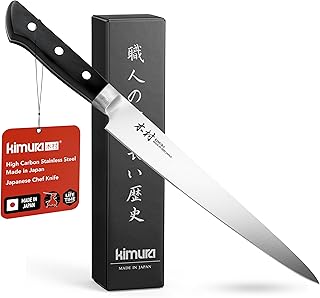
Stop tearing your fish with dull chef knives. Invest in a premium Japanese slicing knife crafted specifically for delicate proteins.
Shop Slicing Knives on Amazon2. What is a Yanagiba? The Traditional Master of Sushi
The Yanagiba (translating literally to “willow blade”) is the quintessential Japanese sushi knife. If you have ever sat at a high-end omakase counter, this is the long, sword-like instrument the chef wielded with hypnotic grace. Originating from the Kansai region (Osaka), the Yanagiba was explicitly designed for one primary purpose: flawlessly separating raw fish from its fillet into pristine slices of sashimi.
Visually, the Yanagiba is striking. It features an incredibly long, narrow blade that curves gently toward an acutely pointed tip. Its hallmark characteristic is its single-bevel edge. Unlike Western knives that are ground symmetrically on both sides, the Yanagiba is sharpened entirely on one side, while the back remains flat (or slightly concave). This intense geometry creates an edge of unparalleled sharpness, capable of separating fish flesh with zero friction.
It is important to note that the Yanagiba is an finishing tool. Before the fish hits the board for sashimi, it must first be broken down from a whole catch—a task typically reserved for other specialized knives. If you are curious about the heavier blades used for processing meat and fish prior to the delicate slicing phase, understanding the difference between boning vs fillet knives for fish cutting is a necessary step in the seafood preparation pipeline.

Experience the frictionless cut of a traditional, single-bevel Yanagiba forged by master craftsmen in Seki City.
View Yanagibas on Amazon3. What is a Sujihiki? The Versatile Modern Slicer
The Sujihiki translates to “muscle cutter” or “flesh slicer,” and it represents a brilliant fusion of Western culinary necessity and Japanese metallurgical craftsmanship. As Western diets (particularly beef) became more integrated into Japanese culture during the late 19th and 20th centuries, Japanese blacksmiths recognized the need for a versatile carving knife.
The Sujihiki is essentially the Japanese equivalent of the Western carving knife. It shares the long, narrow profile of the Yanagiba, but features a double-bevel edge (sharpened symmetrically on both sides). Because the blade is so thin from spine to edge, it generates incredibly low friction, making it exceptional at gliding through large cuts of meat, slicing roasts, and, crucially, portioning raw fish.
While the traditionalist might balk at a sushi chef using a Sujihiki for sashimi, its adoption in modern, high-paced kitchens worldwide is undeniable. It provides the reach and thinness required for raw fish, but without the steep learning curve associated with single-bevel geometry.

From Thanksgiving turkey to fresh tuna steaks, the double-bevel Sujihiki is the ultimate kitchen multi-tasker for flawless slicing.
Shop Sujihikis on Amazon4. The Core Difference: Single-Bevel vs. Double-Bevel Geometry
The grand divergence between these two knives rests entirely in their cross-sectional geometry. To fully appreciate how they cut, one must understand the physics of the blade edge.
A Sujihiki is a double-bevel knife (often a 50/50 or 70/30 grind). As the blade pushes downward into the food, it displaces the material equally (or nearly equally) to both the left and right sides. This symmetrical wedge shape naturally wants to track in a perfectly straight line, making it highly intuitive for anyone who has ever used a standard chef’s knife.
A Yanagiba is a single-bevel knife. The front side features a steep grind (the shinogi line) descending to the cutting edge, while the back side is flat. When a single-bevel knife enters an ingredient, it actively pushes the cut material away to one side (away from the chef), while the flat side glides cleanly against the remaining block of food. This is what creates the impossibly glossy, mirror-like finish on high-end sashimi. However, this asymmetric wedge inherently wants to “steer” or curve into the food, requiring the user to continually adjust their wrist angle to maintain a straight cut. For a deeper dive into how single and double bevels dictate kitchen tasks, exploring the differences between Nakiri and Usuba knives provides excellent context on this geometric phenomenon.
| Feature | Yanagiba | Sujihiki |
|---|---|---|
| Grind Type | Single-Bevel (Asymmetrical) | Double-Bevel (Symmetrical) |
| Food Separation | Exceptional (pushes slice away) | Good (requires slight manual separation) |
| Tracking/Steering | Tends to steer; requires technique | Tracks straight intuitively |
| Learning Curve | Steep / Professional level | Low / Familiar to home cooks |

Whether single or double bevel, maintaining a razor-sharp edge is paramount. Grab a premium Japanese whetstone set today.
Shop Whetstones on Amazon5. Blade Length and Profile: The Mechanics of the Pull-Cut
When you watch an experienced sushi chef process a block of tuna (saku), you will notice a distinct, elegant motion. They do not saw back and forth, nor do they push the knife down in a chopping motion. They execute the hiki-giri, or the pull-cut.
Both the Yanagiba and the Sujihiki are extraordinarily long, typically ranging from 240mm (9.5 inches) up to 330mm (13 inches). This immense length is a functional requirement. To slice raw fish without destroying its texture, the cut must be completed in a single, fluid motion. The chef places the heel of the blade against the fish and pulls backward, allowing the sheer length of the razor-sharp edge to do the work as it glides through to the tip. Sawing back and forth leaves jagged, unappetizing ridges on the sashimi slice.
Because the Yanagiba is a dedicated fish slicer, its profile is highly specialized. It has almost no belly (curvature) and remains very straight until sweeping up to a sharp tip, maximizing the contact area for the pull-cut. The Sujihiki, designed with broader versatility in mind, often features a slightly more pronounced belly near the tip, allowing it to function effectively in carving roasts or trimming fat from large cuts of meat where a bit of rocking or tip work might be necessary.

Long slicing knives require large, gentle surfaces. A traditional Japanese Hinoki wood cutting board preserves your fragile edges.
Shop Hinoki Boards on Amazon6. Steel Types and Hardness: Forging the Perfect Slicer
The performance of any knife is inextricably linked to the steel from which it is forged. The debate between traditional Japanese carbon steels and high-tech stainless alloys frequently dictates the manufacturing style of these two knives. Understanding the fundamental differences in stamped vs forged blade geometry and sharpening is key to comprehending how these long slicers maintain their rigidity.
Traditional Yanagibas are almost exclusively hand-forged using high-carbon steels like Shirogami (White Paper Steel) or Aogami (Blue Paper Steel). These steels can be heat-treated to extreme hardness levels (HRC 62-65). This incredible hardness allows the blacksmith to grind the single-bevel edge to an astoundingly acute angle without it collapsing. The trade-off is that carbon steel is highly reactive; it will rust rapidly if exposed to moisture and acidic foods without immediate care.
Sujihikis bridge the gap between tradition and modernity. While you can find carbon steel Sujihikis, the vast majority are constructed from high-performance stainless or powdered metallurgy steels (like VG-10, SG2, or Swedish Stainless). Because they are frequently used in busy Western kitchens for a variety of tasks, the rust resistance of stainless steel is highly valued. They typically hover around HRC 60-62—hard enough to maintain a blistering edge, but tough enough to handle occasional contact with a bone when carving a turkey or roast.

If you choose a high-carbon Yanagiba, Tsubaki (Camellia) oil is mandatory to prevent rust and maintain the blade’s beautiful finish.
Buy Knife Oil on Amazon7. The Urasuki Factor: The Yanagiba’s Secret Weapon
We briefly touched on the single-bevel geometry, but there is a hidden element on the reverse side of a Yanagiba that truly elevates it above all other slicers: the urasuki.
If you examine the back (the seemingly “flat” side) of a high-quality Yanagiba, you will notice it is not actually flat. It features a slight, longitudinal concave depression—a hollow grind that runs the length of the blade. This is the urasuki.
When the blade slices through a dense, sticky piece of fish (like fresh salmon or tuna), the urasuki creates a microscopic air pocket between the steel and the flesh. This completely breaks the vacuum and surface tension that typically causes food to stick to the side of a knife. The result is a slice that falls away beautifully and cleanly, without the chef having to pry it off the blade. The Sujihiki, being a standard double-bevel knife with flat or slightly convex faces, does not feature an urasuki, meaning sticky proteins may require occasional wiping or slight finger pressure to release from the blade.

Pair your flawless sashimi slices with perfectly seasoned rice. Complete your kitchen with an authentic bamboo sushi making kit.
Shop Sushi Kits on Amazon8. Usability and Skill Level: Which is Easier to Master?
Purchasing a high-end knife is exciting, but matching the tool to your current skill level is vital for kitchen success.
The Sujihiki is remarkably user-friendly. Because it behaves exactly like the chef’s knife or carving knife you already own, the learning curve is practically non-existent. You simply position the blade and pull. It tracks straight, handles dense proteins with ease, and is forgiving if your wrist angle wavers slightly during the cut.
The Yanagiba, conversely, requires dedicated practice. The asymmetric grind will actively fight you if you are not accustomed to it. A novice attempting to slice a fish with a Yanagiba will often find their slices curling outward, resulting in wedge-shaped, uneven cuts rather than perfect rectangular slabs. The chef must subtly twist their wrist inward to counteract the blade’s natural desire to steer left (for right-handed knives). Mastering the Yanagiba is a badge of honor in the culinary world, symbolizing a deep commitment to Japanese technique.
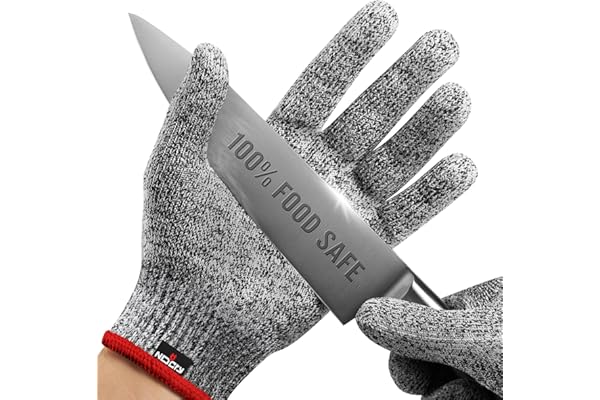
Learning new cutting techniques on razor-sharp Japanese steel can be risky. Protect your hands with level 5 cut-resistant kitchen gloves.
Shop Safety Gloves on Amazon9. Versatility Beyond Fish: Can They Do More?
A specialized knife is a wonderful luxury, but for many home cooks and professional chefs with limited roll-space, a knife must earn its keep through versatility.
This is where the Sujihiki undeniably shines. While it is stellar at portioning sashimi, it is equally adept at carving a Thanksgiving turkey, slicing a holiday ham, portioning a smoked brisket, or meticulously removing the silver skin from a tenderloin. The double-bevel edge is robust enough to handle the slightly firmer textures of terrestrial meats. To understand how Japanese profiles have successfully merged with Western culinary demands, one only needs to look at the evolution of hybrid knives, such as the comparisons seen in MAC vs Wüsthof hybrid Japanese and German forging.
The Yanagiba is a hyper-specialized thoroughbred. It is designed for raw fish, and very little else. Using a Yanagiba to carve a roasted chicken with a crispy skin or attempting to slice through a crusted beef Wellington is a recipe for disaster. The intensely fragile edge can easily chip if it encounters hard crusts, bones, or dense connective tissue. It is a one-task wonder, but it performs that one task better than any other knife on earth.
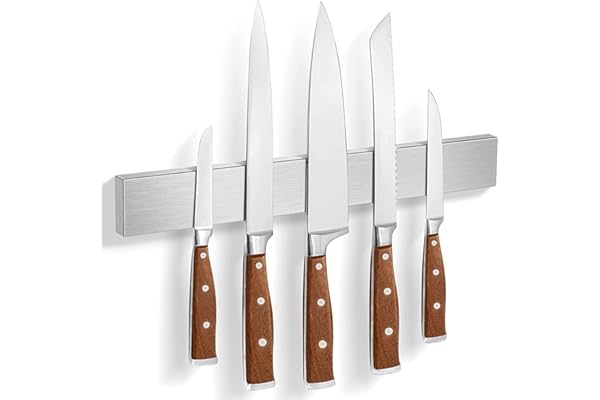
Keep your long, specialized slicers safe from drawer damage and proudly displayed on a beautiful walnut magnetic knife strip.
Shop Knife Strips on Amazon10. Sharpening Differences: Maintaining the Razor Edge
A dull slicer will mangle raw fish, regardless of its pedigree. However, bringing these two knives back to a razor-sharp apex requires entirely different approaches on the whetstone.
Sharpening a Sujihiki follows standard procedure. You match the bevel angle (typically 12-15 degrees per side for Japanese knives), establish a burr on one side, flip the knife, establish a burr on the other side, and refine. It is straightforward, symmetrical work.
Sharpening a Yanagiba is an art form. You only aggressively sharpen the front side, laying the wide bevel (the kireha) completely flat against the stone. Once a burr forms on the back, you lay the back of the knife totally flat against the finest grit stone and gently push it to snap the burr off. Because of the concave urasuki, only the spine and the very edge of the back touch the stone, preserving the hollow grind. If you attempt to sharpen a Yanagiba like a standard V-edge knife, you will permanently destroy its geometry.

To achieve that mirror-finish sashimi cut, finish your sharpening routine with a high-quality leather strop loaded with polishing compound.
Shop Leather Strops on Amazon11. Left-Handed Considerations: A Crucial Divergence
This is a vital factor that is often overlooked until it is too late. Because the Sujihiki is a double-bevel knife with a symmetrical grind, it is entirely ambidextrous. A left-handed chef and a right-handed chef can use the exact same Sujihiki with identical results.
The Yanagiba is strictly handed. The flat side must face the bulk of the food being cut, and the beveled side must push the slice away. Standard Yanagibas are manufactured for right-handed users. If you are left-handed and attempt to use a right-handed Yanagiba, the blade will dig aggressively into the cutting board and mangle the fish. Left-handed chefs must purchase specifically forged left-handed Yanagibas. Unfortunately, due to the lower demand and complex forging process, left-handed traditional Japanese knives often carry a 30% to 50% premium over their right-handed counterparts.

Don’t struggle with the wrong geometry. Ensure you purchase a true Left-Handed Yanagiba explicitly forged for your grip.
Shop Left-Handed Knives12. Final Verdict: How to Choose Between Yanagiba and Sujihiki
The choice between the Yanagiba and the Sujihiki ultimately boils down to your culinary focus, your willingness to learn new techniques, and your need for versatility.
- Choose the Yanagiba if: You are a sushi purist, a professional sushi chef, or an enthusiastic home cook who frequently prepares high-end sashimi. If you are willing to learn the intricacies of single-bevel sharpening and the nuances of the asymmetric pull-cut, the Yanagiba will reward you with flawlessly textured, aesthetically stunning seafood presentation that a double-bevel knife simply cannot replicate.
- Choose the Sujihiki if: You are a versatile home cook, a professional line cook in a mixed-cuisine environment, or a BBQ enthusiast. The Sujihiki provides 90% of the raw-fish slicing capability of the Yanagiba, but offers 100% more utility across the rest of the kitchen. It is easier to steer, easier to sharpen, and ambidextrous right out of the box.
Whichever path you choose, stepping up to a dedicated slicing knife will immediately elevate your kitchen capabilities, transforming the daunting task of portioning delicate proteins into an absolute pleasure.
Ready to Upgrade Your Knife Roll?
Equipping yourself with the right slicing knife changes the way you interact with food. Stop wrestling with short, thick chef knives when dealing with expensive seafood and meats. Experience the effortless glide of specialized Japanese geometry today.
Shop Top-Rated Slicing Knives Now