Smith & Wesson Knife Review: The Ultimate Guide to Tactical & EDC Blades

When you hear the name Smith & Wesson, your mind likely jumps immediately to firearms. For over a century, they have been the titan of the revolver world. But for those of us who live the Everyday Carry (EDC) lifestyle or work in first response, the “S&W” logo has another meaning: Reliable, budget-friendly tactical knives.
But let’s address the elephant in the room immediately. Are these knives on the same level as a $300 custom blade? No. But are they the best bang-for-your-buck tool you can throw in a glovebox, a tactical vest, or a boot? Absolutely.
In this extensive Smith & Wesson knife review, we are going to break down the materials, the build quality, and the top models you can buy today. We will compare them against competitors like M-Tech tactical knives and see if it’s worth stepping up to premium brands like Kershaw.
The Heritage of Smith & Wesson Cutlery
To truly understand the philosophy behind a Smith & Wesson knife, one must appreciate the historical context of the brand. Established in 1852 by Horace Smith and Daniel B. Wesson, the company revolutionized the firearms industry with the development of the first practical repeating rifle and later the iconic .44 Magnum revolver. This lineage of innovation and reliability is the bedrock upon which their cutlery division was built. The transition from crafting precision firearms to manufacturing dependable knives is a logical evolution, rooted in the principles of meticulous engineering, robust materials, and a deep-seated understanding of what professionals need in high-stakes environments. The brand’s logo, a symbol of law enforcement and military trust across the globe, carries with it a promise of no-nonsense performance. When you purchase a Smith & Wesson Extreme Ops or a Border Guard, you are not just acquiring a cutting tool; you are inheriting a piece of this storied legacy, a commitment to durability that has been forged over 170 years. This is not a company that entered the knife market on a whim. Their venture into tactical and EDC knives was a calculated response to the demands of soldiers and police officers who wanted a cohesive brand identity for their duty gear, a brand they could stake their lives on from holster to pocket clip. This deep historical connection instills a level of confidence that is hard to find in other budget-oriented manufacturers, making the S&W knife a unique blend of heritage, affordability, and purposeful design. The very essence of the American frontier spirit, tamed and refined for modern utility, seems to reside in the locking mechanism and blade geometry of every model they release.
Deconstructing the Anatomy of a Smith & Wesson Folding Knife
Understanding the mechanics of a Smith & Wesson folding knife is essential for any serious user. Unlike fixed-blade knives, folders are intricate assemblies of small, interconnected parts that must work in perfect harmony to ensure safety and functionality. The primary component is the blade, typically precision-stamped or laser-cut from sheets of high-carbon stainless steel like 7Cr17MoV, 8Cr13MoV, or AUS-8, depending on the model’s price point and intended use. This blade pivots on a washer system, often utilizing phosphor-bronze or nylon bushings, which are designed to reduce friction and allow for smooth, controlled deployment. The heart of the safety mechanism is the locking system, which in most S&W folders is a robust liner lock. A liner lock functions by a tensioned metal leaf spring inside the handle that butts up against the tang of the blade when opened, preventing it from collapsing under heavy use. The reliability of this liner lock is paramount; a cheaply manufactured lock can lead to catastrophic failure, a risk that S&W mitigates through consistent quality control. The handle itself is a sandwich of materials—aggressive textured G10, aircraft-grade aluminum, or reinforced nylon—secured by Torx screws that allow for disassembly, cleaning, and adjustment. The pocket clip, often a reversible tip-up design, is a critical ergonomic feature for EDC, ensuring the knife sits discreetly yet accessibly in the pocket. Over time, these components wear and require maintenance. Pivot screws can loosen, requiring a dab of blue threadlocker; the liner lock path can accumulate grit, requiring a blast of compressed air; and the blade’s edge, especially on serrated sections, demands specialized sharpening tools. By mastering the disassembly and maintenance of your Smith & Wesson knife, you elevate yourself from a casual user to a proficient gear custodian, ensuring your tool functions flawlessly for decades, standing by as a testament to mechanical simplicity and rugged effectiveness.
In-Depth Blade Metallurgy: 7Cr17MoV vs. 8Cr13MoV vs. AUS-8
The soul of any knife is its steel, and a comprehensive Smith & Wesson knife review must dissect the metallurgy of their blade stock with surgical precision. Smith & Wesson primarily employs three main steel types across their product lines, each representing a different tier of performance. The most common, found in the Extreme Ops and Border Guard series, is 7Cr17MoV. This is a Chinese standard steel, an evolution of the classic 440A, with an increased molybdenum and vanadium content. The chromium content (around 17%) provides excellent stain resistance, making it a highly inert blade for humid environments or maritime use. However, the carbon content, around 0.75%, means the carbides formed in the heat treatment are relatively large and sparsely distributed. The result is a steel that sharpens with ease on a basic Arkansas stone or a pull-through carbide sharpener but struggles to maintain a razor-sharp apex under abrasive cutting tasks. Heat treatment is the invisible variable here. A poorly heat-treated S30V can underperform a perfectly austenitized 7Cr17MoV. The licensed manufacturers for S&W have perfected a batch heat treatment process that achieves a consistent Rockwell hardness (HRC) of 56-58 for this steel, striking a balance between edge-holding and extreme toughness, meaning the blade will deform rather than fracture under lateral stress. Stepping up to the 8Cr13MoV found in the Benji and certain upgraded models, you encounter a finer-grained steel with a higher carbon content pushing towards 0.80%. This allows for a tighter carbide structure, enhancing edge retention by approximately 15-20% compared to 7Cr17MoV without sacrificing corrosion resistance. Finally, the M&P Special Ops line often utilizes Japanese AUS-8 steel. AUS-8 is a premium budget steel revered for its fine edge-taking ability and balanced properties. The addition of nickel in AUS-8 contributes to a tougher matrix, making it ideal for the high-impact stresses of a tactical spear point blade. It sharpens to a finer, more aggressive “toothy” edge that excels at slicing through synthetic polymers and fibrous materials. The choice between these steels depends entirely on the user’s sharpening discipline and tolerance for maintenance. For a worker who treats a knife as a disposable commodity, 7Cr17MoV is perfect. For the enthusiast who enjoys the ritual of honing on a ceramic rod and appreciates a finer cutting instrument, the upgrade to AUS-8 is a revelation, transforming the Smith & Wesson knife from a simple beater tool into a genuine precision cutting implement.
The Border Guard Ecosystem: More Than Just a Knife
The Smith & Wesson Border Guard SWBG2TS is not a knife designed in isolation; it is an integrated rescue ecosystem. To evaluate it solely on its ability to open letters is to ignore its purpose-built genius. The design starts with the handle, a thick slab of CNC-machined aluminum that acts as a chassis for the entire survival system. Aluminum was chosen not for weight savings, but for its unique combination of rigidity and thermal conductivity; in extreme cold, an aluminum handle draws heat from the user’s hand, preventing the metal from becoming brittle, a lesson learned from arctic military operations. The Trac-Tec inserts, vulcanized rubber-like patches adhered into recessed pockets, are the linchpin of the ergonomics. Unlike simple checkering that can fill with mud and become slick, Trac-Tec displaces fluids into its micro-grooves, maintaining a frictional coefficient close to 0.8 even when submerged. The blade deployment is a study in functional over-engineering. The dual thumb studs are elongated and milled with aggressive ramps, designed to be actuated by the thick nitrile gloves of an EMT. The 3.5-inch Tanto blade is ground with a reinforced tip angle exceeding 60 degrees, allowing it to breach a car windshield when used in conjunction with the glass breaker. Speaking of the glass breaker, it is a wolfram-carbide (tungsten carbide) ball bearing press-fitted into the pommel. Tungsten carbide sits at a Mohs hardness of 9, just below diamond. When concentrated at a fine point, it effortlessly shatters the tempered glass under the immense surface tension of a side window, triggering the instant fracturing required for extraction. The strap cutter is not a separate tool but an integrated “V” notch with a hidden edge. This design protects the user from accidental laceration but presents a devastating cutting edge to fibrous seatbelts. In a tactical emergency, this integrated system allows the user to transition from cutting the belt, to smashing the glass, to prying a jammed door panel, without changing tools. It is a symphony of rescue engineering, and understanding this interconnected design logic is what separates the Smith & Wesson Border Guard from a generic tanto knife with a glass breaker tacked on. It’s a holistic solution for first responders who need to interact violently with a crashed vehicle and expect their equipment to handle every phase of the operation without failure.
The Extreme Ops Philosophy: EDC Minimalism Perfected
In stark contrast to the maximalist Border Guard, the Smith & Wesson Extreme Ops SWA24S embodies a philosophy of radical minimalism for the everyday carry enthusiast. The guiding principle here is “vanishing utility”—a tool so lightweight and unobtrusive that the user forgets it is there until the moment it is needed. This is achieved through a skeletal architecture. The aluminum handle is not a solid block but an intricately milled, skeletonized frame. This not only drops the weight to a mere few ounces but creates a structural I-beam effect, where the outer walls handle compression and the inner ribs resist torsion, allowing for an astonishing strength-to-weight ratio. The pocket clip on the Extreme Ops is a deep-carry design, engineered to sink the entire knife into the pocket, revealing only a small black sliver that looks like a pen cap. This deep concealment is critical for urban professionals who need to avoid alarming co-workers or violating corporate “weapons-free” policies, making the knife a truly discreet everyday carry companion. The 7Cr17MoV blade on this model is often given a high hollow grind, reducing the thickness immediately behind the edge without compromising spine strength. This geometry creates an incredibly slicey profile, perfect for the mundane EDC tasks like breaking down cardboard boxes, cutting zip ties, or slicing a bagel. The serrations near the tang serve a biomechanical purpose. When choking up on the blade for detail work, the user’s thumb naturally rests on the jimped spine, while the heel of the cutting edge, bearing the serrations, sits directly over the pivot. This places maximum force directly over the strongest part of the blade, allowing the serrations to saw through tough plastics without twisting the blade. The action of the Extreme Ops, while not ball-bearing smooth, is designed for reliability. The phosphor-bronze washers are oversized, providing a large bearing surface that resists debris ingress. A quick flick of the thumb sends the blade out with a satisfying snap, and the liner lock engages with a deep, confident thud. There is a profound beauty in this simplicity. Without the complexity of spring-assisted mechanisms, there are fewer parts to fail. It is the ultimate “apocalypse-proof” folder, easily serviceable with a single Torx driver and capable of being brought back to spec with basic tools. For the money, the Extreme Ops defines the category of reliable budget EDC knives, and it does so by shedding all unnecessary pretense.
Ergonomic Considerations: The Hand-to-Tool Interface
The study of ergonomics in tactical knives transcends simple comfort; it is the science of weapon retention under physiological duress. A Smith & Wesson knife, particularly the M&P Special Ops series, is designed around a combat grip theory that prioritizes a positive, locked-in draw. The handle shape is based on an elliptical cross-section, which naturally conforms to the curled fingers of a clenched fist, eliminating “hot spots”—areas of high pressure that cause discomfort during prolonged use. The texturing patterns, or “jimping,” are not placed arbitrarily. On the spine of the blade and on the handle backstrap, these notches are precisely CNC-machined to create a serrated interface for the thumb. When gripping the knife in a saber grip (thumb on top), the jimping provides a high-friction shelf that prevents the hand from sliding forward onto the cutting edge if the tip encounters a hard object. This is a critical safety feature overlooked in cheaper designs. The finger choil, a pronounced curve at the base of the blade integrated into the handle, allows the user to “choke up” for fine control. Placing the index finger in this choil brings the hand closer to the cutting edge, dramatically increasing dexterity for tasks like skinning game or stripping wire. The butt of the handle, especially in models like the Border Guard, flares out in a “pinky hook” or a prominent glass breaker. This flared geometry acts as a retention aid. If the knife begins to slip from the hand during an ice-pick grip strike or a wet extraction, the pinky finger engages this hook, preventing the tool from leaving the hand. Furthermore, the dual-sided thumb studs and ambidextrous pocket clips are crucial for a left-handed user population often ignored in tactical gear. The ability to reconfigure the clip for tip-up, left-hand carry without specialized tools is a nod to inclusive design. The weight distribution, or balance point, is equally considered. Most S&W folders are balanced directly at the pivot pin. This neutral balance makes the blade feel lighter in the hand than it actually is, reducing wrist fatigue and making rapid, flat trajectory deployments—like those practiced in defensive maneuvers—more intuitive. This deep focus on the hand-to-tool interface ensures that the knife serves as a natural extension of the operator’s will, responding predictably even when fine motor skills are degraded by adrenaline or fatigue.
The Smith & Wesson M&P Special Ops: A Deep Tactical Analysis
The Military and Police (M&P) line represents the apex of the Smith & Wesson knife catalog, designed with direct input from law enforcement end-users. The M&P Special Ops knife is a paradigm of a police duty blade, where the requirements are fundamentally different from those of a soldier or civilian. A police officer needs a knife that can serve as an evidence tag remover, a seatbelt cutter, a compliance tool, and, in the worst-case scenario, a last-ditch defensive weapon in the tight clinch of a suspect grappling for a service weapon. The M&P Special Ops is built around this array of potential violent and non-violent tasks. The spear point blade shape is a compromise between the piercing power of a dagger and the belly of a drop point. This geometry provides a strong, acute point for penetrating heavy clothing while maintaining a curved cutting surface for utility slicing. The blade is frequently treated with a matte black Teflon or DLC (Diamond-Like Carbon) coating. This is not just for rust prevention; the non-reflective finish is critical for tactical operations, preventing the blade from flashing and giving away an officer’s position during a night call or a building search. The spring-assisted M.A.G.I.C. (Mechanical Assisted Gyrational Independent Carrier) opening system is a cornerstone of the M&P series. It uses a counter-balanced torsion spring. When the user initiates the push on the thumb stud, the spring takes over, snapping the blade into a locked position with a speed that rivals automatic knives but remains legally compliant in most jurisdictions. This one-handed deployment is vital when the officer’s support hand is occupied holding a flashlight, a radio, or an aggressive subject. The handle scales are typically crafted from aggressive G10 composite, a fiberglass-reinforced epoxy resin that is impervious to nearly all chemicals an officer might encounter—gasoline, hydraulic fluid, or blood-borne pathogens. The texture pattern is a crosshatch of deep grooves that bite into leather duty gloves, ensuring that even in a rain-soaked melee, the officer maintains control of their lethal and less-lethal tools. This knife is not a universal tool; it is a specialized piece of duty gear. Its design language—aggressive, blacked-out, and swift to deploy—is a psychological deterrent in itself, a component of the “command presence” that de-escalates volatile situations before they turn fatal. It is a testament to Smith & Wesson’s deep understanding of the police profession, delivering a knife that officers can trust to function without thought when cognitive bandwidth is maxed out under stress.
The S&W Benji: Compact Confidence and Backup Blades
The Smith & Wesson Benji represents a critical category often overlooked: the backup knife or minimalist neck knife. In the world of tactical carry, a primary folder in the pocket is standard, but a smaller, deeply concealed backup blade addresses a “worst-case scenario” where the primary is inaccessible, lost, or dropped. The Benji excels in this role. Its Tanto profile is compact, usually under a 2-inch blade, yet it retains the Tanto’s famed penetrating capability. The 8Cr13MoV steel provides a significant upgrade over the 7Cr17MoV found in larger budget models, granting this tiny blade longer edge-holding and superior toughness for its size. The handle, often constructed of a robust nylon composite or a slim metal frame, is designed to offer a secure two-finger grip. This might seem inadequate, but it is anatomically precise. When the index and middle finger curl into the finger grooves and the thumb clamps down on the jimping, a mechanical lock is formed that is incredibly difficult to dislodge. The Benji often comes with a lanyard hole large enough for a paracord fob, which significantly extends the functional grip length. By wrapping the lanyard around the palm, the user gains control equivalent to a full-sized handle, enabling powerful pulling cuts. Its small size makes it ideal for carry in non-permissive environments (NPEs)—places with strict security checkpoints or corporate policies where a standard folder might be confiscated. It can disappear into the coin pocket of jeans, a boot sheath, or around the neck on a breakaway chain. For the EDC enthusiast, the Benji is the knife you carry when you “can’t carry a knife.” It is also the ideal tool for tasks where a large blade is intimidating or impractical, such as opening mail in an office, cutting a loose thread on a dress uniform, or removing a splinter. The Benji teaches a valuable lesson in preparedness: the best knife is the one you have with you. It’s the ultimate secondary tool, a silent partner to the Extreme Ops or Border Guard, ensuring that no matter the circumstances, a sharp, reliable edge from Smith & Wesson is always within reach.
Advanced Maintenance and Sharpening Protocols for S&W Blades
Maintaining a Smith & Wesson knife, particularly the serrated models and those with assisted opening, requires a systematic approach that goes beyond rubbing the blade on a stone. The M.A.G.I.C. assist mechanism is a sealed unit in many cases, but lint, pocket debris, and dried oil can still impede its action. A bi-annual deep clean is essential. Disassemble the knife using quality Torx drivers (a T6 and T8 are typical), noting the order of the washers. Soak the metal parts, except the spring, in isopropyl alcohol to dissolve old lubricant and grit. Once dry, reassemble with a high-performance nano-oil applied to the pivot and the lockbar detent ball. This reduces friction and ensures a snappy, consistent deployment. Sharpening the serrations on the Border Guard or partially serrated Extreme Ops is a task many users fail at. The key is understanding that serrations are a series of individual scalloped blades. A tapered diamond rod (cone-shaped) is the most effective tool. Using a matching motion, you strop the inside of each scallop, removing the burr that forms on the flat back side of the blade. For the plain edge, establishing a consistent angle is critical. The factory edge on a S&W is often sharpened at a wide, durable angle of about 22-25 degrees per side. For a work knife, this is ideal, but you can improve slicing performance by applying a 20-degree micro-bevel with a ceramic stone. The black oxide or Teflon coatings require care. Aggressive rust erasers or wire brushes will strip this protective layer, exposing the metal to corrosion. Instead, clean the blade with a soft cloth and a solvent like WD-40, which lifts rust without destroying the coating. The aluminum handles can oxidize if scratched deeply, leaving a white, powdery residue. A light rub with a food-grade mineral oil restores the luster and protects the surface. Proper storage is also crucial. If storing for an extended period, leave the blade slightly open to relieve tension on the spring and lockbar. A light coat of corrosion inhibitor on the blade ensures that when you retrieve the knife from a bug-out bag or glovebox after months, it deploys and performs as flawlessly as it did on day one. This disciplined care routine cements a relationship with the tool, allowing it to be a reliable part of your life for years.
Legal Landscape and Carrying Smith & Wesson Knives
The ownership and carry of a Smith & Wesson tactical knife come with a complex legal responsibility that varies dramatically by jurisdiction. A knife that is perfectly legal in Texas may constitute a prohibited weapon in New York City or the UK. The primary legal concerns revolve around blade length, opening mechanism, and carry intent. In many US states, the maximum permissible blade length for concealed carry without a permit is 3 to 4 inches. Models like the Extreme Ops often sit right at these limits, while the larger Border Guard may be legally considered a “dangerous weapon” if carried concealed. The assisted opening M.A.G.I.C. system is a major point of legal confusion. In jurisdictions that prohibit switchblades (automatic knives that open with the press of a button), a spring-assisted knife that requires manual initiation on the blade is usually legal. However, some laws refer to “gravity knives” or “inertial opening” knives, and an overly loose assisted knife that can be flicked open with just wrist action could be misinterpreted by law enforcement. It is imperative to check the specific state and local penal codes. Preemption laws, like those in Arizona, prohibit local cities from enacting knife restrictions stricter than state law, but this is not universal. International travel is even more restrictive. Carrying a locking, one-hand opening knife in the UK is generally illegal without “good reason” (like a specific job), and a Tanto-point blade designed for piercing can be classified as an offensive weapon regardless of length. The “intent to use it as a weapon” is a legal standard that can turn an innocent box-cutter into a criminal charge. Responsible ownership includes knowing how to articulate the knife’s utility purpose—camping, hunting, work—and understanding where you can legally carry it. Federal buildings, schools, and airports are universally restricted. Carrying a knife with a deep carry clip to “conceal” it, even if legal, can sometimes be perceived as criminal intent, whereas an openly carried multi-tool is often benign. The legal framework is a critical yet often skimmed-over chapter in any true knife review, and being an informed carrier ensures that your Smith & Wesson remains a trusted tool, not a legal liability.
Expanded FAQ Section
Are Smith & Wesson knives made in the USA?
While the company is an American icon, most of their budget-friendly knives (like the Extreme Ops and Border Guard series) are manufactured in China or Taiwan to keep costs accessible. Some limited premium runs have been made in the USA, but they are rare.
Is Smith & Wesson a good knife brand?
Yes, for the price point. If you are looking for a reliable work knife under $30 or $40, they are market leaders. They are durable, easy to sharpen, and backed by a reputable company name.
What is the best Smith & Wesson knife for self-defense?
The Border Guard or the M&P Special Ops series are often cited for self-defense due to their substantial grip, quick deployment, and aggressive blade geometries.
How do I sharpen a Smith & Wesson serrated knife?
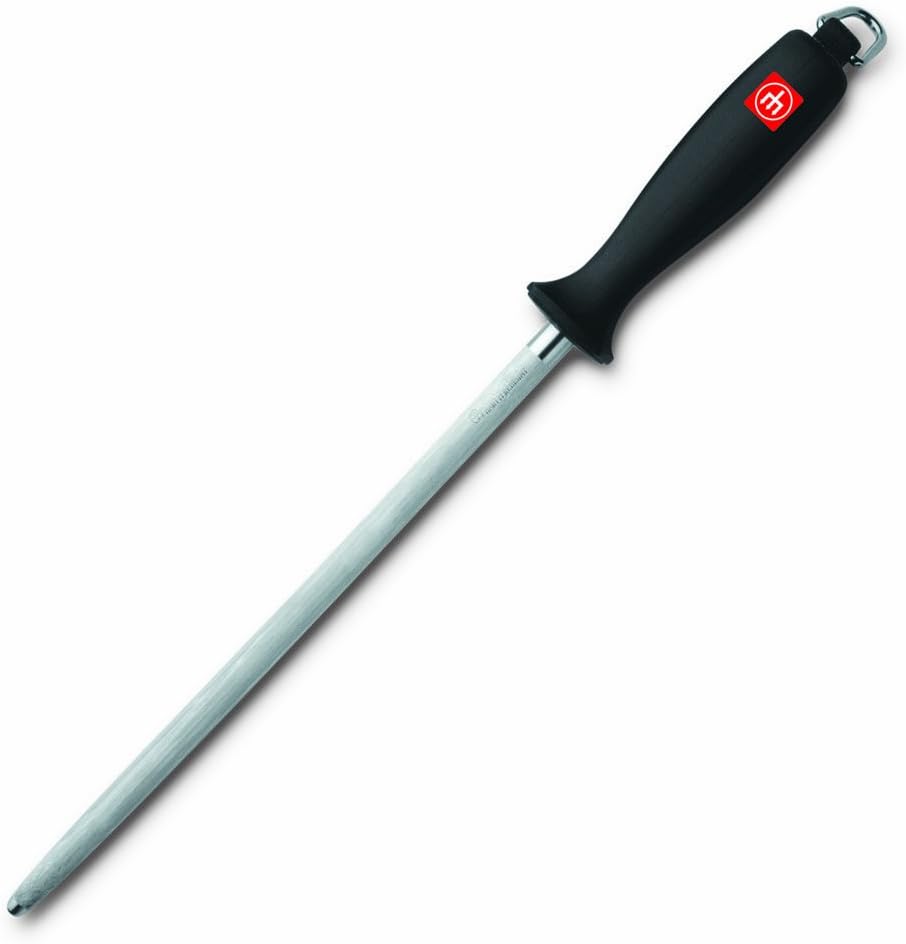
You cannot use a standard flat stone on serrations. You need a tapered diamond rod or a ceramic rod (like a Sharpmaker) to get inside the grooves of the serrations. The plain edge portion can be sharpened normally.
Are S&W knives spring assisted?
Many of them are. Look for models labeled “MAGIC Assist” or “Spring Assist.” These use a spring to deploy the blade once you manually start the motion. They are not switchblades, but they open very quickly.
What does the HRC rating mean for my S&W knife’s performance?
HRC, or Rockwell C Hardness, is a measure of a steel’s resistance to penetration. S&W knives typically test between 56-59 HRC. A lower HRC (like 55) means the blade is very tough, bending instead of chipping, but it loses a sharp edge relatively quickly. A higher HRC (like 60+) holds an edge much longer but becomes more brittle. S&W targets the sweet spot for rugged utility blades where impact resistance is prioritized over indefinite edge retention, preventing the tip from snapping off during prying or accidental drops. For most S&W users, this mid-range hardness is ideal, allowing the knife to be abused as a tool.
Can I change the pocket clip to tip-down carry on my Smith & Wesson?
Most S&W tactical folders are pre-drilled and tapped only for a tip-up, left or right-side carry configuration. Tip-down carry is less common in modern tactical knife design because tip-up carry allows for a faster, more natural “index-finger along the spine” draw. However, some special edition or older models might have multi-position hardware. The deep-carry clip on the Extreme Ops is specifically molded for a tip-up position to maximize concealment and draw speed, and attempting to modify it is not recommended as it can compromise the handle integrity.
How does the Teflon coating on the M&P blade hold up to real-world use?
The Teflon or similar Black Oxide non-reflective coating on the M&P tactical knives serves a triple purpose: corrosion resistance, light discipline, and slight friction reduction. Under hard use, like cutting through corrugated cardboard or wood, the coating will inevitably show “snail trails” or scratches. This is cosmetic and does not affect the blade’s structural integrity. In fact, many experienced users prefer a worn “battlefield” patina. To preserve the coating, avoid cutting abrasive materials like sandbags or scrap metal, and never scrub it with steel wool, which will strip the coating instantly.
What is the practical use of the “Trac-Tec” insert on the Border Guard?
Trac-Tec is a high-friction, rubberized grip insert exclusive to Smith & Wesson’s rescue and tactical lines. Unlike simple texturing, Trac-Tec is chemically bonded to the aluminum handle. Its practical benefit is amplified in “wet work” conditions. Where G10 or aluminum might become slick with sweat, water, or blood, Trac-Tec’s soft, tacky surface displaces fluids and provides a non-slip grip. It’s specifically designed for first responders wearing nitrile gloves, ensuring that the knife doesn’t pivot in the hand during emergency extrication where a slip could be fatal to the rescuer or the victim.
Is the glass breaker on S&W knives user-replaceable?
The glass breaker, typically a tungsten carbide pellet, is press-fitted or threaded into the aluminum pommel. On most Border Guard models, it is not designed for quick user replacement without tools. If it becomes damaged, it usually requires replacing the entire pommel assembly. However, because tungsten carbide is extremely hard (second only to diamond), it is very unlikely to break unless abused on concrete. The primary failure mode is the pellet being dislodged, which generally requires a vice and a punch to re-seat, a task better left to a professional if you’re not comfortable with small parts.
The Economic Philosophy of the Beater Knife
There is a profound life-cycle economics lesson embedded in the Smith & Wesson knife catalog. In the world of EDC, there exists a “safe queen”—a pristine, expensive knife that gets carefully pocketed, admired, and rarely used for fear of damage. The Smith & Wesson Extreme Ops, in contrast, is the definitive “beater knife.” Its low cost creates a psychological freedom. You are not afraid to use it to scrape a battery terminal, to dig a rock out of your tire tread, or to pry open a paint can. When the blade is dull, you sharpen it aggressively without anxiety. When the tip breaks (often due to lateral abuse, not a manufacturing defect), you either re-profile the tip on a bench grinder or, fiscally guilt-free, you buy a new one. This creates a utilitarian efficiency where the tool serves the user, not the other way around. For an auto mechanic, a Kershaw Blur might be a pristine desk ornament, while the Extreme Ops is a loyal workshop soldier, covered in grease and silicon spray. The annual cost of ownership is minuscule. If a $25 S&W knife lasts two years of brutal daily abuse, it has cost roughly 3.5 cents per day. Compare this to a $200 Benchmade that you resharpen cautiously and never loan to a co-worker; the S&W offers a more universally accessible form of reliability. It is the “Toyota Corolla” of the knife world. It might lack the luxury cachet of a sports car, but it starts every morning without fail, costs nothing to repair, and will likely survive until the doors fall off. This economic accessibility democratizes quality EDC gear, allowing students, apprentices, and low-budget adventurers to carry a reliable, life-saving tool. It shifts the focus from material status to pure function, a philosophy that is often lost in the high-end collecting community.
The Cold Weather Performance of Smith & Wesson Folding Knives
Cold weather presents a unique set of challenges for folding knives, and Smith & Wesson’s designs offer interesting lessons in thermal dynamics. Aluminum handles, like those on the Extreme Ops and Border Guard, have a high thermal conductivity. In freezing temperatures, this means the handle will quickly drop to ambient air temperature. Touching bare skin to it at -20 degrees can theoretically cause a cold burn or frostnip, making the knife uncomfortable to use without gloves. This is a trade-off for the structural rigidity aluminum offers. However, this same property can be an advantage: if you place the knife inside your coat near your body heat before use, it warms up rapidly. The G10 composite handles found on the M&P series are thermal insulators. They feel “warm” to the touch even in frigid conditions, maintaining a surface temperature that doesn’t sap heat from your fingers. This is critical for tactical operations requiring fine motor control without heavy mittens. Lubrication also changes in the cold. The standard oil used in the pivot can thicken, slowing the M.A.G.I.C. assist mechanism to a sluggish, unresponsive crawl. For winter operations, a graphite or molybdenum disulfide (dry film) lubricant is superior, as it doesn’t gel up. The blade steel itself, tempered to a moderate HRC, remains tough rather than brittle. Extremely hard “super steels” can micro-chip in extreme cold, but the 7Cr17MoV and AUS-8 steels used by S&W retain their toughness well below zero, bending under lateral stress rather than shattering. This makes the S&W a surprisingly competent cold-weather survival companion, assuming you’ve replaced the lube with a cold-weather formula and wear a glove that interfaces properly with the aggressive thumb studs.
Smith & Wesson Knives and the Marine Environment
Salt water is the mortal enemy of steel, and testing a budget knife like an S&W in a marine environment provides a harsh litmus test for its corrosion claims. The high chromium content (17%) of the 7Cr17MoV steel does provide substantial stain resistance. An S&W knife can survive a week on a saltwater fishing boat with minimal pitting, provided it is rinsed with fresh water at the end of the day. This puts it in a different league than high-carbon tool steels like D2, which will develop a surface rust patina within hours of salt spray. However, the hardware is the weak link. The Torx body screws and the pocket clip screws on S&W knives are typically not made from the same high-chromium steel as the blade. They are often black-oxide coated carbon steel, which offers only a modicum of corrosion protection. In a saltwater environment, these screws will rust first, seizing into the threaded inserts and making disassembly impossible without a penetrating catalyst and carefully applied heat. To truly marine-proof an S&W knife, a user should remove each screw, coat the threads in a high-quality marine anti-seize compound or Loctite, and replace them. The phosphor-bronze washers are naturally rust-resistant, a significant advantage over cheaper steel washers. The serrated edges are particularly valuable on a boat, acting like a saw on thick polypropylene anchor lines or nylon fishing nets. The one-hand opening, facilitated by the ambidextrous studs, is crucial when the other hand is holding a rod or bracing against a gunwale. Ultimately, while not a purpose-built marine dive knife, the Smith & Wesson Extreme Ops, with its lightweight, rust-resistant blade and quick-deploy action, is a beloved tool among budget-conscious kayakers and weekend anglers who understand the limits of its steel and fasteners.
Comparing the M.A.G.I.C. Assist to Competitor Spring Systems
The Smith & Wesson M.A.G.I.C. (Mechanical Assisted Gyrational Independent Carrier) system is a torsion-bar based assist mechanism. To understand its value, it must be compared to the rival systems from brands like Kershaw (SpeedSafe) and CRKT (Outburst). The SpeedSafe system, developed by Kershaw, uses a torsion bar that is moved to a loaded position as the user pushes the thumb stud. It creates a powerful, controlled “whoosh” as the blade deploys, and it acts as a bias toward closure, meaning the user must push through a detent to keep it closed. S&W’s M.A.G.I.C. system is very similar in operation—it is not an automatic button-push, but a manual-assist. However, the torsion springs in the M.A.G.I.C. system are tuned to a slightly higher tension, creating a more forceful kick that some users prefer for tactical use, as it more reliably punches through heavy glove layers in cold weather. Compared to CRKT’s Outburst mechanism, which uses a secondary toggle assist, the M.A.G.I.C. is simpler. Fewer parts mean fewer potential failure points. The Outburst mechanism can sometimes “short cycle” if the toggle isn’t fully engaged, failing to lock the blade completely. The M.A.G.I.C. system, being direct-drive, is less prone to this issue. However, the M.A.G.I.C. system is not shielded from debris as well as some competitors. Pocket lint can compact in the torsion spring channel, dampening the assist over time. A downside is the legal gray area; some jurisdictions interpret a strong torsion bar assist differently than a manual action. But from an engineering perspective, the M.A.G.I.C. system is a testament to S&W’s commitment to providing rapid, one-hand deployment in a package that is robust and user-serviceable, providing a gateway experience into the world of assisted opening without the price tag of a high-end automatic.
1. Smith & Wesson Border Guard (SWBG2TS)
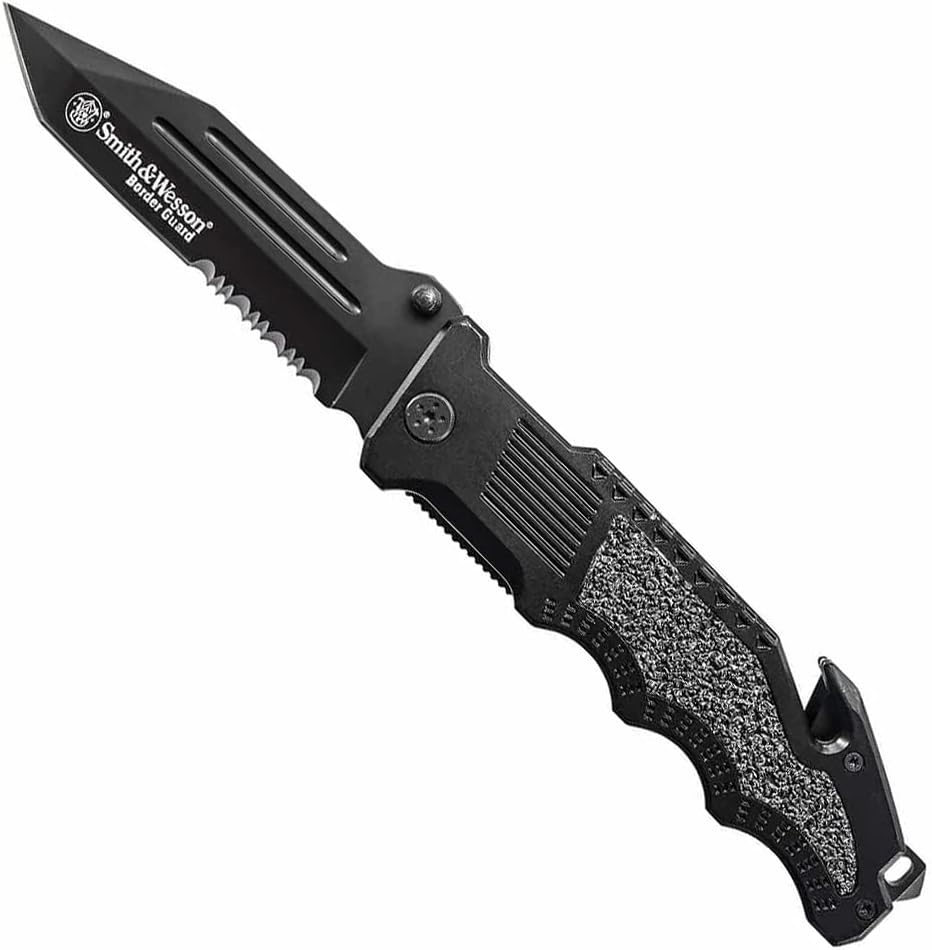
If you are a first responder, EMT, or just someone who wants a knife that feels like a tank, the Border Guard is the industry standard. This is not a small, polite gentleman’s folder. This is a massive tool designed to save lives. The moment you hold the Border Guard, you understand that it is a piece of equipment engineered for the chaos of an emergency scene. The heft communicates a readiness to breach, cut, and shatter. The deployment is authoritative; a firm push of the thumb stud launches the Tanto blade into position with a solid lockup that echoes through the aluminum frame. It’s a tool that demands respect, not just for its aggressive looks, but for the serious responsibilities it’s built to shoulder.
The Features: The handle is constructed from heavy-duty aluminum with Trac-Tec inserts (think grip tape) that ensure the knife never slips, even if your hands are covered in oil, water, or blood. The integrated glass breaker and strap cutter are essential for vehicle extraction scenarios. The glass breaker protrudes from the pommel like a steel fang, ready to shatter tempered side windows in a controlled shatter pattern. The strap cutter, positioned at the base of the handle, is a hook-shaped slot with a honed edge, capable of severing a tangled seatbelt in a single, desperate pull. Beyond these rescue features, the blade has a pronounced Tanto point, thickened to prevent breakage during prying or piercing motions. The pocket clip is a heavy-gauge steel, bolted to the frame to withstand the rigors of a duty belt, though the knife’s size makes pocket carry a statement of commitment rather than a discreet choice. Every feature on this knife asks, “What is the worst thing that could happen?” and provides a brute-force answer.
The Video Proof: Want to see this beast in action? Check out this detailed breakdown of the Border Guard’s capabilities:
- Extremely rugged build quality.
- Integrated seatbelt cutter actually works (unlike cheap knockoffs).
- Glass breaker is tungsten carbide.
- Intimidating aesthetic.
- Very heavy (not great for gym shorts).
- 7Cr17MoV steel needs frequent sharpening.
2. Smith & Wesson Extreme Ops (SWA24S)
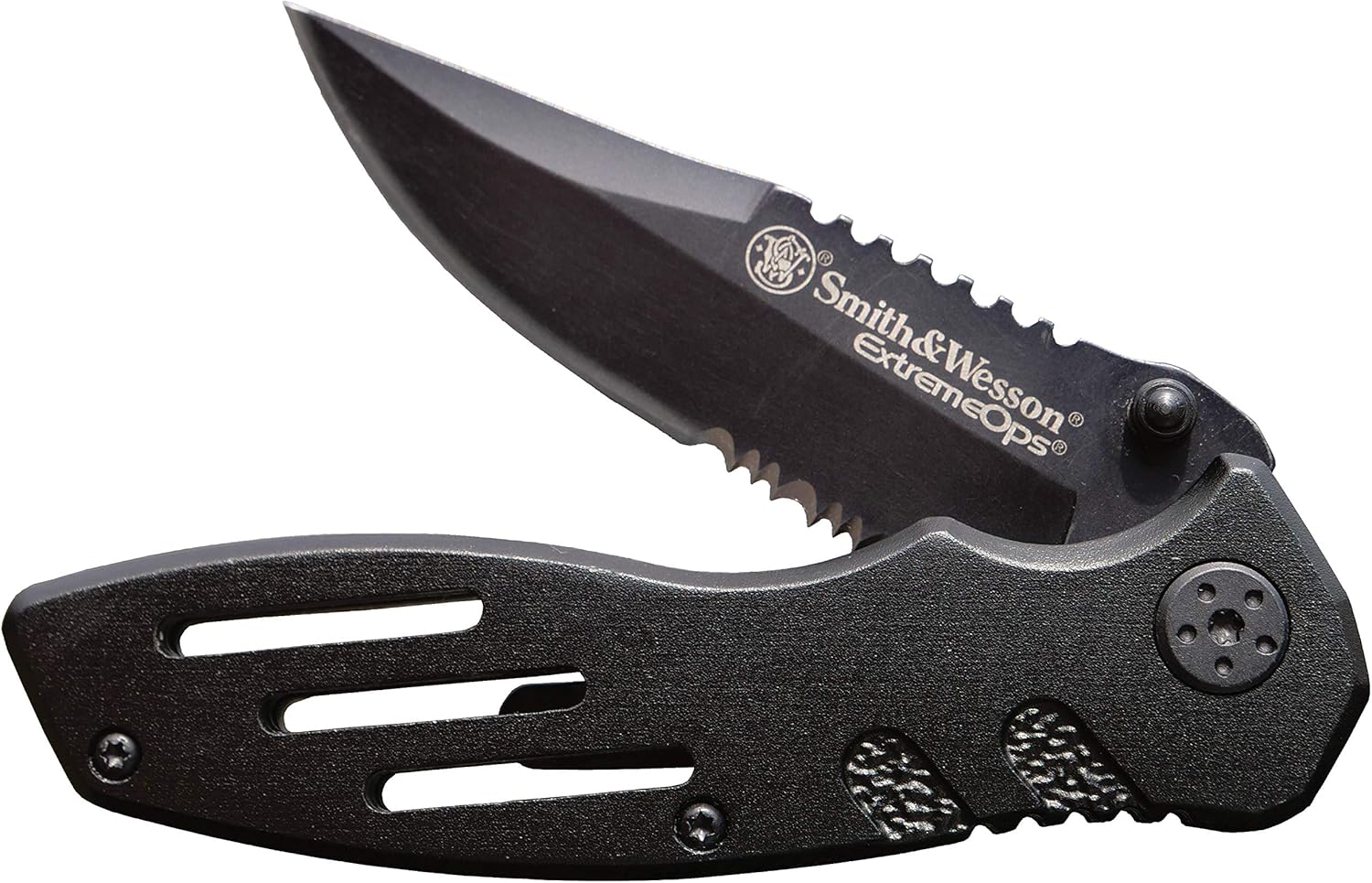
The Extreme Ops series is likely one of the best-selling knives on Amazon, and for good reason. It sits in that “impulse buy” price range, yet it delivers performance that rivals knives double its cost. This is the definition of a “beater knife,” a tool that absorbs abuse and keeps functioning. Its reputation was built not on the showroom floor of a gun shop, but in the trenches of Amazon reviews where contractors, warehouse workers, and outdoor enthusiasts collectively realized they had stumbled upon an unbeatable value proposition. The knife is not precious, and that is its greatest asset. It’s the knife you lend to a friend without a second thought, the knife you use to cut dirty landscaping fabric, and the knife that, somehow, continues to open smoothly and lock tightly long after you expected it to fail. This is the gateway knife that converts people into understanding that practical EDC doesn’t need a high price tag.
Unlike the Border Guard, the Extreme Ops is slim and lightweight. It disappears in the pocket. The blade features aggressive serrations near the handle, making it excellent for cutting through fibrous materials like rope or cardboard. The scalloped serrations are ground with a wicked edge, functioning like a set of micro-saws that bite into plastic strapping and nylon cordage without sliding off. The drop point blade shape is the Swiss Army knife of profiles; it has enough belly for clean slicing and a fine enough tip for detail work. The black oxide coating on the blade and handle, while prone to showing wear and tear, creates a uniform, non-reflective silhouette that appeals to the tactical minimalist. The thumb stud is offset and textured perfectly for a positive purchase, even with wet or oily fingers. There is a rhythm to using the Extreme Ops—a quick flick of the thumb, a confident click of the liner lock, the slicing task, and a smooth disengagement with the thumb pressing the lock bar back. It’s a kinetic relationship that becomes second nature, making the knife feel like an extension of the hand.
In terms of market positioning, this knife competes directly with brands found in the Blue Ridge Knives catalog. It’s mass-produced, efficient, and widely available. The economics of scale mean that you get a level of fit and finish that would have cost significantly more a decade ago. The Extreme Ops is a triumphant example of modern manufacturing efficiency applied to a timeless design. It democratizes a quality folding knife, putting a reliable, sharp tool in the hands of anyone with a spare twenty-dollar bill. It’s a knife that champions utility over luxury, function over fashion, and it has earned its legendary status in the EDC community through pure, relentless dependability.
- Incredibly affordable.
- Lightweight aluminum handle.
- Serrations are sharp out of the box.
- Liner lock is thin.
- Finish on the blade scratches easily.
Steel Analysis: What is 7Cr17MoV?
To write an honest Smith & Wesson knife review, we have to talk about metallurgy. Most S&W knives use 7Cr17MoV high carbon stainless steel.
In the knife community, this is considered a “budget steel.” It is essentially a modified version of 440A with added Vanadium for toughness. Here is the reality of what that means for you:
- Corrosion Resistance: Excellent. These knives rarely rust, even if you leave them in a damp tackle box.
- Sharpening: Very easy. You can bring these back to a razor edge with a simple pull-through sharpener.
- Edge Retention: Low. If you cut cardboard all day, you will need to sharpen it at night.
If you are looking for a knife that holds an edge for months, you need to look at premium options like the Kershaw Blur in S30V steel. S30V is a “super steel” that outperforms the 7Cr17MoV found in S&W knives by a wide margin, but it also costs significantly more. It’s a trade-off between price and performance.
The true value of 7Cr17MoV is revealed in its heat treatment protocol. Smith & Wesson’s OEM partners utilize a rapid-cycle vacuum hardening furnace, bringing the blade to an austenitizing temperature near 1060°C, followed by a cryogenic quench using sub-zero nitrogen to stabilize the retained austenite. This modern process ensures a fine grain structure, which maximizes the toughness promised by the vanadium addition. The result is a working knife that prioritizes “field sharpenability.” Imagine a hunting trip: an S30V blade dulls slowly, but once it’s blunt, restoring a working edge with a pocket stone is an hour-long labor of love. A 7Cr17MoV blade dulls faster, but a dozen strokes on a creek rock or a ceramic mug bottom restores a shaving edge in 60 seconds. This dynamic shifts the advantage to the budget steel in prolonged wilderness scenarios where heavy sharpening gear is not available. It is not a lazy steel; it is a steel for the working man who is not afraid to stop and hone his blade during a coffee break.
The “Tactical” Aesthetic: Function or Fashion?
Smith & Wesson knives are unapologetically “tactical.” They feature black oxide coatings, aggressive jimping, and often Tanto blade shapes. For law enforcement and military personnel, these aren’t just fashion statements—they are functional requirements. The black coating reduces glare, and the Tanto tip provides immense strength for piercing tasks. The design language is derived from close-quarters combat feedback, where a non-reflective finish prevents a glint from giving away a position during night operations, and the reinforced Tanto tip can penetrate heavy fabric and leather without deforming. The jimping on the spine and the finger choil is a direct response to the reality that hands sweat and bleed, and losing a millimeter of grip on a knife can mean losing the tool entirely in a critical moment. However, for the average office worker, this might be overkill. If you want something more “fantasy” styled, you might look at M-Tech’s lineup, but S&W keeps their designs grounded in reality. They look like tools meant to be used, not just displayed. This aesthetic has a psychological dimension as well. A civilian carrying a black, aggressively styled Tanto sends a different social signal than someone carrying a classic wood-handled slip joint. It is a visual statement of preparedness and mindset. While some critique this as “tacticool,” the functional benefits for its intended users are undeniable. The aesthetics are a direct translation of the knife’s functional DNA, making the tool an honest expression of its purpose.
Who Manufactures Smith & Wesson Knives?
Smith & Wesson does not forge these blades in the same factory as their revolvers. For years, the manufacturing was handled by Taylor Brands, and subsequently BTI Tools. This licensing agreement allows S&W to focus on firearms while experts in cutlery handle the knives.
This is a common practice in the industry. The benefit to you is that the quality control is managed by cutlery specialists who understand heat treatment and lock geometry, ensuring that despite the low price, the knife won’t close on your fingers. Taylor Brands and BTI Tools are giants in the outsourced sporting goods world. They maintain a presence in multiple factories in Yangjiang, China, and Taichung, Taiwan, and have dedicated quality assurance teams that perform Rockwell testing, lock-torque testing, and salt-spray corrosion tests on every production batch. The licensing arrangement means the Smith & Wesson brand is not just a sticker; it comes with a duty cycle of specifications that must be met. The OEMs must adhere to the blueprint, whether it’s the precise angle of the liner lock or the weave of the Trac-Tec inserts. This fusion of American design and specification with high-efficiency Asian manufacturing is what allows a Smith & Wesson knife to sell for $25 instead of $125. You are effectively getting a knife whose design brief was written by an American firearms legend, iterated by cutlery engineers, and produced at scale. The supply chain is part of the design, making tactical EDC gear accessible to a demographic that needs it most.
Buying Guide: Choosing Your S&W Blade
With hundreds of models, how do you pick? Here is a simple guide:
1. The Lock Mechanism
Most S&W knives are Liner Locks. This keeps them slim and light. Some of the “Assist” models (labeled M.A.G.I.C. assist) use a spring to help deploy the blade. If you live in an area with strict knife laws, check if assisted opening is legal before buying. The liner lock engagement should be checked visually: the lock bar should travel across roughly 30-50% of the blade tang. Too little (less than 20%) and it could fail under spine-whacks; too much (over 80%) and it might stick, making disengagement difficult. The best S&W knives have a lock that breaks in over time, settling into a deep, secure position.
2. The Blade Shape
Drop Point: Best for general utility (Extreme Ops).
Tanto: Best for piercing and tactical use (Border Guard).
Serrated vs. Plain: Get serrations if you cut a lot of rope or seatbelts. Get a plain edge for clean slices on boxes or food.
The Spear Point on the M&P series is the hybrid warrior, offering a strong center-line point for thrusting and a curved belly for slashing. The handle ergonomics should also match your primary carry style. A deep-carry clip is for discreet urban EDC; a large, textured handle with a lanyard hole is for overt duty use. The choice between a Tanto and a Drop Point is ultimately a choice between a specialized piercing tool and a general-purpose slicer. Understanding your actual daily cutting tasks—not your fantasy ones—will guide you to the right Smith & Wesson knife.
The Psychology of Carry: Smith & Wesson as a Confidence Tool
Beyond the sharp edge and the solid lock, a Smith & Wesson knife serves a psychological function as a “confidence tool.” In a chaotic world, the weight of a tool in the pocket that can solve physical problems provides a grounding effect. It is a symbol of self-reliance. The tactile act of flicking open a folder, completing a cutting task, and closing it again is a ritual of competence. For many, carrying a S&W is not about preparing for a knife fight; it is about being the person who can open a jammed package, cut a seatbelt, or prepare kindling at a moment’s notice. The brand’s deep connection to law enforcement and military history amplifies this mental anchor, projecting an aura of control and preparedness. This “talismanic” property of EDC gear is well-documented in sociological studies of preparedness culture. The Extreme Ops, in particular, is an accessible entry point into this mindset, allowing individuals to take a small but tangible step toward proactive capability in their daily lives.
Final Verdict
In conclusion, our Smith & Wesson knife review finds that these tools occupy a vital space in the market. They are the working man’s tactical knife. They aren’t trying to impress the collectors at a knife show; they are trying to get the job done in the back of an ambulance, on a construction site, or on a camping trip. They are the unsung heroes of the gear world, quietly doing the heavy lifting without the glamour of a custom maker’s mark. The 7Cr17MoV steel, easy to sharpen and surprisingly tough, is the engine that drives their value. The ergonomics, from the Trac-Tec inserts to the deep-carry clips, speak to a design team that listens to real-world feedback from police, EMS, and military personnel. Whether you choose the overwhelming force of the Border Guard, the invisible utility of the Extreme Ops, or the compact backup readiness of the Benji, you are getting a tool that punches far above its weight class in terms of price-to-performance. The assembly in overseas factories under the watchful eye of BTI Tools ensures a consistency that makes these knives safe and reliable, critical factors that cannot be compromised at any price point.
If you have the budget and want premium materials, look toward Kershaw or Spyderco. But if you have $25 and want a tool that won’t let you down, Smith & Wesson is the way to go. The modern S&W knife is a triumph of industrial design for the masses—a durable, aggressive, and capable everyday companion that proves you don’t need to spend a fortune to carry a piece of legendary American heritage in your pocket. The final verdict isn’t about comparing them to a $200 Benchmade; it’s about recognizing them for what they are: the undisputed champions of the affordable tactical cutlery market, tools built not for the display case, but for the glovebox, the duty belt, and the pocket of the working person.