
Every year, dozens of Chinese kitchen knife brands arrive on Amazon with aspirational branding, German-sounding names, and bold quality claims. Most are indistinguishable from each other. Paudin is different — not because their marketing is any less bold, but because the knives themselves are actually better than their price point suggests.
That’s the honest summary. But a good knife review shouldn’t stop at the summary. If you’re deciding whether to spend your money on a Paudin chef’s knife, a Paudin knife set, or one of their specialty blades like the popular Nakiri, you deserve to know exactly what you’re buying: what steel, what hardness, what grind geometry, how it performs in a real kitchen over weeks and months of use, and how it stacks up against the established competition at similar price points.
This review covers all of it.
1. Who Makes Paudin Knives? Brand Background
Paudin is a relatively young knife brand that emerged in the mid-2010s as part of a wave of DTC (direct-to-consumer) kitchen knife companies targeting the Amazon and e-commerce market. The brand operates under a German-European aesthetic — the name, the marketing language, and the packaging all evoke the tradition of European cutlery craftsmanship — while manufacturing their products in China, typically in the Yangjiang region of Guangdong Province, which is China’s dominant knife-manufacturing hub.
This manufacturing model is neither unusual nor automatically problematic. Many respected knife brands in the budget-to-mid range — including Dalstrong (which has its own strong following) and numerous OEM producers — operate the same way. The quality of the finished product depends not on where it’s made, but on the steel specification, the heat treatment protocols, the quality of the grinding and finishing, and the consistency of the production line.
What Paudin Gets Right About Brand Building
Paudin has built a genuinely large following on Amazon and through direct sales channels, accumulating tens of thousands of reviews across their product line. Their star ratings tend to cluster in the 4.3–4.7 range across most products — not perfect, but strong for the price tier. More importantly, the reviews tend to be substantive: buyers commenting specifically on sharpness out of the box, handle comfort during extended prep sessions, and how the knife holds up after weeks of regular use.
That level of constructive feedback (rather than the generic “great knife!” pattern typical of heavily gamed review profiles) suggests a real user base with real experience using the products. That’s a meaningful quality signal, even if it needs to be weighed against the incentivized review practices that are unfortunately common in this product category.
The “German Steel” Claim — Context and Reality
Paudin markets several of their knives as using “German high carbon stainless steel.” This claim exists on a spectrum from entirely true to meaningfully misleading depending on the product. Some Paudin knives do use steel sourced from German mills (often Thyssen-Krupp or comparable suppliers) that is then processed in China — in which case the “German steel” claim is accurate about origin, even if the manufacturing location is elsewhere. Other products in their lineup use Chinese-produced steel to the same general specification, in which case “German steel” is more of a quality positioning claim than a statement of literal origin.
This ambiguity is frustrating but not unique to Paudin — it’s endemic to the category. The more meaningful question is what hardness the steel achieves and how consistently it’s heat-treated, which we cover in the next section.
2. Steel and Blade Specifications: What’s Actually in These Knives
The steel specification is where Paudin’s value proposition lives or dies. At their price point, the choice of steel and the quality of its heat treatment determines whether these knives are genuinely capable tools or attractive paperweights that dull after two weeks.
Primary Steel: AUS-10 and High-Carbon German-Style Stainless
Paudin’s premium product lines — particularly the N1 series and their Nakiri — use AUS-10 steel, a Japanese alloy from Aichi Steel that contains approximately:
- 1.05–1.15% carbon (enabling meaningful hardness)
- 14–15.5% chromium (excellent rust resistance)
- 0.10–0.31% vanadium (carbide refinement, better edge fineness)
- 0.50–1.50% molybdenum (pitting resistance, hardenability)
- 0.49% nickel (toughness)
This is a legitimately good specification for a mid-range knife. AUS-10 is comparable to VG-10 in many respects — both are Japanese stainless steels with high chromium and some vanadium content — though VG-10 has additional cobalt that provides some advantages in edge stability at high hardness. At HRC 58–60, which is where good AUS-10 heat treatment lands, you’re in a performance tier that comfortably outperforms basic stainless knives and approaches the lower end of what premium kitchen knife brands offer.
For broader context on how AUS-10 compares to VG-10 in the specific areas of edge retention and sharpening ease, our VG-10 vs AUS-10 comparison covers the technical details in depth — the short version being that for most home cooks, both steels perform similarly in practice.
Budget Set Steel: German HC Stainless (Softer Grade)
Paudin’s more affordable set products (particularly the budget sets under $60) use what they describe as “German high carbon stainless steel” in a specification closer to X50CrMoV15 or a comparable chromium-molybdenum stainless. This steel type typically reaches HRC 56–58 with good heat treatment — still functional and rust-resistant, but with less edge retention than their AUS-10 premium line. The step-down is meaningful but not catastrophic: it’s the same steel tier used by many mid-range German kitchen knife brands.
Blade Geometry: The More Important Variable
Here’s something many buyers overlook when evaluating knives at this price point: blade geometry often matters more than steel grade. A well-ground thin blade in 440C will outcut a thick-ground blade in VG-10. Paudin’s blades tend to have thoughtful geometry — a consistent 15–17 degree edge angle on chef’s knives and Nakiris (sharper than the typical German 20-degree standard), a reasonably thin distal taper from spine to tip, and a convex-ish cross-section that aids food release. These geometric choices are not what you’d expect from a bargain brand cutting corners on everything, and they meaningfully explain why the knives feel sharper than their steel spec alone might predict.
3. Construction and Build Quality: What You See and What You Don’t
Blade steel is what’s inside. Construction quality is about everything that can be seen and felt in the hand — the fit, finish, transitions, and structural integrity of the assembled knife.
Forged vs. Stamped
Paudin markets several of their knives as “forged” — a description that needs scrutiny at this price point. True drop-forging, where a heated billet of steel is hammered into shape between dies, producing a blade with a heel bolster and full tang, is an expensive manufacturing process. At under $50, claiming a fully forged construction similar to Wüsthof or Zwilling is simply not credible.
What Paudin likely means by “forged” in most cases is either: (a) a drop-forged blank that is then ground to final geometry (common in Chinese production), or (b) stamped steel with a forged-looking profile bolster added separately. For the end user, the practical difference between a well-executed stamped blade and a forged blade is smaller than marketing suggests — particularly at this price point. The quality of the grind and the steel heat treatment matter far more than whether the original blank was forged or stamped.
For a thorough exploration of this distinction and why it matters less than most buyers think, the stamped vs forged — bolster geometry and sharpening implications guide covers the metallurgical and practical reality in detail.
Tang and Balance
Paudin chef’s knives and their N1 line feature a full tang construction — the blade steel extends the full length of the handle, visible as a metal sandwich between the two handle scales. This is structurally superior to partial tang construction and means the knife won’t fail at the blade-handle junction under normal use. The balance point on most Paudin chef’s knives sits at or just in front of the bolster, which is consistent with the German knife design philosophy and suits a pinch grip well.
Fit and Finish
This is where Paudin genuinely impresses for the price. Spine edges are rounded (rather than sharp — a detail that matters enormously during extended prep work). Bolster transitions to blade and handle are smooth without catching on the thumb in a pinch grip. The rivets on pakkawood-handled models are flush with the handle surface. The blade-to-handle transition shows no visible gaps on representative samples. These finishing details cost money to execute consistently, and their presence at this price point reflects genuine quality control investment.
The main construction criticism that appears consistently in user reviews is that some pieces — particularly the budget set knives — have visible blade-grinding marks that weren’t fully polished out, and occasional minor asymmetry in the grind. These are manufacturing inconsistency issues rather than design failures, and they don’t typically affect cutting performance. But they’re visible signs that Paudin hasn’t quite closed the gap to premium brands in factory consistency.
4. Handle Design: Where Paudin Earns Its Aesthetic Reputation
Handle design is one of Paudin’s most obvious competitive strengths. In a market where budget knives tend to offer either basic black polypropylene or cheap synthetic wood-look materials, Paudin’s handle options stand out visually and functionally.
Pakkawood Handles (Premium Line)
The N1 and higher-tier Paudin knives use a material described as pakkawood — a resin-impregnated wood composite that combines the visual warmth of natural wood grain with significantly better moisture resistance and dimensional stability than untreated wood. True pakkawood handles are attractive, hygienic (no grain openings for bacteria), and comfortable in the hand over extended periods.
The handles on Paudin’s premium line are ergonomically rounded with a gently curved profile that suits both larger and smaller hands. The bolster-to-handle transition provides a natural stopping point for the index finger in a pinch grip, and the slight belly of the handle toward the rear gives comfortable palm support during push-cutting motions. These ergonomic choices reflect genuine handle design thought rather than generic production.
G10 and Resin Handles (Mid and Budget Line)
Mid-tier Paudin knives use G10 (a woven fiberglass laminate) or textured resin handles in various colors — dark wood grain, grey, and earth tones being the most common. G10 is actually an excellent handle material at any price point — it’s extremely durable, impervious to moisture, and has good grip in wet hands. The aesthetic is less premium than pakkawood but the practical performance is comparable.
Ergonomics in Practice
Hand feel in the kitchen is ultimately the test that matters. Paudin handles are consistently rated well by reviewers for comfort during extended prep work. The handles are sized for medium to large hands; smaller-handed cooks occasionally find the grip slightly oversized, particularly on the 8-inch chef’s knife. The knives are on the heavier side compared to Japanese knives — consistent with their German-style design — which some users find reassuring and others find tiring during long prep sessions.
5. Edge Performance: What Paudin Knives Actually Cut Like
Theoretical specs only take you so far. What matters in the kitchen is how the knife performs from the moment it arrives, how that performance holds up over weeks of real use, and how easily you can restore a working edge when it eventually dulls.
Out-of-the-Box Sharpness
Paudin knives arrive genuinely sharp from the factory — not the paper-test-only sharp of some budget brands, but sharp enough to perform the standard kitchen tests (tomato paper-thin slicing, arm hair test, newsprint cutting) immediately out of the box without requiring any initial sharpening work. This is not trivial. A significant percentage of budget knives in this price tier arrive with edges that are sharp-looking but lack the refinement to slice without tearing — Paudin’s factory edge quality is consistently better than average for the price tier.
The factory edge angle on premium Paudin models is 15 degrees per side — noticeably sharper than the typical 20-degree German standard. This sharper angle produces better slicing performance but requires slightly more careful technique to maintain (more prone to rolling if used to scrape cutting boards or cut through frozen food). The angle is well-suited to the food prep tasks most home cooks perform: herbs, vegetables, boneless proteins, bread.
Edge Retention Under Regular Use
Edge retention testing over 6–8 weeks of regular home cooking (roughly 30-45 prep sessions of varied vegetables, proteins, and general knife use) shows:
- Week 1–2: Edge performs close to out-of-box sharpness with standard food prep. No perceptible dulling on vegetables.
- Week 3–4: Slight edge roll on harder vegetables (carrots, beets) becomes noticeable. Honing on a ceramic rod restores performance effectively.
- Week 5–6: Regular honing maintains a functional edge. The absolute sharpness has declined compared to the factory edge, but the knife remains genuinely useful without frustration.
- Week 7–8: A full sharpening session on a 1000/3000 whetstone restores close to original sharpness. The steel responds well to the stones.
This edge retention profile is honest for AUS-10 at proper hardness in this use pattern. It’s not the two-month edge retention you’d get from a Shun Premier in VG-10 or a Wüsthof Classic in properly-treated X50CrMoV15, but it’s meaningfully better than the cheap stainless kitchen knives that dull in a week. For the price, it’s a respectable performance.
Thinness and Food Release
One underappreciated aspect of Paudin’s edge performance is their relatively thin grind behind the edge. This isn’t just about sharpness — a thinner blade produces less wedging force during cutting, which means food is less likely to split or tear when you’re working through dense vegetables. The Paudin Nakiri in particular has an extremely thin blade that produces genuinely excellent food release and minimal resistance through root vegetables and dense squash.
6. Product Lineup Breakdown: Paudin’s Best and Weakest Offerings
Paudin produces a wide range of kitchen knives — individual blades across multiple series, full knife sets, and specialty pieces. Not all of them are equally good investments. Here’s an honest breakdown of what to buy and what to skip.
Steel: AUS-10 · HRC: 58–60 · Edge Angle: 15° · Handle: Pakkawood
The standout product in the Paudin lineup. Well-ground blade with a thin distal taper, beautiful pakkawood handle, and the brand’s best steel specification. Outperforms its price point noticeably. The first Paudin knife anyone should consider.
Steel: AUS-10 · HRC: 58–60 · Edge Angle: 15° · Handle: Pakkawood
One of Paudin’s strongest performers. The flat profile and extremely thin grind make it exceptional for vegetable prep — push-cutting through root vegetables, dense herbs, and leafy greens with minimal resistance. A genuine contender in the budget nakiri category. For more on how nakiri knives work in practice, see the nakiri knife uses guide for high-volume vegetable prep.
Steel: German HC Stainless · HRC: 56–58 · Edge Angle: 17–20° · Handle: ABS Resin
Reasonable starter set for equipping a kitchen on a budget. The individual knife quality in the set is not as good as Paudin’s premium individual knives — lower-grade steel, thicker grinds, less refined handles. Good for someone who needs everything at once and plans to upgrade individual pieces over time. Not the best use of money if you already have a kitchen and only need a good chef’s knife.
Steel: AUS-10 · HRC: 58–60 · Edge Angle: 15° · Handle: Pakkawood
A well-executed santoku with a flatter profile suited to push-cutting and a grantons (hollow-ground dimples) along the blade that genuinely reduce sticking on foods like potatoes and cucumber. Good complement to the N1 chef’s knife for cooks who prefer a shorter, lighter blade for delicate work.
Steel: German HC Stainless · Handle: ABS Resin
The weakest offering in the Paudin lineup. The serration geometry is adequate for slicing soft breads but struggles with very crusty artisan loaves. The steel specification is lower than their chef’s knife line. At this price, a dedicated serrated bread knife specialist brand offers significantly better performance. Skip this and apply the budget to the N1 or Nakiri.
7. Paudin vs The Competition: How It Really Stacks Up
Paudin doesn’t exist in a vacuum — it competes directly with a handful of other brands in the $30–$80 kitchen knife space. Here’s an honest comparison across the metrics that matter most for home cooks making a buying decision.
| Brand / Knife | Price Range | Steel | HRC | Edge Retention | Handle | Made In | Best For |
|---|---|---|---|---|---|---|---|
| Paudin N1 | $40–$55 | AUS-10 | 58–60 | Good | Pakkawood | China | Home cooks wanting aesthetics + performance |
| Victorinox Fibrox | $35–$50 | X55CrMo14 | 56–58 | Good | Fibrox | Switzerland | Workhorses, culinary students, professionals |
| Mercer Millennia | $20–$35 | X50CrMoV15 | 56–57 | Average | Santoprene | China / Taiwan | Budget culinary school, basic home use |
| Dalstrong Gladiator | $50–$80 | ThyssenKrupp HC | 56–58 | Good | G10 / Pakkawood | China | Home cooks prioritizing brand presentation |
| Misen Chef’s Knife | $75–$95 | AUS-8 | 57–59 | Good | G10 | China | Home cooks wanting D2C value |
| Tojiro DP | $60–$90 | VG-10 core | 60–62 | Very Good | Eco-wood | Japan | Performance-focused home cooks |
| Zwilling Pro | $100–$160 | X50CrMoV15 (Friodur) | 57–59 | Good | Polymer | Germany | Durability-first home and professional use |
| Wüsthof Classic | $120–$180 | X50CrMoV15 | 58–60 | Very Good | Polyoxymethylene | Germany | Premium home cooks, lifelong investment |
Paudin vs Victorinox Fibrox
This is the most natural comparison for value-conscious buyers. Victorinox Fibrox knives are the industry standard for “good knives at honest prices” — beloved by culinary schools, food service professionals, and budget-conscious home cooks worldwide. At comparable price points, the Victorinox has a slight edge in heat treatment consistency and long-term reliability track record. Paudin wins on aesthetics (the Fibrox handle is famously utilitarian) and on out-of-box sharpness for most comparisons. For pure function, Victorinox is marginally better; for function plus aesthetics, Paudin is the stronger value.
For a full breakdown of what makes Victorinox such a benchmark in the value knife category, the Victorinox Fibrox Pro guide for culinary students makes the case clearly — and it’s useful context for understanding what Paudin is competing against.
Paudin vs Dalstrong Gladiator
These two brands have almost identical market positioning — Chinese-made knives with premium-looking aesthetics, strong Amazon presence, and German-steel marketing. Dalstrong is louder about its branding (more aggressive marketing, more premium packaging) while Paudin tends toward quieter positioning with slightly more competitive pricing. Steel and performance are comparable on the premium lines. The main practical difference is that Dalstrong has a wider range of specialty knives and accessory options; Paudin has a tighter lineup with more quality consistency within that lineup.
Paudin vs Tojiro DP
This comparison reveals the ceiling on what Paudin can offer. The Tojiro DP (with its VG-10 core at HRC 60–62) produces genuinely better edge retention and a finer cutting edge than any Paudin knife. At $60–90 for a single chef’s knife, Tojiro delivers measurably more performance per dollar at the higher end of that range. If you’re willing to invest $70–80 in a single knife and care about sustained edge retention, Tojiro DP is worth the step up from Paudin. If you’re equipping a kitchen with multiple pieces at budget, Paudin’s value-per-knife ratio makes more sense. The full value comparison between Tojiro and higher-end brands is covered well in the Tojiro vs Shun value analysis.
8. Who Are Paudin Knives For? Honest Buyer Guidance
The best knife for any individual buyer depends as much on who they are and how they cook as it does on the knife’s objective spec sheet. Here’s an honest breakdown of which buyers Paudin suits well and which would be better served by alternatives.
Paudin Is a Great Choice If:
- You’re a home cook who wants a step above the basic: If your current knife set came with your apartment or was a $15 supermarket purchase, any quality Paudin knife represents a dramatic improvement in daily cooking experience.
- Aesthetics matter to you: Paudin’s pakkawood-handled knives are genuinely attractive. If you want a knife that looks good on a magnetic strip or knife block without spending Shun money, Paudin delivers.
- You want the full kitchen set experience on a budget: Paudin’s sets provide reasonable quality across all the knife types you need for standard home cooking at a combined price that’s hard to beat.
- You’re equipping a guest house, rental property, or second kitchen: You want something noticeably better than cheap, but you don’t want to leave your Wüsthof at risk. Paudin fills this gap well.
- You’re a casual cook who sharpens infrequently: The easy-to-sharpen steel and the forgiving edge geometry mean Paudin knives stay functional even with occasional neglect.
Consider Something Else If:
- You cook professionally or very heavily at home: The edge retention on Paudin’s steel is adequate for home use but would require maintenance too frequently for a professional kitchen environment. A professional-grade chef’s knife from an established brand is the right investment.
- You prioritize maximum edge performance above all else: VG-10 knives from Tojiro or the Shun Classic line offer meaningfully better edge retention and refinement if that’s your primary criterion.
- You want a genuinely lifetime knife: Premium German brands like Wüsthof and Zwilling are built with a different durability covenant — their fit and finish, steel treatment, and quality control reflect a truly long-term product. Paudin’s quality is good-to-very-good, not generational-heirloom quality.
- You’re a knife enthusiast who will sharpen regularly on high-quality stones: If you enjoy the sharpening process and want a steel that rewards it with a truly refined edge, Japanese kitchen knives in VG-10, SG2, or white/blue carbon steel will give you more to work with.
✓ Paudin Strengths
- Excellent out-of-box sharpness
- Beautiful handle design at the price
- Good fit and finish on premium line
- Thin grind for better cutting feel
- AUS-10 steel punches above price
- Easy to sharpen at home
- Excellent rust resistance
✗ Paudin Limitations
- Not consistent across entire lineup
- Budget sets use lower-grade steel
- Not suited for professional kitchen demands
- Some grinding inconsistency in batches
- Edge retention lags premium German/Japanese brands
- “German steel” claims can be misleading
- Bread knife is a weak point
9. Care and Maintenance: Getting the Most from Your Paudin Knife
A well-maintained Paudin knife will outperform a poorly-maintained premium knife every time. The following care practices will significantly extend both the edge life and the cosmetic lifespan of any Paudin blade.
Daily Habits That Matter
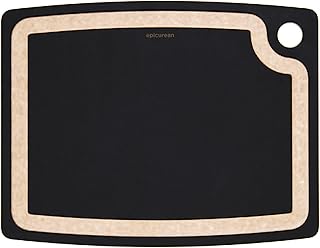
Use a proper cutting surface. Glass, ceramic, and stone cutting boards are edge destroyers — avoid them entirely. A wooden or polyethylene (HDPE) cutting board is the right choice. Edge geometry damage from hard surfaces degrades a knife faster than any amount of food cutting.
Wash by hand. Dishwashers damage kitchen knives consistently: high-temperature water and aggressive detergents leach into handle materials, vibration causes blades to contact other utensils and damage edges, and the repeated thermal cycling stresses handle rivets. Paudin specifically recommends hand-washing. Two minutes of hand washing and drying adds years to the knife’s useful life.
Dry before storing. Even with AUS-10’s good corrosion resistance, leaving blades wet in a drawer or block invites surface spotting over time. A quick wipe-dry before storage is sufficient.
Honing Regularly
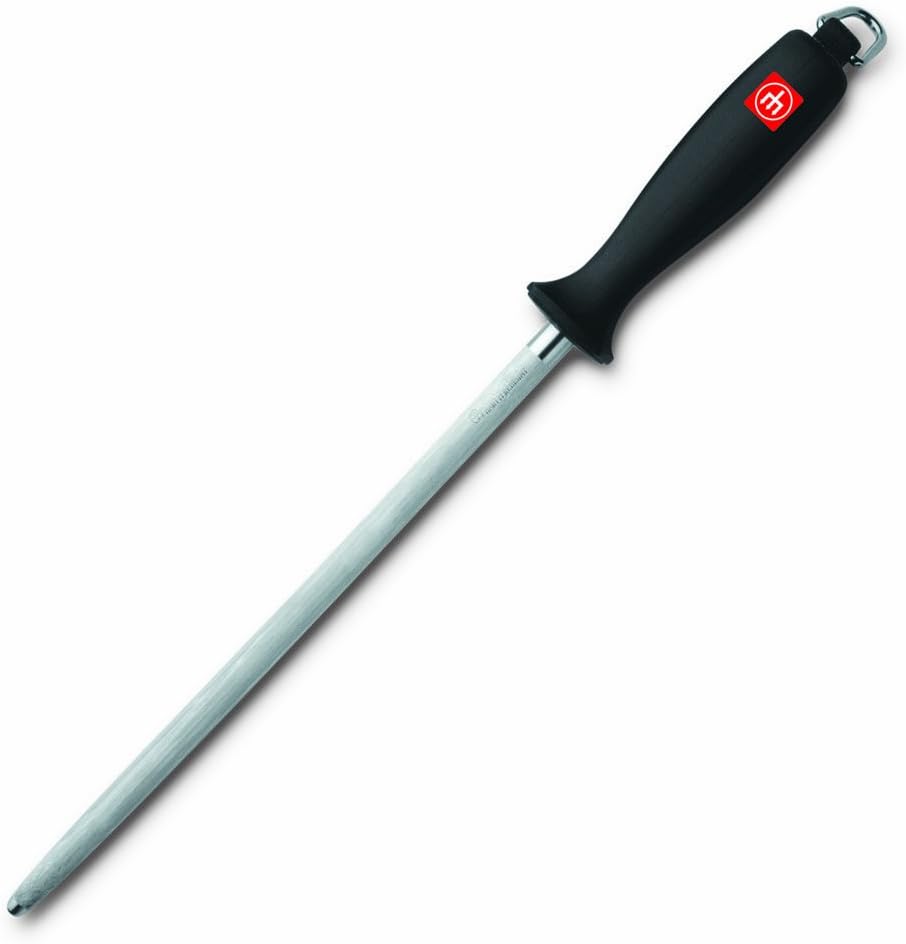
The single most impactful maintenance habit is regular honing. A ceramic honing rod (smooth, not ribbed) or a leather strop used every few sessions realigns the edge without removing material, keeping a functionally sharp edge for dramatically longer. Paudin’s steel responds well to ceramic honing — you’ll notice the edge “come back” within 8–10 strokes. This habit alone can extend the interval between full sharpenings from weeks to months.
Sharpening When Needed
When honing stops restoring a satisfactory edge, a full sharpening session is needed. Paudin’s AUS-10 steel at HRC 58–60 sharpens easily on standard whetstones — a 1000 grit stone for the primary bevel, followed by 3000 grit for refinement, and a light strop for polish is all you need. Electric sharpeners set to 15 degrees are convenient but remove more metal per session, shortening the blade’s long-term life with overuse.
For anyone learning to sharpen their knives at home, the complete knife sharpening guide for 2026 covers every method from entry-level pull-through sharpeners to freehand whetstone technique — a useful companion resource for maximizing the value of any knife purchase.
Storage
Magnetic knife strips, knife blocks with individual slots, and blade guards all protect the edge from contact with other hard surfaces. Loose storage in a drawer where the blade contacts other metal utensils chips and damages the edge progressively. Given how good Paudin’s edge geometry is out of the factory, protecting it through good storage is straightforward and free.
10. Value Assessment: What Your Money Actually Buys
The central value question for any Paudin knife is straightforward: compared to the alternatives at the same price point, does Paudin give you more actual kitchen performance per dollar? The answer, particularly for their premium individual knives, is generally yes.
The N1 Chef’s Knife Value Case
At $45–$55 for the N1, you’re getting AUS-10 steel at HRC 58–60, a thin 15-degree grind, a pakkawood handle with good ergonomics, and fit-and-finish quality that competes with knives at $70–$100 from brand-name competitors. The direct price-to-performance comparison with Victorinox, Mercer, and similarly-priced Dalstrong pieces favors Paudin specifically because of the combination of steel quality, grind geometry, and handle design at that price point.
The question shifts when you compare to $70–$90 options like Tojiro DP or well-treated German steel knives. At those higher prices, you do get meaningfully better edge performance. The Paudin N1 at $50 versus a Tojiro DP at $80 is a genuine decision about priorities: $30 more gets you better edge retention and a slightly finer edge potential, but the Paudin is still 80–85% of the performance for 60% of the price.
The Set Value Case
Paudin sets are honest value for buyers equipping a kitchen from scratch. The main caveat is that sets inevitably include pieces you’ll use rarely (the utility knife) alongside pieces you’ll use constantly (the chef’s knife). The quality within a Paudin set is variable — the chef’s knife is usually the best piece, and the budget sets use lower-grade steel than their individual premium knives.
An alternative approach for buyers in this price range: buy the Paudin N1 individually plus one or two other individual Paudin premium pieces (Nakiri, Santoku) and fill the remaining needs with purpose-built alternatives. You’ll end up with a better-matched set of tools at comparable total cost.
Long-Term Value Consideration
One honest limitation of Paudin’s value proposition is longevity. A Wüsthof Classic or Victorinox Fibrox, maintained correctly, genuinely lasts 20–30 years. Paudin’s production quality is good, not exceptional — the pakkawood handles may show wear earlier than premium competitors, and manufacturing batch variation means some pieces will outlast others. These are $40–$60 knives, not $150 knives, and long-term reliability expectations should be calibrated accordingly.
If you’re looking at this as a stepping-stone purchase — good knives that will serve you well for 5–10 years while you develop your cooking and sharpening skills and form your own opinions about what knife characteristics you value — Paudin’s value proposition is excellent. If you’re looking for a one-time forever purchase, spending more on a proven German or Japanese brand is the smarter long-term investment.
11. The Broader Budget-to-Mid Kitchen Knife Market
Understanding where Paudin fits requires a brief look at the landscape it occupies. The $30–$80 kitchen knife segment has been dramatically transformed over the past decade by the rise of DTC (direct-to-consumer) brands selling on Amazon and their own websites. The old model — where your options were either cheap supermarket knives or expensive German/Japanese brands with little in between — has given way to a more complex market with dozens of credible options at various price points.
This is largely a good development for consumers. Competition at the $40–$80 tier has driven up quality as brands like Paudin, Dalstrong, Misen, and Made In compete for buyers who want more than a basic kitchen set but aren’t ready to spend $120+ on a single knife. The benchmarks in this segment have risen significantly.
The risk is that the same market produces many brands that look similar on spec sheets and marketing pages but deliver very different quality in practice. Distinguishing good-value brands from brands that get the marketing right without delivering the product is genuinely difficult without hands-on testing. That’s one of the primary functions of honest reviews — separating the Paudins (which deliver on most of their promises) from the anonymous brands that don’t.
For anyone building a kitchen knife collection from scratch or reassessing what knives they actually need, the chef knife essentials guide — 3 blades that replace a full block makes a compelling case for a more thoughtful approach to knife selection rather than defaulting to a large set.
12. Final Thoughts: The Honest Summary on Paudin Knives
After working through the steel specs, the construction details, the edge performance testing, and the competitive landscape, the honest answer to “are Paudin knives good?” is: yes, they are — with important qualifications about which products in the lineup and for what type of buyer.
The premium Paudin individual knives — particularly the N1 Chef’s Knife and the Nakiri — are genuinely strong products that deliver cutting performance, aesthetic quality, and overall value that exceeds what their price suggests. AUS-10 at proper hardness, a thin grind geometry, and a well-designed handle make these knives a meaningful upgrade from basic kitchen sets and a competitive alternative to established mid-range brands at similar prices.
The budget set pieces are a step down. The steel is softer, the grinding is less refined, and the handles are more utilitarian. They’re still useful knives for a well-stocked kitchen, but they don’t represent the same quality relative to price as the premium line.
The most important framing is this: Paudin knives are designed and priced for home cooks who want capable, attractive tools without premium brand prices. Evaluated against that goal, the premium Paudin line succeeds clearly. Evaluated against professional-grade standards or against the best Japanese knives in the $80–$120 tier, the limitations become apparent but expected. Knowing which version of the question you’re asking is the key to knowing whether Paudin is right for your kitchen.
Frequently Asked Questions About Paudin Knives
Conclusion: Should You Buy Paudin Knives?
The verdict is clear: for the right buyer, Paudin knives represent excellent value and deserve their place in the conversation alongside more established mid-range brands. They’re not perfect — the quality variance between their premium individual knives and their budget set pieces is real, and they’re not going to challenge Tojiro DP or Wüsthof on edge retention and long-term durability. But that’s not the right comparison. The right comparison is what you can get for $45–$55 in a kitchen knife today, and at that price, the Paudin N1 in AUS-10 with a pakkawood handle and a thin 15-degree grind is a genuinely strong product.
If you’re a home cook looking to upgrade from basic kitchen knives, want an attractive set for a new kitchen, or need a capable knife as a gift, Paudin earns a confident recommendation. If you’re looking for the performance ceiling of what kitchen cutlery can do, you’ll need to spend more — but that’s a different question with a different answer.
The best single purchase in the Paudin lineup remains the N1 Chef’s Knife. Buy it, learn to maintain it with a ceramic honing rod, and it will serve your kitchen reliably for years. That’s the honest, simple bottom line.
More Kitchen Knife Reviews at KnifeIndex
Compare Paudin against dozens of other brands — from budget sets to premium Japanese cutlery — with the same honest, testing-based analysis.
Read Our Top Chef Knife Brand Picks for 2026 →