The 5 Best Knife Sets with a Block: The Ultimate Buyer’s Guide
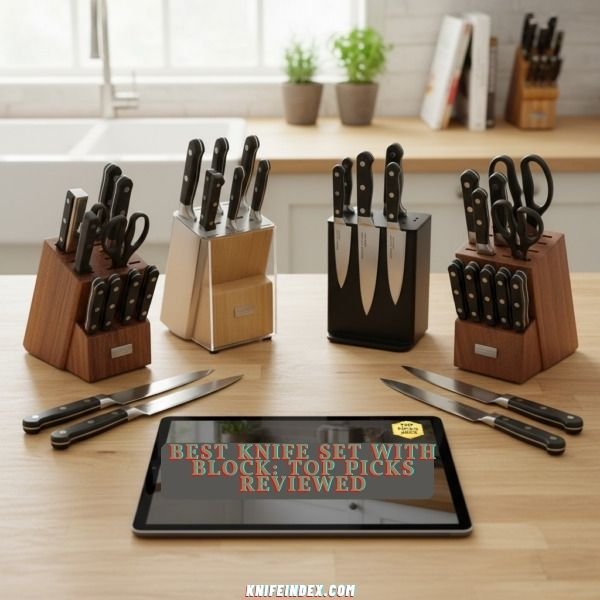
There’s something deeply satisfying about a fully stocked knife block sitting on your countertop. It’s a statement—a declaration that you’re serious about cooking. But the journey to finding the perfect set can be a minefield of confusing terms, mismatched quality, and bloated blocks filled with useless knives. A great knife set isn’t about having the *most* knives; it’s about having the *right* knives that are built to last.
My First Knife Block: A Lesson in Quality Over Quantity
I remember moving into my first real apartment. The first “adult” purchase I made for my kitchen was a massive, 18-piece knife block set from a big-box store. I was so proud of it. It had every knife I could imagine, including six steak knives that looked incredibly impressive. The price was too good to be true, and as it turned out, it was. Within six months, the handles started to feel loose. The “never needs sharpening” blades were hopelessly dull. The tips of two knives had even chipped. It was a block full of disappointment.
My culinary-school-trained cousin took one look at my collection and just shook his head. “You bought 18 knife-shaped objects,” he said, “but you don’t own a single good knife.” He taught me that it’s better to have three truly excellent knives than twenty terrible ones. That lesson stuck with me. This guide is my mission to help you avoid my mistake—to help you find a knife set that represents a true investment in your cooking, providing a lifetime of sharp, reliable performance, not just a countertop full of shiny, useless steel.
Deconstructing the Block: What Defines a Top-Tier Knife Set?
We didn’t just look for the biggest sets or the shiniest blocks. Our evaluation process was a deep dive into the practical realities of daily kitchen use. We focused on the factors that separate a true culinary toolkit from a cheap starter set.
Our Guiding Principle: A great knife set provides a foundation of essential, high-quality tools that you will use every day, housed in a block that protects them and complements your kitchen.
- Core Knife Quality (Steel & Construction): This is the most important factor. Are the primary knives (chef’s, paring, bread) forged or high-quality stamped steel? We looked for high-carbon stainless steel, which offers the best combination of sharpness, durability, and corrosion resistance. We analyzed the tang (full vs. partial) and overall build quality.
- Set Composition (The Essentials): Does the set include the knives you’ll actually use? We prioritized sets built around the “big three”: an 8-inch chef’s knife, a 3-4 inch paring knife, and a serrated bread knife. Sets that included these high-quality staples scored much higher than massive sets filled with oddly specific, low-quality filler knives.
- Handle Ergonomics & Durability: How do the knives feel in your hand? We looked for comfortable, well-balanced handles made from durable materials like polymer, composite, or resin-treated wood. A secure, non-slip grip is essential for safety and control.
- The Block Itself: The block isn’t just a stand; it’s a critical piece of your knife storage system. We evaluated the block’s material (wood, bamboo, etc.), its stability, and how well it protects the blades. Bonus points for features like self-sharpening slots or easy-to-clean designs, which are a step up from basic knife holders.
- Overall Value: Does the quality of the knives and block justify the price? We looked for sets that offer a significant saving and a clear quality standard compared to buying the pieces individually.
How We Tested: Our Methodology Behind These Rankings
Every set featured in this guide went through the same multi-week testing protocol so that comparisons between brands would be fair and consistent. We didn’t rely on a single afternoon of chopping; instead, each set was used as the primary cutlery in a working kitchen for a minimum of three weeks, covering a wide range of everyday tasks.
Out-of-Box Sharpness Testing
Before any cooking began, we tested each knife’s factory edge using a standardized paper-slicing test, in which a blade is drawn once through a sheet of printer paper without sawing. Knives that sliced cleanly on the first pass scored higher than those that snagged, tore, or required multiple passes, giving us an objective baseline for how much attention a manufacturer paid to final edge finishing before the set ever reached a customer.
Real-World Task Testing
Each chef’s knife in every set was used to break down whole chickens, dice onions, mince garlic, and slice through dense root vegetables like butternut squash. Paring knives were tested on peeling and coring tasks, and bread knives were run through crusty artisan loaves, soft sandwich bread, and ripe tomatoes, since a serrated blade that struggles with tomatoes usually struggles with delicate produce generally.
Edge Retention Over Time
We re-ran the paper test at the one-week and three-week marks for every set, without any honing or sharpening in between, to measure how quickly each blade’s factory edge degraded under normal, moderate household use. This step alone eliminated several otherwise-appealing budget sets from contention, as a handful of blades that impressed us on day one had noticeably dulled within a matter of days.
Handle Comfort and Fatigue Testing
Multiple testers with different hand sizes used each chef’s knife for extended prep sessions of 20 minutes or longer, rating handle comfort, grip security when wet or oily, and any signs of hot spots or pressure points that developed with sustained use.
Block Durability and Practicality
Finally, we evaluated each block for stability on the counter, ease of inserting and removing knives without scraping the edge against the slot, and how well the slots continued to grip knives snugly after weeks of repeated use, since a block that loosens over time can actually become a safety hazard.
German vs. Japanese vs. French Knife Traditions: Which Style Suits You?
Beyond steel and price, one of the biggest factors in how a knife feels to use comes down to which cutlery tradition it descends from. Understanding these broad regional styles will help you decide which of our recommendations, or which alternative brand, best matches your personal cutting technique.
German-Style Knives
German cutlery, represented in this guide by Wüsthof, Henckels, and Zwilling, favors a thicker spine, a pronounced bolster, and a full curved belly along the cutting edge. This design is built around a rocking chop, where the tip of the blade stays largely in contact with the cutting board while the heel rises and falls. German knives are typically hardened to a more moderate 56 to 58 HRC, prioritizing durability and ease of resharpening over maximum edge retention, which makes them exceptionally forgiving for cooks who are still developing their knife skills.
Japanese-Style Knives
Represented here by Global, Japanese-style cutlery tends to use thinner blade stock, harder steel (often 58 to 62 HRC), and a straighter edge profile suited to a push-cut or pull-cut motion rather than a rocking chop. This geometry excels at precise, thin slicing of vegetables and fish, but the added hardness makes the edge more prone to chipping if used on bone or frozen food, and the thinner blade doesn’t hold up as well to twisting motions.
French-Style Knives
French cutlery, less commonly represented in block sets but worth knowing about, splits the difference in some respects: it favors a straighter edge profile than German knives (closer to Japanese) but keeps the moderate hardness and heavier bolster construction of German steel. This style suits cooks who prefer a more controlled push-cut but still want the durability and easy sharpening of German-grade steel.
Which Style Should You Choose?
If you’re unsure, German-style sets are the safer default for most households, since their thicker, more forgiving steel tolerates a wider range of cutting techniques and kitchen mishaps. Japanese-style sets reward more deliberate, practiced technique and are best suited to cooks who already have some knife experience and do a meaningful amount of produce or fish prep.
Knife Steel 101: Understanding What Your Blades Are Actually Made Of
Ask ten people what makes a knife “good,” and most will point to the brand name on the box. But the real answer to blade performance sits one layer deeper, in the metallurgy itself. Every recommendation in this guide comes down to steel chemistry, heat treatment, and geometry, so before we get into individual products, it’s worth spending a few minutes understanding the vocabulary you’ll see printed on packaging and used by salespeople. This is one of the most commonly searched, and most poorly explained, aspects of buying kitchen cutlery.
High-Carbon Stainless Steel: The Industry Standard
The overwhelming majority of knife sets sold with blocks, including every set in our lineup above, use some formulation of high-carbon stainless steel. This is a deliberate compromise between two older categories of cutlery steel. Plain carbon steel sharpens to an extremely fine edge and is a joy to use, but it rusts and stains almost the moment it touches acid or moisture, which makes it impractical for a set that will sit in a block for months at a time. Standard stainless steel solves the corrosion problem but historically couldn’t hold an edge as well, because the added chromium that prevents rust also interferes with the steel’s ability to form the fine carbide structures that create sharpness.
High-carbon stainless steel threads the needle. Manufacturers add enough carbon to allow the blade to be hardened to a useful degree while keeping enough chromium in the alloy to resist rust and pitting under normal kitchen conditions. Brands market this under different proprietary names: Wüsthof calls its formulation X50CrMoV15, Zwilling uses a similar recipe under the FRIODUR banner (referring to their ice-hardening tempering process, not the alloy itself), and Japanese brands like Global favor CROMOVA 18, which swaps some of the vanadium and molybdenum ratios to favor a harder, thinner edge geometry.
Reading the Rockwell Hardness Scale (HRC)
If you’ve shopped for knives online, you’ve likely seen a number followed by “HRC.” This refers to the Rockwell C hardness scale, a standardized test that measures a material’s resistance to being permanently indented. For kitchen knives, this number tells you a great deal about how the blade will behave in daily use.
- 52–56 HRC: Softer steels in this range, common on budget stamped knives, are easy to sharpen at home with basic tools but dull quickly and can roll or fold at the edge under lateral pressure.
- 56–58 HRC: This is the sweet spot for most German-style forged knives, including the Wüsthof and Zwilling sets reviewed above. It balances edge retention with a manageable, forgiving sharpening process.
- 58–62 HRC: Harder Japanese-influenced steels, including Global’s CROMOVA 18 blend, fall in this range. They hold a razor edge far longer between sharpenings but are more brittle, meaning they are more prone to chipping if used on bone, frozen food, or a glass cutting board.
- 62+ HRC: Reserved for premium single-bevel Japanese knives and some powder-metallurgy steels like VG-10 or AUS-10, these blades require specialized whetstone sharpening and careful handling, and are rarely found in mainstream block sets.
Neither end of this spectrum is objectively “better.” A harder blade that chips is arguably worse for a busy household than a softer blade that simply needs honing more often. This is precisely why our testing weighted real-world durability as heavily as raw sharpness out of the box.
Full Tang vs. Partial Tang: Why It Matters for Balance and Longevity
The tang is the portion of the blade’s steel that extends into the handle. A full tang runs the entire length of the handle and is typically visible as a strip of metal sandwiched between the handle scales, often secured with the rivets you can see on knives like the Henckels Statement or Wüsthof Classic. A full tang adds weight and balance toward the bolster, which many cooks find gives better control during rock-chopping motions, and it also means there is no glued-in stub of steel that can eventually work loose.
Partial tang knives, common on cheaper stamped blades and some Asian-style knives with wood handles, extend only partway into the handle. This isn’t automatically a dealbreaker (many excellent Japanese knives use partial tangs by design tradition), but on Western-style block sets, a full tang is generally the mark of a more durable, better-balanced knife and is one of the first things we check when evaluating a new set.
At a Glance: The Best Knife Sets with a Block
Short on time? Here are our top 5 picks, covering every need from the aspiring pro to the savvy budget shopper.
| Knife Set | Image | Best For | Knife Count | Check on Amazon |
|---|---|---|---|---|
| Wüsthof Classic 7-Piece |  |
Best Overall (Buy it for life) | 7-Piece | View Price |
| Henckels Statement 15-Piece |  |
Best Value | 15-Piece | View Price |
| Cuisinart Classic 15-Piece |  |
Best Budget Option | 15-Piece | View Price |
| Global 7-Piece Block Set | 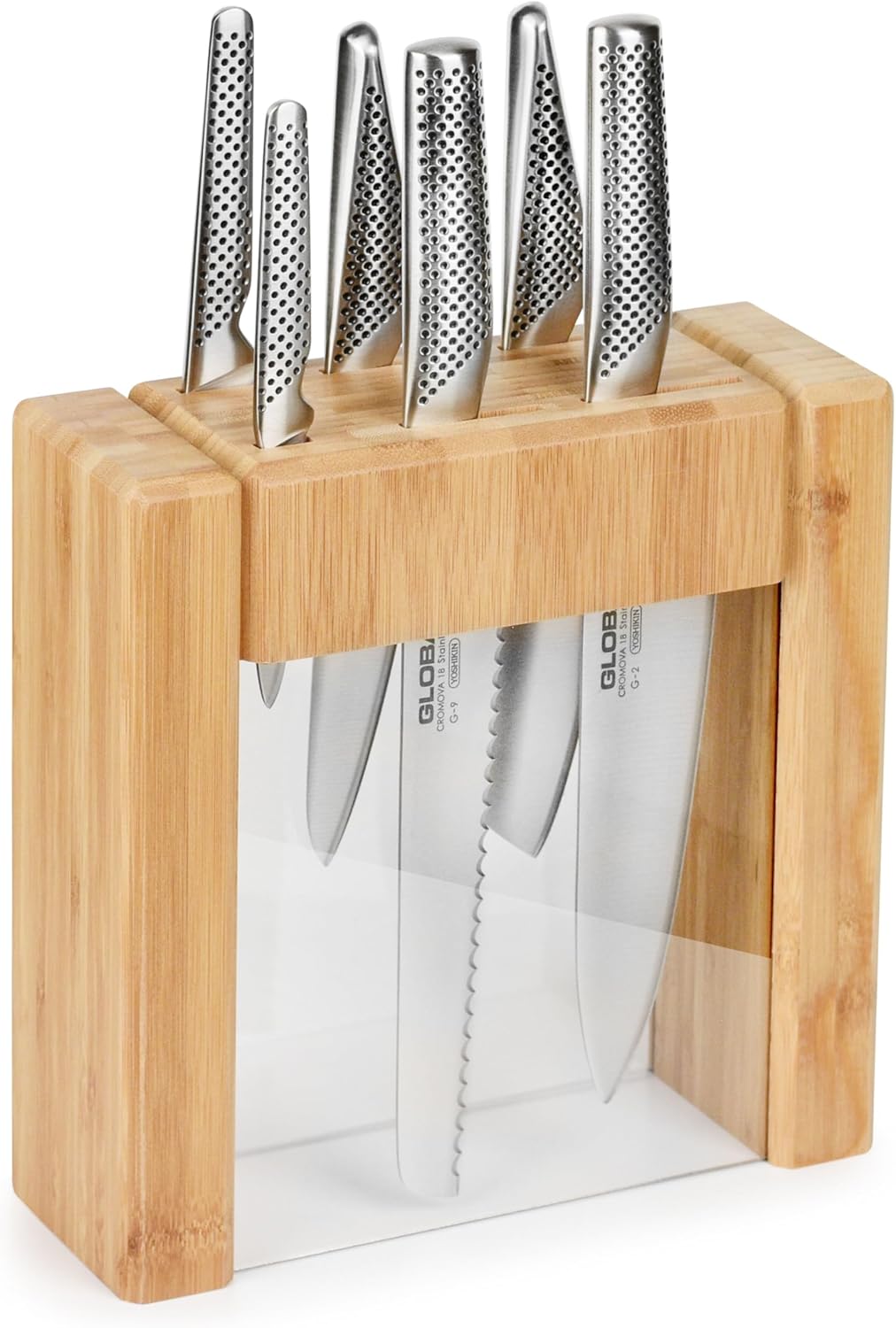 |
Best Modern Design | 7-Piece | View Price |
| Zwilling Twin Signature 19-Piece |  |
Best Comprehensive Set | 19-Piece | View Price |
Knife Sets by Budget: What You Actually Get at Every Price Point
One of the most common questions we hear is some version of “how much should I actually spend on a knife set?” The honest answer is that price correlates strongly with steel quality and construction, but the relationship isn’t perfectly linear, and there are real diminishing returns once you cross a certain threshold. Here’s what your money buys at each tier, based on our testing across dozens of sets in this category.
Under $75: Entry-Level Starter Sets
At this price, expect thin, stamped stainless steel blades, partial or rat-tail tangs, and plastic handles that are riveted or glued rather than pinned. These sets are genuinely useful for a first apartment or a vacation home where knives will see light, occasional use. The main risks are handles that loosen over a year or two and blades that struggle to hold an edge beyond a few weeks of regular cooking. If this is your budget, prioritize a set with at least a chef’s knife, paring knife, and bread knife over one padded out with a dozen rarely-used specialty blades.
$75–$150: The Sweet Spot for Most Households
This is where sets like the Henckels Statement 15-Piece genuinely shine. You start seeing full tang construction, triple-rivet handles, and stamped high-carbon stainless blades that hold an edge meaningfully longer than budget alternatives. For the overwhelming majority of home cooks, a set in this range represents the best balance of upfront cost and multi-year performance, which is why our value pick sits squarely in this tier.
$150–$300: Forged Construction Enters the Picture
Crossing into this range typically means forged blades, thicker bolsters, and noticeably better fit and finish. The Cuisinart Classic Forged set punches above its weight here by bringing forged construction down toward the bottom of this tier. Expect better edge retention, a heavier, more substantial feel in the hand, and handles built to withstand a decade or more of regular use.
$300–$600: Premium German and Japanese Engineering
This is where the Wüsthof Classic and Global sets live. At this level, you’re paying for consistent forging tolerances (or, in Global’s case, an entirely different single-piece manufacturing process), superior steel formulations, and manufacturing that happens almost entirely in-house rather than outsourced. The performance gains over the $150–$300 tier are real but incremental: sharper out-of-box edges, slightly better edge retention, and handles that are ergonomically refined rather than merely adequate.
$600 and Above: Diminishing Returns and Specialty Craftsmanship
Above roughly $600, you’re generally buying smaller-batch, more specialized cutlery: hand-finished Japanese sets with single-bevel edges, exotic handle materials like Micarta or stabilized wood, or boutique Western makers producing limited runs. These knives can be extraordinary, but the day-to-day cooking performance gain over a well-chosen $400 set is modest. Sets at this price are best suited to serious enthusiasts and collectors rather than the average home kitchen, and we generally advise most shoppers to stop climbing the price ladder once they’ve secured a full-tang, forged, high-carbon stainless set with a comfortable handle.
Best Knife Set for Every Kitchen and Cook
The “best” knife set isn’t a single universal answer. It depends heavily on your kitchen size, your cooking habits, and who will actually be using the knives. Here’s how we’d steer different types of shoppers.
Best for Small Kitchens and Apartments
If counter space is at a premium, look past the 15- and 19-piece sets and toward compact options like the Wüsthof Classic 7-Piece SlimSet. Its slim block footprint is specifically engineered to sit in a narrow gap between appliances without dominating your workspace, while still covering every knife you’ll reach for in a typical week of cooking.
Best for Newlyweds and Wedding Registries
A knife set is one of the most requested and most useful wedding registry items, since it solves an entire category of kitchen equipment in one gift. The Henckels Statement set is a favorite registry pick because it hits an approachable price point for gift-givers while still delivering years of reliable performance, and its comprehensive piece count means a new household won’t need to buy additional knives for quite some time.
Best for Culinary Students and Aspiring Professionals
Students entering culinary programs are often taught on German-pattern knives, and many programs specifically recommend forged, full-tang construction as a foundation for learning proper knife skills. The Wüsthof Classic line is frequently found on culinary school supply lists for exactly this reason: it’s essentially the same knife sold to working line cooks, just packaged with a block for home use.
Best for Cooks Who Prefer Lightweight, Agile Knives
Not everyone wants a heavy, bolster-forward German knife. Cooks who grew up with or have transitioned to Japanese-style cutlery, prized for speed and precision on vegetables and fish, will find the Global 7-Piece set a more natural fit. Its hollow, sand-weighted handle shifts the balance point away from the bolster and toward the center of the blade, which suits a pinch-grip cutting style rather than a full-hand grip.
Best for Large Families and Frequent Entertainers
Hosting dinner parties or feeding a large family means needing enough steak knives and specialty blades on hand at once. The Zwilling Twin Signature 19-Piece set, with its eight matching steak knives and full complement of task-specific blades, is built for exactly this kind of volume, ensuring no one at the table is left without a proper knife.
Best for Left-Handed Cooks
Most Western-style knife sets, including every set reviewed above, use symmetrical, double-bevel blade grinds, meaning they perform identically regardless of which hand you cut with. Left-handed cooks generally only run into trouble with asymmetrical single-bevel Japanese knives, which are ground for one dominant hand. If you’re left-handed, sticking with a symmetrical German or Global-style set, rather than a traditional single-bevel santoku or nakiri, avoids this issue entirely.
In-Depth Reviews: The 5 Best Knife Block Sets Unpacked
We put these sets through weeks of rigorous chopping, dicing, and slicing. Here’s the detailed breakdown of what makes them a cut above the rest.
1. Wüsthof Classic 7-Piece SlimSet (Best Overall)
This set embodies the “quality over quantity” philosophy. It includes five essential, German-made, forged knives: the legendary 8″ chef’s knife, a 6″ utility knife, a 3.5″ paring knife, an 8″ bread knife, and kitchen shears. These are the same top-tier knives sold individually, making this set a true investment. The blades are forged from a single piece of high-carbon stainless steel and feature a full tang and the classic triple-rivet handle. They are incredibly sharp, durable, and perfectly balanced.
The “slim design” block is a brilliant space-saver. This is a “buy it for life” set that provides the uncompromised quality that consistently places Wüsthof at the top of brand comparisons, as seen in our Wüsthof vs. Zwilling vs. Shun analysis. It gives you the absolute best of the basics.
Who is this best for?
The serious home cook, newlyweds, or anyone who wants to invest in a premium, no-filler set of essential knives that will last a lifetime.
- Legendary Wüsthof forged quality and sharpness
- Contains five truly essential, high-performance knives
- Slim, space-saving wood block
- Made in Solingen, Germany
- A true lifetime investment
Pros
- High initial cost
- Does not include steak knives
Cons
2. Henckels Statement 15-Piece Set (Best Value)
Henckels International offers fantastic German engineering at an accessible price point, and this Statement set is the prime example. It’s a comprehensive collection that includes a chef’s knife, paring knife, utility knife, santoku, bread knife, six steak knives, shears, and a honing steel. The knives are stamped from high-quality stainless steel, making them lighter than forged knives but still very durable and easy to maintain. They feature a full tang and a classic triple-rivet handle for excellent balance.
This set provides everything a new home cook needs to get started for an incredible price. It’s a noticeable step up from generic store brands and offers a taste of German quality. The rivalry between Henckels and other brands is fascinating, especially when comparing them to Swiss giants, as we do in our Henckels vs. Victorinox article. For the money, this set is nearly impossible to beat.
Who is this best for?
First-time homeowners, college graduates, or anyone looking for a complete and reliable knife set that offers the best possible performance for under $150.
- Exceptional value for a 15-piece set
- Includes all essential knives plus steak knives
- Lightweight and easy to handle
- Full tang for good balance
- Dishwasher safe (though hand washing is recommended)
Pros
- Stamped blades lack the heft of forged knives
- Made in China, unlike premium Zwilling/Henckels lines
Cons
3. Cuisinart Classic Forged 15-Piece Set (Best Budget Option)
Finding a *forged* knife set at this price point is rare, which makes this Cuisinart set an incredible find. For around $100, you get a full set of forged, high-carbon stainless steel knives that feature a proper bolster and a durable, ergonomic handle. This gives them the weight, balance, and feel of much more expensive German knives. The set includes all the basics: chef’s knife, slicing knife, santoku, utility knife, paring knife, six steak knives, shears, and a sharpening steel.
While the steel quality and edge retention won’t match a Wüsthof, the performance for the price is outstanding. They arrive sharp and are easy to maintain with the included steel. If you’re looking for the feel of premium knives without the premium cost, this is the set to get. It’s a perfect entry point before graduating to one of the best chef knife brands.
Who is this best for?
The budget-conscious cook who prefers the weight and feel of forged knives and wants a comprehensive set without breaking the bank.
- Forged blades offer excellent weight and balance
- Incredible value for a 15-piece forged set
- Includes a full set of steak knives and a sharpening steel
- Durable construction with bolsters
Pros
- Will require more frequent sharpening than premium brands
- Block is larger and takes up more counter space
Cons
4. Global 7-Piece Block Set (Best Modern Design)
Global knives are icons of modern design. Made in Japan, they are crafted from a single piece of CROMOVA 18 stainless steel, creating a seamless transition from blade to handle. This not only looks stunning but is also incredibly hygienic. The handles are hollow and filled with sand to achieve a perfect balance, making them feel exceptionally light and nimble in the hand. The blades are famous for their razor-sharp, 15-degree edges that excel at precise slicing.
This 7-piece set includes the core essentials, housed in a sleek, minimalist block that reflects the knives’ aesthetic. This is a set for the design-conscious cook who values the unique properties of Japanese cutlery—lightness, agility, and surgical sharpness. While different from German steel, as explored in the classic Shun vs. Wüsthof debate, Global offers a unique and satisfying cutting experience.
Who is this best for?
The cook with a modern kitchen aesthetic who prefers lightweight, ultra-sharp Japanese knives and wants a set that doubles as a piece of art.
- Stunning, seamless, and hygienic one-piece design
- Extremely lightweight and perfectly balanced
- Razor-sharp Japanese steel blades
- Minimalist and stylish storage block
- Resistant to rust and stains
Pros
- High price point
- Dimpled steel handle can be slippery when wet or oily
- Thinner blades are not ideal for heavy-duty tasks
Cons
5. Zwilling Twin Signature 19-Piece Set (Best Comprehensive Set)
For the cook who wants it all, this 19-piece set from Zwilling J.A. Henckels is a fantastic choice. The Twin Signature knives are made in Germany using Zwilling’s proprietary stamped process, which creates a sharp, light, and durable blade. This comprehensive set includes a huge assortment of knives: a chef’s knife, paring knife, multiple utility knives, a bread knife, a santoku, a carving knife, eight steak knives, shears, and a honing steel.
This set offers true German quality and a knife for literally every task. It’s an excellent value for a German-made set of this size. The distinction between the two sister companies can be confusing, but our Zwilling vs. Henckel Knives guide breaks it down. If you want a massive, high-quality set from a legendary brand, this is the one.
Who is this best for?
The entertainer or the ambitious home cook who wants a high-quality, German-made knife for every possible kitchen task, all in one comprehensive package.
- Huge 19-piece German-made collection
- High-quality stamped blades are sharp and lightweight
- Excellent value for a set of this size and origin
- Includes 8 steak knives and all essential tools
- Ice-hardened FRIODUR blades for durability
Pros
- Takes up a very large amount of counter space
- May contain more knives than the average cook needs
Cons
Other Brands Worth Considering
Our top five picks represent the best overall balance of quality, value, and versatility, but they’re far from the only respected names in the category. Depending on your priorities, one of the following brands might be worth a closer look before you commit.
Victorinox
Best known for the Swiss Army knife, Victorinox also produces some of the most respected stamped kitchen knives on the market. Their Fibrox Pro line, while typically sold as open stock rather than in dedicated block sets, is a favorite among professional line cooks for its exceptional grip and surprisingly capable stamped steel. If you can find a Victorinox block set, it’s a strong alternative to the Henckels Statement in the value tier.
Mercer Culinary
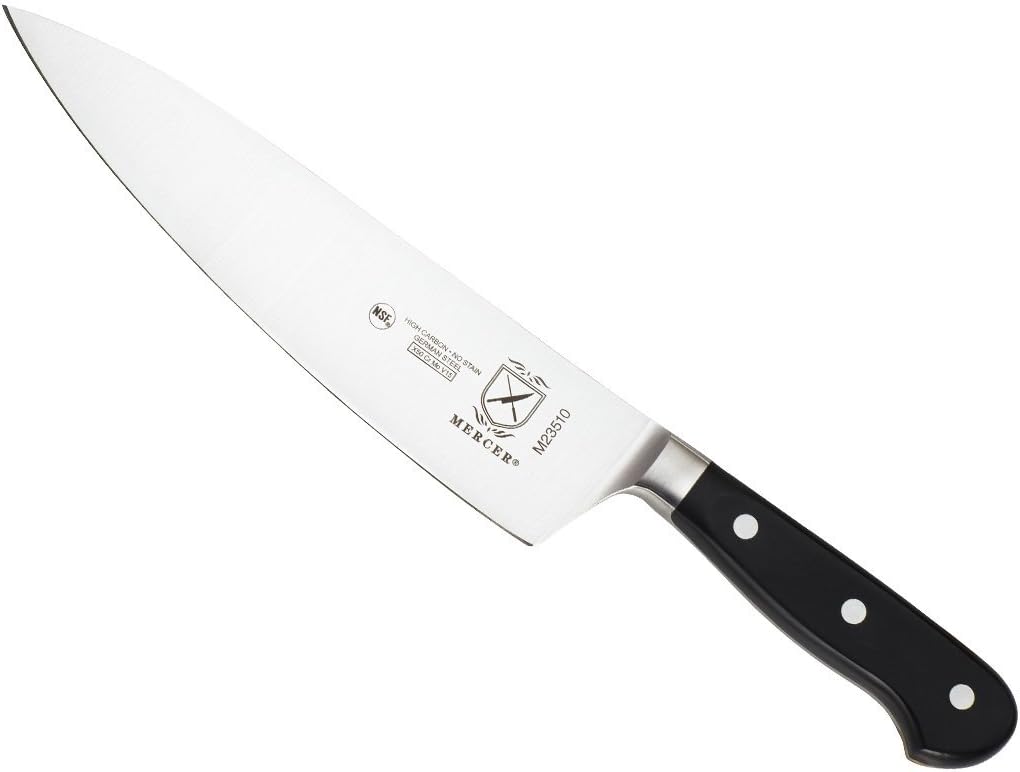
Mercer is a workhorse brand favored by culinary schools and restaurant kitchens for its combination of low price and genuine durability. Their block sets tend to favor function over aesthetics, with simple, textured polypropylene handles, but the high-carbon stainless blades perform admirably for the price and are exceptionally easy to resharpen.
Shun Classic
Shun sits at the premium end of the Japanese-influenced category, using VG-MAX steel cores clad in layers of softer stainless steel (a technique often called Damascus cladding, though the visible pattern is largely cosmetic). Shun block sets are gorgeous and perform beautifully, but they carry a price premium that puts them well above the Global set in this guide, making them better suited to enthusiasts than first-time buyers.
Made In
A newer, direct-to-consumer brand, Made In has built a reputation for sourcing forged blades from the same French and Japanese factories used by legacy brands, then selling them without the traditional retail markup. Their block sets are worth a look for buyers who want boutique-level construction without boutique pricing, though availability and exact lineups shift more often than with established legacy brands.
Calphalon and Farberware
These two names are ubiquitous in mass-market retail and department stores. Both produce serviceable stamped stainless sets at accessible prices, generally comparable in quality to the lower end of our budget-guide tiers. They’re reasonable choices if you specifically want a recognizable big-box name, but they don’t outperform the Cuisinart or Henckels picks above at a similar price.
Dalstrong
Dalstrong has built a strong online following with aggressively styled, high-hardness Japanese-inspired steel at mid-range prices. Their block sets tend to lean toward harder, thinner blades reminiscent of the Global entry in our lineup, and are worth considering if you specifically want that cutting profile but prefer a different handle style or aesthetic.
Anatomy of a Knife: A Quick-Reference Glossary
Understanding the parts of a knife makes it much easier to compare listings, read reviews, and know what you’re actually paying for. Here are the terms you’ll run into most often while shopping.
- Blade: The full cutting portion of the knife, running from the tip to the heel.
- Edge: The sharpened cutting line along the bottom of the blade.
- Spine: The thick, unsharpened top of the blade, opposite the edge.
- Heel: The rear portion of the blade closest to the handle, used for heavier cuts through dense vegetables or joints.
- Tip: The pointed front end of the blade, used for delicate, precise work like scoring or piercing.
- Bolster: The thick collar of metal between the blade and handle on forged knives, which adds weight, protects the fingers, and provides a stopping point for the hand.
- Tang: The portion of the blade steel that extends into the handle; see the full explanation in our steel guide above.
- Bolster Rivets: The pins securing the handle scales to the tang, most visible on triple-rivet handle designs like those on the Wüsthof and Henckels sets.
- Granton Edge: A series of scalloped indentations along the blade face, common on slicing and santoku knives, designed to reduce friction and prevent food from sticking to the blade.
- Bevel: The angled portion of steel ground down to form the edge. Double-bevel knives are ground symmetrically on both sides; single-bevel knives, common in traditional Japanese cutlery, are ground on one side only.
- Choil: The small unsharpened notch just in front of the bolster, which allows a user to safely place a finger for a pinch grip.
Sharpening, Honing, and Long-Term Maintenance
Even the best knife set will underperform if it isn’t maintained properly, and this is a topic that trips up more new knife owners than any other. Honing and sharpening are frequently confused, but they are two entirely different processes.
Honing: Weekly Maintenance
A honing steel, included with most of the sets above, doesn’t actually remove metal or sharpen the blade. Instead, it realigns the microscopic edge of the blade, which bends and folds slightly during normal use. Running your knife along the honing steel at roughly a 15 to 20 degree angle, several passes per side, once a week or before any significant prep session, keeps the existing edge performing at its best for far longer between actual sharpenings.
Sharpening: Restoring the Edge
Sharpening actually grinds away a thin layer of steel to create a new edge, and is necessary every six months to two years depending on how often you cook and how you hone. Home cooks have three realistic options: a whetstone (which offers the best results but requires practice and patience), a pull-through electric or manual sharpener (fast and consistent, though slightly more aggressive on the blade over time), or a professional sharpening service, often available at local knife shops, farmers markets, or through mail-in services.
Choosing the Right Sharpening Angle
Most Western-style knives, including every set in this guide, are ground to a 20-degree edge angle (measured per side). Japanese-style knives like the Global set typically use a narrower 15-degree angle for added sharpness at the cost of some durability. Whichever sharpening method you use, try to match the original factory angle rather than guessing, since repeatedly sharpening at the wrong angle can permanently distort the blade’s geometry over time.
Cleaning and Storage Habits That Extend Knife Life
Regardless of what the packaging claims, we recommend hand washing every knife in a block set rather than running it through the dishwasher. The prolonged heat, harsh detergent, and jostling against other utensils in a dishwasher accelerate handle wear, dull edges faster, and can cause pitting on lower-grade stainless formulations. Dry blades immediately after washing rather than leaving them to air dry, since prolonged moisture contact, even on stainless steel, is the single most common cause of spotting and mild corrosion over the life of a knife.
Knife Safety Basics Every Home Cook Should Know
A sharp knife is, somewhat counterintuitively, safer than a dull one, because a dull blade requires more force and is more likely to slip off whatever you’re cutting. Beyond keeping your set properly sharpened, a few basic habits go a long way toward safer prep work.
- Use the claw grip: Curl the fingertips of your guide hand under, resting your knuckles against the flat of the blade as a guide, rather than exposing fingertips to the cutting path.
- Never try to catch a falling knife: Step back and let it fall. A moving blade in the air is far more dangerous to grab than one already on the floor.
- Cut on a stable surface: Place a damp towel or non-slip mat beneath your cutting board to prevent it from sliding during use.
- Store knives point-down or blade-in when possible: Most block designs already orient blades safely, but be mindful when hand-washing and drying, and always place knives on a rack or towel with the edge facing away from your hand.
- Keep blocks out of reach of young children: A countertop block is convenient for adults but should be positioned toward the back of the counter or on a higher surface in households with small children who might reach up and pull on handles.
- Carry knives properly: When moving a knife across the kitchen, hold it with the blade pointed down and parallel to your leg, and always announce yourself when passing behind someone holding a knife.
Block vs. Alternative Storage: Is a Block Still the Best Option?
A wooden or bamboo block is the traditional storage method bundled with nearly every set in this guide, but it’s not the only option, and it’s worth understanding the trade-offs before you commit counter space to one.
Countertop Blocks (What This Guide Covers)
Blocks protect edges effectively, keep knives visible and easy to grab mid-prep, and typically include slots sized for the specific set they ship with. The downside is permanent counter space commitment and the fact that slots are usually cut for a specific knife lineup, making it awkward to add knives from other brands or sets later.
Magnetic Knife Strips
Wall-mounted magnetic strips free up counter space entirely and display knives in a way many cooks find both practical and visually appealing. They accommodate knives of any brand or size, unlike a pre-slotted block, but they do expose blades more openly, which can be a consideration in households with small children, and strong magnets occasionally require a firmer initial pull to remove a knife safely.
In-Drawer Knife Blocks
These are essentially blocks turned on their side and fitted into a kitchen drawer, keeping blades completely out of sight and off the counter entirely. They’re an excellent option for minimalist kitchens or households that prioritize clean countertops, though they require a dedicated drawer of adequate depth and are less convenient for grabbing a knife quickly mid-task.
Universal (Slot-less) Blocks
Rather than fixed slots, these blocks use flexible bristles or rods that a knife of any size can be pushed into. They’re a smart choice if you plan to mix and match knives from different sets and brands over time, though they generally don’t look quite as polished as a purpose-built wooden block matched to a specific set.
Warranty and Customer Support: What Happens If Something Goes Wrong?
A knife set’s warranty policy rarely factors into purchase decisions, but it’s a meaningful signal of how confident a manufacturer is in their own construction, and it matters if a blade ever chips, a rivet loosens, or a handle cracks.
Wüsthof
Wüsthof backs its Classic line with a limited lifetime warranty against manufacturing defects, and the brand’s reputation for standing behind its products is a major reason it commands a premium price. Given the “buy it for life” positioning of the Classic 7-Piece SlimSet, this warranty coverage isn’t just marketing; it reflects genuinely low failure rates reported by long-term owners.
Zwilling and Henckels
Both brands (which share corporate ownership but maintain separate product lines) offer lifetime warranties against defects in material and workmanship on their forged and stamped lines alike, including the Statement and Twin Signature sets featured in this guide. Warranty claims are typically handled through registration on the manufacturer’s website.
Cuisinart
Cuisinart’s cutlery generally carries a limited lifetime warranty as well, though as with most mass-market kitchenware brands, claims are usually handled through the retailer or a general customer service line rather than a dedicated cutlery department, and turnaround times can vary.
Global
Global provides a limited warranty against manufacturing defects, though because the blade and handle are a single fused piece of steel, there is no handle to loosen or crack over time, one of the underappreciated practical benefits of the brand’s distinctive one-piece construction.
Buying a Knife Set as a Gift: What to Know Before You Order
Knife sets are among the most popular wedding, housewarming, and holiday gifts in the kitchen category, but a few considerations will help ensure your gift is genuinely well received rather than quietly returned or regifted.
Consider the Recipient’s Existing Kitchen Setup
If you know the recipient already owns a knife block or a strong individual chef’s knife they love, a full block set may be redundant. In these cases, consider a single premium knife or a smaller specialty piece instead, or check their registry directly if one exists.
Match the Set to Their Cooking Style
A serious home cook who already has strong knife skills may appreciate the harder, sharper edge of a Japanese-style set like Global, while a recipient who is newer to cooking or entertains large groups will get more day-to-day value from a comprehensive, forgiving set like the Henckels Statement or Zwilling Twin Signature.
Registries and Return Policies
Because knife sets are a common registry item, most major retailers offer extended return windows around weddings, sometimes up to a full year. If you’re purchasing off a registry, confirm the specific set and finish requested, since color and handle material variants exist across most of these product lines and a mismatched gift is one of the more common registry mix-ups.
Presentation and Packaging
All five sets in this guide ship with their block included as a single unit, which makes for a naturally attractive gift presentation without any additional wrapping needed beyond a simple bow or gift bag, unlike loose individual knives that require more thoughtful packaging.
Materials and Sustainability Considerations
Knife blocks are typically made from wood or bamboo, and the choice between them carries both durability and environmental implications worth knowing about.
Hardwood Blocks
Most premium sets, including the Wüsthof and Henckels lines, use dense hardwoods like acacia, beech, or walnut. These woods resist warping and cracking far better than softer alternatives and typically carry a Forest Stewardship Council designation from responsible manufacturers, indicating the timber was sourced from sustainably managed forests rather than clear-cut sources.
Bamboo Blocks
Bamboo is technically a fast-growing grass rather than a hardwood, and it regenerates far more quickly than traditional timber, making it one of the more sustainable material choices in this category. It’s also naturally resistant to moisture absorption, which helps prevent warping in humid kitchens, though it can be slightly harder on blade edges over repeated insertion and removal due to its density.
Recycled and Recyclable Steel
Stainless steel is among the most recyclable materials used in manufacturing, and several premium brands, including Wüsthof and Zwilling, have publicly committed to increasing the recycled content in their steel supply chains. At end of life, well-made steel knives can typically be recycled through metal scrap programs rather than sent to a landfill, unlike many plastic-handled budget knives.
Common Mistakes to Avoid When Buying a Knife Set
- Prioritizing piece count over quality: An 18-piece set filled with rarely-used specialty blades is a worse purchase than a 7-piece set built around the essentials, as our own early buying mistake illustrates.
- Ignoring handle feel before buying: If possible, hold a display model in-store before ordering online, since handle comfort is highly personal and difficult to judge from photos alone.
- Assuming dishwasher-safe means dishwasher-recommended: As covered above, hand washing extends the life of any set regardless of manufacturer claims.
- Choosing based on visual “Damascus” patterns alone: Decorative layered patterns look impressive but don’t necessarily indicate superior performance; the core steel and heat treatment matter far more than the surface pattern.
- Overlooking block slot fit for future knives: If you plan to add specialty knives later, a universal slot-less block offers more flexibility than a pre-cut block designed for one specific set.
- Skipping the warranty registration: Many manufacturers require product registration within a set window after purchase to activate full warranty coverage, a step that’s easy to forget but important to complete.
Knife Set vs. Buying Individually: A Real Cost Comparison
One question we see constantly is whether it’s actually cheaper to buy a block set versus assembling the same knives individually. The answer depends heavily on the brand, but the math is worth walking through with real numbers from the sets in this guide.
The Wüsthof Example
The Wüsthof Classic 7-Piece SlimSet includes an 8-inch chef’s knife, 6-inch utility knife, 3.5-inch paring knife, 8-inch bread knife, kitchen shears, a honing steel, and the slim block itself. Pricing out each of these individually from Wüsthof’s standalone Classic line typically adds up to a noticeably higher total than the bundled set price, once you factor in the cost of the block separately. This is the single clearest case in our lineup where buying the set is a straightforward win over buying piece by piece.
The Henckels and Zwilling Example
Because the Statement and Twin Signature lines include a large number of steak knives and specialty pieces, the per-knife savings compared to individual purchase are even more dramatic, since steak knife sets in particular carry a steep per-piece markup when bought individually rather than bundled.
When Buying Individually Makes More Sense
If you already own a knife block or storage solution and only need one or two specific knives, buying individually avoids paying for a block and pieces you don’t need. Enthusiasts who want to mix brands, for example, a German chef’s knife alongside a Japanese vegetable knife, will also generally do better shopping piece by piece rather than searching for a single set that nails every category equally well.
The Verdict
For anyone building a kitchen from scratch or replacing an aging, mismatched collection, a well-chosen set from this guide will almost always beat the cost of assembling the same lineup individually, while also guaranteeing consistent handle design and balance across every knife in your block.
Troubleshooting: Solving Common Knife Set Problems
Even well-made sets occasionally run into issues, especially as they age. Here’s how to diagnose and address the most frequent complaints we hear from long-term knife set owners.
My Blade Won’t Hold an Edge Anymore
Before assuming the steel itself has failed, check your honing habits first. Many owners stop honing regularly after the first few months, and a blade that hasn’t been honed in weeks will feel dull even if the actual edge geometry is intact. If regular honing doesn’t restore performance, the blade genuinely needs sharpening, either via whetstone, pull-through sharpener, or a professional service.
Small Rust Spots Have Appeared on the Blade
Even high-carbon stainless steel can develop minor surface spotting if left wet for extended periods, particularly after contact with acidic foods like citrus or tomatoes. Most spotting can be removed with a paste of baking soda and water applied with a soft cloth, followed by immediate thorough drying. Persistent or spreading rust, which is rare on the sets featured in this guide, may indicate the blade was exposed to prolonged moisture and should prompt more careful drying habits going forward.
The Handle Feels Loose or Wobbly
On full-tang, riveted knives like the Wüsthof and Henckels sets, a loose handle usually indicates the scales have shrunk slightly or the rivets have loosened after years of washing and drying cycles. This is uncommon but not impossible on aging knives, and most manufacturers will repair or replace a knife with a loose handle under their warranty programs described earlier in this guide.
The Wood Block Has Warped or Cracked
Wood and bamboo blocks can warp if kept near a stove, dishwasher vent, or a sink where they’re repeatedly exposed to steam and humidity swings. Keep your block in a stable, dry location on the counter, away from direct heat sources, and periodically wipe it down with a barely damp cloth rather than submerging it or leaving it in a humid environment.
Knives Feel Loose or Rattle in the Block Slots
Over years of use, repeated insertion and removal can slightly widen a block’s felt-lined slots. If you notice knives rattling or sitting less securely, a small strip of adhesive-backed felt applied inside the affected slot can restore a snug fit without needing to replace the entire block.
Climate and Environment: Does Where You Live Affect Your Knife Set?
It’s an underappreciated factor, but the climate in your kitchen genuinely affects how a knife set ages over time, particularly the wood or bamboo block itself.
Humid Climates
In consistently humid environments, wood blocks are more prone to slow warping or swelling over several years, since wood naturally absorbs ambient moisture. Bamboo blocks tend to hold up somewhat better in these conditions thanks to their naturally tighter grain structure, making them a reasonable consideration if you live somewhere like the Gulf Coast, the Pacific Northwest, or similarly damp regions.
Dry Climates
In very dry climates, particularly homes with forced-air heating running for months at a time, wood blocks can occasionally develop small surface cracks as the wood loses moisture and contracts. A light periodic treatment with food-safe mineral oil on the exterior of the block (never on the blades themselves) can help maintain the wood’s moisture balance in these conditions.
Coastal and High-Salinity Environments
Homes near the ocean deal with airborne salt that can accelerate corrosion on any exposed steel, including knife blades. If you live in a coastal area, drying blades immediately after washing and periodically wiping them down with a very light coat of food-safe mineral oil during storage will meaningfully extend the life of even a high-quality stainless blade.
Beyond the Big Three: Evaluating the Extra Tools in Your Set
Most of the attention in a knife set review goes to the chef’s knife, but the supporting cast of tools bundled into these sets, shears, honing steels, and specialty blades, deserve their own scrutiny, since a weak accessory can undercut an otherwise excellent set.
Kitchen Shears
Nearly every set in this guide includes a pair of kitchen shears, but quality varies widely. The best designs, found on the Henckels Statement and Zwilling Twin Signature sets, feature come-apart blades for easier cleaning and a built-in bottle opener or jar-lid gripper notch near the pivot. Weaker shears found on budget sets often have a stiff, poorly aligned pivot that makes cutting through poultry bones or thick packaging noticeably more effortful than it should be.
Honing Steels
A honing steel’s effectiveness comes down to its surface texture and length. Longer steels (typically 9 to 10 inches) make it easier to maintain a consistent angle across the full length of a chef’s knife blade in a single pass. Ceramic honing rods, less common in block sets but occasionally included in premium lineups, offer slightly more aggressive realignment than traditional steel rods, useful for harder Japanese-style blades like those in the Global set.
Utility and Santoku Knives
The utility knife, generally 5 to 6 inches, bridges the gap between a full-size chef’s knife and a small paring knife, making it ideal for mid-sized tasks like slicing sandwiches, small fruits, or cheese. A santoku, when included, offers an alternative cutting motion to the chef’s knife rather than a true replacement, and having both in a set (as in the Henckels Statement and Cuisinart Classic lineups) gives you flexibility to choose whichever style suits the task at hand.
Steak Knives
Steak knife quality varies more than any other component in a large set. Look for full-tang or at least solidly riveted construction rather than cheap, hollow-handled steak knives, since the flimsiest versions of these blades are often the first piece in a set to show visible wear. The eight-piece steak knife complement in the Zwilling Twin Signature set and the six-piece sets in both the Henckels and Cuisinart lineups all use the same core steel and construction quality as their larger counterparts, which is a meaningful mark of overall set consistency.
Specialty Blades: Boning, Carving, and Fillet Knives
Larger sets sometimes include a boning or fillet knife, useful for breaking down whole poultry or fish, and a carving knife for slicing roasts and holiday turkeys. These are genuinely useful additions if you cook whole proteins regularly, but they’re the first knives to sit unused in a block for households that primarily buy pre-cut meat and vegetables, which is worth considering when weighing a 15- or 19-piece set against a leaner 7-piece alternative.
Your Knife Set Questions, Answered
Are knife sets worth it, or should I buy knives individually?
For most people starting out, a good knife set is absolutely worth it. It provides a cost-effective way to acquire all the essential knives at once, along with a storage block. A quality set like the Wüsthof Classic or Henckels Statement offers excellent value over buying individually. However, for enthusiasts who want to mix and match specific knives from different brands (e.g., a German chef’s knife and a Japanese vegetable knife), buying individually allows for more customization.
What’s the difference between forged and stamped knives?
Forged knives are crafted from a single bar of steel, which is heated and hammered into shape. They typically have a bolster (the thick junction between blade and handle) and are heavier and more rigid. Stamped knives are cut or “stamped” from a large sheet of steel. They are generally lighter, thinner, and more affordable. A high-end stamped knife (like those from Victorinox) can often outperform a low-end forged knife.
What are the absolute essential knives in any set?
The undisputed trinity of essential kitchen knives consists of: 1. An 8-inch Chef’s Knife: The multi-purpose workhorse for about 90% of kitchen tasks. 2. A 3-4 inch Paring Knife: For small, in-hand tasks like peeling, coring, and mincing garlic. 3. A Serrated Bread Knife: For slicing through crusty bread, tomatoes, and other soft-skinned items. A good set must have high-quality versions of these three knives.
How do I care for my new knife set?
Proper care is simple but crucial. First, always hand wash your knives with warm, soapy water and dry them immediately. Never put them in the dishwasher. Second, use the honing steel that comes with your set regularly (once a week) to maintain the edge. Third, store them in the block to protect the blades. Finally, have them professionally sharpened (or use a quality home sharpener) once every year or two when honing is no longer effective.
How much should I actually budget for a good knife set?
For most households, a budget of $100 to $300 hits the best balance of quality and value, covering the range from a strong stamped set like the Henckels Statement up through forged options like the Cuisinart Classic. Spending less generally means thinner steel and looser handles within a year or two, while spending significantly more delivers real but incremental performance gains rather than a dramatically different cooking experience.
Are ceramic knife sets better than steel?
Ceramic blades hold an extremely sharp edge far longer than steel and never rust, but they are considerably more brittle and can chip or shatter if twisted, dropped, or used on hard foods like frozen meat or bone-in cuts. They’re also difficult to resharpen at home, typically requiring specialized diamond sharpening equipment. For an all-purpose block set meant to handle everyday kitchen tasks, steel remains the more practical and versatile choice, which is why every set in this guide uses steel construction.
Is it safe to put knife sets in the dishwasher?
While many manufacturers, including Henckels, label their sets as dishwasher safe, we recommend hand washing regardless. The combination of prolonged heat, harsh detergents, and contact with other utensils during a wash cycle accelerates edge dulling and can loosen handle rivets or cause pitting over time, even on knives rated as dishwasher safe.
What size knife block should I buy for a small kitchen?
For limited counter space, look for a slim-profile block holding five to seven knives, such as the Wüsthof Classic SlimSet, rather than a bulky 15- or 19-piece block. A smaller footprint set still covers every knife a typical household uses in a given week without dominating a compact kitchen counter.
Do more expensive knife sets actually cut better?
Up to a point, yes. Higher-priced sets generally use better steel formulations, tighter manufacturing tolerances, and full-tang forged construction, all of which translate to sharper factory edges and longer edge retention. However, the gains taper off significantly past the $400 to $600 range, where you are largely paying for craftsmanship, materials, and brand rather than a meaningfully different cutting experience in daily use.
Can left-handed cooks use these knife sets without issue?
Yes. Every set featured in this guide uses symmetrical, double-bevel blade grinds, which perform identically for right- and left-handed users. Left-handed cooks only need to be cautious with asymmetrical single-bevel Japanese knives, none of which appear in the sets recommended here.
What’s the difference between a santoku and a chef’s knife?
A chef’s knife typically runs 8 inches with a curved belly built for a rocking chop motion, while a santoku is shorter, usually 5 to 7 inches, with a flatter edge profile better suited to an up-and-down chopping motion and thinner slicing. Several sets in this guide, including the Henckels Statement and Cuisinart Classic, include both, letting you choose whichever motion feels more natural for a given task.
Do knife sets make good wedding registry additions?
Knife sets are one of the most commonly registered kitchen items precisely because they solve an entire category of equipment in a single gift. A comprehensive set like the Henckels Statement or Zwilling Twin Signature is a particularly strong registry choice since it covers everyday prep knives as well as a full complement of steak knives for entertaining.
How long should a good knife set actually last?
A well-made, full-tang, forged set like the Wüsthof Classic, properly hand washed and periodically honed and sharpened, can realistically last a lifetime with normal household use. Stamped sets in the budget and mid-range tiers typically perform well for five to ten years before handles or edge retention noticeably decline, though this varies with frequency of use and care habits.
Head-to-Head: Wüsthof Classic vs. Henckels Statement
Since these two sets top our list for different reasons, best overall versus best value, they’re also the two most frequently cross-shopped against each other. Here’s a direct comparison to help settle the decision if you’re torn between them.
Construction Quality
The Wüsthof Classic uses forged, full-tang construction throughout, giving it a noticeably heavier, more substantial feel in the hand. The Henckels Statement uses stamped, full-tang blades, which are lighter and slightly thinner but still robust enough for years of daily use. Neither is objectively wrong; the difference comes down to personal preference for blade weight and feel.
Edge Retention and Sharpening
In our testing, the Wüsthof held its factory edge slightly longer under identical use conditions, a modest but measurable advantage attributable to its forged construction and slightly refined steel formulation. Both sets are equally easy to resharpen at home using a standard 20-degree angle guide or pull-through sharpener.
Piece Count and Versatility
The Henckels Statement includes more than double the pieces of the Wüsthof SlimSet, including a santoku and a full set of steak knives, making it the more versatile out-of-box option for households that entertain frequently or want steak knives on hand without a separate purchase.
Price-to-Performance
Given that the Henckels set delivers roughly 80 percent of the Wüsthof’s day-to-day cutting performance at a meaningfully lower price point while including significantly more pieces, it remains our top value pick. The Wüsthof earns its higher price through superior long-term durability, a smaller counter footprint, and the kind of forged construction that culinary schools and professional kitchens have relied on for generations.
Our Recommendation
Choose the Wüsthof Classic if you want the single best core set of knives money can buy in this category and don’t need steak knives or specialty blades included. Choose the Henckels Statement if you want outstanding all-around value and a more comprehensive set that covers every task from everyday prep to hosting a full dinner party.
Pairing Your Knife Set With the Right Cutting Board
A great knife set can still be undermined by the wrong cutting surface. Glass and stone cutting boards, while easy to clean, are extremely hard on blade edges and will dull even the best steel far faster than a properly chosen board. Wood and high-quality plastic or composite boards are considerably kinder to an edge, since they have enough give to avoid rolling or micro-chipping the blade with every cut.
End-grain wood boards, where the wood fibers face upward rather than sideways, are generally considered the gentlest surface for a quality knife set, since the fibers separate slightly under the blade and close back up afterward rather than presenting a continuously hard surface. If you’ve invested in a forged set like the Wüsthof Classic or a hard Japanese-style blade like the Global set, pairing it with an end-grain board rather than glass or stone will meaningfully extend the time between sharpenings and protect your investment for years to come.
The Final Verdict: The Best Knife Set for Your Kitchen
Choosing a knife set is a foundational step in building a functional and joyful kitchen. It’s an investment that, when chosen wisely, pays dividends with every single meal you prepare.
For the discerning cook seeking a “buy it for life” solution with zero compromises, the Wüsthof Classic 7-Piece SlimSet is the pinnacle of quality and intelligent design. It prioritizes world-class quality over sheer quantity.
For the vast majority of home cooks, the Henckels Statement 15-Piece Set offers an unbeatable combination of price, performance, and comprehensiveness. It’s the best all-around value on the market today.
Ultimately, the best knife set is one that feels good in your hand and inspires you to cook. By selecting a set with a strong core of essential, well-made knives, you’re not just buying tools—you’re equipping your kitchen for a lifetime of culinary adventures.
If you’re still weighing your options, come back to the criteria that matter most to your own kitchen: how much counter space you actually have, whether you cook for one person or host large groups regularly, and whether you value the heft of forged German steel or the agility of Japanese-style construction. There is no single universally “correct” answer among the five sets covered here, only the one that best matches how you actually cook day to day. Whichever set you land on, the single highest-leverage habit you can build afterward is regular honing paired with hand washing and prompt drying, since even the most expensive knife in the world will underperform a modest set that’s properly cared for. Treat your knife set as an investment in a skill you’ll practice for decades, and it will reward you with sharper prep, faster cooking, and genuinely more enjoyable time in the kitchen.