Boker Kalashnikov Review: The King of Budget Automatics?
Is the Boker Plus Kalashnikov 74 the most reliable automatic knife under $60? We put the legend to the test.

In the knife world, few names carry as much weight as Kalashnikov. Synonymous with rugged durability, simplicity, and effectiveness, the name evokes the legendary reliability of the AK-47 assault rifle. When Boker Plus licensed the name for their automatic knife series, they had big shoes to fill. Years later, the Boker Kalashnikov stands as perhaps the most popular entry-level automatic knife on the market.
But does it deserve the hype? Can a knife that often sells for under $50 truly be reliable enough for tactical carry or heavy EDC (Everyday Carry)?
We’ve spent months testing various iterations of this blade—from the standard AUS-8 drop points to the upgraded D2 steel variants. While we have extensively reviewed high-end tactical folders like the SOG-TAC XR and heavy-duty fixed blades like the Fallkniven S1, the Kalashnikov occupies a unique space. It’s the “people’s switchblade”—accessible, fun, and surprisingly tough.
In this comprehensive review, we will dissect the ergonomics, action, steel performance, and overall value of the Boker Kalashnikov to help you decide if this snappy auto belongs in your pocket.
Quick Specs: Boker Plus Kalashnikov 74
| Blade Length | 3.25 inches (Standard Model) |
|---|---|
| Overall Length | 7.625 inches |
| Blade Material | AUS-8 or D2 (depending on model) |
| Handle Material | Cast Aluminum |
| Lock Type | Button Lock (Plunge Lock) |
| Action | Coil Spring Automatic |
| Weight | 3.70 oz |
| Price Range | $45 – $65 |
Design & Ergonomics: Inspired by History
The design cues of the Boker Kalashnikov 74 are deliberately aggressive. The handle features molded finger grooves that are meant to evoke the structural ribs of the AK-47’s stamped steel magazine. While this is largely an aesthetic homage, it serves a functional purpose: grip.
Handle Construction
The handle is made from cast aluminum. This is a common material for automatic knives, also seen in the Kershaw Launch series and some Kershaw Blur models. The aluminum is lightweight and strong, but Boker coats it in a thick paint (usually black, desert tan, or OD green).
Note on Wear: The finish on the Kalashnikov is notorious for wearing down. Unlike the hard-anodized finish you might find on a premium Zero Tolerance (ZT) knife, the Boker’s paint will scuff and scratch. However, for many users, this “battle-worn” look is part of the appeal. It feels like a tool meant to be used, not a safe queen.
Ergonomics in Hand
The handle is fairly neutral despite the finger grooves. It fits well in a standard hammer grip and a reverse grip. The texture isn’t overly aggressive—most of the traction comes from the deep jimping on the spine and the shape of the handle itself. If you have very large hands, you might find the standard size slightly cramped, in which case the XL version might be a better fit.
The Action: Why Everyone Loves It
The primary reason anyone buys a Boker Kalashnikov is the action. It is a side-opening coil spring automatic. You press the button, and the blade flies out with authority.
The “kick” on the Kalashnikov is substantial. In the budget category, many automatics feel sluggish or have weak springs that fail to lock up fully. Boker has tuned the spring tension perfectly here. It fires hard—hard enough that you need to have a firm grip on it.
This reliability makes it a viable option for first responders or military personnel who might need one-handed deployment in high-stress situations. It is significantly faster than manual thumb-stud openers like the Ka-Bar Dozier or even flippers like the QSP Hawk.
The Button Lock
The knife utilizes a plunge lock (often referred to as a button lock). When the blade is open, a plunger engages a notch in the blade tang to hold it rigid. To close it, you press the button and fold the blade back manually against the spring tension.
For a deeper dive into how this mechanism compares to others, check out our guide on the best button lock knives. One critique of the Kalashnikov is that the button is flush with the handle. While this prevents accidental deployment in the pocket, it can sometimes be hard to find by feel with gloved hands.
Blade Performance: AUS-8 vs. D2
Historically, the Boker Kalashnikov came standard with AUS-8 stainless steel. In recent years, Boker has introduced D2 tool steel variants, creating a divide in the user base.
The Classic AUS-8
AUS-8 is a Japanese stainless steel that was the industry standard for mid-range knives in the 1990s and 2000s. Today, it is considered a budget steel.
- Pros: It is incredibly corrosion-resistant and very easy to sharpen. You can get a razor edge on it with a basic stone or rod.
- Cons: Edge retention is mediocre. If you are cutting cardboard boxes all day, you will need to strop or touch up the edge frequently.
The D2 Upgrade
For roughly $10-$15 more, you can often find the D2 version. D2 is a semi-stainless tool steel known for excellent hardness and edge retention.
- Pros: Holds an edge significantly longer than AUS-8. It is a “working” steel.
- Cons: It is harder to sharpen (see our sharpening systems guide for help) and is not fully stainless, meaning it can spot with rust if exposed to moisture and not oiled.
Verdict on Steel: If you live in a humid environment or near the ocean (perhaps looking for something like the rust-proof Spyderco Caribbean), stick to the AUS-8 or the black-coated D2. For general EDC where cutting performance matters most, the D2 upgrade is absolutely worth the extra cost.
See It In Action
To truly appreciate the snap of the Kalashnikov’s action, you need to see it. Check out this overview of the various models available in the series.
Comparison: Boker Kalashnikov vs. The Competition
The budget automatic market is crowded. Here is how the Kalashnikov stacks up against other popular tactical and budget options.
| Model | Price | Steel | Action | Best For |
|---|---|---|---|---|
| Boker Kalashnikov | ~$50 | AUS-8 / D2 | Auto (Coil Spring) | All-around EDC / Beater |
| Kershaw Launch 4 | ~$85 | CPM-154 | Auto (Coil Spring) | Premium Compact Carry |
| Smith & Wesson M&P | ~$45 | 4034 SS | Spring Assisted | Entry Tactical |
| SOG-TAC XR | ~$80+ | D2 / Cryo D2 | XR Lock (Manual) | Heavy Duty Tactical |
Vs. Smith & Wesson Knives
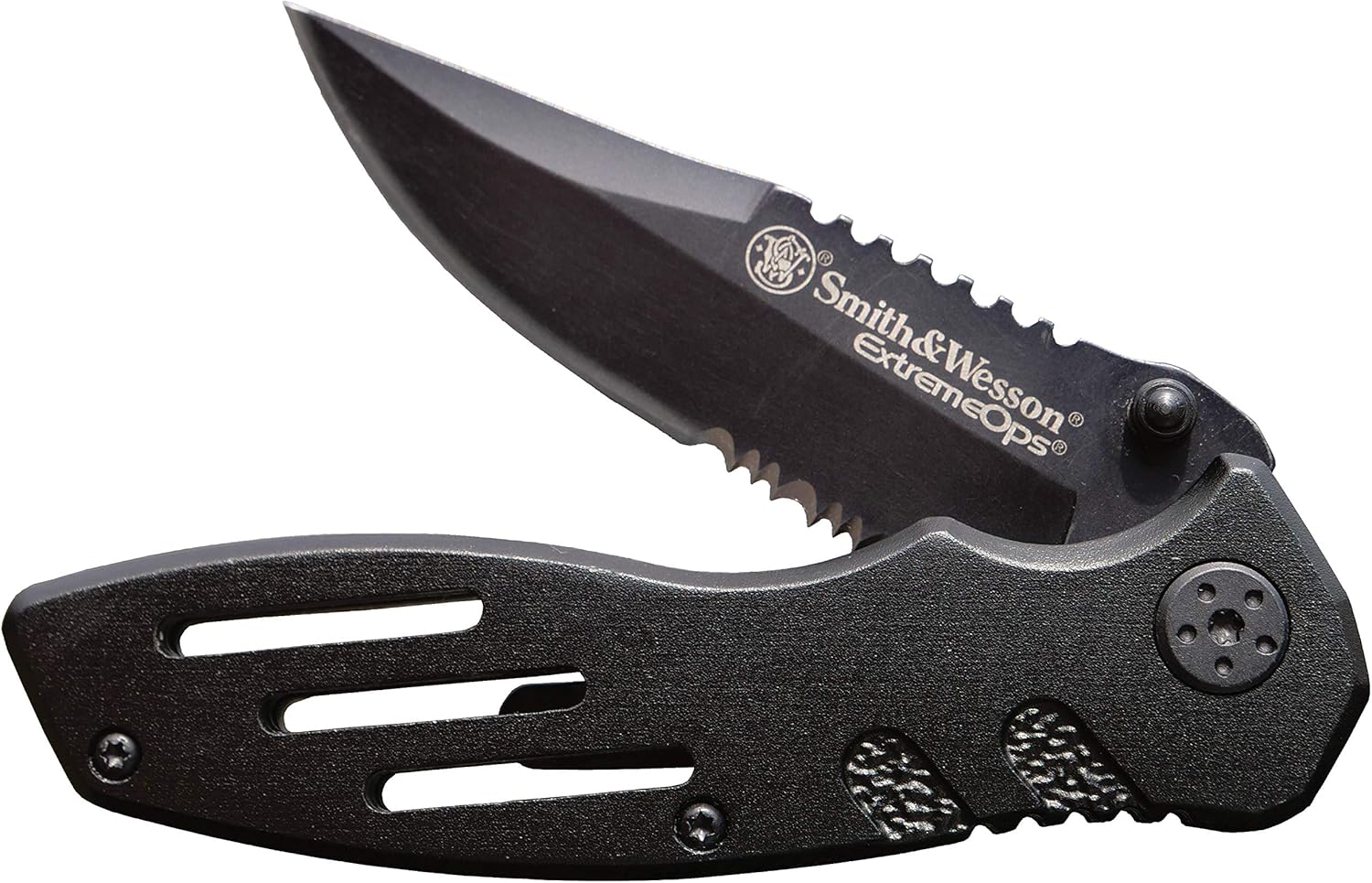
Many users cross-shop the Kalashnikov with Smith & Wesson knives. Generally, the Boker is superior in build quality. While S&W knives often use spring-assist mechanisms (where you must start the blade opening manually), the Boker is a true automatic. The Boker’s aluminum handle also feels more substantial than the plastic-heavy handles often found on budget S&W models.
Vs. Cheap Gas Station Knives
It is tempting to compare the Boker to the M-Tech knives found at truck stops. There is no comparison. The internal springs in the Boker are heat-treated and designed for thousands of cycles. M-Tech automatics or assists often fail after a few months of hard use. The Kalashnikov is a legitimate tool; the others are often novelties.
Alternatives for Restricted Areas
If you live in a state where automatics are illegal, you cannot carry the Kalashnikov. In that case, we recommend a robust button lock manual folder or a sturdy back lock like the Buck 110 or 112 series. For a tactical feel without the spring, the Cold Steel folders or fixed blades are excellent alternatives.
Pros & Cons
✅ Pros
- Incredible Value: Hard to beat for under $50.
- Snappy Action: Fires hard and reliably every time.
- Deep Carry Clip: Rides low in the pocket for discreet carry.
- Variety: Available in Dagger, Wharncliffe, Drop Point, and tons of colors (including the famous “Dessert Warrior”).
- Ergonomic: Secure grip inspired by the AK-47.
❌ Cons
- Paint Wear: The handle coating scratches and wears off easily.
- Pocket Clip Strength: The clip can be a bit weak and bend if snagged.
- Blade Play: Minor side-to-side play is common in this price range (though usually adjustable).
- Legal Restrictions: Being an automatic, it is illegal to carry in many jurisdictions.
The History Behind the Name: Boker and the Kalashnikov License
To understand why this knife exists at all, it helps to understand Boker as a company. Heinrich Boker’s cutlery business traces its roots back to Solingen, Germany, a city that has been a center of blade manufacturing since the medieval period. The Boker tree-brand trademark is one of the oldest registered trademarks still in commercial use anywhere in the world, and the company has produced everything from kitchen cutlery to straight razors to military-contract fixed blades over the past century and a half.
Boker Plus, the sub-brand responsible for the Kalashnikov series, was created specifically to work with outside designers and licensed intellectual property. Rather than manufacturing every knife in Solingen, Boker Plus sources many of its designs from factories in Taiwan and China, which keeps production costs down and allows the company to offer automatics at a price point that would be unthinkable for a knife built entirely in Germany. This is an important distinction for buyers to understand: the Kalashnikov is a Boker-branded product, but it is not a “Made in Germany” knife. Knowing this up front prevents disappointment when the fit and finish doesn’t match Boker’s higher-end Solingen-forged lines.
The Kalashnikov name itself was licensed through an agreement that allowed Boker to use imagery and branding associated with the Kalashnikov Concern, the Russian defense manufacturer behind the AK-47 and AK-74 rifles. This is why the knife series carries designations like “Kalashnikov 74″—a direct reference to the AK-74 rifle platform that succeeded the original AK-47. The licensing deal extended beyond knives too, at various points covering apparel, lighters, and other AK-branded merchandise, but the automatic knife line is by far the most commercially successful product to come out of that partnership.
It’s worth noting that the rifle association is purely thematic. There is no mechanical or engineering relationship between the AK-74 rifle and the knife that bears its name—the “74” is a marketing choice, not a technical specification. Boker leaned into the branding because the Kalashnikov name is globally recognized as shorthand for weapons that work under adverse conditions without complaint, and that reputation for dependability is exactly what the company wanted associated with an inexpensive automatic knife.
The Full Kalashnikov Lineup: Which Model Should You Buy?
One of the most common points of confusion for first-time buyers is the sheer number of Kalashnikov variants on the market. Boker has released dozens of colorways, blade shapes, and sizes under the same general platform. Understanding the naming conventions and differences will save you from ordering the wrong knife.
Standard vs. XL vs. Mini
The standard Kalashnikov 74 carries a blade around 3.25 inches, but Boker also produces an XL variant with a blade closer to 3.5 inches and a noticeably longer, thicker handle to match. The XL is worth considering if you have larger hands or simply want a more substantial knife in the pocket. On the opposite end, there are compact and mini versions with blades under 3 inches, designed for jurisdictions with stricter blade-length limits or for users who want the automatic action in a smaller, lighter package. Weight and overall length scale roughly with blade length across the line, so a mini model will feel noticeably lighter in the pocket than the standard 3.7-ounce version.
Blade Shape Variants
Beyond size, the Kalashnikov comes in several distinct blade grinds, each suited to different tasks:
- Drop Point: The most common and versatile grind, good for general EDC tasks like opening packages, cutting cordage, and light food prep.
- Dagger (Spear Point): A symmetrical double-edged grind that leans harder into the tactical aesthetic. Because both edges need sharpening, upkeep takes slightly longer, and in many jurisdictions a double-edged blade is treated as a “dagger” under the law with its own separate restrictions, so this is the variant to research most carefully before buying.
- Wharncliffe: A straight edge with a spine that curves down to meet the point. This shape excels at precise, controlled cuts and is popular with users who do a lot of box-cutting or utility work.
- Tanto: A reinforced tip with an angular grind, marketed toward users who want maximum tip strength for prying or piercing harder materials.
Special and Limited Editions
Beyond the core catalog, Boker periodically releases limited colorways through dealer exclusives and collaborations. These runs tend to sell out quickly and can command a premium on the secondary market once discontinued. Collectors specifically hunting for a particular anodized color or graphic pattern should expect to pay more than the standard MSRP once a run sells out, and should be cautious of inflated “collector” pricing on marketplaces outside of authorized retailers.
Automatic Knife Laws in the United States: A Closer Look
Because the Kalashnikov is a true automatic (commonly called a “switchblade” under most state statutes), it is subject to a patchwork of laws that is significantly more restrictive than the rules governing manual folders, assisted-openers, or flippers. This is the single most important thing to research before buying one, and it’s a topic we get more reader questions about than almost anything else on this site.
Federal Law: The Switchblade Act
At the federal level, the Switchblade Knife Act of 1958 restricts the interstate shipment, introduction, and transportation of automatic knives, with carve-outs for certain government entities, veterans with a disability affecting one hand, and knives with blades under a certain length in some interpretations. In practice, this federal law mostly affects how retailers ship these knives across state lines rather than personal ownership within a state, but it’s the reason many general merchandise retailers won’t carry automatics at all, even in states where they are perfectly legal to own.
State-by-State Variation
State laws generally fall into a few broad categories, though the exact wording and enforcement varies by jurisdiction and can change from year to year:
- Generally permissive states: A number of states have repealed or narrowed their switchblade bans over the last decade, allowing ownership and open or concealed carry with few extra restrictions beyond standard knife laws.
- Ownership-only states: Some jurisdictions allow you to own an automatic knife at home but restrict carrying it in public, meaning the Kalashnikov could be a fine collector’s piece or home-defense tool but a legal liability in your pocket.
- Profession-restricted states: A handful of states limit automatic knife carry to law enforcement, military, or certain licensed professions such as commercial fishermen, arborists, or linemen who have historically been granted exceptions for work-related utility.
- Fully restricted states: A smaller number of states and municipalities still ban automatic knives outright, regardless of blade length or intended use.
Because this legal landscape shifts as legislatures revisit their knife statutes, we strongly encourage you to check your specific state and local city or county ordinances immediately before purchasing, rather than relying on outdated forum posts or blog comments. City-level knife ordinances can sometimes be stricter than state law even in permissive states, particularly in larger metropolitan areas.
Traveling and Shipping Considerations
If you plan to travel with a Kalashnikov, treat it the same way you would treat a firearm from a legal-compliance standpoint: research the laws of every state or country you’ll pass through, not just your origin and destination. Automatic knives are absolutely prohibited in carry-on and checked luggage under TSA rules in the United States, and they are frequently flagged and confiscated at airport security checkpoints even when packed in checked bags, since checked-bag exceptions for knives generally apply only to non-automatic designs. If you need to ship the knife rather than fly with it, expect that some carriers and marketplaces impose their own additional restrictions on automatic knife shipments independent of state law, so always read the shipping policy of wherever you purchase from.
Maintenance, Disassembly, and Long-Term Care
A budget automatic is only as good as the maintenance routine behind it. Because the Kalashnikov uses a coil-spring mechanism with more moving parts than a simple manual folder, a little routine care goes a long way toward keeping the action crisp for years.
Cleaning the Mechanism
Pocket lint, dust, and pocket debris are the biggest enemies of any automatic knife’s action. Over months of daily carry, this debris works its way into the pivot area and spring channel, gradually slowing the fire and introducing grit that accelerates wear. We recommend a compressed air blast through the pivot area every few weeks for daily carriers, followed by a drop of light oil on the pivot and spring track. Avoid thick greases, which attract more lint than they repel; a thin synthetic gun oil or dedicated knife lubricant works far better on a mechanism this size.
Should You Take It Apart?
Full disassembly of an automatic knife is a more serious undertaking than servicing a manual folder, because you are working against a compressed spring that can launch small parts across the room if you’re not careful. We generally do not recommend full teardown for casual owners. If the action has become sluggish and compressed air and lubrication haven’t solved it, it’s usually safer and cheaper to send the knife back to Boker’s service department or a knowledgeable local knife shop than to risk losing a spring detent or misaligning the plunge lock yourself. If you do decide to go further than basic pivot lubrication, work over a container or towel that will catch small parts, keep firm downward pressure on the spring-loaded components at all times, and photograph each step before removing it so you have a visual reference for reassembly.
Pivot Screw Tension
As mentioned earlier in this review, minor blade play is common on budget automatics and is usually solved with a small adjustment to the pivot screw using the correct size Torx driver. The key with an automatic is that this screw also affects how freely the blade can fire and lock; over-tightening can bind the mechanism enough that the blade fails to fully lock into the open position, which is both annoying and unsafe. Make quarter-turn adjustments, testing the fire and lockup after each one, rather than cranking the screw down in one motion.
Storage Between Uses
If you’re not carrying the knife daily, store it in a dry environment with the blade closed, ideally with a light coat of oil on the blade itself if you own one of the D2 versions, since D2 is not fully stainless and will develop surface rust spots if left damp or exposed to humidity for extended periods. A silica gel packet in the storage box or drawer is a cheap way to extend the life of the finish and blade steel alike.
Avoiding Counterfeits: How to Buy an Authentic Boker Kalashnikov
Because the Kalashnikov is one of the most popular and widely counterfeited automatic knife designs on the market, buyers need to be careful about where they purchase from. Counterfeit and clone versions circulate on various marketplaces and typically use inferior steel, weaker springs prone to premature failure, and stamped rather than properly cast handles.
Signs of a Counterfeit
Common red flags include: pricing dramatically below the normal market range, missing or incorrect Boker tree-logo stamping on the blade, inconsistent font or spacing in the “Kalashnikov” branding, a noticeably weak or “mushy” firing action compared to genuine units, and packaging that doesn’t match Boker’s typical retail box design. If a listing’s photos look inconsistent with the description, or if the seller has no other established knife listings, treat it as a warning sign.
Buying From Authorized Sources
The safest way to guarantee authenticity is to buy directly from Boker’s official storefront on a major marketplace, or from established specialty knife retailers who deal directly with Boker’s US distribution. This is also the best way to ensure you have a valid path to warranty support if something goes wrong with the mechanism.
Buyer’s Guide: Which Kalashnikov Fits Your Use Case?
With so many blade shapes, sizes, and steel options across the line, it helps to match the specific variant to your intended use rather than just grabbing whichever colorway looks best.
For General EDC and Box-Opening Duty
Stick with the standard drop point in AUS-8 if budget is the priority, or D2 if you want noticeably longer edge retention between touch-ups for the modest price increase. The standard size handle balances well in the hand for all-day carry.
For Larger Hands or a More Substantial Feel
The XL variant is the better call if the standard model feels cramped, and it also offers slightly more blade to work with for tasks like batoning small kindling or breaking down larger boxes.
For Discreet Carry or Restrictive Blade-Length Areas
The compact or mini versions keep total blade length under common regulatory thresholds while still delivering the same automatic action, which matters in jurisdictions that set a maximum legal blade length even where automatics themselves are permitted.
For Collectors
If you’re buying primarily to add to a collection rather than for hard daily use, keep an eye out for limited colorways and dealer exclusives, and prioritize buying new-in-box from an authorized retailer to preserve both authenticity and resale value.
Pocket Carry, Clip Design, and Everyday Ergonomics
Beyond the headline specs, a lot of what makes or breaks a daily-carry automatic comes down to details that only show up after weeks of actually using the thing in a pocket. The Kalashnikov has some notable strengths and weaknesses here worth calling out separately from the general ergonomics discussion earlier in this review.
Clip Position and Retention
The pocket clip sits toward the butt end of the handle in a deep-carry configuration, meaning very little of the knife protrudes above the pocket line. This is a deliberate design choice that favors discretion over quick-draw speed; a shallower carry clip would expose more of the handle and make the knife faster to acquire, but the deep-carry approach keeps the Kalashnikov from printing through pants or looking overtly tactical in casual settings. The tradeoff, as mentioned in the pros and cons section, is that the clip itself is made from a relatively thin stamped steel that can lose tension over months of insertion and removal, and can bend if snagged on a doorframe or car seat. Replacement clips are available from Boker and from third-party knife parts suppliers if yours wears out.
Carry Position and Draw Speed
Because the clip is tip-up and right-side only, left-handed users will need to draw the knife with their off hand or adjust their carry position accordingly, since there’s no factory option to flip the clip to the other side. For right-handed users, the tip-up orientation means the blade deploys away from the hand when drawn correctly, which is the safer default orientation for a knife with this much firing force behind it.
Weight Distribution and All-Day Comfort
At 3.7 ounces, the standard Kalashnikov sits in a comfortable middle ground: heavy enough to feel substantial and well-made, but light enough not to sag a pocket or become annoying during a full day of wear. The aluminum handle construction is a big part of why the knife achieves this balance; a similarly sized knife with a steel handle would be noticeably heavier and less pleasant for all-day carry.
Glove Compatibility
One recurring complaint from cold-weather and work-glove users is that the flush-mounted fire button, while excellent for preventing accidental deployment, can be difficult to locate and depress with thick gloves on. If you plan to carry this knife for outdoor winter work or in a job that requires gloves, spend some time practicing the draw and fire motion with your specific gloves before relying on it in the field, since the button’s low profile takes more deliberate pressure to activate than a raised button would.
Warranty, Customer Support, and Replacement Parts
Because an automatic mechanism has more that can theoretically go wrong than a simple manual folder, it’s worth knowing what kind of support backs up your purchase before you buy.
Boker’s Warranty Policy
Boker generally warranties its knives against manufacturing defects in materials and workmanship, though normal wear items like the painted finish, pocket clip tension, and edge sharpness typically fall outside what a manufacturer’s warranty covers. If your knife arrives with a mechanism that won’t fire reliably, fails to lock into the open position, or has a defect in the blade steel itself, that’s the kind of issue a warranty claim is designed to address, as opposed to cosmetic paint wear from months of pocket carry.
Getting Warranty Service
The process typically starts by contacting Boker’s customer service department directly, describing the issue, and following their instructions for return shipping. Keep your original receipt or order confirmation, since proof of purchase from an authorized retailer speeds up the process considerably and helps rule out the counterfeit-unit concerns discussed earlier in this review.
Replacement Parts
Common wear items like pocket clips and pivot screws are generally available either directly through Boker or through specialty knife parts retailers, which means a worn clip doesn’t have to mean the end of the knife’s useful life. Because the Kalashnikov shares hardware sizing across much of its model range, parts are often interchangeable between the different blade-shape and color variants, though it’s worth confirming compatibility with your specific model before ordering.
Collector Culture and the Kalashnikov’s Place in the Hobby
Few budget knives have generated the kind of dedicated collector following that the Kalashnikov enjoys. Online knife forums and enthusiast communities have entire threads dedicated to tracking down discontinued colorways, comparing production-year differences, and debating which blade shape is the “true” original design.
Why a Budget Knife Became a Collector’s Item
Part of the appeal is simple economics: at under $60, it’s realistic for a collector to own five or six different colorways and blade shapes without the financial commitment that a similarly sized collection of premium automatics would require. This accessibility has turned the Kalashnikov into something of a gateway knife for people getting into automatic collecting for the first time, in the same way that many gun collectors cut their teeth on affordable, widely available rifle platforms before moving into rarer or more expensive pieces.
Notable Variants Among Collectors
The “Dessert Warrior” mentioned earlier in our FAQ has become something of a community inside joke and a genuinely sought-after variant precisely because of its origin as a typo that Boker leaned into rather than corrected. Beyond that specific run, collectors also chase early-production units with slight stamping or handle-texture differences from later runs, though these differences are subtle enough that they matter far more to dedicated collectors than to someone simply looking for a reliable EDC knife.
Resale Value Considerations
Standard colorways in common blade shapes hold relatively little premium on the secondary market, since Boker keeps them in steady production. Limited or discontinued runs, by contrast, can appreciate meaningfully once they’re no longer available new, particularly if the knife is unused and still in original packaging. If resale value matters to your purchase decision, buying limited runs new and keeping them unopened is the more reliable path to any future premium, while a knife you intend to actually carry and use should be evaluated purely on its merits as a tool rather than as a future investment.
Steel Hardness, Grind Geometry, and What the Numbers Actually Mean
We’ve discussed AUS-8 versus D2 in terms of general performance, but knife buyers who want to understand the underlying metallurgy often ask about the actual hardness numbers and how they translate to real-world use.
Rockwell Hardness Explained
Steel hardness is measured on the Rockwell C scale (HRC), and it’s the single number most enthusiasts look at first when comparing steels. AUS-8 is typically heat-treated to a relatively moderate hardness range, which is precisely why it’s so forgiving to sharpen freehand—softer steel simply removes material faster under an abrasive stone. D2, by contrast, is heat-treated to a notably higher hardness range, which is the direct cause of both its superior edge retention and its increased difficulty to sharpen. As a rule of thumb across the whole knife industry, every few points of HRC increase roughly correlates with steel holding an edge longer but also becoming more brittle and harder to resharpen, and the Kalashnikov’s two steel options sit at opposite ends of that tradeoff by design, giving buyers a genuine choice rather than a marginal difference.
Grind Geometry and Cutting Performance
Hardness numbers only tell part of the story; the actual grind geometry matters just as much for real-world cutting performance. The Kalashnikov’s drop point and wharncliffe variants use a fairly standard hollow or flat grind depending on the specific production run, optimized more for general utility slicing than for the kind of thin, food-prep-oriented grind you’d find on a dedicated kitchen knife. This is worth knowing if you’re expecting the kind of effortless push-cutting you’d get from a thinly ground kitchen paring knife; the Kalashnikov’s grind favors edge durability for a folding tactical knife over ultimate slicing thinness, which is the correct tradeoff for a knife that’s going to see box tape, rope, and general utility work rather than delicate food prep.
Spring Steel and Mechanism Longevity
Less discussed than the blade steel, but arguably just as important to the ownership experience, is the coil spring itself that powers the automatic action. Boker uses a heat-treated spring steel designed for a high number of open-close cycles before fatigue sets in and the “kick” of the action starts to weaken. Under normal daily-carry use, most owners report years of reliable firing before noticing any meaningful decline in spring tension, though heavy “flicking” for fun rather than practical deployment will shorten that lifespan simply due to the higher cycle count being run through the mechanism over the same calendar period.
Caring for Your Kalashnikov by Climate and Environment
How you maintain the knife should shift somewhat depending on where and how you actually carry it. A knife carried in a dry, temperate office environment faces a very different set of challenges than one carried on a boat, a job site, or a humid coastal town.
Humid and Coastal Environments
Salt air and high humidity are the two biggest threats to any knife steel that isn’t fully stainless, which puts D2 owners in coastal or humid regions at higher risk of surface rust spotting than AUS-8 owners in the same environment. If you live in this kind of climate and prefer the D2 version’s edge retention, plan on wiping the blade dry after any exposure to moisture and applying a light coat of oil more frequently than an inland, dry-climate owner would need to.
Dry, Dusty, or Sandy Environments
In arid or dusty conditions, corrosion is less of a concern, but fine grit working its way into the pivot and spring channel becomes the bigger threat to the action’s smoothness. Compressed air becomes your best maintenance tool in this kind of environment, and it’s worth blowing out the mechanism more frequently than the general few-weeks guideline mentioned earlier if you’re regularly exposing the knife to sand or fine construction dust.
Cold Weather Carry
Extreme cold can make the lubricant inside the mechanism thicken slightly, occasionally resulting in a noticeably weaker fire in very low temperatures. If you carry the knife through harsh winters, consider a lighter-viscosity, cold-weather-rated lubricant rather than a general-purpose oil, and be aware that the flush-mounted fire button, already a minor complaint for glove users as discussed earlier, becomes even harder to actuate with cold, stiff fingers or thick winter gloves.
General Climate-Agnostic Best Practices
Regardless of environment, the two habits that do the most to extend the life of any Kalashnikov are keeping the pivot area free of accumulated debris and avoiding prolonged exposure to standing moisture. Owners who follow just these two basic habits tend to report the crisp, satisfying factory action lasting for years of regular carry, while owners who neglect maintenance entirely are the ones most likely to report a sluggish or weakening fire after a relatively short period of use.
Frequently Asked Questions
Is the Boker Kalashnikov legal to carry?
This depends entirely on your location. In the United States, federal law allows ownership, but state laws vary wildly regarding carry. Some states allow automatics for everyone, others only for law enforcement, and some ban them entirely. Always check your local laws before buying.
Does the Boker Kalashnikov have a safety lock?
No, the standard Kalashnikov 74 does not have a secondary safety switch to prevent the button from being pressed. However, the button is recessed (flush), which minimizes accidental deployment. If safety is a major concern, you might prefer a Blue Ridge Knives manual folder.
Can I sharpen the D2 steel version easily?
D2 is harder to sharpen than the AUS-8 version. We recommend using a diamond sharpening rod or a guided system. Avoid pull-through sharpeners as they can chip D2’s hard edge. See our sharpening guide for tips.
What is the “Dessert Warrior” version?
The “Dessert Warrior” is a famous, limited-edition run of the Boker Kalashnikov featuring a pink handle with sprinkles and a blue blade, resembling a donut. It started as a typo (Desert vs Dessert) and became a community favorite.
Is this knife good for self-defense?
While any sharp object can be used for defense, the Kalashnikov is primarily an EDC tool. However, its rapid deployment makes it popular among tactical users. For dedicated defensive options, you might look at neck knives or fixed blades like the ESEE JG3.
How do I fix blade play on my Kalashnikov?
Small amounts of play are normal for budget autos. You can tighten the pivot screw slightly with a Torx driver (usually T8). Don’t over-tighten, or the blade won’t deploy. A drop of Blue Loctite on the pivot screw helps keep it in the sweet spot.
Is the clip reversible?
No, the pocket clip on the standard Boker Kalashnikov is tip-up, right-hand carry only. It is not reversible for left-handed users.
Can I use this for field dressing game?
In a pinch, yes. The drop point blade shape is versatile. However, the automatic mechanism can get clogged with blood and fur, which is hard to clean. For hunting, we strongly suggest a fixed blade like those in our best field dressing knives list.
Where is the Boker Kalashnikov made?
The Kalashnikov series is produced through Boker Plus, the brand’s sub-label for outside-designed and internationally manufactured products. Unlike Boker’s premium Solingen, Germany-forged lines, the Kalashnikov is manufactured overseas, which is a major reason it can be sold at such an accessible price point.
Can I fly with a Boker Kalashnikov in checked luggage?
Generally, no. Automatic knives are treated differently from manual folders under most airline and security screening policies, and even checked-bag allowances for knives typically exclude automatics. If you need to travel with the knife, research your airline and destination’s specific rules first, or ship it separately using a carrier that permits automatic knife shipments to your destination.
How do I know if my Kalashnikov is authentic?
Check for a clean, correctly stamped Boker tree logo on the blade, consistent font spacing in the Kalashnikov branding, a firm and consistent firing action, and retail packaging that matches Boker’s standard box design. Buying from an authorized retailer or Boker’s official storefront is the most reliable way to avoid counterfeit units.
What’s the difference between the standard and XL Kalashnikov?
The XL model uses a longer blade, typically closer to 3.5 inches versus the standard 3.25-inch blade, paired with a proportionally longer and thicker handle. It suits users with larger hands or anyone who wants a more substantial knife without moving to a completely different platform.
Does the dagger version have different legal restrictions?
Often, yes. Double-edged “dagger” blades are treated as a separate category from single-edged blades in a number of jurisdictions, sometimes carrying restrictions independent of the automatic-opening mechanism itself. If you’re considering the dagger grind, check both your local automatic knife laws and your local dagger or double-edged blade laws before purchasing.
Final Verdict
The Boker Plus Kalashnikov 74 is not a perfect knife. The paint wears off, the steel isn’t a super-powder metallurgy marvel, and the clip could be stronger. But despite these minor flaws, it remains the undisputed king of budget automatic knives.
It offers a satisfying, reliable action that puts smiles on faces. It is rugged enough to be a daily beater but cheap enough that you won’t cry if you lose it. Whether you are looking for your first automatic knife, a reliable backup for your tactical kit, or just a cool piece of engineering to open Amazon boxes, the Kalashnikov delivers.
If you can legally own one, every knife enthusiast should have at least one Kalashnikov in their collection. We recommend opting for the D2 steel version for the best performance longevity.
Ready to join the Kalashnikov family?
Click below to see the latest colors, blade shapes, and pricing.
Buy Now on Amazon