Zwilling vs Henckels Knives: An In-Depth Comparison
Walk into any major kitchen supply store, and you’ll face a wall of German knives. Among them, two names dominate: Zwilling and Henckels. Their logos—one with two figures, one with a single figure—look strikingly similar. This leads to one of the most common questions I hear: Are they the same company? And if so, which one should I actually buy? After years of using both in my own kitchen, I’m here to cut through the confusion and give you the definitive answer.
Affiliate Disclosure: This post contains affiliate links. This means if you make a purchase through my links, I may earn a commission at no extra cost to you. I only recommend products I have personally used and trust. My goal is to provide honest, experience-based advice to help you find the perfect knives for your kitchen.
The Short Answer (TL;DR)
Don’t have time for a 4,000-word deep dive? Here’s the bottom line:
- Yes, they are the same parent company. The German company Zwilling J.A. Henckels makes both brands.
- Zwilling is the premium, top-tier brand. These are high-performance knives, primarily forged in Solingen, Germany, using high-carbon steel. They are aimed at serious home cooks and professionals.
- Henckels (or Henckels International) is the value-focused, entry-level brand. These knives are designed to be affordable and accessible, often manufactured outside of Germany (e.g., Spain, China, India) with slightly softer steel and simpler construction.
Think of it like Toyota and Lexus. Toyota makes reliable, affordable cars for everyone (Henckels). Lexus is their premium, luxury brand with higher performance and a bigger price tag (Zwilling).
The Core Confusion: One Company, Two Brands
Let’s clear this up right away. The parent company, founded in 1731 in Solingen, Germany, is Zwilling J.A. Henckels. Over the centuries, as they expanded globally, they realized the need for two distinct product tiers to serve different markets. This led to the creation of Henckels International.
A Tale of Two Logos: The “Twins” vs. The “Stick Figure”
The easiest way to tell them apart on a store shelf is the logo stamped on the blade.
- ZWILLING (The “Twins”): This logo features two stylized figures. It signifies the premium, German-made line. If you see the twins, you’re looking at the company’s flagship product.
- HENCKELS (The “Stick Figure”): This logo features a single stylized figure. It denotes the more affordable, internationally-made value brand.
This simple visual cue is your first and most reliable indicator of the knife’s quality, origin, and price point. Now, let’s break down what those differences really mean for you in the kitchen.
A Brief History: How One Company Became Two Brands
To really understand why Zwilling and Henckels feel simultaneously related and distinct, it helps to know how the company got here. The story starts in 1731, when master cutler Peter Henckels registered the twin figure symbol with the Cutlers’ Guild of Solingen — at the time, trademark registration for blades was taken as seriously as a patent, since a maker’s reputation was tied directly to the mark stamped on the steel.
For most of the eighteenth and nineteenth centuries, the company operated as a single, tightly focused cutlery house producing knives, scissors, and razors exclusively in Solingen. The shift toward a two-tier brand structure happened much later, largely in response to twentieth-century globalization. As international demand for kitchen cutlery grew, the company faced a choice: keep every product line German-made and accept slower growth and higher prices, or build a second, globally manufactured brand that could meet demand at accessible price points without diluting the reputation of the original German-forged line.
The result was the modern structure familiar today — Zwilling as the flagship, Solingen-rooted brand, and Henckels International (or J.A. Henckels) as the globally produced value tier. Both brands report into the same parent company, share some back-end quality control processes, and even cross-pollinate design ideas, but they’re marketed, manufactured, and priced as genuinely distinct product lines rather than a simple “good vs. better” split within one catalog.
Today the parent company’s portfolio extends well beyond knives into cookware, bakeware, small appliances, and flatware, but cutlery remains the category where the Zwilling-versus-Henckels question comes up most often, simply because it’s the product category where the price and quality gap between the two brands is most immediately felt by a shopper standing in front of a store shelf.
Blade Geometry and Edge Angle: The Technical Details That Matter
Beyond steel hardness, the actual shape ground into a blade’s edge has a major effect on how a knife feels and performs, and it’s an area where Zwilling and Henckels diverge in subtle but noticeable ways.
Edge Angle
Zwilling’s harder, ice-hardened steel allows the factory to grind a narrower edge angle — typically around 15 degrees per side, or 30 degrees inclusive — without the edge chipping or rolling under normal use. A narrower angle translates directly into a sharper-feeling blade that slices through food with less resistance. Henckels’ softer steel needs a slightly wider angle, generally in the 15 to 20 degree range depending on the line, to avoid the edge deforming during everyday cutting tasks. The wider angle is a small trade-off in outright sharpness in exchange for a more forgiving, chip-resistant edge.
Blade Profile
Both brands’ chef’s knives use a classic curved belly designed for a rocking motion, where the tip stays roughly in contact with the cutting board while the heel of the blade lifts and falls. Zwilling’s Pro line has a slightly more pronounced curve near the heel, which some cooks find speeds up fine mincing work, while Henckels’ Classic line uses a flatter curve closer to the traditional German profile, favoring a more even rock through the entire length of the blade.
Blade Thickness and Taper
Forged Zwilling blades taper more aggressively from spine to edge, a byproduct of the forging process itself, which results in less resistance and cleaner separation when slicing through dense vegetables like squash or sweet potatoes. Stamped Henckels blades maintain a more consistent thickness along the blade’s length, since they’re cut from flat stock rather than hammered into a tapered shape, which is part of why stamped knives can occasionally feel like they’re wedging rather than gliding through very dense produce.
Deep Dive: Zwilling vs. Henckels Feature Comparison
1. Manufacturing Origin & Philosophy: The Soul of the Steel
Where a knife is made tells you a lot about its heritage and intended quality.
Zwilling: German Engineering in Solingen
Zwilling knives are, with very few exceptions, manufactured in their legendary factory in Solingen, Germany. This city is known as the “City of Blades” and has a reputation for steel craftsmanship protected by law, similar to Champagne in France. A knife stamped “Solingen” must meet strict quality standards. This German heritage means a focus on precision, durability, and a “buy it for life” mentality. The entire process, from forging to finishing, is a matter of national pride.
Henckels: A Global Approach to Value
Henckels knives are made all over the world. While the design and quality control are overseen by the German parent company, the actual manufacturing is often done in countries with lower production costs, such as Spain, India, and China. This global approach is key to their strategy: delivering a reliable, functional knife at a price point that’s accessible to everyone, from college students to new homeowners.
2. Steel Quality & Blade Construction: The Heart of Performance
The type of steel used and how it’s treated is arguably the most important factor in a knife’s performance. This is where the price difference between the two brands is most justified.
Zwilling: Proprietary High-Carbon Steel
Zwilling uses a proprietary high-carbon, no-stain stainless steel formula in their German-made knives. They subject this steel to their signature FRIODUR® ice-hardening process. This involves heating the steel to extreme temperatures and then cryo-freezing it. This complex process refines the steel’s molecular structure, resulting in a blade that is:
- Harder: Typically around 57 Rockwell Hardness (HRC). This allows for a sharper, more acute edge angle (around 15° per side).
- More Durable: The refined structure makes the blade more resistant to chipping and corrosion.
- Better Edge Retention: A harder blade holds its sharp edge for significantly longer, meaning less frequent sharpening.
This superior steel is a core reason why many home chefs and professionals consider them among the best chef knife brands available.
Henckels: Reliable Stainless Steel
Henckels uses quality stainless steel sourced from their international factories. It’s a good, reliable steel that is tough and highly resistant to rust. However, it’s generally a softer steel than what’s used in Zwilling knives (typically 54-56 HRC). A softer steel means:
- Easier to Sharpen: Softer steel is less resistant to abrasion, so you can bring a dull edge back to life very quickly with a simple sharpener or honing rod.
- Lower Edge Retention: The downside is that it will lose its razor-sharp edge more quickly, requiring more frequent honing and sharpening.
- Tougher, Less Brittle: Softer steel is less likely to chip if you accidentally hit a bone, making it very forgiving for beginners.
3. Forged vs. Stamped Blades: A Difference You Can Feel
This is a major construction difference that impacts a knife’s balance, weight, and durability.
Zwilling: Primarily Forged
Most premium Zwilling lines (like the Pro, Four Star, and Professional “S”) are forged. This means each blade is heated and hammered from a single, solid piece of steel. This process creates a thicker, heavier, and more robust knife. Key features of a forged knife include:
- A Bolster: The thick piece of metal between the blade and the handle. It adds weight, provides perfect balance, and acts as a finger guard for safety.
- A Full Tang: The steel from the blade runs all the way through the handle, providing superior strength and balance. You can usually see the metal sandwiched between the handle scales.
Henckels: Primarily Stamped
Most Henckels lines (like the popular Statement and Solution series) are stamped. The blades are cut out from a large sheet of steel, like a cookie-cutter. They are then heat-treated, sharpened, and attached to a handle. Stamped knives are:
- Lighter and Thinner: They are less fatiguing to use for long periods and can feel more nimble.
- No Bolster: The blade runs straight into the handle, making them lighter but offering less balance and no finger protection.
- Partial Tang: The tang usually only extends partway into the handle, which is sufficient for most home tasks but less robust than a full tang.
Note: There are exceptions! Henckels does produce some excellent forged lines, like the Henckels Classic, which offer a fantastic bridge between the two brands’ typical styles.
4. Handle Materials & Ergonomics: Where Your Hand Meets the Blade
Steel gets most of the attention in knife debates, but the handle is what actually determines whether a knife is comfortable to use for twenty minutes of prep work. Zwilling and Henckels take noticeably different approaches here, and the differences show up the moment you pick a knife up.
Zwilling: POM Handles and Precision Riveting
Most modern Zwilling lines use a synthetic polymer called POM (polyoxymethylene), sometimes marketed as a proprietary blend. POM is dense, non-porous, and resistant to moisture absorption, which means the handle won’t swell, crack, or harbor bacteria the way older wood handles could. On forged lines like the Pro and Professional “S,” the handle is triple-riveted to a full tang, so the rivets you see on the outside are purely cosmetic reinforcement of a bond that’s already structurally sound. The handle shape itself is usually contoured with a slight belly to fill the palm, and many lines add a raised thumb rest just above the bolster to encourage a pinch grip rather than a hammer grip.
Henckels: Simpler Synthetics Built for Durability
Henckels handles are typically molded from a simpler, harder plastic composite rather than the more refined POM blend used on premium Zwilling lines. This keeps manufacturing costs down and actually has a practical upside: these handles are extremely resistant to chipping, staining, and heat, which makes them forgiving for a household kitchen where knives get tossed in a drawer or left to air dry near a stove. Some Henckels sets, particularly in the Modernist and Graphite lines, use full stainless-steel handles instead of synthetics. These give the knife a sleek, seamless look and are very easy to sanitize, but they can feel slippery when wet and add weight toward the handle rather than the blade, shifting the balance point compared to a traditional forged German knife.
Grip Comfort in Practice
In my own testing, the curved bolster on the Zwilling Pro consistently won out for extended prep sessions — after twenty minutes of dicing vegetables, my hand showed no fatigue points. The Henckels Statement’s lighter stamped handle, by contrast, is easier to maneuver quickly but transmits more vibration through small, repetitive cuts. Neither is objectively wrong; it comes down to whether you value heft and stability or speed and lightness.
5. Warranty & Lifetime Guarantee: What Happens If Something Goes Wrong
This is one of the most overlooked differences between the two brands, and it’s a real factor in total cost of ownership.
Zwilling’s Lifetime Warranty
Zwilling backs the vast majority of its forged, German-made knives with a limited lifetime warranty against manufacturing defects in materials and workmanship. This doesn’t cover normal wear like a dulled edge, accidental chipping from cutting through bone, or rust caused by improper care, but it does mean that a genuine defect — a handle that separates from the tang, for example — is the company’s responsibility to make right. Because the warranty is tied to defects rather than performance over time, it’s still worth registering your purchase and keeping the receipt if you’re buying a knife you expect to use for decades.
Henckels’ Warranty Coverage
Henckels also offers a limited warranty on most of its lines, but the terms are generally narrower and vary more by product series than Zwilling’s do. Entry-level stamped sets purchased through mass retailers sometimes carry shorter or more limited coverage than the forged Classic line. If warranty length matters to your purchase decision, it’s worth checking the specific product listing or the packaging insert for the exact series you’re considering, since “Henckels” as a brand name spans a wide range of manufacturing tiers.
What the Warranty Doesn’t Cover
Neither brand’s warranty covers what’s actually the most common failure point for a kitchen knife: edge dulling from normal use, rust from being left wet, or damage from being run through a dishwasher. Both companies explicitly recommend hand-washing for this reason, and putting a warrantied knife in a dishwasher can void coverage entirely.
6. Manufacturing Countries Explained: Reading the Fine Print
“Made in Germany” carries real weight in the knife world, but it’s worth understanding exactly what each country of origin means for the knife in your hand.
- Germany (Solingen): Reserved almost exclusively for premium Zwilling lines. Solingen is a legally protected regional designation in Germany, similar to how Champagne must come from the Champagne region of France — a knife can only carry the “Solingen” stamp if key production steps happen within the city.
- Japan: Some higher-end Zwilling and Miyabi lines are produced in Japan, blending German design philosophy with Japanese steel and grinding techniques for a thinner, sharper edge geometry.
- Spain: Home to Zwilling’s Henckels Classic production. Spanish factories use imported German steel but finish and assemble the knives locally, which keeps costs down while retaining a forged construction.
- China: Used for many entry-level, stamped Henckels lines such as Statement and some Solution products. Quality control is still overseen by the parent company, but material costs and labor are significantly lower, which is reflected in the retail price.
- India and Thailand: Additional manufacturing hubs for value-tier Henckels cookware and cutlery, following the same cost-driven logic as Chinese production.
A country of origin isn’t a perfect proxy for quality — a well-made stamped knife from China can still be a great tool for its price point — but it’s a useful signal for what construction method and steel grade to expect before you even read the product description.
Head-to-Head: Popular Knife Lines Reviewed
Let’s move from theory to practice. I’ve spent countless hours with these knives, and here’s my breakdown of some of the most popular lines from each brand you can find on Amazon.
Top Pick from Zwilling: Zwilling Pro 8-inch Chef’s Knife

The Professional’s Choice at Home
This is, in my opinion, the pinnacle of Zwilling’s design. The Pro line is forged from high-carbon German steel and features a unique curved bolster. This design encourages a proper “pinch grip,” making the knife feel like a natural extension of your hand. It’s perfectly balanced, incredibly sharp out of the box, and holds its edge for a very long time. Dicing an onion is effortless; the blade glides through without any wedging. It’s a true workhorse.
Pros
- Exceptional balance and ergonomics
- Curved bolster promotes a perfect grip
- Incredibly sharp and holds its edge
- Forged in Germany for maximum durability
Cons
- Premium price point
- Can feel heavy for some users
Best Value from Zwilling: Zwilling Four Star 8-inch Chef’s Knife

The Timeless Classic
The Four Star line has been a bestseller for over 40 years for a reason. It features the same German-forged, ice-hardened blade as the Pro line but has a simpler, molded synthetic handle and a standard bolster. This makes it slightly lighter and more affordable. It’s an incredibly comfortable and reliable knife that offers 90% of the Pro’s performance for a lower price. It’s a fantastic entry point into the world of premium German cutlery.
Pros
- Same high-quality blade as premium lines
- Comfortable and secure molded handle
- Lighter than many other forged knives
- Excellent performance for the price
Cons
- Handle design is less refined than Pro
- Standard bolster, not curved
Top Pick from Henckels: Henckels Classic 8-inch Chef’s Knife

Forged Performance on a Budget
This is the secret weapon in the Henckels lineup. The Henckels Classic is forged, not stamped, and made in Spain from German stainless steel. It features a traditional three-rivet handle and a full tang, giving it the satisfying heft and balance of a more expensive knife. While the steel is a touch softer than Zwilling’s, it’s a massive step up from most entry-level knives. It offers an incredible taste of premium performance at a fraction of the cost. For anyone torn between stamped and forged, this is the perfect compromise.
Pros
- Forged construction provides great balance
- Durable full-tang design
- Excellent value for a forged knife
- Made in Spain with German steel
Cons
- Needs more frequent honing than Zwilling
- Slightly less refined finish
Best Starter Set: Henckels Statement 15-piece Knife Block Set

The Ultimate Kitchen Starter
If you’re outfitting a kitchen for the first time or looking for one of the best affordable chef knives in a complete package, the Statement set is a runaway bestseller for a reason. These are stamped, lightweight knives made from high-quality stainless steel. The set includes everything you need: a chef’s knife, bread knife, paring knives, santoku, steak knives, and a block. They are sharp, comfortable, and easy to care for. While a single blade won’t compete with a Zwilling Pro, the sheer value of the entire set is unbeatable.
Pros
- Incredible value for a complete set
- Lightweight and easy to handle
- Includes steak knives and sharpening steel
- Dishwasher safe (though hand-washing is recommended)
Cons
- Stamped blades lack the balance of forged
- Requires frequent sharpening to stay keen
Comparison Table: Zwilling vs. Henckels at a Glance
| Feature | ZWILLING (e.g., Pro, Four Star) | HENCKELS (e.g., Classic, Statement) |
|---|---|---|
| Primary Manufacturing | Solingen, Germany | Global (Spain, India, China) |
| Typical Blade Type | Forged | Stamped (with some forged exceptions) |
| Steel Quality | High-Carbon, Ice-Hardened (Harder) | Standard Stainless Steel (Softer) |
| Rockwell Hardness (HRC) | ~57 HRC | ~54-56 HRC |
| Edge Retention | Excellent | Good |
| Bolster & Full Tang | Yes (Standard on forged lines) | Typically no (Except on forged lines like Classic) |
| Price Point | Premium / Investment | Value / Budget-Friendly |
| Target Audience | Serious Home Cooks, Professionals | Beginners, Students, Budget-Conscious |
Price Range Breakdown: What You’ll Actually Pay
Price is often the deciding factor once you understand the quality differences, so let’s talk real numbers. These are general market ranges for an 8-inch chef’s knife in each tier — exact pricing fluctuates with sales, so always check the current listing before assuming these figures are exact.
- Henckels Statement / Solution (stamped, entry-level): Typically the most affordable single knives in either brand’s lineup, often priced similarly to a mid-range grocery-store knife but with noticeably better steel and fit-and-finish.
- Henckels Classic (forged, mid-tier): A step up in price from the stamped lines, reflecting the forged construction and full tang, while still costing meaningfully less than any German-forged Zwilling knife.
- Zwilling Four Star (forged, mid-premium): Priced above the Henckels Classic but below the flagship Zwilling Pro, offering nearly identical blade performance in a simpler handle.
- Zwilling Pro / Professional “S” (forged, premium): The highest price point of the lines covered in this guide, reflecting German manufacturing, the curved ergonomic bolster, and FRIODUR ice-hardening.
- Zwilling Kramer & Miyabi collaborations (super-premium): Limited-run or Japanese-influenced collections that sit above even the standard Zwilling Pro line, aimed at collectors and serious enthusiasts rather than everyday buyers.
A useful way to think about the spread: a full Henckels Statement block set can cost roughly the same as a single Zwilling Pro chef’s knife. Neither approach is wrong — one buys you breadth of coverage across knife types, the other buys you a single tool built to a much higher standard.
Knife Series Directory: Decoding the Product Names
One of the biggest sources of confusion when shopping for either brand is the sheer number of product line names. Here’s a quick-reference guide to the series you’re most likely to encounter while browsing.
Zwilling Series Guide
- Zwilling Pro: The brand’s flagship forged line, featuring the signature curved bolster and full tang. This is the line most often recommended for serious home cooks.
- Zwilling Four Star: A long-running bestseller with a simpler molded handle but the same forged, ice-hardened blade as the Pro line.
- Zwilling Professional “S”: An older flagship design with a more traditional bolster shape, still widely available and popular with cooks who prefer a classic profile.
- Zwilling Twin Signature: A budget-friendlier forged line within the Zwilling brand, positioned between Henckels Classic and Zwilling Four Star.
- Miyabi (by Zwilling): A Japanese-produced sub-brand using harder, thinner steel and traditional Japanese blade profiles, aimed at cooks who want Japanese-style performance with Zwilling’s backing.
- Zwilling x Kramer: A limited collaboration line with bladesmith Bob Kramer, representing some of the most expensive knives either brand produces.
Henckels Series Guide
- Henckels Classic: The brand’s forged flagship, made in Spain with German steel, offering a full tang and traditional three-rivet handle.
- Henckels Statement: A stamped, budget-oriented line frequently sold as complete block sets — the line featured earlier in this guide.
- Henckels Solution: Another stamped, value-tier line with a slightly different handle profile, often bundled in starter sets.
- Henckels Definition: A modern stamped line with a more contemporary handle shape, sitting in a similar price bracket to Statement.
- Henckels Silvercap / Modernist: Lines that use full stainless-steel handles for a sleek, seamless look, trading some grip warmth for easy cleaning and a modern aesthetic.
When you see a knife described simply as “Henckels,” always check which of these series it belongs to — the gap in construction and price between Henckels Classic and Henckels Statement is nearly as large as the gap between Henckels and Zwilling as brands.
How Do They Compare to Other Brands?
Understanding where Zwilling and Henckels sit in the broader market is crucial. The world of cutlery is vast, with fierce competition from other German and Japanese makers.
For instance, the classic German knife debate often comes down to Wüsthof vs. Zwilling. Both are Solingen-based titans, but they have subtle differences in blade angle and handle philosophy. For a complete breakdown, comparing them to the Japanese giant Shun is also essential, which you can read about in our Wüsthof vs. Zwilling vs. Shun guide. Similarly, when considering the value offered by Henckels, it’s impossible to ignore the Swiss powerhouse Victorinox. We’ve compared them directly in our Henckels vs. Victorinox analysis. In fact, many people cross-shop these value champions against the premium brands, leading to matchups like Wüsthof vs. Victorinox and, of course, a deep dive into Victorinox vs. Zwilling. It’s a fascinating world of trade-offs between performance, durability, and price.
Weight and Balance: A Closer Look
Weight is one of those specs that doesn’t show up on a spec sheet the way steel hardness does, but it dramatically affects how a knife feels in extended use, and it’s a direct consequence of the forged-versus-stamped divide covered earlier.
An 8-inch forged Zwilling chef’s knife typically weighs noticeably more than a comparably sized stamped Henckels knife, with the difference concentrated at the bolster and the base of the blade. This forward-and-center weighting is what gives forged knives their “self-guiding” feel during a rocking chop — the weight of the blade does some of the work for you. Stamped Henckels knives, by contrast, are weighted more toward the handle, since there’s no heavy bolster to counterbalance, which makes them feel nimbler and easier to maneuver in quick, precise motions but requires slightly more active force from your arm during heavy chopping tasks like breaking down a butternut squash.
Neither weighting is universally better — professional kitchens are split on the question, and it genuinely comes down to personal preference and the size and strength of the person holding the knife. Cooks with smaller hands or less forearm strength often prefer the lighter Henckels feel for long prep sessions, while cooks who do a lot of heavy-duty chopping tend to gravitate toward the momentum a forged Zwilling knife provides.
Where to Buy: Avoiding Fakes and Getting the Best Price
Both brands are popular enough that counterfeit and gray-market listings occasionally show up in online marketplaces, so it’s worth knowing how to shop safely.
Trusted Sources
The safest options are Zwilling’s and Henckels’ own official websites, Amazon listings that are sold and shipped directly by Amazon or by the brand itself, and major kitchenware retailers like Williams Sonoma, Sur La Table, or Bed Bath & Beyond. Listings from third-party marketplace sellers with unusually low prices, inconsistent photos, or no brand verification badge are worth extra scrutiny before purchasing.
Timing Your Purchase
Both brands run predictable sales cycles. Major discount events cluster around Black Friday and Cyber Monday, with Zwilling in particular known for offering some of its steepest discounts of the year during this window — sometimes 40 to 50 percent off flagship lines like the Pro series. Amazon Prime Day is another reliable window for discounts on both brands. Outside of those events, Henckels sets go on sale more frequently throughout the year given their higher sales volume and broader retail distribution.
Open-Box and Factory Seconds
Zwilling operates factory outlet stores, both physical locations and periodic online outlet sales, where knives with minor cosmetic blemishes — a slightly uneven handle finish, for example — are sold at a significant discount despite being functionally identical to full-price retail knives. This is one of the best-kept secrets for getting genuine Solingen-forged Zwilling knives at a price closer to Henckels territory.
Common Mistakes to Avoid When Choosing Between the Two
After years of fielding questions on this exact comparison, a handful of avoidable mistakes come up again and again.
- Assuming “Henckels” always means the same product. As covered in the series directory above, Henckels spans stamped entry-level lines and a forged Classic line that’s genuinely closer to Zwilling in construction. Always check the specific series before comparing prices.
- Buying a full 15-piece block set when you only need three knives. Block sets look like great value, but most home cooks use a chef’s knife, a paring knife, and a bread knife for 90 percent of tasks. If the rest of the set will sit unused, a smaller set or open-stock purchase of just those three blades is often the better investment.
- Ignoring handle size relative to your hand. Neither brand offers dramatically different handle sizing across most lines, but if you have particularly small or large hands, it’s worth handling a knife in person before committing to a premium purchase online.
- Overlooking the cutting board. As mentioned in the care section above, using the wrong cutting surface will dull any knife regardless of brand, making the steel-quality debate somewhat moot if you’re cutting on glass or stone.
- Buying based on looks alone. Both brands have visually striking lines with damascus-pattern blades or unusual handle materials. These are beautiful, but the pattern itself doesn’t change core performance — make sure the underlying line (Pro, Four Star, Classic, Statement) matches your actual needs before the aesthetics factor in.
Choosing the Right Knife Type: Beyond the Chef’s Knife
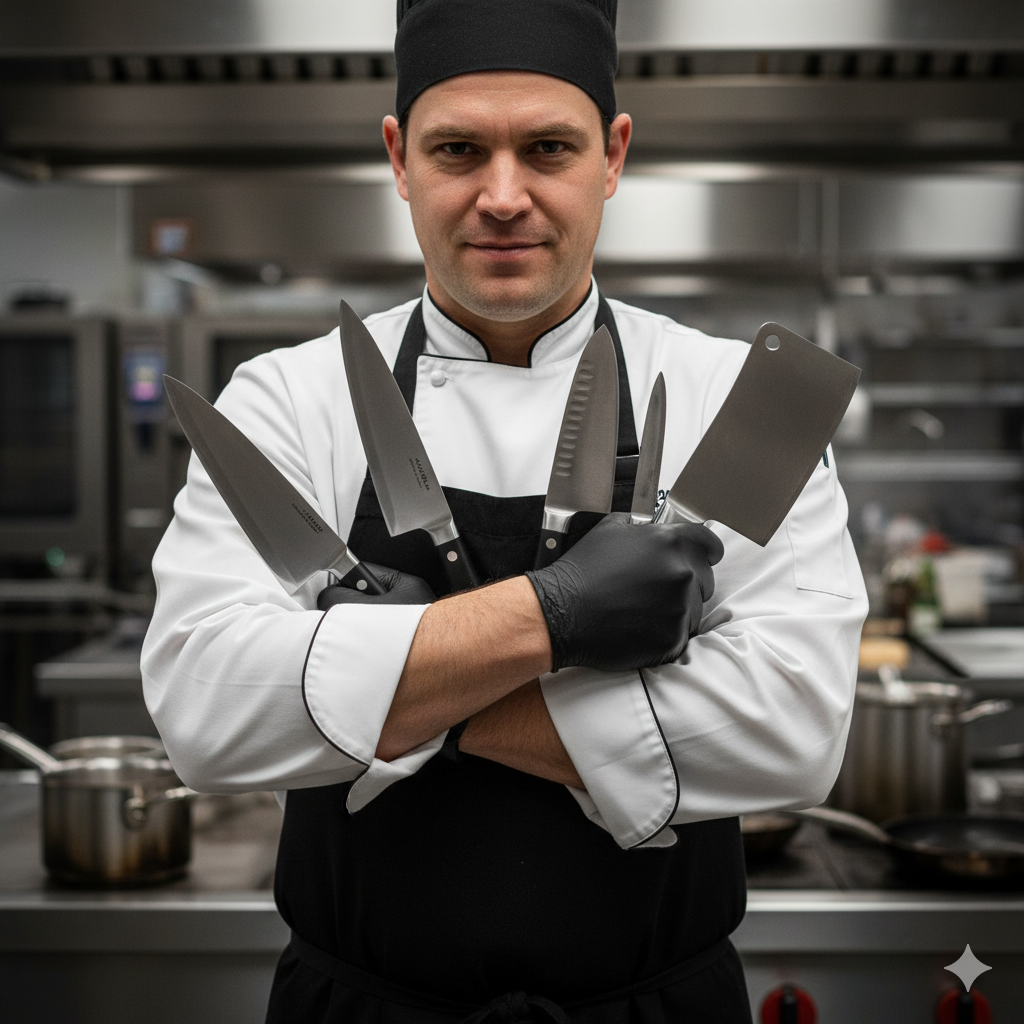
This guide has focused heavily on the 8-inch chef’s knife because it’s the workhorse of any kitchen, but both brands offer full lineups of specialized blades. Here’s how to think about the rest of your collection.
Santoku Knife
A santoku is a shorter, wider blade with a flatter edge profile than a chef’s knife, designed for a straight up-and-down chopping motion rather than the rocking motion a Western chef’s knife favors. Both Zwilling and Henckels offer santoku versions across most of their major lines. If you find a full-size chef’s knife intimidating or unwieldy, a santoku is often an easier knife to build confidence with, and it excels at vegetable prep in particular.
Paring Knife
A 3 to 4-inch paring knife handles detail work: peeling, trimming, deveining shrimp, hulling strawberries. Both brands include one or two paring knives in nearly every block set, and the steel and construction quality typically mirrors whatever tier the rest of the set belongs to. A Zwilling paring knife will hold its edge notably longer than a Henckels stamped paring knife, but because these blades see lighter use than a chef’s knife, many cooks find the difference less noticeable day to day.
Bread Knife
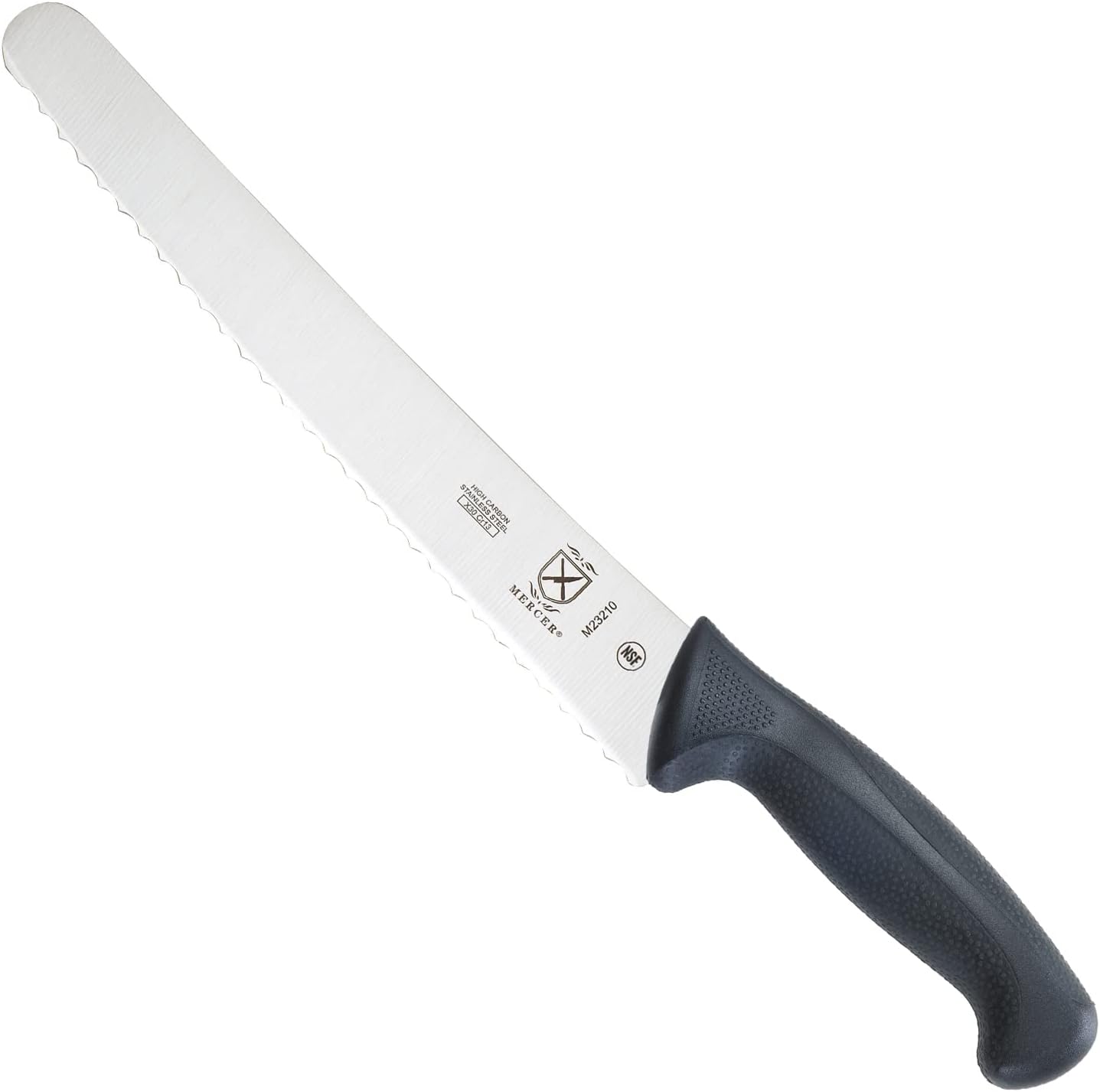
Bread knives use a serrated edge rather than a straight one, which means the hardness and sharpening philosophy that separates Zwilling from Henckels matters less here — a serrated edge stays functional far longer than a straight edge regardless of steel hardness, since it’s cutting through friction and sawing rather than a clean slice. This is one category where the Henckels stamped bread knives included in a set genuinely punch above their price.
Utility Knife
Sitting between a paring knife and a chef’s knife in size, a utility knife is the answer to “this is too big for a paring knife but I don’t want to pull out the chef’s knife.” It’s a genuinely useful blade for sandwiches, small fruits, and quick tasks, and it’s included in most mid-size and larger block sets from both brands.
Building a Mixed Collection
You don’t have to choose one brand exclusively. A common strategy among experienced home cooks is to invest in a single premium Zwilling chef’s knife as the primary workhorse, then round out the rest of the collection — paring knives, bread knife, kitchen shears, steak knives — with a more affordable Henckels set. This gives you premium performance where it matters most (the knife you’ll use for 80% of your cutting tasks) without paying premium prices for blades that see comparatively light use.
Care and Maintenance: Making Either Brand Last
Regardless of which brand or line you choose, proper care has a bigger impact on how long a knife stays sharp and looking new than almost any other factor.
Washing
Hand-wash immediately after use with warm water and mild dish soap, then dry the blade completely before storing it. Never let a knife — from either brand — soak in a sink full of water, and never run it through the dishwasher even if the packaging claims it’s dishwasher safe. Prolonged moisture exposure, harsh detergents, and contact with other utensils in a dishwasher are the leading causes of premature dulling, staining, and handle degradation.
Honing vs. Sharpening
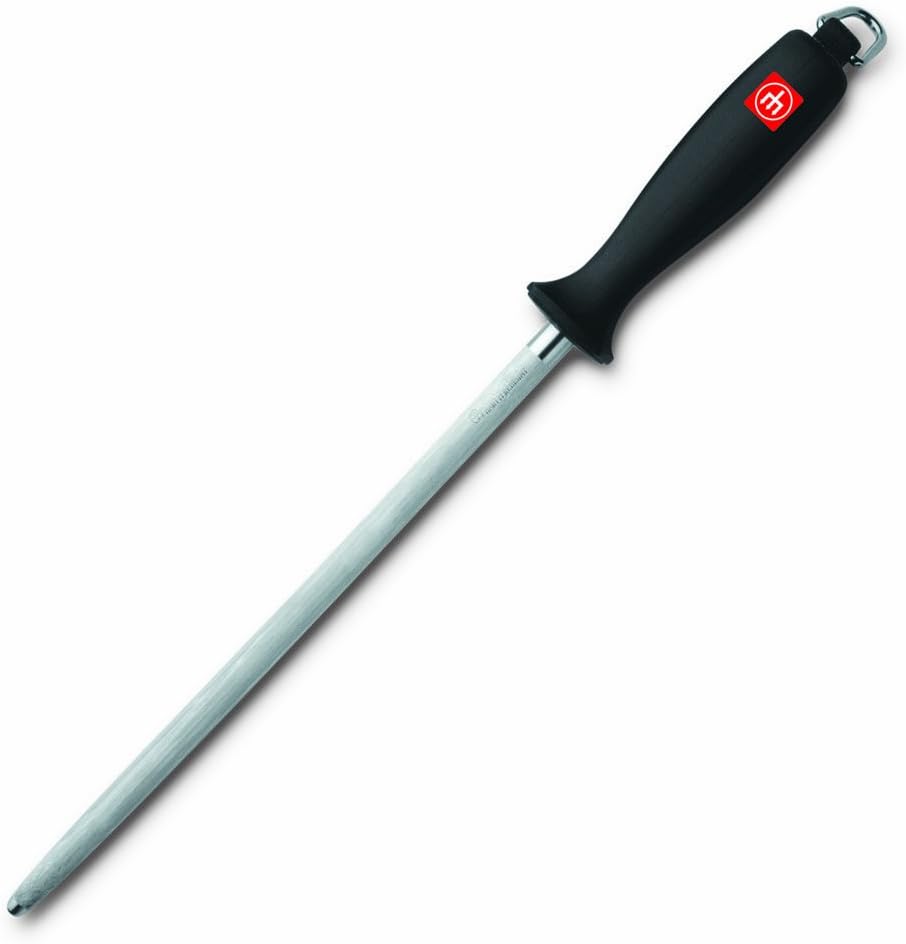
These two terms get used interchangeably but describe different maintenance tasks. Honing realigns a blade’s existing edge using a honing steel or ceramic rod, and should be done every few uses to keep a knife performing at its best — it doesn’t remove any metal. Sharpening actually grinds away a small amount of steel to create a new edge, and should only be needed once or twice a year for a well-maintained Zwilling knife, or somewhat more often for a Henckels knife given its softer steel. Zwilling recommends honing and sharpening at roughly a 15-degree angle per side, while Henckels knives are generally sharpened between 15 and 20 degrees depending on the specific blade, so check your knife’s documentation before using an angle-specific sharpening system.
Storage
Store knives in a wooden block, a magnetic strip, or individual blade guards — never loose in a drawer, where the edge can be damaged by contact with other utensils and where it becomes a genuine safety hazard. A knife block also helps air-dry any residual moisture around the bolster, an area that’s easy to miss when hand-drying.
Cutting Surface Matters
Always cut on wood or plastic cutting boards. Glass, stone, and ceramic surfaces will dull even the hardest Zwilling edge within a handful of uses, effectively erasing the edge-retention advantage you paid a premium for. This single habit affects blade longevity more than the brand or steel grade you choose.
Craftsmanship Details Worth Knowing
A few smaller construction details separate the two brands beyond the headline differences in steel and forging, and they’re worth understanding if you’re the type of buyer who reads spec sheets closely.
Bolster-to-Blade Transition
On forged Zwilling knives, the bolster is grown directly out of the same piece of steel as the blade during forging, meaning there’s no seam, gap, or weld point where the two meet. This is part of why forged bolsters feel so solid — there’s genuinely nothing to separate over time. Stamped Henckels blades that do include a bolster (some lines omit it entirely) typically attach it as a separate piece bonded to the tang, which is a perfectly durable method but a structurally different approach than a one-piece forged bolster.
Rivet Placement and Finishing
Zwilling’s premium lines use precision-milled rivets that sit flush with the handle surface, with no gaps where food debris or moisture can collect. This is a small but meaningful hygiene and longevity detail — handle-related bacteria buildup is one of the more common complaints with lower-quality knives over years of use. Henckels’ entry-level lines use a similar rivet approach on the forged Classic line, while fully molded stamped handles like Statement skip rivets altogether in favor of a single molded piece that encases the tang, which is actually easier to keep clean since there are no seams at all.
Spine Finishing
Premium Zwilling lines hand-finish the spine of the blade — the top, non-cutting edge — to remove any sharp corners, which matters because many cooks rest a finger along the spine during precision cuts. This detail is less consistently present on entry-level Henckels lines, where the spine may retain slightly sharper factory edges. It’s a minor point, but one that experienced cooks notice within the first few uses of a new knife.
Manufacturing Consistency
Because Zwilling’s premium lines are produced in a smaller number of dedicated Solingen facilities, batch-to-batch consistency in blade geometry and hardness tends to be tighter than across Henckels’ more geographically distributed manufacturing footprint. In practice this means two Zwilling Pro chef’s knives purchased years apart are more likely to feel and perform identically than two Henckels Statement knives from different production runs, though both brands maintain quality control standards well above typical big-box store cutlery.
Best Knife By Scenario: Real-World Recommendations
Beyond the broad “who should buy which brand” breakdown, here’s how I’d advise a few specific, common situations that come up in reader questions.
Small Apartment Kitchen, Limited Storage
Skip the full block set entirely. A single Zwilling Four Star chef’s knife plus a compact Henckels paring knife covers nearly every task in a small kitchen without taking up counter or drawer space. Store them on a slim magnetic strip rather than a bulky block.
Large Family, Heavy Daily Cooking Volume
This is where a complete Henckels Statement block set genuinely shines — you get enough blades that multiple people can prep simultaneously without waiting on a single knife, and the lower per-knife cost means less anxiety about kids or inexperienced cooks handling them. Consider adding one Zwilling Pro chef’s knife as the “good knife” reserved for the primary cook.
Meal Preppers Who Cut Large Volumes of Vegetables
Edge retention matters most here, since you’re making hundreds of cuts in a single session. The Zwilling Pro or Professional “S” line’s superior edge retention will noticeably outlast a stamped Henckels knife across a week of heavy Sunday meal-prep sessions, reducing how often you need to stop and hone mid-session.
College Students and First Apartments
Budget and durability both matter more than ultimate performance here. A Henckels Statement or Solution knife (or a compact starter set) is hard to beat — it’s inexpensive enough that an accidental drop or a roommate’s misuse isn’t a financial disaster, and the softer steel is genuinely more forgiving of imperfect technique.
Professional or Semi-Professional Cooks
If you’re cooking for hours daily, invest in Zwilling — the Pro or Professional “S” lines are built to handle that volume, and the superior edge retention translates directly into less time spent sharpening between services. Many culinary students specifically choose Zwilling as their first “real” knife purchase for exactly this reason.
Gift for a Home Cook Who Already Has Everything
A single, premium Zwilling knife — ideally a specialty piece like a santoku or a Miyabi line item they wouldn’t necessarily buy for themselves — makes a more memorable gift than another block set duplicating knives they already own.
Who Should Buy ZWILLING?
You should invest in Zwilling knives if you fit this profile:
- You’re a passionate home cook or culinary professional. You cook frequently and see your kitchen tools as an investment in your craft.
- You value a “buy it for life” philosophy. A Zwilling knife, with proper care, can be passed down for generations.
- You appreciate perfect balance and heft. You enjoy the solid, confidence-inspiring feel of a forged knife with a full tang and bolster.
- You don’t mind spending more for top-tier performance and want a blade that holds its edge for a long time.
Who Should Buy HENCKELS?
Henckels knives are the perfect choice for you if:
- You’re a beginner cook, a student, or outfitting your first kitchen. You need reliable tools without a massive financial commitment.
- You prioritize value and quantity. You’d rather have a complete block set that covers all your needs than one single expensive knife.
- You prefer a lighter, more nimble knife. The lightweight nature of stamped Henckels knives can be less intimidating and fatiguing.
- You’re not obsessed with sharpening. While they dull faster, they are also incredibly easy to sharpen back to a working edge.
Frequently Asked Questions (FAQ)
Is Zwilling a luxury brand?
Yes, within the context of widely available kitchen knives, Zwilling is considered a premium or “affordable luxury” brand. It sits at the top end of what you’ll find in most department stores, offering professional-grade quality for the serious home cook.
Can I put Zwilling or Henckels knives in the dishwasher?
While many Henckels packages say “dishwasher safe,” I strongly advise against it for any good knife. The harsh detergents, high heat, and jostling against other items can dull the blade, damage the handle, and cause corrosion. Always hand-wash your knives with warm, soapy water and dry them immediately.
Which brand is better, Shun or Zwilling?
This is a classic “German vs. Japanese” debate. Neither is objectively “better”—they’re just different. Zwilling (German) knives are typically heavier, made of tougher (softer) steel, and designed for robust chopping and rocking. Shun (Japanese) knives are lighter, made of harder steel that holds a razor edge longer, but can be more brittle and prone to chipping. We cover this rivalry in-depth in our Shun vs Wüsthof article, which shares many principles with the Zwilling comparison.
What’s the best way to sharpen these knives?
For regular maintenance (every few uses), a honing steel is essential to realign the edge. For actual sharpening (once or twice a year), a whetstone will give you the best results. For an easier but still effective method, a good pull-through sharpener designed for the correct blade angle (usually 15° for Zwilling) works well. Many Henckels sets come with a sharpening steel included.
Is Henckels actually good quality, or just a budget name?
Henckels is a legitimate, well-engineered brand rather than a knockoff riding on Zwilling’s reputation — it’s the same parent company applying real quality control to a lower-cost tier. For everyday home cooking, a Henckels knife is more than capable, and the forged Henckels Classic line in particular offers genuine mid-tier performance. The “budget” label is relative to Zwilling’s premium positioning, not a reflection of the knives being poorly made.
Should I be concerned that some Henckels knives are made in China?
Country of manufacture affects labor and material costs more than it guarantees quality on its own. Henckels knives made in China, Thailand, or India still go through the parent company’s design and quality-control process, and for a stamped, entry-level knife, the manufacturing location isn’t going to be the limiting factor on performance — the steel grade and construction method matter more. If provenance matters to you specifically, look for the Henckels Classic line, which uses German steel finished in Spain, or shop the Zwilling brand for Solingen, Germany manufacturing.
How can I tell if a Zwilling knife is genuine and not counterfeit?
Check for the twin-figure logo stamped directly into the blade near the bolster, along with “ZWILLING,” “J.A. Henckels,” and “Solingen, Germany” etched nearby on authentic German-made pieces. Genuine Zwilling packaging includes consistent branding, a model name, and often a QR code or authentication sticker. Buying from Zwilling’s official site, Amazon listings sold and shipped by Zwilling or Amazon directly, or authorized major retailers is the safest way to avoid counterfeit or gray-market products, which have become more common for popular chef’s knife models.
What’s the difference between Zwilling Pro and Zwilling Professional “S”?
Both are forged, German-made flagship lines with nearly identical steel and hardness. The main difference is bolster and handle geometry: the Pro line features a distinctive curved bolster designed to encourage a pinch grip, while the Professional “S” uses a more traditional straight bolster shape that some cooks who learned on classic German knives find more familiar. Performance-wise, they’re closely matched — the choice mostly comes down to handle preference.
Is a Henckels knife set a good gift?
A Henckels block set is one of the more popular gift choices in the cutlery category because it delivers a complete, useful kitchen upgrade at an accessible price point, and the presentation of a full block makes it feel substantial. For a smaller, more premium gift — say, for someone who already owns a full set of knives but would appreciate one exceptional blade — a single Zwilling Pro or Four Star chef’s knife tends to make a stronger impression.
Do Zwilling and Henckels knives need to be sharpened at different angles?
Yes, slightly. Zwilling recommends a roughly 15-degree edge angle per side for most of its German-forged knives, which is achievable because their harder FRIODUR-treated steel holds a thinner edge without chipping. Henckels knives are generally sharpened somewhere between 15 and 20 degrees depending on the specific line, since their softer steel needs a slightly more obtuse edge to avoid rolling or chipping in everyday use. If you use an angle-guided sharpening system, it’s worth confirming the recommended angle for your specific knife model rather than assuming one setting works for every knife in a mixed collection.
Are Miyabi knives the same as Zwilling?
Miyabi is a sub-brand owned by Zwilling J.A. Henckels, produced primarily in Japan rather than Germany. Miyabi knives use harder, thinner Japanese-style steel and blade geometry, sitting above the standard Zwilling Pro line in both price and edge sharpness, though generally with less impact resistance. Think of Miyabi as Zwilling’s answer to premium Japanese cutlery brands like Shun, made under the same corporate umbrella.
Which is better for a beginner: Zwilling or Henckels?
Henckels is usually the more forgiving starting point. The knives are lighter, easier to sharpen when they inevitably dull from unfamiliar technique, and less of a financial risk while you’re still learning proper knife skills. Once you’ve developed consistent habits — a stable pinch grip, regular honing, cutting only on wood or plastic — upgrading to a Zwilling knife will feel like a meaningful step up rather than an intimidating investment.
More Reader Questions
Can I mix Zwilling and Henckels knives in the same block or set?
Absolutely, and many experienced cooks do exactly this on purpose. There’s no compatibility issue between the two brands — a knife block with universal slots will hold either brand’s knives just fine, and there’s no functional downside to pairing a premium Zwilling chef’s knife with a more affordable Henckels bread knife or paring knife. The only consideration is remembering that each knife may want a slightly different honing and sharpening angle, as covered earlier.
How long should a Zwilling or Henckels knife actually last?
With proper hand-washing, honing, and periodic sharpening, a forged Zwilling knife can realistically last several decades or longer — it’s genuinely common for these knives to be passed down between generations. A well-maintained Henckels knife, including the stamped lines, can also last many years, though the softer steel means you’ll likely need a professional resharpening or replacement sooner if it’s used heavily and not maintained carefully.
Do more expensive Zwilling lines like Kramer or Miyabi actually perform better, or is it just branding?
There’s a real performance difference, not just branding. Kramer and Miyabi lines use harder, more refined steel and thinner edge geometry than even the standard Zwilling Pro line, which translates into a noticeably sharper out-of-the-box edge and finer control for detail work. That said, the performance gain is incremental rather than transformative compared to the jump from Henckels to standard Zwilling — these premium collaborations are aimed at enthusiasts who want the best available rather than cooks looking for the best value.
Is it worth buying steak knives from either brand, or should I look elsewhere?
Steak knives are a category where the brand differences matter less, since most steak knives — from either brand — use straight or micro-serrated edges designed to cut through cooked protein rather than raw ingredients, and see far less use than a chef’s knife. The steak knives included in a Henckels Statement block set are perfectly serviceable for this purpose, and there’s rarely a strong case for paying a Zwilling premium specifically for steak knives unless you want matching aesthetics with a full Zwilling set.
Do Zwilling and Henckels make left-handed friendly knives?
Most chef’s knives from both brands, including every line covered in this guide, use a symmetrical double-bevel edge, which means the knife performs identically regardless of which hand you cut with — there’s no dedicated “left-handed” version needed for a standard Western-style blade. The one place handedness can matter slightly is with certain bolster shapes on premium forged lines, where a curved bolster designed around a right-handed pinch grip can feel marginally less natural to some left-handed cooks, though the vast majority of left-handed users report no meaningful issue after a short adjustment period.
What’s the environmental or ethical difference between buying German-made versus internationally-made knives?
Both brands operate under the same parent company’s quality and labor oversight regardless of manufacturing location, so there isn’t a documented difference in ethical sourcing between a Solingen-made Zwilling knife and an internationally-made Henckels knife. The more meaningful environmental consideration is longevity: a knife that lasts decades and only needs occasional resharpening has a smaller lifecycle footprint than a lower-quality blade that gets replaced every few years, which is one more argument in favor of investing in at least one durable, well-maintained knife regardless of which brand you choose.
The Final Verdict: Which Brand is Right for You?
After all this, the decision between Zwilling and Henckels isn’t about finding a “winner.” It’s about identifying your own needs and budget.
For the aspiring chef who wants an uncompromising tool that will last a lifetime, the choice is clear: ZWILLING. The investment in a German-forged knife like the Zwilling Pro will pay dividends in performance, comfort, and durability for decades.
For the practical home cook who needs reliable tools to get the job done without breaking the bank, the choice is equally clear: HENCKELS. A set like the Henckels Statement or a forged Henckels Classic chef’s knife provides phenomenal performance-per-dollar and is the smartest entry into the world of quality cutlery.
Ultimately, both brands carry the legacy of a 290-year-old company dedicated to quality. By choosing the brand that aligns with your culinary journey, you simply can’t go wrong.