Dexter-Russell Knives Review: Why Professional Butchers & Chefs Swear By Them
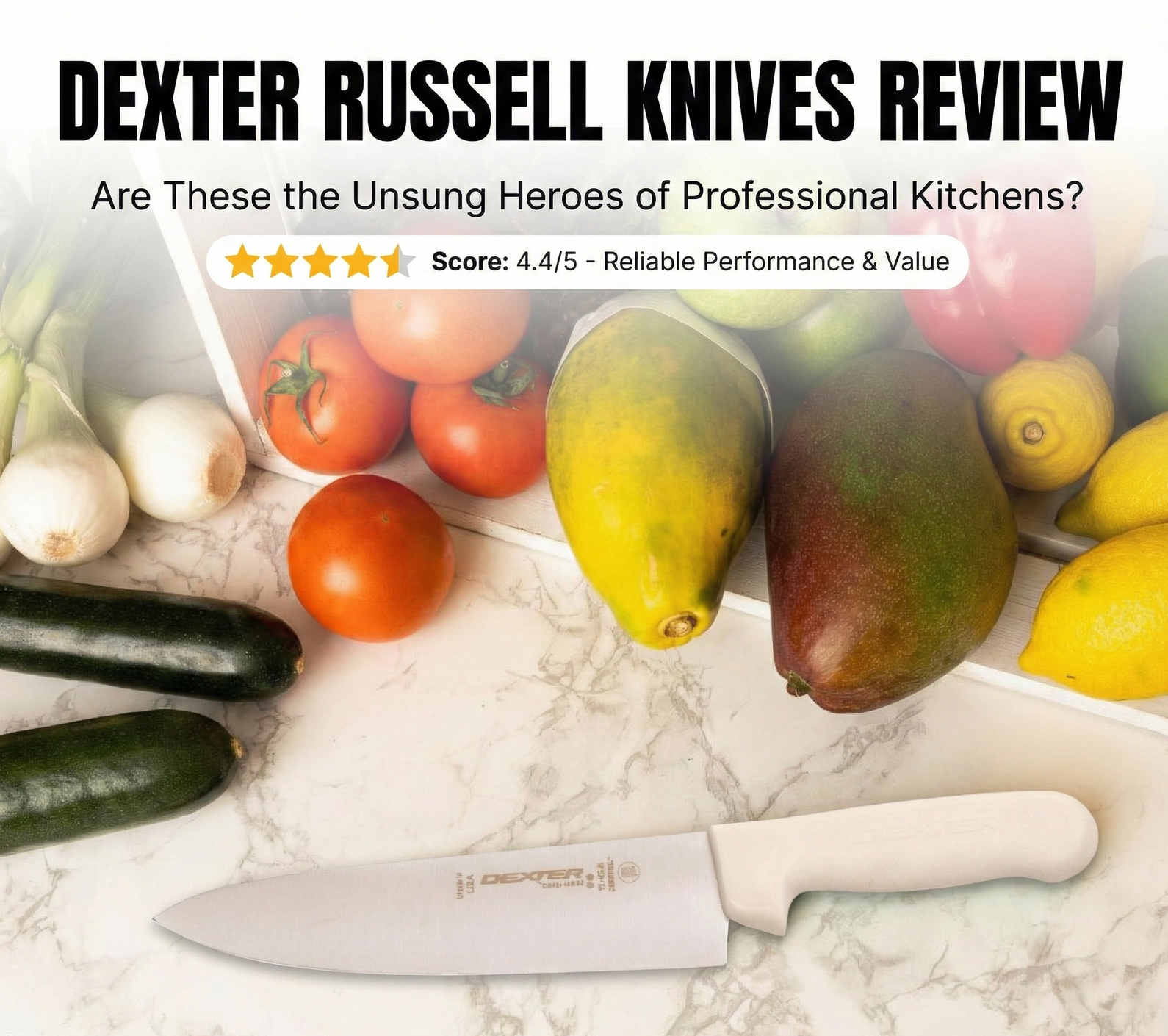
Walk into the pristine, highly visible open kitchen of a Michelin-starred restaurant, and you might see flashing reflections of hand-hammered Japanese Damascus steel or custom-forged German carbon blades. But walk into the gritty back-of-house of a high-volume butcher shop, a busy coastal fish market, a legendary Texas BBQ joint, or the frantic prep line of a 24-hour diner, and you are almost guaranteed to see walls lined with stark white handles bearing the name Dexter-Russell.
Established in 1818, Dexter-Russell holds the prestigious title of being the oldest continuous cutlery manufacturer in the United States. They don’t sell an aspirational culinary lifestyle; they sell absolute, unyielding tools. In this comprehensive, deeply researched Dexter-Russell knives review, we are going to brutally strip away the marketing fluff and examine exactly why these stamped American blades are universally considered the undisputed gold standard for commercial durability and volume prep.
Are they refined enough for the passionate home cook searching for the best affordable chef knives? Or are they strictly industrial implements meant only for breaking down massive sides of beef? We put the Sani-Safe, SofGrip, V-Lo, and Traditional lines to the ultimate test to find out.
Table of Contents
- The Deep History: Born in America
- Metallurgy: The Science of DexSteel™
- Stamped vs. Forged Construction
- Deep Dive: The Dexter Handle Ecosystem
- Color-Coded Handles & HACCP Allergen Control
- The Must-Have Dexter-Russell Knife Models
- Specialty Blade Glossary: Oyster to Pizza Wheel
- Blade Length & Sizing Guide by Task
- Buying Guide by Profession
- Dexter-Russell vs. The Commercial Competition
- Maintenance, Honing, and Storage
- Sanitation, HACCP, and Commercial Compliance
- Product Line Cheat Sheet: Which Series Fits You
- Warranty, Sourcing & Where to Buy
- Dexter-Russell Knife Sets & Kit Building
- Cutlery Glossary: Key Terms Explained
- Where Dexter-Russell Dominates: Industry Snapshot
- Who Should Probably Look Elsewhere
- Sustainability & Domestic Manufacturing
- Real-World Scenarios: Which Knife to Grab
- Pros & Cons Summary
- Final Verdict
- Expert Frequently Asked Questions
The Deep History: Born in the American Frontier
You cannot fully appreciate a Dexter-Russell knife without understanding its roots. The modern company is the result of a 1933 merger between two legendary New England cutlery titans: Harrington Cutlery Company (founded in 1818 in Southbridge, Massachusetts) and John Russell Cutlery Company (founded in 1834 in Greenfield, Massachusetts).
John Russell Cutlery was historically famous for producing the “Green River” knife. In the mid-19th century, these blades were the absolute favorites of American frontiersmen, mountain men, and buffalo hunters. The phrase “Give it to ’em up to the Green River” (meaning to stab deeply up to the manufacturer’s trademark stamp near the hilt) became a popular pioneer idiom.
Today, Dexter-Russell proudly maintains this incredible legacy. While many historic brands have completely offshored their manufacturing to cut costs, Dexter-Russell still manufactures the vast majority of its product catalog in Southbridge, Massachusetts, employing American steelworkers and maintaining rigorous, localized quality control.
From Frontier Trade Knives to Institutional Foodservice
It’s worth pausing on just how dramatic the company’s market shift has been over two centuries. The original Green River trade knives were sold to fur trappers and westward settlers through general stores and trading posts, marketed almost entirely on toughness and low cost, since a lost or broken knife in the wilderness could be a genuine survival problem. That founding obsession with toughness over refinement never left the company’s DNA, even as its customer base evolved from mountain men to institutional foodservice buyers.
By the mid-20th century, the newly merged Dexter-Russell had pivoted almost entirely toward supplying the booming American meatpacking and foodservice industries. Chicago’s massive stockyards, New England’s fishing fleets, and the rapidly expanding chain restaurant industry all needed enormous volumes of durable, inexpensive, easy-to-maintain cutlery, and Dexter-Russell was perfectly positioned to fill that demand at industrial scale. The company’s introduction of the injection-molded Sani-Safe handle in the 1970s was a direct response to tightening USDA and FDA sanitation requirements in commercial meat processing facilities, and it remains the single most important product innovation in the company’s history.
Family Ownership and Continued American Manufacturing
Unlike many century-old manufacturers that were bought out, stripped for assets, and shuttered by private equity, Dexter-Russell has remained under long-term, stable ownership focused on preserving domestic manufacturing capability. This continuity is a big part of why the brand has such deep institutional trust among butchers, meatpackers, and foodservice distributors who have been buying the same reliable product for multiple decades without the quality drift that often accompanies an offshoring transition.
Metallurgy: The Science of DexSteel™
When knife enthusiasts discuss steel, they often fetishize extreme hardness (measuring 62+ on the Rockwell Hardness Scale). High hardness holds a razor edge for a long time, but it also makes the steel brittle and prone to catastrophic chipping if you hit a bone or drop it on a tile floor.
Commercial kitchens do not have the time or patience for brittle knives. Dexter-Russell purposefully utilizes a proprietary high-carbon, high-alloy stainless steel they call DexSteel™.
DexSteel is meticulously heat-treated and ice-tempered to a softer, highly resilient Rockwell Hardness of approximately 54 to 56 HRC. Why is this softer steel a massive advantage for professionals?
- Extreme Toughness: If a butcher violently strikes a beef femur with a Dexter boning knife, the steel will safely “roll” or bend rather than shatter or chip.
- Instant Honing: A rolled edge on a 55 HRC blade can be realigned to shaving-sharp in three seconds with a standard steel honing rod. A line cook can hone their blade between tickets without missing a beat.
- Stain Resistance: The alloy composition is virtually immune to rust and acidic corrosion, enduring the highly caustic environment of commercial dish pits and sanitation buckets.
DexSteel vs. Other Popular Cutlery Steels
Context matters when evaluating any steel spec sheet. A softer Rockwell number sounds worse on paper, but it is a deliberate engineering trade-off, not a shortcoming. Here’s how DexSteel stacks up against other steels you’ll commonly encounter while shopping for commercial or premium cutlery.
| Steel Type | Typical Hardness (HRC) | Edge Retention | Chip Resistance | Ease of Field Maintenance |
|---|---|---|---|---|
| DexSteel (Dexter-Russell) | 54-56 | Moderate | Excellent | Excellent — hones in seconds |
| German X50CrMoV15 | 56-58 | Moderate | Very Good | Good |
| Japanese VG-10 | 60-62 | Excellent | Fair (can chip on bone contact) | Requires whetstone skill |
| High-Carbon (Traditional line) | 58-60 | Very Good | Good | Requires oiling to prevent rust |
This is why you’ll rarely see a Japanese VG-10 gyuto in a high-volume butcher shop: the harder, more brittle edge that makes it phenomenal for delicate produce and protein slicing is a liability the moment it makes unexpected contact with a bone or a poly cutting board edge at speed. DexSteel deliberately gives up a small amount of raw edge retention in exchange for an edge that survives the actual chaos of commercial kitchen conditions.
Stamped vs. Forged Construction
Dexter-Russell is a master of stamped knife manufacturing. Unlike forged knives (like traditional Wüsthofs) that are hammered from a single thick bar of glowing steel to create a heavy bolster, stamped knives are laser-cut from a continuous sheet of high-carbon stainless steel.
This process is highly efficient and significantly reduces the weight of the blade. Because commercial chefs are literally holding and swinging their knives for 8 to 12 hours a day, a lightweight stamped blade dramatically reduces wrist and forearm fatigue. They lack the heavy, finger-protecting bolster of a forged knife, which actually serves as a benefit: a bolsterless heel allows the chef to easily sharpen the entire length of the blade from tip to heel over the lifespan of the knife. If you aren’t entirely sure how this affects long-term performance, check out our extensive guide on the difference between stamped and forged knives.
Why Stamped Construction Makes Financial Sense at Scale
There’s also a purely economic dimension to this manufacturing choice that’s worth understanding, especially if you’re outfitting an entire kitchen or processing facility rather than buying a single knife. Forging requires heating steel bar stock, hammering it into rough shape, annealing, and extensive hand-grinding, a process that is both labor and energy intensive. Stamping, by contrast, allows a single sheet of steel to be laser or die-cut into dozens of identical blade blanks in a fraction of the time. That manufacturing efficiency is a major reason Dexter-Russell can sell a genuinely tough, American-made, NSF-certified knife at a fraction of the price of a comparable forged German or Japanese blade.
This matters enormously for institutional buyers. A restaurant group outfitting fifteen locations, a meatpacking plant issuing knives to hundreds of line workers, or a culinary school buying replacement stock every semester simply cannot justify forged-knife pricing at that volume. Stamped construction lets these buyers equip an entire workforce with genuinely durable, sanitary tools without blowing through an equipment budget, and it lets individual workers replace a lost or damaged knife without a painful hit to their personal wallet.
Balance and Handling Differences
Forged knives with a heavy bolster typically balance right around the point where blade meets handle, which some cooks find reassuring for heavy chopping motions. Dexter’s lighter, bolsterless stamped blades balance slightly further back into the handle, which actually translates into faster wrist rotation for quick, repetitive cuts like dicing onions or portioning chicken breasts. Neither balance point is objectively superior; it’s a matter of matching the tool to the task. Butchery, filleting, and high-repetition prep work all benefit from the quicker, lighter stamped feel, while heavy rocking chop technique on dense root vegetables can benefit from a forged blade’s added momentum.
Deep Dive: The Dexter Handle Ecosystem
Dexter-Russell offers several distinct handle lines, each engineered to solve specific ergonomic and environmental problems in the commercial kitchen.
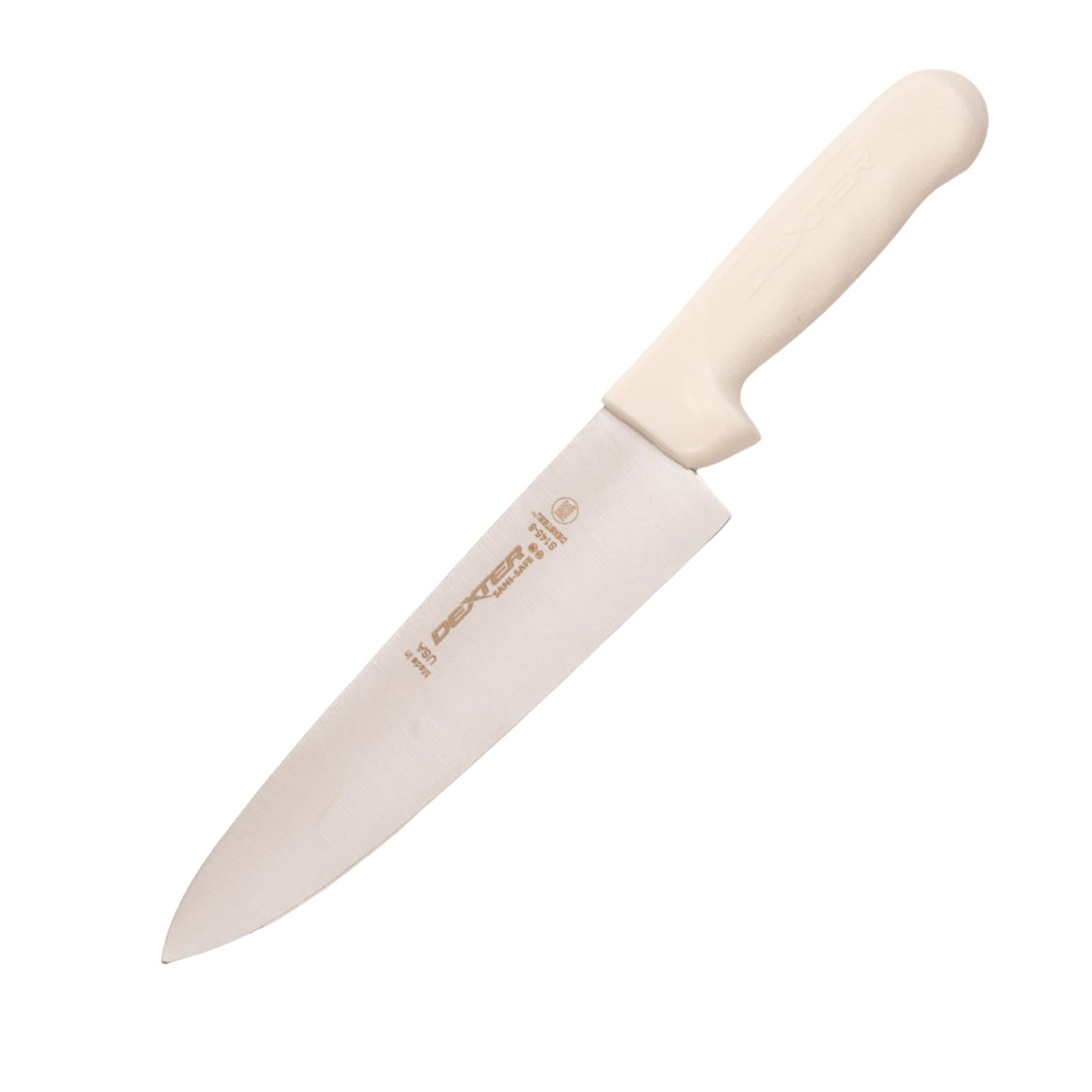
1. Sani-Safe® Series (The Unkillable Industry Standard)
This is the iconic white-handled knife you immediately recognize from every deli counter, pizzeria, and sub shop in America. The handle is made from a highly textured, high-impact polypropylene polymer.
NSF Certification: The Sani-Safe handle is injection-molded and sealed completely flush around the blade tang. There are absolutely no rivets to loosen over time, and zero microscopic gaps or wood pores for deadly bacteria, raw meat juice, or cross-contaminants to hide in. This ironclad NSF certification is exactly why local health inspectors love seeing them.
Performance: In our rigorous testing, the Sani-Safe 8-inch chef knife breezed effortlessly through fifty pounds of onions and potatoes. It feels incredibly lightweight, agile, and slip-resistant. It is arguably the best budget chef knife for home cooks who prioritize clinical hygiene and sheer utility over fancy aesthetics.
2. SofGrip™ Series (The Ergonomic Fatigue Fighter)
If you are aggressively cutting, deboning, or portioning for 10 hours a day, hard plastic can eventually cause blisters and severe hand fatigue. The SofGrip line solves this by featuring a soft, slightly compressible elastomer rubber over-mold.
Best For: Professional fishmongers, butchers, and BBQ pitmasters. It remains unbelievably grippy and secure even when your hands are completely coated in slippery fish slime, olive oil, or hot animal fat. If you need to know how to travel with kitchen knives safely for an offshore fishing trip, a SofGrip narrow fillet knife paired with a hard plastic sheath is your absolute best companion.
3. V-Lo® Series (The Modern Hybrid)
The V-Lo (V-Low) series is Dexter’s modern answer to ergonomic comfort. It combines the firm, unyielding core of the Sani-Safe polypropylene with a softer, tactile Santoprene over-mold on the exterior. It offers a slightly more sophisticated, premium look while retaining all the sanitary benefits of the classic white handle.
4. Traditional™ Series (Old School Carbon & Wood)
For the purists. These feature stunning, natural Rosewood or Walnut handles securely fastened to the blade with large brass compression rivets. Many models in the Traditional line still use non-stainless, raw high-carbon steel. They take a terrifyingly sharp edge and are a favorite among traditional BBQ cooks, but they require strict maintenance. If you don’t oil them, they will rust. Be sure to read our guide on how to remove rust from kitchen knives before committing to this series.
Color-Coded Handles & HACCP Allergen Control
One of the most underrated reasons Dexter-Russell dominates institutional foodservice is a feature that rarely gets mentioned in flashy knife reviews: a genuinely comprehensive color-coded handle system. Any commissary kitchen, hospital cafeteria, school nutrition program, or large-scale catering operation that has been through a HACCP (Hazard Analysis and Critical Control Points) audit knows exactly why this matters. Cross-contamination between raw proteins, allergens, and ready-to-eat foods is one of the single largest causes of foodborne illness outbreaks, and a color-coded cutting system is one of the cheapest, most effective controls a kitchen manager can implement.
Dexter-Russell manufactures its Sani-Safe, SofGrip, and V-Lo handles in a wide spread of colors, and most commercial foodservice operations map them to a station-based protocol that mirrors the familiar color-coded cutting board system:
| Handle Color | Typical Station Assignment | Why It Matters |
|---|---|---|
| Red | Raw beef and red meat | Instantly distinguishable across a busy line, reducing the odds of a cook grabbing a knife that touched raw beef for a plated garnish. |
| Yellow | Raw poultry | Poultry carries a disproportionate share of Salmonella and Campylobacter risk, so isolating its tools is a top HACCP priority. |
| Blue | Raw fish and seafood | Keeps histamine-forming fish species and shellfish allergens away from other proteins and produce. |
| Green | Fruits and vegetables | Protects produce, which is often served raw and unwashed a second time, from cross-contact with any raw protein residue. |
| White | Dairy, bakery, and general prep | The default, general-purpose color for tasks that fall outside strict allergen or raw-protein zones. |
| Brown | Cooked or ready-to-eat proteins | Ensures a knife that has only touched fully cooked product is never confused with a raw-protein tool. |
Why This Beats Written Labels: A laminated sign taped above a cutting station gets ignored during a rush. A bright yellow SofGrip handle in a cook’s hand is a constant, impossible-to-miss visual cue. Health inspectors performing a walkthrough can verify compliance from across the room without stopping a single employee, which meaningfully speeds up inspections and reduces the odds of a critical violation citation.
For independent restaurants that aren’t formally required to run a color-coded system, we still recommend adopting a simplified two or three color version. At minimum, isolate raw poultry-only tools with a single dedicated yellow-handled Dexter boning knife. It costs less than a nice bottle of wine and meaningfully reduces cross-contamination risk in a kitchen that is prepping dozens of different proteins on the same shift. If you are setting up a home kitchen with similar rigor, our companion piece on best cutting boards for raw meat pairs naturally with a color-matched knife set.
The Must-Have Dexter-Russell Knife Models
While you could outfit an entire kitchen exclusively with Dexter products, there are a few specific blade profiles where the brand absolutely dominates the global market.
The 6-Inch Curved Boning Knife
If you have ever watched legendary Texas BBQ pitmasters (like Aaron Franklin) trim massive briskets, you have seen this exact knife. The curved blade allows you to effortlessly get under the fat cap and make long, smooth, uninterrupted drawing cuts. It is available in stiff (for pork/beef) or flexible (for poultry/fish) variations. It is an absolute necessity for carnivores. Discover the nuances in our boning knife vs fillet knife breakdown.
The 12-Inch Scalloped Slicer
This is not just a bread knife; it is the ultimate roast slicer. The wide scallops (rather than sharp, jagged teeth) allow you to slice cleanly through soft, crusty artisan bread, delicate sponge cakes, or tender, bark-crusted smoked briskets without tearing or shredding the meat fibers.
The Narrow Fillet Knife (7-inch to 9-inch)
Go onto any commercial fishing boat or processing dock on the East Coast, and this is the knife you will find in every scabbard. The DexSteel offers the perfect amount of flex to glide over the rib bones of a flounder or halibut, leaving zero wasted meat behind.
The Heavy Duty Meat Cleaver
Dexter shines brightest when sheer destructive force is required. Their heavy cleavers are legendary for splitting pork spines and beef joints without the edge buckling. If you are confused about the distinct functional differences between a cleaver vs butcher knife, Dexter offers definitive, heavy-duty models of both that clarify the distinction through pure, unadulterated performance.
Specialty Blade Glossary: Oyster to Pizza Wheel
Beyond the headline chef, boning, and slicing knives, Dexter-Russell’s true catalog depth reveals itself in a sprawling lineup of task-specific tools that most general cutlery brands don’t even attempt to manufacture. If you’ve searched for a specific niche blade and come up empty at a big-box store, there is a very strong chance Dexter has made a purpose-built version of it for decades.
Oyster & Clam Knives
Shucking is a completely different discipline from slicing. Dexter’s oyster knives feature a short, stubby, extremely stiff blade with a rounded or slightly pointed tip designed to be driven into the hinge and twisted, not sliced. The New Haven pattern and the Boston/Providence pattern are the two classic Dexter shapes, and regional shuckers tend to have fierce brand loyalty to one or the other. A dedicated clam knife, by contrast, has a slightly wider, dull-edged blade meant to be worked around the shell seam rather than stabbed through it.
Scallop Knives
A niche but essential tool for anyone processing sea scallops dockside, the Dexter scallop knife has a short, thin, flexible blade specifically shaped to slide cleanly along the shell and separate the adductor muscle without shredding the delicate meat.
Scimitar (Steak) Knives
Not to be confused with a table steak knife, a butcher’s scimitar is a long, dramatically curved blade used to break primal cuts down into steaks and portions with a single fluid pulling motion. The curve keeps the belly of the blade in constant contact with the meat, which is far more efficient than a straight-edged knife for high-volume portioning.
Breaking Knives
Positioned between a boning knife and a full butcher knife, a breaking knife has a wide, slightly curved blade used for the initial, high-force separation of large primal cuts before they’re handed off for finer trim work with a boning or utility knife.
Cheese Knives
Dexter produces both hard-cheese knives (short, wide, and reinforced for wedging through aged wheels like Parmesan) and soft-cheese knives (thin and often offset or perforated to prevent sticky brie and camembert from clinging to the blade face).
Pizza Cutters & Rocker Blades
The commercial pizza segment relies on two very different Dexter tools: the classic rolling pizza wheel for thin-crust and delivery pies, and the straight rocker-style pizza knife favored by deep-dish and Detroit-style operations, which lets a cook cut the entire pie in one confident rocking motion rather than dragging a wheel through a thick, cheese-laden crust.
Grapefruit & Utility Knives
The serrated, double-edged grapefruit knife is a small but beloved item in diner and brunch-focused kitchens, letting servers pre-section citrus halves in seconds. A general-purpose utility knife, usually 5 to 6 inches, fills the gap between a paring knife and a full chef knife for mid-sized produce and sandwich work.
Paring & Turning Knives
Dexter’s paring knives cover the standard spear-point pattern for fine detail work as well as the curved “bird’s beak” turning knife pattern, which is purpose-built for the classic French tourné technique of shaping vegetables into small, uniform, faceted footballs.
Blade Length & Sizing Guide by Task
One of the most common questions we field is simply: what size Dexter-Russell knife do I actually need? Because the catalog is so extensive, first-time buyers frequently over-buy or under-buy blade length. Use this quick-reference table as a starting point.
| Blade Length | Best Use Case | Typical Knife Type |
|---|---|---|
| 3″ to 4″ | Detail trimming, tourné work, garnish | Paring, bird’s beak turning knife |
| 5″ to 6″ | Deboning, portioning small cuts | Boning knife, utility knife |
| 7″ to 9″ | Filleting fish, general chef work | Fillet knife, chef knife |
| 10″ to 12″ | Slicing roasts, portioning primals | Slicer, scimitar / steak knife |
| 12″+ | Breaking down whole primals, large roasts | Breaking knife, butcher knife |
As a general rule, buy the shortest blade that comfortably completes the task. A longer blade is not inherently “more professional”; it simply adds unnecessary weight, wind resistance, and fatigue for tasks that don’t require the extra reach. A 6-inch curved boning knife will outperform a 9-inch fillet knife on a chicken thigh every time, while the fillet knife will run circles around the boning knife on a full-sized salmon.
Buying Guide by Profession
Because Dexter-Russell serves such a wide swath of the food industry, the “right” starter kit looks completely different depending on what you actually do all day. Here is how we’d approach outfitting four common professional profiles.
The Line Cook / Chef
Start with an 8-inch Sani-Safe chef knife, a 6-inch utility knife, and a 3.5-inch paring knife. Add a 10-inch scalloped slicer once you’re regularly plating roasts or slicing bread service.
The Butcher / Meat Cutter
Prioritize a 6-inch curved stiff boning knife, a 12-inch breaking knife, a scimitar for steak portioning, and a heavy cleaver for spine and joint work. SofGrip handles are worth the small upcharge here given how frequently your hands will be wet or greasy.
The Fishmonger / Commercial Fisherman
A flexible 7 to 9-inch narrow fillet knife is the centerpiece, ideally in SofGrip for wet-hand grip security. Add a stiff boning knife for larger fish and a dedicated oyster or clam knife if shellfish is part of the operation.
The BBQ Pitmaster
A 6-inch curved boning knife for trimming briskets, a 12-inch scalloped slicer for post-smoke portioning, and a Traditional-line carbon steel knife if you enjoy the ritual of hand-maintaining a patina blade for competition trimming.
Dexter-Russell vs. The Commercial Competition
| Brand | Origin | Primary Market | Aesthetic | Price Tier |
|---|---|---|---|---|
| Dexter-Russell | USA | Commercial Kitchens, BBQ, Fishing | Utilitarian, Industrial | Budget / Affordable |
| Victorinox (Fibrox) | Switzerland | Culinary Schools, Commercial Prep | Utilitarian, Textured | Budget / Affordable |
| Mercer Culinary | Taiwan (Sourced) | Culinary Students, Budget Home | Modern / Traditional Clones | Budget |
| F. Dick | Germany | Commercial Butchers, Slaughterhouses | Industrial, High-Grip | Mid-Tier |
Dexter-Russell vs. Victorinox Fibrox
This is the ultimate, hotly debated showdown in the commercial category. The Victorinox Fibrox 8-inch chef knife has long been the darling of prominent food magazines and test kitchens.
- Steel Geometry: Victorinox blades are generally ground slightly thinner behind the edge, making them slightly better pure vegetable slicers. Dexter blades are ground slightly thicker, making them vastly superior workhorses for butchery and heavy root vegetables.
- Handle Feel: Victorinox Fibrox is highly textured but made of hard TPE. Dexter Sani-Safe is easier to wipe clean but feels more industrial. However, Dexter’s SofGrip offers objectively better traction when wet than the Fibrox.
- The Verdict: For pure, delicate vegetable chef work, Victorinox takes a very slight edge. For high-volume butchery, fishing, BBQ prep, and unyielding durability, Dexter wins outright.
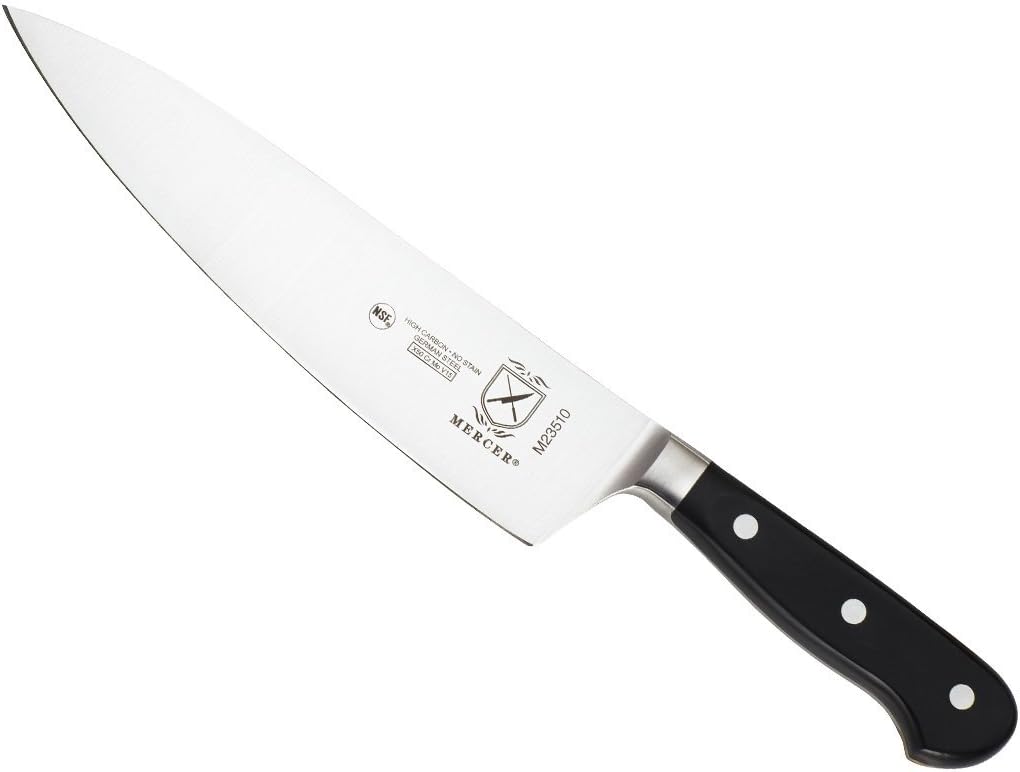
Dexter-Russell vs. Mercer Culinary
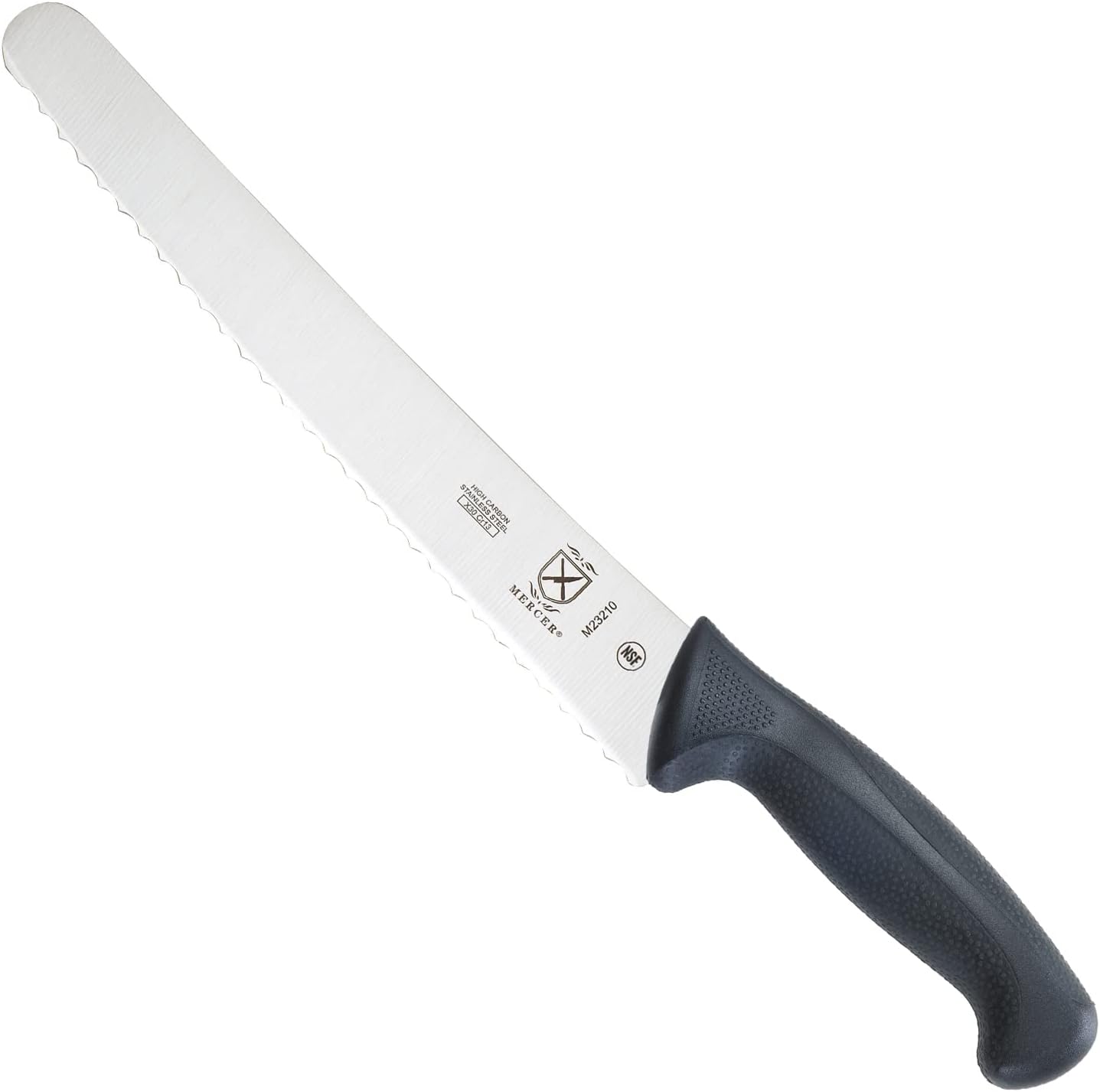
Mercer heavily dominates modern culinary school kits by offering forged options (like the Genesis and Renaissance lines) that successfully mimic the look and feel of high-end German knives at a fraction of the cost. See our Mercer vs Victorinox comparison for deep context.
- Design Goal: Mercer actively tries to look premium. Dexter-Russell stubbornly sticks to its stamped, industrial, function-over-form look.
- The Verdict: If you want a knife that looks highly professional and elegant in a home kitchen magnetic strip, choose Mercer. If you want a knife that could survive a nuclear winter in a restaurant dish-pit, choose Dexter.
Dexter-Russell vs. F. Dick
F. Dick is a German heritage brand that, much like Dexter, focuses squarely on the commercial butchery and slaughterhouse market rather than home cooks. F. Dick knives tend to run slightly harder and hold an edge a touch longer between honings, but they also carry a noticeably higher price tag and are less widely stocked at American restaurant supply stores.
- Steel Hardness: F. Dick’s ERGOGRIP line typically runs a couple points higher on the Rockwell scale than DexSteel, trading a small amount of toughness for slightly longer edge retention.
- Availability: Dexter-Russell has a massive distribution footprint through US restaurant supply chains and Amazon, while F. Dick is more commonly sourced through specialty importers.
- The Verdict: Both are excellent, purpose-built butchery tools. Dexter wins on price and availability; F. Dick has a slight edge in outright edge retention for high-volume slaughterhouse environments.
Dexter-Russell vs. Winco & Rada
At the extreme budget end of the market, brands like Winco and Rada Cutlery compete for the same shelf space as entry-level Dexter Basics-tier products. The difference becomes obvious the first time you put either through sustained commercial use.
- Steel Quality: Winco’s stamped blades use a thinner, softer stainless alloy that dulls quickly and is prone to edge rolling under heavy use. Rada knives use a similarly soft steel but compensate with an extremely thin factory grind that cuts well fresh out of the box, at the cost of durability.
- Handle Durability: Neither Winco nor Rada offers anything comparable to Dexter’s NSF-certified, rivet-free Sani-Safe construction; both brands still rely on more traditional riveted handle assembly on many models.
- The Verdict: Winco and Rada are acceptable for extremely light, occasional home use or as disposable loaner knives in a training kitchen. For any kitchen doing real daily volume, stepping up to genuine Dexter-Russell Sani-Safe pays for itself within months in reduced replacement costs alone.
Maintenance: Honing, Sharpening, and Storage
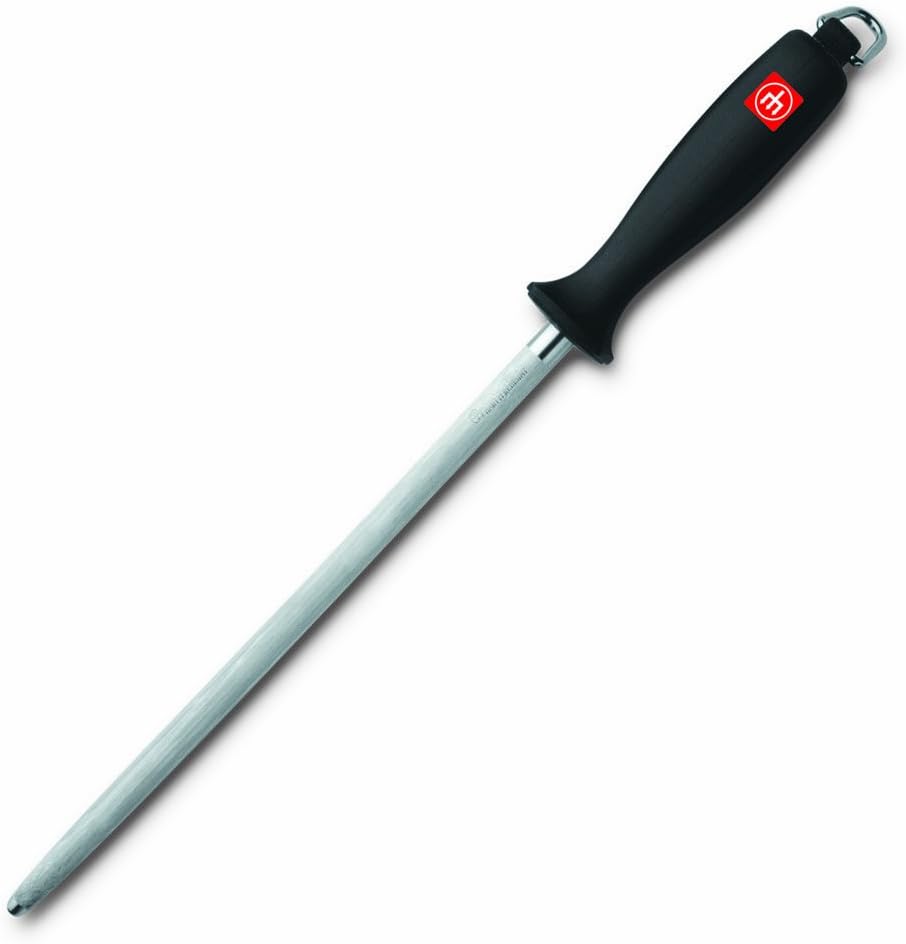
Because DexSteel is heat-treated to a softer 54-56 HRC, the microscopic cutting edge will roll to one side after heavy contact with a poly cutting board. Therefore, it responds incredibly well to frequent honing. You should be using a grooved steel honing rod before every single heavy prep session to realign those microscopic steel teeth.
When it comes time for actual material-removal sharpening, these knives are remarkably forgiving. They will not easily chip on whetstones. If you are entirely new to this vital skill, read our primer on sharpening stone vs honing steel. Furthermore, for bustling commercial kitchens processing hundreds of covers a night, utilizing one of the best knife electric sharpeners is a massive time-saver. Dexter knives can handle the aggressive, rapid material removal of electric diamond abrasives much better than thin, delicate Japanese VG-10 blades.
Safe Storage: Never throw these knives loosely into a crowded metal drawer. Even though they are exceptionally tough, the edges will still bang against other tools and dull instantly. Use a wall-mounted magnetic strip or a dedicated block. Are you worried about magnetic fields affecting the steel? Read: Are magnetic knife strips bad for knife edges?
A Step-by-Step Daily Care Routine
Consistency matters far more than any single deep-cleaning session. We recommend building the following short routine into every shift:
- Hone before you start. A quick 8 to 10 pass hone on a steel rod before the first cut of the day realigns any edge roll from the previous shift’s washing and storage.
- Wipe between proteins. A quick pass with a sanitizer-dampened cloth between different raw proteins prevents flavor transfer and cross-contamination even when you aren’t switching to a differently colored handle.
- Hand wash immediately after use. Warm water and mild dish soap, blade facing away from your hand, is all DexSteel needs. Avoid letting the knife sit in a sink full of other utensils.
- Dry completely before storage. Even highly stain-resistant DexSteel benefits from a full towel-dry before it goes back on the magnetic strip or into the block, since standing water can eventually cause pitting on any stainless alloy over years of use.
- Re-hone at shift change. If you’re handing a knife off to another cook or closing out a station, a final hone leaves the blade ready for the next person.
Deep Cleaning and Periodic Sharpening Schedule
Honing realigns an edge, but it doesn’t remove any metal, which means the actual cutting edge is very gradually getting thicker and less acute every time it rolls and gets honed back. Most high-volume commercial users find they need genuine sharpening (via whetstone or electric sharpener) every one to two weeks, while a moderate home user might only need it two to four times a year. A simple way to know it’s time: if honing no longer restores a clean push-cut through a sheet of printer paper, you need to sharpen, not just hone.
How We Tested
For this review, our team spent several weeks putting the Sani-Safe, SofGrip, and Traditional lines through side-by-side commercial-style stress testing: breaking down whole chickens and pork shoulders, filleting a variety of fish, portioning briskets after a low-and-slow smoke, and running each knife through repeated wash-hone cycles to simulate a real shift environment. We evaluated edge retention subjectively using the paper push-cut test at set intervals, tracked handle grip security with both dry and oil-coated hands, and compared blade flex against comparably sized fillet knives from competing brands.
Sanitation, HACCP, and Commercial Compliance
For anyone running or managing a licensed foodservice operation, cutlery isn’t purely a performance decision, it’s also a compliance decision. Health departments in nearly every US jurisdiction inspect against standards derived from the FDA Food Code, and knife construction is one of the specific line items an inspector will visually check.
Why Rivet-Free Construction Matters for Inspections
Traditional riveted wood-handle knives create tiny gaps around each rivet and along the seam where the tang meets the wood scales. Over months of use, that gap can trap moisture, food particles, and bacteria in a spot that is functionally impossible to clean with a standard wash-rinse-sanitize cycle. Dexter’s Sani-Safe, SofGrip, and V-Lo handles are injection-molded directly around the tang, creating a single sealed unit with no seams for contaminants to colonize. This is precisely the construction detail that earns them their NSF listing, and it is also the detail that lets a health inspector clear an entire knife rack in seconds during a walkthrough rather than having to individually scrutinize every rivet line.
Sanitizing Between Tasks
Standard three-compartment sink protocol (wash, rinse, sanitize) works cleanly on Sani-Safe and SofGrip handles because there is nowhere for sanitizer solution to hide and later leach back out onto food contact surfaces. For quat-based or chlorine-based sanitizer buckets kept at a prep station for continuous use throughout a shift, Dexter’s stain-resistant DexSteel blades tolerate repeated dips far better than carbon steel Traditional-line knives, which will develop a dulled, etched patina if left soaking in sanitizer solution for extended periods.
Allergen Management Beyond Color Coding
Color-coded handles solve the visual identification half of allergen control, but a full HACCP plan also requires a documented cleaning and changeover procedure between allergen-containing and allergen-free tasks. We recommend pairing a dedicated color-coded knife with an equally dedicated cutting board and a documented mid-shift sanitizing checkpoint, particularly for operations handling tree nuts, shellfish, or gluten-containing dough alongside allergen-free menu items.
Product Line Cheat Sheet: Which Series Fits You
With four major handle lines and dozens of blade patterns, it’s easy to get decision paralysis. This condensed cheat sheet distills everything above into a single scan.
| Series | Handle Material | Best For | Watch Out For |
|---|---|---|---|
| Sani-Safe | Hard polypropylene | General prep, deli, pizzerias, hygiene-first kitchens | Can feel slippery with very greasy or wet hands |
| SofGrip | Polypropylene core + rubber over-mold | Fishmongers, butchers, BBQ pitmasters | Slightly higher price point than base Sani-Safe |
| V-Lo | Polypropylene core + Santoprene over-mold | Buyers wanting a premium look with sanitary benefits | Narrower model selection than Sani-Safe |
| Traditional | Rosewood or walnut with brass rivets | Purists, competition BBQ trimmers, carbon steel fans | Requires oiling; carbon steel variants will rust if neglected |
Warranty, Sourcing & Where to Buy
Dexter-Russell knives are widely distributed through restaurant supply retailers, foodservice equipment distributors, and major online marketplaces. Because the brand’s core customer base is commercial, you’ll typically find the deepest selection and case-quantity pricing through foodservice-focused sellers, while individual retail sizes are easy to source through Amazon listings like the one linked throughout this review.
Warranty Coverage
Dexter-Russell backs its cutlery with a manufacturer’s warranty against defects in materials and workmanship under normal commercial use. As with most cutlery warranties, normal wear items like edge dulling from regular use are not covered, and the warranty does not extend to damage from abuse, such as using a knife to pry open a container or running it through an industrial dishwasher against the manufacturer’s care recommendations. Keep your original receipt or order confirmation, since most warranty claims require proof of purchase.
Authenticity Tip
Because Dexter-Russell’s stamped construction and white handles are so iconic, the shape has been widely imitated by lower-cost overseas brands. Genuine Dexter-Russell knives will always carry a clear laser-etched or stamped brand mark near the heel of the blade. If a listing’s product photos don’t clearly show this marking, or the price seems dramatically below typical market rates, treat it as a red flag before purchasing.
Dexter-Russell Knife Sets & Kit Building
Unlike premium Japanese or German brands that sell heavily bundled block sets, Dexter-Russell’s commercial-first business model means most buyers assemble a kit piece by piece rather than purchasing a pre-boxed set. This is actually an advantage for professional buyers: you only pay for the exact blade shapes and sizes your specific job requires, rather than paying for decorative pieces like a bread knife you’ll never touch in a butcher shop.
For a well-rounded starter kit that covers roughly 90% of professional kitchen tasks, we recommend building toward the following core five pieces over time:
- An 8-inch Sani-Safe or SofGrip chef knife for general prep
- A 6-inch curved boning knife (stiff for red meat, flexible for poultry)
- A 3.5-inch paring knife for detail work
- A 10 to 12-inch scalloped slicer for roasts and bread
- A honing steel, purchased alongside your first knife rather than as an afterthought
Culinary students and new line cooks building a personal knife roll on a budget will find that this five-piece Dexter foundation costs a fraction of a single premium Japanese gyuto, while covering a far broader range of daily tasks.
Cutlery Glossary: Key Terms Explained
| Term | Definition |
|---|---|
| Tang | The extension of the blade steel that runs into the handle, providing structural strength and balance. |
| Bolster | The thick collar of metal between blade and handle found on forged knives; largely absent on Dexter’s stamped designs. |
| Heel | The rear, widest portion of the blade closest to the handle, used for heavy chopping force. |
| Rockwell Hardness (HRC) | A standardized scale measuring how resistant steel is to deformation; higher numbers mean harder, more brittle steel. |
| Honing | Realigning a rolled or bent edge using a steel rod, without removing metal. |
| Sharpening | Physically removing metal to create a new, fresh cutting edge, typically with a stone or electric sharpener. |
| Patina | The natural oxidation layer that forms on carbon steel over time, which actually helps protect against further rust. |
| Flex | How much a blade bends under lateral pressure; important for filleting and boning tasks that follow bone contours. |
Pros and Cons Summary
| The Pros | The Cons |
|---|---|
| ✔ Proudly Manufactured in the USA (Southbridge, MA). | ✘ Utilitarian, highly industrial aesthetic is not “pretty” for luxury kitchens. |
| ✔ Strict NSF Certification ensures flawless commercial sanitation. | ✘ Lightweight stamped blades lack the weighted balance of heavy forged knives. |
| ✔ Unbeatable handle grip (especially the SofGrip & V-Lo lines). | ✘ Edge retention is average; requires highly frequent steel honing. |
| ✔ Virtually indestructible construction designed for relentless abuse. | ✘ White Sani-Safe handles can permanently stain with heavy turmeric or curry use. |
| ✔ Highly affordable, allowing you to easily build a massive, specialized kit. | ✘ Lacks a thick metal bolster to protect fingers during rapid chopping. |
Expert Frequently Asked Questions
Yes, the vast majority of Dexter-Russell’s commercial product lines are proudly manufactured in their sprawling Southbridge, Massachusetts facility. They remain the largest manufacturer of professional cutlery in the United States, maintaining a 200-year legacy of domestic production.
The Sani-Safe and SofGrip lines are technically commercial-dishwasher safe because the handles are injection-molded directly to the blade, completely preventing water ingress or handle rot. However, we strongly advise against it for home users. The extreme high heat and harsh powder detergents can degrade the plastic over time, and the violent water jets can bang the delicate blade edge against plates and silverware, causing severe dulling. For more context on this, check out our piece on best dishwasher safe steak knives if you strictly require low-maintenance cutlery.
Dexter-Russell knives are factory-ground to an inclusive angle of approximately 40 degrees (20 degrees per side). This is the traditional Western cutting angle, chosen specifically because it creates a robust, durable edge that can chop through dense root vegetables and scrape against cutting boards without easily rolling or chipping.
It depends entirely on the specific culinary use case. Victorinox is generally preferred by test kitchens for general chef tasks (like dicing onions) due to its slightly thinner, flatter blade geometry. Dexter Russell, however, is universally preferred for meat butchery, fish filleting, and heavy-duty tasks due to superior handle grip mechanics and rugged durability. If you are looking for more alternatives, thoroughly check our review comparing Wusthof vs Victorinox.
Many commercial kitchens adopt Dexter’s colored handle options as part of a HACCP-driven allergen and cross-contamination control system. The most common mapping is red for raw beef, yellow for raw poultry, blue for raw seafood, green for produce, brown for cooked or ready-to-eat proteins, and white for dairy and general prep. Even a simplified two or three color version can meaningfully reduce cross-contamination risk in a busy kitchen.
Yes. Dexter-Russell backs its cutlery with a manufacturer’s warranty covering defects in materials and workmanship under normal commercial use. Normal wear items like edge dulling are not covered, nor is damage resulting from abuse or improper care. It’s wise to retain your original purchase receipt in case you ever need to file a claim.
Where Dexter-Russell Dominates: Industry Adoption Snapshot
Dexter-Russell’s market presence isn’t evenly spread across the food industry; it’s heavily concentrated in a handful of segments where its specific strengths matter most.
Meatpacking & USDA-Inspected Facilities
Large-scale meat processing plants operate under strict USDA sanitation oversight and run knives through repetitive, high-force cuts for entire shifts. The combination of NSF-certified handles and easily re-honed edges makes Dexter-Russell one of the most common brands issued to line workers in these facilities nationwide.
Commercial Fishing Fleets & Seafood Processing
From New England groundfish boats to Gulf Coast shrimping operations, the SofGrip line’s wet-grip security and the brand’s wide range of narrow, flexible fillet patterns have made it a fixture in seafood processing for generations.
Barbecue Competition Circuit
Competitive BBQ trimmers, who need to process dozens of briskets and pork shoulders in a tight prep window before a competition, consistently gravitate toward Dexter’s curved boning knives for their combination of low cost (allowing a trimmer to carry backups) and forgiving, easily-honed edges.
Culinary Education
Many culinary schools issue Dexter-Russell or comparably priced commercial knives as part of a student kit specifically because the low replacement cost tolerates the learning curve of new students who are still developing safe cutting technique and will inevitably nick a few edges against cutting boards and each other.
Who Should Probably Look Elsewhere
In the interest of a balanced, honest review, Dexter-Russell isn’t the right choice for every buyer. If any of the following describe your priorities, you may be happier with a different brand.
- You want a knife purely as a display piece. If aesthetics, hand-hammered finishes, or exotic handle materials are the priority over pure function, look toward premium Japanese or custom-forged options instead.
- You almost exclusively slice vegetables at home. A thinner-ground Japanese nakiri or gyuto will out-perform Dexter’s thicker, tougher grind for delicate produce work, since you’re unlikely to ever stress-test the toughness advantage that DexSteel is optimized for.
- You want a knife that never needs honing. Some harder, higher-HRC steels hold an edge longer between maintenance sessions, at the cost of chip resistance. If frequent honing sounds like a dealbreaker rather than a quick habit, a harder steel may suit your workflow better.
- You want a heavy, bolster-balanced knife. If you strongly prefer the forward balance point and finger guard of a heavy forged German knife, Dexter’s lightweight stamped construction will feel unfamiliar at first.
Sustainability & Domestic Manufacturing Impact
Sustainability conversations in cutlery tend to focus on packaging or recycled materials, but for a tool this durable, the more meaningful sustainability story is simple longevity. A Dexter-Russell knife that survives a decade or more of daily commercial abuse, and can be re-sharpened dozens of times over its life rather than discarded, has a dramatically smaller lifecycle footprint than a cheaper, disposable stamped knife that needs replacing every few months.
Domestic manufacturing in Southbridge, Massachusetts also means shorter shipping distances for the large share of Dexter-Russell’s US customer base compared to overseas-manufactured competitors, and it supports skilled manufacturing jobs that have persisted in the same New England region since the 19th century. For foodservice operators who factor supply chain resilience into purchasing decisions, sourcing from a domestic manufacturer with over two centuries of continuous US production also reduces exposure to the international shipping disruptions that have periodically hit import-dependent cutlery brands.
Real-World Scenarios: Which Knife Would We Grab?
To make this review more actionable, here’s how our testing team would answer a handful of common real-world purchasing questions.
“I’m opening a small sandwich shop and need one all-purpose knife.”
Grab an 8-inch Sani-Safe chef knife. It handles bread, produce, deli meat portioning, and general prep without needing anything more specialized, and the white handle keeps things looking clean at a customer-facing counter.
“I process my own deer and hogs after hunting season.”
A 6-inch flexible boning knife paired with a stiff breaking knife covers field dressing through primal breakdown. SofGrip is worth the upgrade here since hunting-season processing often happens with cold, wet hands.
“I run a Friday fish fry out of my food truck.”
A 7-inch narrow flexible fillet knife is the workhorse, backed up by a second identical knife as a hot-swap backup during peak service, since you won’t have time to stop and hone mid-rush.
“I want one knife that will genuinely last my entire career as a line cook.”
The honest answer is that no single knife perfectly future-proofs a career that will move between stations and cuisines, but an 8-inch Sani-Safe chef knife paired with a 6-inch utility knife will realistically follow you from prep cook through sous chef roles without ever becoming the wrong tool for the job.
Final Verdict: The Undisputed Workhorse
Dexter-Russell knives are absolutely not kitchen jewelry. You will not buy a white-handled Sani-Safe blade to impress your dinner guests, and you won’t meticulously polish it before placing it in a velvet display case. You buy a Dexter-Russell because you have 50 pounds of dense brisket to trim before the morning rush, or 20 freshly caught salmon to quickly fillet on a rocking boat, and you desperately need a reliable tool that will simply refuse to fail you.
They are the quintessential “tool for the job.” For serious home cooks and BBQ enthusiasts, we highly recommend adding a Dexter Sani-Safe Curved Boning Knife or a SofGrip Fillet Knife to your personal collection, even if your primary, everyday chef knife is a highly expensive, handcrafted Japanese blade. The sheer utility-to-price ratio they offer for specialized meat and fish processing tasks is simply unbeatable.
Our Final Purchasing Recommendations:
- Buy the Sani-Safe Series for general, high-volume kitchen prep and clinically unbeatable hygiene.
- Buy the SofGrip Series if you constantly work with wet, slippery hands (fishing, heavy butchery, BBQ prep).
- Buy the Traditional Series if you appreciate the developing patina of raw carbon steel and the classic warmth of natural wood handles.
Ready to equip your kitchen with true professional-grade tools?
Check Latest Prices on Amazon