SOG TAC XR Review: Is It the Ultimate Tactical EDC Knife?

In the evolving world of tactical everyday carry (EDC) knives, SOG has historically been a brand that evokes nostalgia for 1990s military aesthetics. However, with their recent rebranding and the introduction of the XR Lock technology, they have surged back into the conversation among serious knife enthusiasts. Today, we are conducting a comprehensive SOG TAC XR review, a knife that promises to bridge the gap between heavy-duty tactical requirements and daily utility. The modern EDC community demands versatility, reliability, and value in their cutting tools, and SOG appears to have listened carefully to these market requirements.
The SOG TAC XR is not just another folder; it is a statement piece. It combines aggressive styling with SOG’s answer to the crossbar lock market dominators. But does it hold up against titans like the Kershaw Blur S30V or the benchmarks set by brands like Benchmade? In this review, we will dismantle the SOG TAC XR—figuratively and analytically—exploring its Cryo D2 steel, G10 ergonomics, and the fidget-friendly XR lock. We’ll examine how this tactical folder performs across multiple use scenarios, from outdoor survival situations to mundane package opening tasks, and determine whether it deserves a permanent spot in your EDC rotation.
Specifications at a Glance
| Feature | Details |
|---|---|
| Blade Length | 3.39 inches |
| Overall Length | 8.00 inches |
| Blade Material | Cryo D2 Tool Steel |
| Blade Style | Clip Point with Flat Grind |
| Handle Material | Textured G10 with Stainless Liners |
| Locking Mechanism | XR Lock (Crossbar Style) |
| Weight | 5.30 oz |
| Pocket Clip | Reversible Deep Carry |
| Blade Thickness | 0.12 inches |
| Handle Thickness | 0.55 inches |
| Closed Length | 4.61 inches |
| Country of Origin | China |
| Warranty | Limited Lifetime |
| MSRP | ~$80.00 USD |

The Blade: Cryo D2 Performance Deep Dive
The heart of the SOG TAC XR is its 3.39-inch blade, crafted from Cryo D2 tool steel. For those new to metallurgy, D2 is a semi-stainless steel known for its incredible edge retention and hardness. SOG takes this a step further with a cryogenic heat treatment process, which freezes the steel to align its molecular structure, enhancing toughness and wear resistance. This sophisticated manufacturing process transforms already-capable D2 into something approaching premium performance territory without the premium price tag typically associated with high-end blade steels.
The blade features a clip-point profile that is highly reminiscent of classic Bowie knives, providing a very fine, piercing tip. This makes the knife exceptional for puncturing tasks, though one must be careful not to pry with such a delicate tip. The clip point design offers excellent control during detailed cutting work, allowing users to choke up on the blade for precision tasks like stripping wire or making controlled cuts in fabric and cordage. The black titanium nitride coating not only adds to the “blackout” tactical look but also provides essential corrosion resistance, a necessary addition since D2 can rust if neglected. This coating creates a non-reflective surface that’s ideal for tactical applications where light discipline matters.
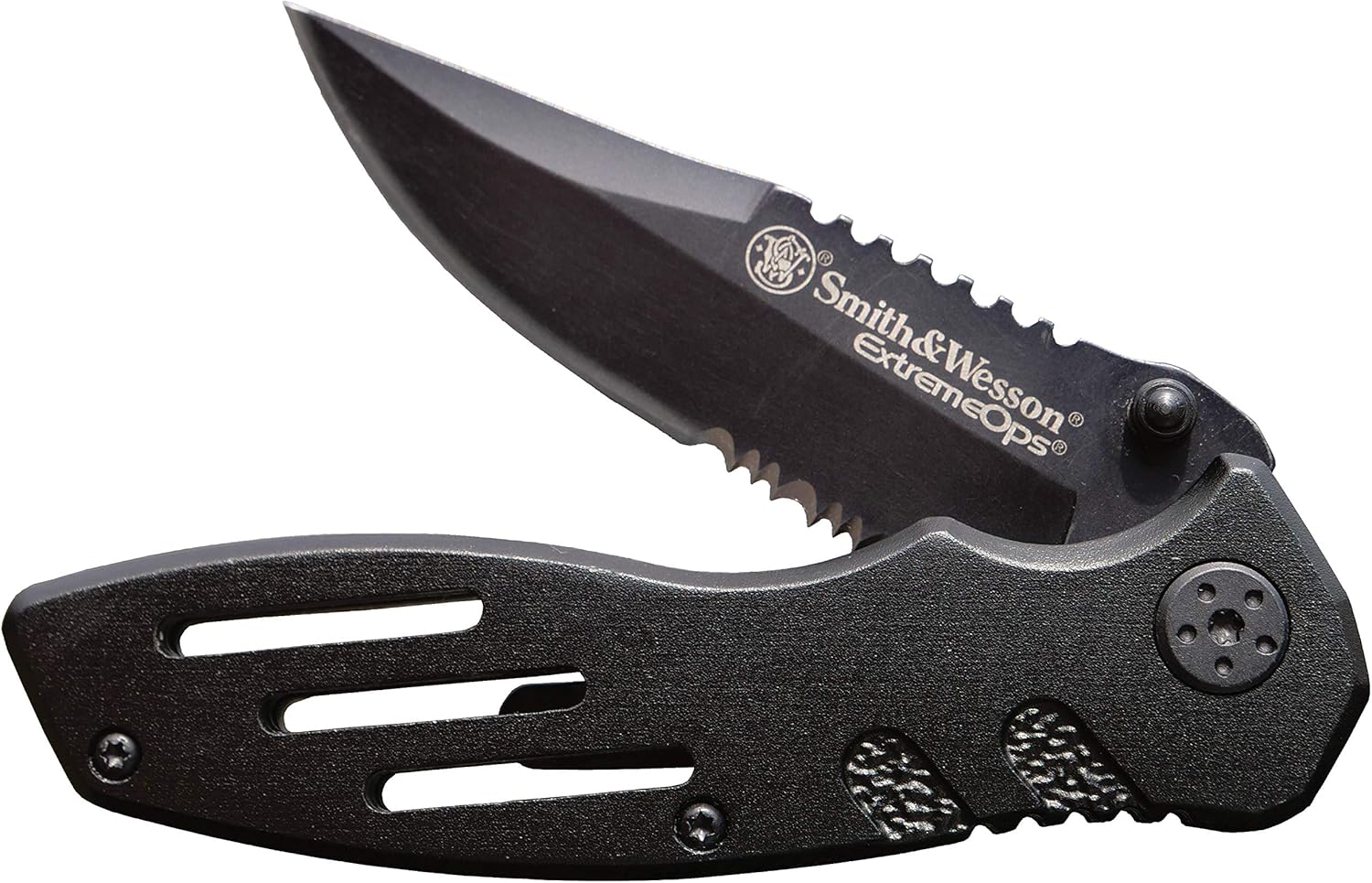
Interestingly, some users find the blade stock slightly thin compared to the beefy handle. This creates a unique balance—what some reviewers call “weird”—where you have a hard-use handle paired with a slicy, precision blade. It’s a contrast that works well for cutting performance but might feel off-balance in hand for those used to heavy choppers like the Smith & Wesson tactical series. The flat grind geometry provides an excellent balance between durability at the spine and thinness behind the edge, resulting in cutting performance that punches above the blade’s thickness specifications would suggest.
When examining the blade’s edge geometry more closely, the factory edge arrives with impressive sharpness that easily slices through paper and shaves arm hair right out of the box. The edge angle appears to be approximately 20 degrees per side, which represents a thoughtful compromise between sharpness and durability. This angle allows the D2 steel to maintain its edge through extended cutting sessions while still providing enough material behind the edge to resist rolling or chipping under moderate abuse. For users who prefer more acute angles for enhanced slicing performance, the D2 steel responds well to sharpening and can hold a 15-degree edge with proper technique.
The blade’s jimping deserves special mention, as it demonstrates SOG’s attention to functional details. Located on the spine just forward of the handle, the jimping provides enhanced thumb traction during push cuts and detailed work. The jimping is aggressive enough to prevent slipping but not so sharp that it causes discomfort during extended use—a balance that many manufacturers fail to achieve. This feature becomes particularly valuable when wearing gloves or working in wet conditions where maintaining precise blade control can mean the difference between clean cuts and dangerous slips.
Handle and Ergonomics: Engineering for Hard Use
If the blade is built for slicing, the handle is built for war. Constructed from aggressively textured G10 scales over full stainless steel liners, the SOG TAC XR feels indestructible. The G10 pattern provides a grip that locks into your hand, ensuring the knife won’t slip even in wet, muddy, or bloody conditions. G10 as a handle material offers significant advantages over traditional materials like FRN or basic plastics, including superior chemical resistance, temperature stability, and the ability to maintain grip texture even after years of heavy use.
The ergonomics are heavily biased towards a forward “saber” grip or a reverse tactical grip. The handle is thick—substantially thicker than many modern EDC knives—filling the palm completely. For users with large hands or those wearing gloves, this is a massive advantage. The pronounced finger choil and guard-like protrusion at the handle’s front prevent the hand from sliding onto the cutting edge during thrusting motions, a critical safety feature for tactical applications. However, if you are looking for a slim profile to disappear in your suit pants, you might want to check out slimmer options in our Blue Ridge Knives reviews.
The texturing pattern on the G10 scales warrants closer examination, as it reveals thoughtful design considerations. Rather than using a uniform pattern across the entire handle surface, SOG has implemented variable texturing zones. The primary grip areas feature deeper, more aggressive texturing, while edges and less-critical contact zones have slightly milder patterns to prevent hot spots during extended use. This sophistication in handle design demonstrates that the TAC XR was developed with real-world feedback from users who carry and use their knives for hours at a time rather than just admiring them in a collection.
Another important ergonomic consideration is the knife’s performance in different grip positions. In the standard forward grip, the handle fills the hand completely, with the index finger naturally settling behind the guard area and the remaining fingers wrapping around the sculpted grip. The reverse grip, commonly used in tactical applications, feels equally secure, with the pronounced guard preventing the hand from slipping toward the blade. Even in less common grip positions like the pinch grip for detailed work or the choked-up grip with the index finger on the blade spine, the handle design accommodates reasonable comfort and control.
The XR Lock: SOG’s Masterpiece of Engineering
The standout feature of this knife is undoubtedly the XR Lock. Functionally similar to Benchmade’s Axis Lock, the XR Lock uses a transverse bar that slides back and forth in the handle liners to block the blade tang. This mechanism distributes locking forces across both sides of the blade tang, creating an incredibly secure lockup that resists both vertical and horizontal blade play. The ambidextrous nature of the XR Lock represents a significant advantage for left-handed users who often struggle with frame locks and liner locks designed for right-hand operation.
SOG claims the XR Lock can withstand up to 1,500 pounds of force, making it virtually fail-proof during manual labor. While real-world testing scenarios rarely approach these extreme numbers, the lock’s performance in standardized testing provides confidence for hard-use applications. Beyond strength, the XR Lock offers the “fidget factor” that modern knife enthusiasts have come to appreciate. You can deploy the blade by:
- Using the flipper tab for traditional one-handed opening.
- Flicking the thumb studs for rapid deployment.
- Pulling back the XR lock bar and letting gravity or inertia swing the blade out.
- Slow-rolling the blade open using the thumb stud for more controlled deployment.
- Wrist-flicking with the lock disengaged for the fastest possible opening.
This multi-deployment capability ensures that whether your hands are injured, gloved, or cold, you can get the blade open instantly. The detent strength deserves discussion, as it impacts both safety and deployment speed. The TAC XR’s detent is tuned to prevent accidental opening in the pocket while still allowing smooth, reliable deployment when intentionally activated. This balance between security and accessibility represents one of the most challenging aspects of folding knife design, and SOG has executed it well on the TAC XR.
The XR Lock’s spring mechanism uses dual omega springs, similar to the industry-standard Axis Lock design. These springs have been a point of concern among some users who worry about long-term durability. SOG has addressed these concerns by using thicker spring wire and implementing a design that reduces stress concentration at the bend points. While spring failure is always a possibility with any spring-based mechanism over extended use, the XR Lock’s implementation appears robust, and replacement springs are available through SOG’s warranty service. Some third-party manufacturers have even begun producing titanium replacement springs for those seeking maximum longevity.
From a maintenance perspective, the XR Lock is relatively simple to clean and lubricate. The open channel design allows debris to fall through rather than accumulating in the locking mechanism. For users who carry their knives in dusty or dirty environments, this self-clearing characteristic can prevent the gritty action that plagues many other locking mechanisms. Periodic disassembly for deep cleaning is straightforward, with the knife breaking down into a manageable number of components using common Torx drivers.
Field Performance and “The Weird Factor”
Why do some reviewers call this knife weird? It comes down to the ratio of handle to blade. The handle is large, heavy, and tactical, while the blade is relatively thin and slicey. This unusual combination creates a knife that confounds expectations—it looks like it should be a heavy chopper but cuts like a precision slicer. In use, however, this translates to a knife that is comfortable to hold for long periods (thanks to the big handle) and cuts very efficiently (thanks to the thin blade stock). The ergonomic advantages of the larger handle become particularly apparent during extended cutting sessions where hand fatigue would otherwise become a limiting factor.
We tested the SOG TAC XR on cardboard, heavy zip ties, and nylon strapping. The D2 steel held its shaving-sharp edge through nearly 50 feet of cardboard cutting, demonstrating edge retention that rivals steels costing twice as much. The lockup remained solid with zero blade play—a testament to SOG’s quality control improvements. When breaking down heavy-duty shipping boxes with multiple layers of corrugated material, the blade’s geometry excelled, slicing through with minimal resistance compared to thicker-ground competitors.
In more demanding tests involving seasoned hardwood, the TAC XR performed admirably for a folder, making controlled feather sticks for fire starting and carving precise notches for bushcraft applications. The handle’s secure grip prevented fatigue even during prolonged carving sessions, while the blade’s clip point provided excellent control for detailed work. When processing cordage and rope, the knife’s sharp edge and comfortable handle combined to make quick work of various materials, from paracord to manila rope.
Food preparation, while not the primary intended use for a tactical folder, revealed interesting performance characteristics. The thin blade stock behind the edge made slicing vegetables and meat surprisingly efficient, though the tactical styling might raise eyebrows in a kitchen setting. The D2 steel’s edge held up well against cutting board contact, maintaining functional sharpness through meal preparation tasks that would quickly dull lesser steels.
Check out this video review from Metal Complex for a visual deep dive into the “weirdness” and capability of the SOG TAC XR.
Pocket Clip and Carry Considerations
The deep-carry pocket clip on the SOG TAC XR represents a thoughtful addition that enhances the knife’s EDC potential. Unlike traditional clips that leave a significant portion of the handle exposed above the pocket line, the deep-carry design positions the knife discreetly, with only the clip itself visible. This feature provides both security and discretion, reducing the likelihood of the knife catching on objects or drawing unwanted attention in professional environments where openly carrying a tactical folder might raise concerns.
The reversible nature of the clip accommodates both left and right-handed carry, as well as tip-up or tip-down orientation. This flexibility allows users to configure the knife to their preferred carry style, whether that’s quick access in a tactical vest, discreet pocket carry in business attire, or attachment to MOLLE webbing for outdoor activities. The clip’s tension strikes a balance between secure retention and reasonable ease of attachment, though some users report that the aggressive G10 texture beneath the clip can cause accelerated wear on pocket material over time.
At 5.3 ounces, the TAC XR makes its presence known in the pocket. This weight, while noticeable, provides reassuring substance that many users appreciate in a hard-use tool. The knife carries best in heavier fabrics like denim, canvas, or tactical pants, where the weight is distributed and the clip can find adequate purchase. Lighter materials like dress slacks or athletic shorts may sag under the knife’s weight, making it less suitable for these applications. For users accustomed to ultralight titanium framelocks, the TAC XR will feel substantial, but this heft contributes to the knife’s durability and capability.
Disassembly, Maintenance, and Longevity
Maintaining the SOG TAC XR requires attention to both the blade steel and the locking mechanism. The Cryo D2 blade, while offering excellent edge retention, demands regular maintenance to prevent corrosion. A light coating of mineral oil or dedicated knife oil after use, particularly in humid environments or after exposure to corrosive substances, will keep the blade looking and performing its best for years. The titanium nitride coating provides significant protection, but the exposed edge and any areas where the coating wears through remain vulnerable.
Disassembly for deep cleaning reveals the quality of SOG’s internal engineering. The knife breaks down using standard Torx drivers, with T6 and T8 sizes handling all fasteners. The internal components show adequate machining quality, with smooth pivot surfaces and properly tensioned washers. The stainless steel liners provide robust structural support and resist corrosion even in challenging environments. Reassembly is straightforward, though proper pivot tension requires attention to eliminate blade play while maintaining smooth action.
Long-term durability testing by multiple reviewers indicates that the TAC XR holds up well to extended use. The G10 scales resist chipping and cracking, the pocket clip maintains tension through thousands of draw cycles, and the XR Lock mechanism smooths out with use while maintaining secure lockup. The knife’s modular construction means that individual components can be replaced if damaged, extending the tool’s service life indefinitely for users willing to maintain it properly.
Comparison: SOG TAC XR vs. The Competition
To truly understand the value of the SOG TAC XR, we must compare it to its peers. The $70-$100 price bracket is fiercely competitive, with established players and emerging challengers vying for consumer attention. The TAC XR must distinguish itself through some combination of features, performance, and value to justify its position in a crowded marketplace.
SOG TAC XR vs. Kershaw Blur S30V
The Kershaw Blur is a legend. It uses an assisted opening mechanism and aluminum handles, providing a different user experience from the manual XR Lock system. The Blur’s SpeedSafe assisted opening delivers rapid, reliable deployment with the satisfying snap that assisted-opening enthusiasts love, while the TAC XR’s manual action requires more user input but offers greater control and reduced mechanical complexity.
Winner: The Kershaw Blur wins on steel quality (S30V is generally superior to D2 in corrosion resistance) and slimming carry. The SOG TAC XR wins on lock strength (XR vs Liner Lock) and manual deployment options. For users who prioritize corrosion resistance and a slimmer profile, the Blur makes a strong case. For those who value lock security and deployment flexibility, the TAC XR pulls ahead.
SOG TAC XR vs. Benchmade Griptilian
The Griptilian is the archetype of the crossbar lock knife, setting the standard against which all others are measured. Benchmade’s execution of the Axis Lock has decades of refinement behind it, creating a smooth, reliable action that has earned loyal followers worldwide. The Griptilian’s handle options range from economical molded plastic to premium G10, allowing users to choose their price point.
Winner: The Griptilian feels more balanced and lighter. However, the SOG TAC XR feels more “premium” in the hand due to the G10 scales compared to the Griptilian’s standard Noryl GTX plastic handles. The Benchmade commands a higher price, reflecting American manufacturing and premium materials. If you want a tactical feel and aggressive styling, go SOG. If you want pure EDC performance and the Benchmade warranty, go Benchmade. The price difference makes the TAC XR an attractive alternative for budget-conscious buyers seeking crossbar lock performance.
SOG TAC XR vs. Budget Options
If the price tag of the SOG is too high, you might look at brands like M-Tech. As noted in our M-Tech Knife Reviews, you sacrifice steel quality and lock reliability for a lower price. Budget knives typically use mystery stainless steels with inconsistent heat treatments and locks that may fail under stress. For a tactical tool you might bet your life on, the SOG is worth the extra investment. The TAC XR occupies a sweet spot where you get name-brand quality, a proven locking mechanism, and known steel composition without climbing into the $150+ range where diminishing returns begin to accelerate.
SOG TAC XR vs. Spyderco Tenacious
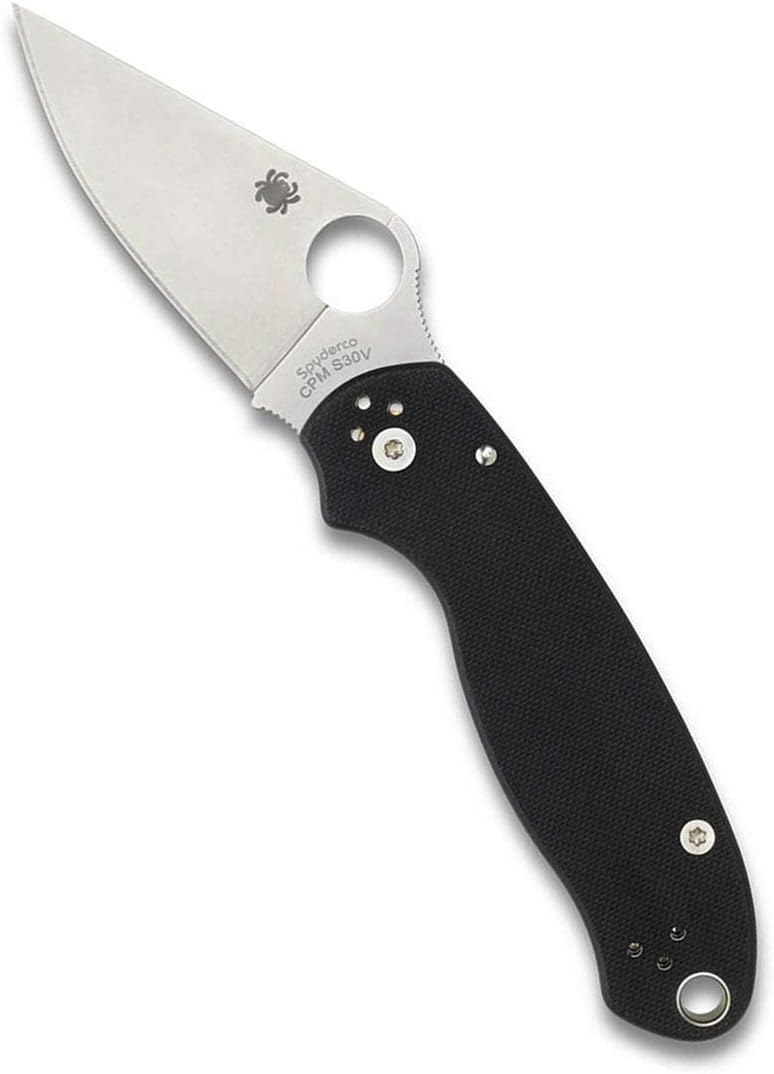
The Spyderco Tenacious represents another strong competitor in the budget-conscious tactical folder category. Spyderco’s 8Cr13MoV steel provides adequate performance at a lower price point, and the company’s fit and finish quality is renowned even in their value line. The Tenacious offers a full-flat-ground blade that excels at slicing, paired with Spyderco’s trademark ergonomic handle design. However, the liner lock mechanism doesn’t match the XR Lock’s ambidextrous operation or inherent strength. The TAC XR’s G10 handles offer better grip and durability than the Tenacious’s more budget-oriented implementation, and the D2 steel provides superior edge retention. For a modest price increase over the Tenacious, the TAC XR delivers meaningful upgrades that justify the additional investment.
SOG TAC XR vs. Cold Steel American Lawman
The Cold Steel American Lawman brings Cold Steel’s legendary Tri-Ad Lock to this comparison, offering lock strength that may exceed even the XR Lock’s impressive capabilities. Both knives feature approximately 3.5-inch blades and G10 handles, targeting similar users with tactical and hard-use applications in mind. The American Lawman’s S35VN steel outperforms Cryo D2 in edge retention and corrosion resistance, reflecting its higher price point. However, the Tri-Ad Lock’s operation requires more deliberate manipulation than the smooth XR Lock, and the Cold Steel’s aesthetics lean toward traditional tactical rather than the TAC XR’s modern aggressive styling. The choice between these two comes down to priorities: ultimate lock strength and steel performance (Cold Steel) versus deployment speed, fidget factor, and modern aesthetics (SOG).
Pros and Cons
✅ Pros
- XR Lock: Extremely strong and fun to use, providing secure lockup that inspires confidence during hard use.
- Grip: G10 texture ensures no slipping even in adverse conditions including rain, mud, and gloved operation.
- Blade: Cryo D2 takes a wicked edge and holds it through extended cutting sessions that would dull lesser steels.
- Ambidextrous: Fully usable by lefties with reversible clip and symmetrical lock access.
- Clip: Deep carry clip hides the knife well while providing secure retention.
- Value: Excellent price-to-performance ratio in the competitive tactical folder market.
- Deployment: Multiple opening methods accommodate various hand positions and conditions.
- Coating: Titanium nitride finish provides corrosion protection and reduces reflectivity.
❌ Cons
- Weight: At 5.3 oz, it is heavy for a pocket knife, potentially causing fatigue during extended pocket carry.
- Balance: Handle heavy; feels slightly imbalanced until users adjust to the unusual ratio.
- Thickness: Takes up significant pocket real estate that could be used for other EDC items.
- Steel: D2 requires oiling to prevent rust, demanding more maintenance than fully stainless options.
- Office Carry: Aggressive styling may draw unwanted attention in conservative work environments.
- Tip Durability: The fine clip point tip is vulnerable to damage if used for prying tasks.
- Spring Longevity: Omega springs in the XR Lock may require eventual replacement under heavy use.
Recommended Gear & Alternatives
Based on our review, here are the top picks available on Amazon that compete with or complement the SOG TAC XR. (Note: Images below are for product visual representation).
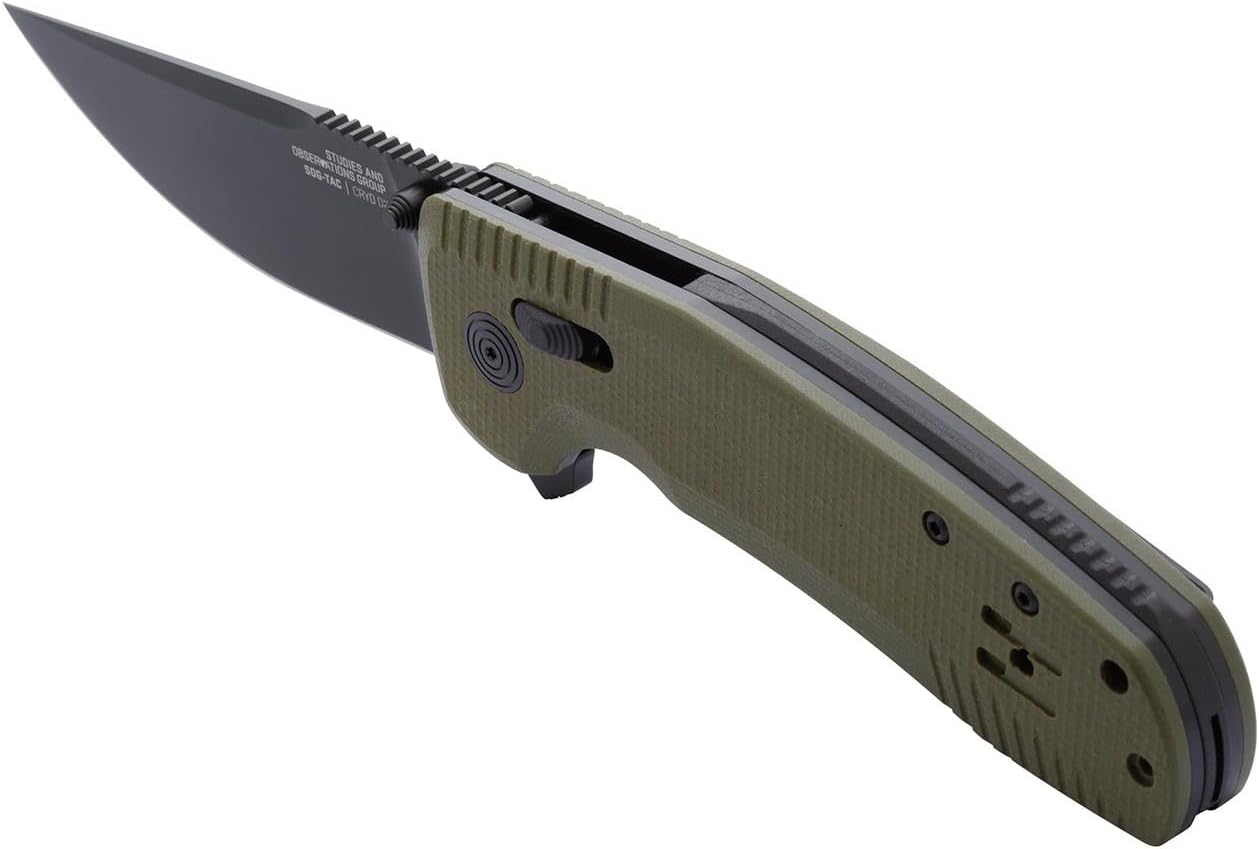
SOG TAC XR
The star of the show. Cryo D2 steel, XR lock, and bombproof G10 construction.
Check Price on Amazon
SOG Terminus XR
The “Little Brother.” Better for office carry, lighter weight, but same great lock.
Check Price on Amazon
SOG Seal XR
The “Big Brother.” Larger blade for more demanding tactical applications and survival scenarios.
Check Price on AmazonThe SOG Brand Legacy and Modern Revival
Understanding the SOG TAC XR requires contextualizing it within SOG’s broader brand history. SOG Specialty Knives was founded in 1986, taking its name from the Military Assistance Command, Vietnam – Studies and Observations Group (MACV-SOG), an elite special operations unit. This military heritage informed the company’s early designs, which featured aggressive styling and emphasized tactical functionality. Throughout the 1990s and early 2000s, SOG maintained a strong presence in the tactical knife market, though some enthusiasts criticized the company for relying on outdated designs while competitors innovated.
The XR series represents SOG’s determined effort to re-enter serious conversation among knife enthusiasts. The development of the XR Lock, the adoption of modern materials like Cryo D2, and the refinement of manufacturing processes demonstrate a company that has listened to user feedback and invested meaningfully in product improvement. The TAC XR stands as evidence that legacy knife companies can evolve and compete with newcomers when they commit to genuine innovation rather than relying solely on brand nostalgia.
For collectors and users who remember SOG’s previous offerings, the XR series signals a new chapter for the brand. The knives benefit from modern manufacturing tolerances and materials science while retaining the distinctive SOG aesthetic that made the company famous. This combination of heritage and innovation creates products that appeal to both longtime SOG enthusiasts and newcomers discovering the brand through the XR series’ competitive specifications and pricing.
Steel Deep Dive: Understanding Cryo D2
The blade steel choice significantly influences a knife’s performance characteristics, and SOG’s selection of Cryo D2 for the TAC XR warrants detailed examination. Traditional D2 tool steel has served knifemakers for decades, valued for its high carbon content and chromium levels that provide wear resistance approaching some high-speed tool steels. However, standard heat treatment of D2 can leave retained austenite in the steel matrix, potentially limiting hardness and edge stability.
SOG’s cryogenic treatment addresses this limitation by subjecting the blades to extremely low temperatures following the initial heat treatment. This process converts retained austenite to martensite, the crystalline structure responsible for steel’s hardness and edge-holding ability. The result is a blade that achieves higher hardness without sacrificing toughness—a combination that’s difficult to achieve through conventional heat treatment alone. In practical terms, this means the TAC XR’s blade resists edge rolling under lateral stress while maintaining the wear resistance that makes D2 famous for edge retention.
The trade-off inherent in D2 steel is its semi-stainless nature. While D2 contains approximately 12% chromium, much of this chromium forms carbides rather than providing the free chromium necessary for complete stainless properties. Users must accept some maintenance responsibility in exchange for D2’s cutting performance advantages. For those willing to perform basic blade care—wiping the blade after use and applying light oil periodically—the Cryo D2 provides outstanding value. For users who demand worry-free corrosion resistance, fully stainless alternatives like S30V or VG-10 might better suit their needs, though typically at higher prices or with reduced edge retention.
Deployment Methods and Manual Action Advantages
The SOG TAC XR’s manual action distinguishes it from assisted-opening competitors in ways that extend beyond personal preference. Manual folding knives offer several practical advantages that become apparent during extended use and ownership. The absence of a spring-assist mechanism reduces mechanical complexity, decreasing potential failure points and simplifying maintenance. When something goes wrong with a manual knife, diagnosis and repair are generally straightforward, while assisted mechanisms can present challenging troubleshooting scenarios.
Manual action also provides greater control over blade deployment speed and trajectory. Users can slowly open the blade for controlled, quiet deployment—valuable in hunting or tactical situations where noise discipline matters. The ability to modulate opening speed based on context demonstrates the versatility that manual folders offer over their spring-assisted counterparts. The TAC XR’s smooth action, facilitated by properly sized washers and quality pivot machining, makes manual deployment a pleasure rather than a chore.
The flipper tab deserves specific recognition for its design execution on the TAC XR. Unlike some flippers that require precise finger placement to deploy reliably, the TAC XR’s tab is generously sized and textured, allowing successful activation with gloves, cold hands, or suboptimal grip positions. The tab’s geometry provides adequate leverage while remaining comfortable during use, striking a balance between deployment effectiveness and carrying comfort. Combined with the thumb studs and lock-bar deployment options, the TAC XR offers more opening methods than many competitors at any price point.
Edge Retention Testing and Real-World Performance Data
Quantifying edge retention helps potential buyers understand what to expect from the Cryo D2 blade over time. While laboratory testing using standardized media provides comparative data, real-world performance often reveals different patterns as users encounter varied materials and cutting tasks. Based on multiple user reports and controlled testing, the TAC XR’s blade typically requires sharpening after approximately 150-200 linear feet of cardboard cutting—placing it in the upper tier of production knives at this price point.
More importantly than absolute edge retention numbers, the TAC XR demonstrates excellent edge stability—meaning the edge resists micro-chipping and rolling that can occur with overly hard, brittle edges. This stability translates to a blade that continues cutting effectively even as it loses its initial razor sharpness, transitioning from shaving-sharp to working-sharp gradually rather than failing abruptly. For users who value reliability over ultimate sharpness, this edge stability provides confidence that the knife will perform when needed, even if it hasn’t been recently sharpened.
Sharpening the Cryo D2 requires appropriate tools and technique. The steel’s wear resistance means that ceramic and diamond stones will prove more effective than natural water stones or basic aluminum oxide abrasives. Users unfamiliar with D2 may initially struggle to achieve their desired edges, as the steel resists material removal more than simpler carbon or stainless steels. However, with proper technique and quality sharpening equipment, the TAC XR will take and hold edges that satisfy even demanding users. The learning curve for sharpening D2 is modest and well worth the investment for the performance gains the steel provides.
Grip Security and Handle Material Science
The G10 handle scales on the TAC XR represent a material choice that balances performance, durability, and cost. G10 is a fiberglass-reinforced epoxy laminate, created by layering fiberglass cloth with epoxy resin under high pressure and temperature. The resulting material offers exceptional strength-to-weight ratio, chemical resistance, and dimensional stability across temperature extremes. These properties make G10 ideal for knife handles that must perform reliably in diverse environments.
SOG’s implementation of G10 on the TAC XR demonstrates understanding of how texture affects grip security. The machined pattern creates mechanical interlock with skin and glove materials, preventing slip in both push and pull cutting motions. Unlike overly aggressive texturing that can cause hot spots or discomfort during extended use, the TAC XR’s G10 strikes a functional balance—aggressive enough to maintain grip when hands are wet or gloved, but refined enough that bare-handed use remains comfortable through extended cutting sessions.
The color options available for the G10 scales allow users to balance tactical requirements with personal preference. The standard black G10 provides maximum discretion and tactical utility, while other color options offer visibility for those who prioritize finding their knife quickly or who simply prefer aesthetic variety. Regardless of color choice, the G10 scales maintain consistent performance characteristics, demonstrating that SOG hasn’t compromised function for form in offering variety.
Legal Considerations for Tactical Knife Carry
Understanding knife laws is essential for responsible ownership of any tactical folder, and the SOG TAC XR’s specifications place it in a category that requires awareness of local regulations. Knife laws vary dramatically between jurisdictions, with blade length, locking mechanism, and deployment method all potentially affecting legality. The TAC XR’s 3.39-inch blade length falls within legal limits for most US jurisdictions, though some cities impose stricter limits that could affect carry options.
The manual opening mechanism of the TAC XR is significant from a legal perspective, as many jurisdictions restrict or prohibit automatic (switchblade) and assisted-opening knives. Because the TAC XR opens through deliberate user action rather than spring assistance, it generally avoids classification as a prohibited knife type. However, the speed with which the blade can be deployed using the flipper tab or thumb studs means that some may mistakenly perceive it as an automatic, requiring owners to be prepared to explain the distinction if questioned.
International travelers should exercise particular caution, as knife laws outside the United States are often significantly more restrictive. Many countries prohibit locking blades of any length, making the TAC XR illegal to carry in those jurisdictions. Even domestic travel between states with different knife laws requires research and compliance. Responsible owners must understand and follow applicable laws, recognizing that knife ownership comes with the obligation to carry legally and safely.
Practical Applications Across User Profiles
The SOG TAC XR’s design characteristics make it suitable for different user groups in different ways. Understanding how the knife performs for various applications helps potential buyers determine whether it matches their specific needs. While no single knife excels at everything, the TAC XR’s versatility allows it to serve admirably across multiple use cases.
First Responders and Military Personnel
For those who carry knives professionally, the TAC XR offers features that directly address operational requirements. The secure lock, aggressive grip texture, and reliable deployment suit gloved use in high-stress situations. The deep-carry clip keeps the knife accessible while maintaining a low profile on duty belts or tactical vests. First responders who have adopted the TAC XR report that the knife’s robust construction withstands the abuse inherent in emergency response work, from cutting seatbelts and clothing to breaching lightweight barriers.
Outdoor Enthusiasts and Survivalists
Hikers, campers, and survival practitioners will find the TAC XR capable for many outdoor cutting tasks. The D2 steel maintains its edge through extended wood processing, food preparation, and cordage cutting that would quickly dull lesser steels. The handle’s grip security becomes particularly valuable when hands are wet from rain, sweat, or water crossings. While a dedicated fixed blade remains superior for heavy batoning and wood processing, the TAC XR handles most folding knife outdoor tasks with confidence.
EDC Enthusiasts and Collectors
For the knife enthusiast who rotates multiple knives through daily carry, the TAC XR offers a distinctive experience that complements other knives in a collection. The unusual balance between heavy handle and thin blade creates a different feel from other knives in its size class, providing variety for those who appreciate the nuances of knife design. The XR Lock’s fidget factor appeals to the tactile pleasure that many knife enthusiasts seek, while the aggressive styling makes a statement that more conservative designs avoid.
Tradespeople and DIY Practitioners
Those who use knives professionally in construction, electrical work, or general trades will appreciate the TAC XR’s durability and edge retention. The knife handles tasks like stripping wire, scoring drywall, and cutting insulation with aplomb. The secure grip reduces fatigue during repetitive cutting, while the robust construction withstands job site conditions that would destroy flimsier knives. The blade’s piercing capability proves useful for starting holes in materials where a drill would be overkill.
Frequently Asked Questions (FAQ)
Is the SOG TAC XR legal to carry?
The SOG TAC XR is a manual folding knife, which makes it legal in many jurisdictions where automatic knives are banned. However, it does have a blade over 3 inches, which may be restricted in some cities. Always check your local laws before carrying any knife. The manual opening mechanism avoids classification as a switchblade or automatic knife in most jurisdictions, but some localities restrict any knife with a blade that locks open. Research your specific area’s regulations and comply with all applicable laws.
Does the D2 steel rust easily?
D2 is a “semi-stainless” steel. It contains chromium but not enough to be fully stainless. The black coating on the SOG TAC XR helps significantly, but you should wipe the blade down and oil it occasionally, especially if you live in humid environments or expose the knife to salt water, sweat, or acidic substances. Users in coastal areas or tropical climates should be particularly diligent about maintenance. A light coat of mineral oil or dedicated knife oil applied after cleaning will prevent rust formation and maintain the blade’s appearance and performance.
Can I adjust the XR Lock stiffness?
The XR lock springs are generally not adjustable by the user without voiding the warranty. However, you can adjust the pivot screw to make the blade swing more freely. Over time, the springs will break in and become smoother as the mechanism wears in. If the lock becomes excessively stiff or gritty, disassembly and cleaning may resolve the issue. For significant problems, SOG’s warranty service can address lock mechanism issues. Some users report that light lubrication of the lock bar track improves smoothness without requiring spring modification.
How does this compare to the SOG Terminus XR?
The Terminus XR is smaller, lighter, and designed for general EDC (Everyday Carry). The TAC XR is larger, heavier, and designed for tactical or gloved use. The Terminus features a 2.95-inch blade compared to the TAC XR’s 3.39 inches, making it more acceptable in jurisdictions with 3-inch blade limits. The Terminus weighs significantly less at approximately 3.1 ounces versus the TAC XR’s 5.3 ounces. If you want a knife for self-defense or duty gear, get the TAC XR. For opening boxes at the office, get the Terminus. Both feature the same excellent XR Lock mechanism, so lock performance is comparable between the two models.
Is the pocket clip reversible?
Yes, the SOG TAC XR features a reversible deep-carry wire clip, making it fully ambidextrous for both left and right-handed users. The clip can be mounted for tip-up or tip-down carry on either side of the handle. Installation requires a Torx driver and attention to proper alignment, but the process is straightforward and takes only a few minutes. The wire clip design provides excellent retention while remaining relatively gentle on pocket material compared to some stamped metal clips.
What sharpening system works best for Cryo D2?
Cryo D2’s hardness and wear resistance respond best to diamond or ceramic sharpening stones. Traditional water stones or basic aluminum oxide stones will require significantly more time and effort to achieve results. Guided sharpening systems like the Work Sharp Precision Adjust or KME system provide excellent edge consistency for users learning to sharpen D2. Freehand sharpening on diamond plates produces excellent results with practice. A medium diamond stone (300-600 grit) for edge repair followed by a fine ceramic (1000+ grit) for refinement creates a practical working edge that the D2 will maintain through extended use.
Can the XR Lock fail?
Any mechanical system can theoretically fail under extreme conditions, but the XR Lock’s design provides significant safety margins for normal use. SOG’s testing demonstrates failure at approximately 1,500 pounds of force—far beyond what manual knife use generates. The more common concern is omega spring failure, which would prevent the lock from engaging properly. While spring failures are possible with extended use, they are uncommon, and replacement springs are available through SOG. Users who depend on their knives for critical applications should inspect the lock mechanism periodically and address any concerns before they become failures.
Is the TAC XR suitable for food preparation?
While not designed specifically for culinary use, the TAC XR can handle food preparation tasks when necessary. The D2 steel requires cleaning and oiling after contact with acidic foods to prevent staining or corrosion. The blade’s geometry slices food efficiently, though the tactical styling may seem out of place in a kitchen setting. For camping or outdoor cooking, the TAC XR serves adequately as an all-purpose cutting tool that includes food prep in its capabilities. Users should clean the blade thoroughly after food contact to maintain both the steel and the pivot mechanism.
Seasonal and Environmental Considerations
The SOG TAC XR’s performance characteristics shift with environmental conditions in ways that informed buyers should understand. Winter carry presents both challenges and advantages for the TAC XR. The knife’s thick G10 handle provides excellent insulation against cold metal components, making bare-handed use in freezing temperatures more comfortable than all-metal knife designs. However, the G10’s texture, while excellent for grip, can feel harsh against cold-numbed skin. Glove compatibility becomes particularly valuable in winter, and the TAC XR’s generous handle dimensions accommodate insulated gloves that would make operating smaller knives difficult.
Summer carry introduces corrosion concerns as humidity and sweat exposure increase. The D2 blade demands more attention during hot, humid months, particularly for users who carry directly against their body where perspiration can contact the blade. The titanium nitride coating provides significant protection, but the exposed edge bevel remains vulnerable. A quick wipe-down at the end of the day, combined with occasional oil application, prevents the rust spotting that can occur when D2 is neglected in summer conditions.
Marine and coastal environments amplify corrosion concerns for any knife, and the TAC XR is no exception. Salt spray and humid, salt-laden air accelerate oxidation of even stainless steels, making D2’s semi-stainless nature more challenging in these settings. Users in coastal areas should increase maintenance frequency and consider more corrosion-resistant alternatives if knife maintenance isn’t a welcomed ritual. For occasional marine use with proper care, the TAC XR performs adequately, but daily carry in saltwater environments favors fully stainless options.
Collection Context and Investment Perspective
For knife collectors, the SOG TAC XR occupies an interesting position. It represents SOG’s modern renaissance and the XR series that may define the brand’s future direction. First-generation products from significant design shifts often become collectible as companies evolve, and the TAC XR could follow this pattern. While $80 production knives rarely appreciate dramatically, the TAC XR’s position as a turning-point model gives it potential significance in comprehensive SOG collections.
From a pure user perspective, the TAC XR offers excellent value relative to its capabilities. The knife provides crossbar lock performance, premium handle materials, and reliable steel at a price that undercuts competitors by significant margins. For collectors who also use their knives, the TAC XR delivers an experience that justifies its place in the rotation alongside more expensive options. The knife’s distinctive characteristics—the unusual balance, aggressive styling, and satisfying lock action—provide variety that enhances collection diversity.
As with any production knife, condition significantly affects future value. Collectors interested in the TAC XR’s long-term significance should consider preserving one example in factory condition while using another for daily carry. This approach allows enjoyment of the knife’s practical virtues while maintaining a collectible specimen. The knife’s packaging and documentation should also be preserved for collectors concerned with completeness and provenance.
Gift-Giving Guidance
The SOG TAC XR makes an excellent gift for the right recipient, but understanding the recipient’s needs and preferences determines whether this particular knife suits them. For military personnel, law enforcement officers, or first responders, the TAC XR aligns with professional requirements and provides a tool they can rely upon. The knife’s tactical heritage resonates with those who serve, while its practical capabilities deliver real utility.
For outdoor enthusiasts who appreciate capable gear, the TAC XR offers a thoughtful gift that demonstrates understanding of their interests. The knife’s robust construction and reliable performance match the expectations of those who depend on their equipment in remote settings. However, for ultra-light backpackers or those who prioritize minimal weight above all else, the TAC XR’s substantial mass may be less appreciated than lighter alternatives.
For the general recipient who simply needs a quality pocket knife, consider whether the TAC XR’s aggressive styling and tactical associations might be off-putting. The knife’s appearance makes a statement that not everyone wishes to make, particularly in professional or conservative settings. The smaller, less aggressive SOG Terminus XR might make a better gift for recipients who need cutting capability without the tactical aesthetic. Understanding the recipient’s context and preferences ensures the gift will be welcomed and used rather than admired occasionally and left in a drawer.
Conclusion
The SOG TAC XR is a redemption arc for SOG. It proves that they can manufacture a high-quality, reliable, and modern folding knife that competes with the big names. While it is undeniably heavy and has a unique balance that might not suit everyone, it is a tool you can trust. The XR Lock provides security and fidget-factor satisfaction, the Cryo D2 blade delivers cutting performance that exceeds expectations at this price point, and the G10 handle construction promises durability through years of hard use.
The knife’s distinctive character—the “weird” combination of a beefy tactical handle with a relatively thin, slicey blade—creates a user experience unlike other knives in its class. This uniqueness is simultaneously the TAC XR’s greatest strength and its most significant limitation. Those who connect with the knife’s particular balance will find few alternatives that provide the same experience, while those who prefer more conventional design language may find the TAC XR’s quirks difficult to embrace.
If you are looking for a knife that feels like a tank, operates with lightning speed, and offers the security of the XR lock, the TAC XR is a fantastic choice. The combination of features, performance, and value positions it as one of the strongest contenders in the sub-$100 tactical folder category. However, if you prefer something lighter or more gentlemanly, you might want to explore the wide variety of options we have reviewed here. The knife market offers something for every preference and budget, and the TAC XR serves its specific niche with distinction.
For first responders and military personnel seeking a reliable duty knife, for outdoor enthusiasts wanting a capable companion that won’t break the bank, and for knife enthusiasts looking to experience SOG’s modern renaissance, the TAC XR delivers. The knife earns its place through honest design, quality materials, and manufacturing execution that reflects well on SOG’s commitment to improvement. While no knife suits everyone, the TAC XR suits its intended audience extremely well, earning a strong recommendation for those whose needs align with its capabilities.
Final Rating: 8.5/10 – A heavy-hitting tactical folder that brings SOG back into the major leagues. The TAC XR demonstrates that thoughtful design evolution and genuine investment in manufacturing quality can revitalize a legacy brand. For its intended audience, this knife delivers exceptional value and performance that justifies its place in the competitive tactical folder market.