Kershaw Blur S30V Review: Is It The Ultimate EDC Pocket Knife?
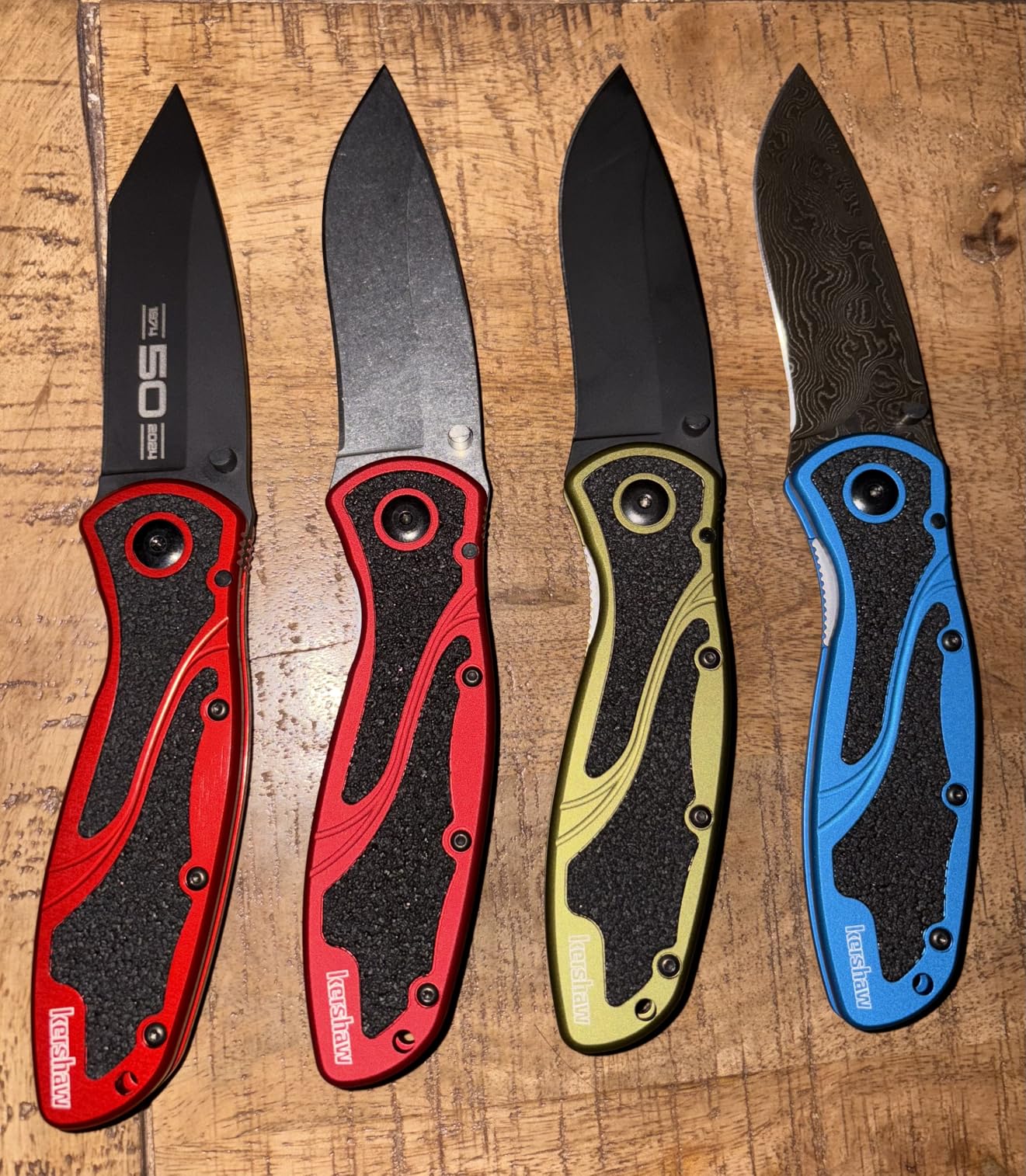
In the vast ocean of everyday carry (EDC) knives, few silhouettes are as instantly recognizable as the Kershaw Blur. Designed by the legendary Ken Onion, the Blur has been a staple in pockets for nearly two decades. But today, we aren’t talking about the standard 14C28N Sandvik model. We are diving deep into the premium, high-performance variant: the Kershaw Blur S30V.
Why does this knife matter? Because it bridges the gap between affordable production folders and high-end super-steel tools. If you have been browsing our Blue Ridge Knives reviews looking for a hidden gem, you know that finding premium materials at a mid-range price point is rare.
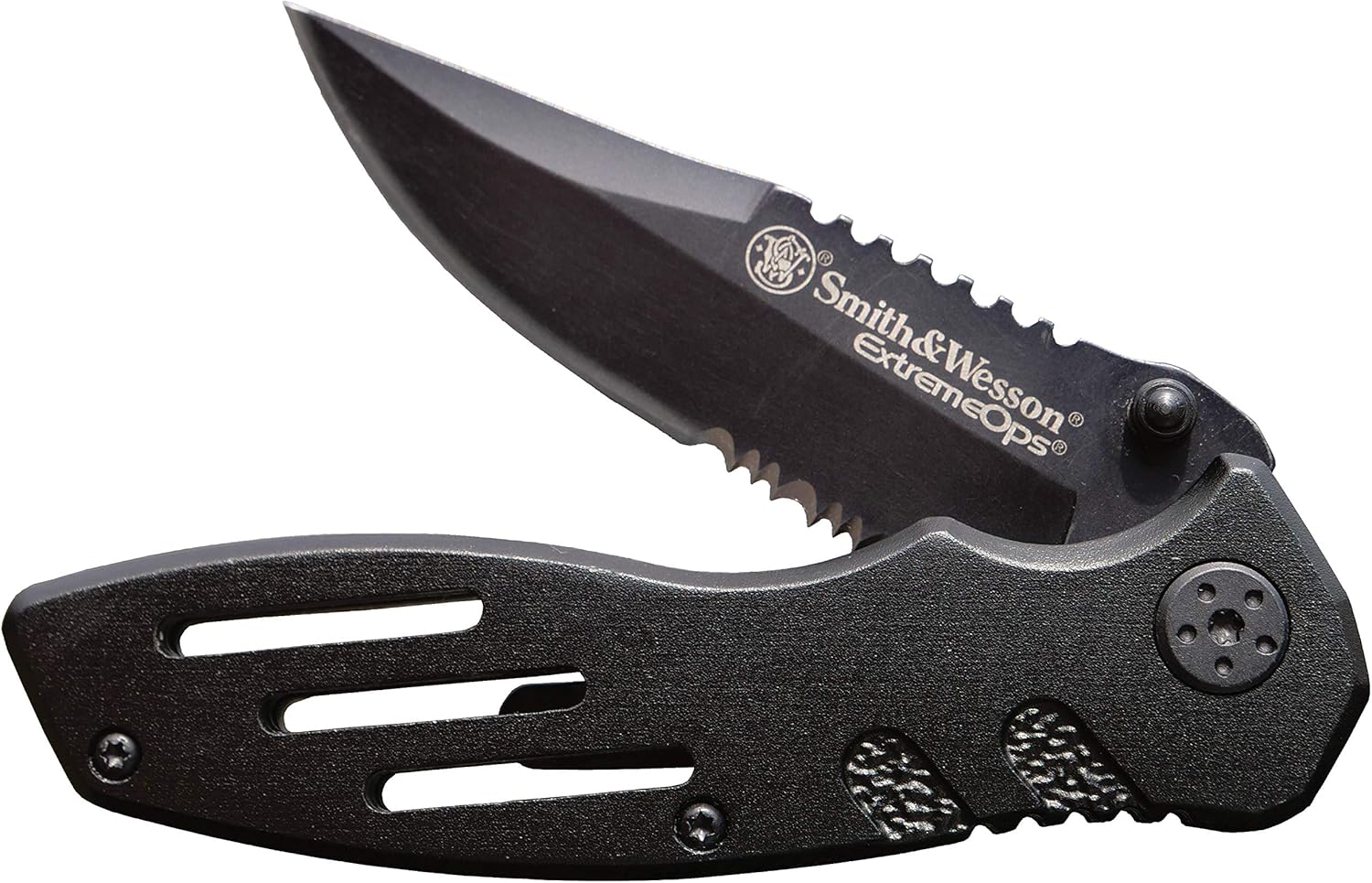
In this extensive Kershaw Blur S30V review, we will tear down the specs, analyze the metallurgy of the blade, test the SpeedSafe action, and see if it truly stands superior to its budget competitors like the Smith & Wesson tactical line.
The Kershaw Legacy: Why Ken Onion Designs Matter
Before we dive deeper into the specifications of this particular pocket knife, it’s essential to understand the pedigree behind the Kershaw Blur. Ken Onion isn’t just another knife designer; he is widely regarded as one of the most influential custom knife makers of the modern era. His collaboration with Kershaw Knives began in the late 1990s, and it fundamentally changed the landscape of production folding knives forever. The SpeedSafe assisted opening mechanism, which Onion invented and patented in 1998, revolutionized how we think about pocket knife deployment. Before SpeedSafe, one-handed opening typically meant either a slow manual thumb stud deployment or an expensive automatic knife that was illegal in many jurisdictions. Ken Onion’s genius was creating a middle ground—a mechanism that provides the speed and satisfaction of an automatic knife while maintaining the legal status of a manual folder.
The Kershaw Blur represents the culmination of Onion’s design philosophy: ergonomic excellence, mechanical reliability, and aesthetic distinctiveness. When you hold a Blur, you’re not just holding a cutting tool; you’re holding a piece of modern knife history. The recurve blade shape that Onion favors isn’t merely a stylistic choice—it’s a calculated engineering decision that enhances cutting performance across a wide variety of materials. Ken Onion understood that a knife is ultimately defined by how it cuts, not how it looks in a display case. This philosophy permeates every aspect of the Blur’s design, from the aggressive blade geometry to the textured handle inserts that provide purchase in adverse conditions.
Kershaw Knives, founded in 1974 and now operating as a subsidiary of KAI Group (which also owns Zero Tolerance Knives and Shun Cutlery), has built its reputation on manufacturing excellence and innovative designs. The company’s Tualatin, Oregon facility produces some of the finest American-made production knives available today. The decision to manufacture the Blur domestically, rather than outsourcing to overseas factories, speaks volumes about Kershaw’s commitment to quality control and precision manufacturing. When you purchase a USA-made Kershaw, you’re supporting American craftsmanship and receiving a knife that has undergone rigorous quality assurance protocols that budget import knives simply cannot match.
Understanding CPM-S30V Steel: A Deep Dive into Powder Metallurgy
To truly appreciate what makes the Kershaw Blur S30V special, we need to understand the metallurgical science behind its blade steel. CPM-S30V represents a quantum leap forward in knife steel technology, and understanding why requires a brief journey into the history of steel manufacturing. Traditional stainless steels used in knife making—such as 440C, AUS-8, and even VG-10—are produced through conventional ingot metallurgy. In this process, raw materials are melted together in a furnace, poured into molds, and allowed to cool slowly. During this cooling process, the various alloying elements within the steel begin to separate and cluster together, forming carbides of varying sizes. These carbide clusters can create weak points in the steel’s crystalline structure, leading to reduced toughness and inconsistent edge retention.
Crucible Particle Metallurgy (CPM) fundamentally changes this equation. Instead of allowing the molten steel to cool slowly in a mold, the CPM process atomizes the liquid metal into tiny droplets using high-pressure gas. These droplets cool almost instantaneously into fine powder particles, each with a uniform distribution of alloying elements. This powder is then consolidated under extreme heat and pressure through a process called Hot Isostatic Pressing (HIP). The result is a steel with an exceptionally uniform microstructure, where vanadium carbides—the hardest carbides used in knife steels—are distributed evenly throughout the matrix. This uniformity translates directly into real-world performance: better edge retention because the carbides don’t clump together, improved toughness because there are fewer stress risers, and enhanced corrosion resistance because chromium is evenly distributed.
The specific alloy composition of S30V is carefully balanced for knife applications: approximately 1.45% Carbon provides hardness and edge holding capability; 14.00% Chromium delivers stainless properties and wear resistance; 4.00% Vanadium forms extremely hard carbides that dramatically improve wear resistance; and 2.00% Molybdenum enhances toughness and resistance to pitting corrosion. This carefully calibrated recipe, combined with the CPM manufacturing process, creates a steel that outperforms conventional ingot steels in nearly every measurable category. When you’re cutting through abrasive materials like cardboard, rope, or carpet, those evenly distributed vanadium carbides act as microscopic armor plating, protecting the edge from wear and deformation.
Edge Retention: The Numbers Behind the Performance
When knife enthusiasts talk about edge retention, they’re referring to a blade’s ability to maintain a sharp, functional cutting edge through extended use. This characteristic is measured through standardized testing protocols, most commonly the CATRA (Cutlery and Allied Trades Research Association) test. In CATRA testing, a knife blade makes repeated cuts through silica-impregnated card stock while sensors measure the force required for each cut. As the blade dulls, more force is required to complete the same cut. By comparing the number of cuts a blade can make before requiring a specific force threshold, testers can objectively quantify edge retention.
In standardized CATRA testing, S30V dramatically outperforms common budget knife steels. A typical 8Cr13MoV blade might complete 200-250 cuts before reaching the dullness threshold. AUS-8 typically manages 180-220 cuts. 440C, the “premium” steel of decades past, achieves around 300-350 cuts. S30V, by comparison, routinely exceeds 600-700 cuts in the same test protocol—effectively doubling or tripling the edge retention of conventional stainless steels. This isn’t just a laboratory curiosity; it translates directly into real-world experience. An EDC knife user who breaks down cardboard boxes daily might need to sharpen an 8Cr13MoV blade every week. That same user could go a month or more between sharpenings with S30V, assuming identical usage patterns.
Corrosion Resistance: Real-World Stainless Performance
The term “stainless steel” is somewhat misleading; no steel is truly stain-proof. However, S30V’s high chromium content—14% by weight—provides exceptional corrosion resistance that exceeds many other premium knife steels. Chromium forms a passive oxide layer on the steel’s surface that prevents oxygen from reaching the iron beneath, effectively halting the oxidation process we call rust. For everyday carry knife users, this means the Kershaw Blur S30V can withstand sweat, humidity, rain, and even accidental exposure to corrosive substances without developing rust spots or pitting.
This corrosion resistance is particularly important for users who carry their knives in humid environments, near saltwater, or during physical activities that generate significant perspiration. Many high-carbon tool steels like D2 or M4 offer excellent edge retention but require vigilant maintenance to prevent rust formation. S30V provides a compelling compromise: edge retention approaching that of high-carbon tool steels combined with corrosion resistance that rivals dedicated stainless formulations. For the average EDC user who wants a knife they can carry daily without worrying about maintenance, this combination is nearly ideal.
Steel Comparison: S30V Versus the Competition
| Steel Type | Edge Retention | Toughness | Corrosion Resistance | Ease of Sharpening | Typical Price Range |
|---|---|---|---|---|---|
| 8Cr13MoV | Low (2/10) | Good (7/10) | Fair (5/10) | Very Easy (9/10) | $20-$40 |
| AUS-8 | Low-Medium (3/10) | Good (7/10) | Good (6/10) | Easy (8/10) | $30-$60 |
| 14C28N | Medium (4/10) | Very Good (8/10) | Good (7/10) | Easy (8/10) | $40-$80 |
| VG-10 | Medium-High (5/10) | Medium (5/10) | Good (7/10) | Moderate (6/10) | $60-$120 |
| D2 | Medium-High (6/10) | Medium (5/10) | Low (3/10) | Difficult (4/10) | $40-$100 |
| 154CM | High (7/10) | Medium (5/10) | Good (7/10) | Moderate (5/10) | $80-$150 |
| S30V | Very High (8/10) | Medium (5/10) | Very Good (8/10) | Difficult (4/10) | $100-$200 |
| S35VN | Very High (8/10) | Good (6/10) | Very Good (8/10) | Difficult (4/10) | $120-$250 |
| M390 | Excellent (9/10) | Medium (5/10) | Excellent (9/10) | Very Difficult (2/10) | $150-$300+ |
| S90V | Excellent (10/10) | Low (3/10) | Very Good (8/10) | Extremely Difficult (1/10) | $200-$400+ |
As the comparison table illustrates, S30V occupies a sweet spot in the knife steel hierarchy. It delivers edge retention that dramatically exceeds budget steels while maintaining practical levels of toughness and corrosion resistance. The trade-off, as with most high-performance steels, is that S30V is more difficult to sharpen than simpler steels. However, because S30V holds an edge so much longer than budget alternatives, the actual time spent sharpening over the life of the knife may actually be less. Many S30V users report touching up their edge once a month with a ceramic rod or strop, rather than the weekly sharpening sessions required by softer steels.
Integrating the Kershaw Blur Into Your Everyday Carry Setup
Everyday carry is more than just a hobby; for millions of people worldwide, it’s a philosophy of preparedness and self-reliance. A well-curated EDC setup ensures that you have the tools necessary to handle life’s unexpected challenges, from opening packages to cutting seatbelts in an emergency. The pocket knife is the cornerstone of any EDC kit, and selecting the right knife involves balancing factors like size, weight, deployment speed, cutting performance, and legal compliance. The Kershaw Blur S30V excels across all these dimensions, making it one of the most versatile EDC knives available today.
Weight is a critical consideration for everyday carry knives. A knife that’s too heavy becomes a burden in the pocket, leading users to leave it at home—which defeats the entire purpose of EDC. At 3.9 ounces, the Kershaw Blur S30V strikes an ideal balance. It’s heavy enough to feel substantial and capable in hand, yet light enough to carry comfortably all day without creating a noticeable sag in your pocket. The anodized aluminum handle scales contribute significantly to this weight optimization; aluminum offers an excellent strength-to-weight ratio that polymer handles can’t match and titanium handles can’t beat at this price point.
Pocket clip design is another often-overlooked aspect of EDC knife functionality. The Kershaw Blur features a robust stainless steel pocket clip that provides excellent retention. Whether you’re running, climbing, or simply going about your daily routine, the Blur stays securely in place. The clip is configured for tip-up or tip-down carry, allowing users to choose their preferred draw orientation. Tip-up carry positions the knife for faster deployment, as your thumb naturally lands on the thumb stud when you draw the knife from your pocket. Tip-down carry, conversely, positions the knife deeper in the pocket and may be preferred by users who prioritize discretion or who find that tip-up carry interferes with accessing other pocket items.
Pocket Real Estate: How the Blur Compares to Popular EDC Knives
Pocket Friendly EDC Knife Comparison
Kershaw Blur S30V: 3.4″ blade, 4.5″ closed length, 3.9 oz weight. Slim profile slides easily into pocket alongside wallet or phone. The textured Trac-Tec inserts provide grip without excessive pocket wear.
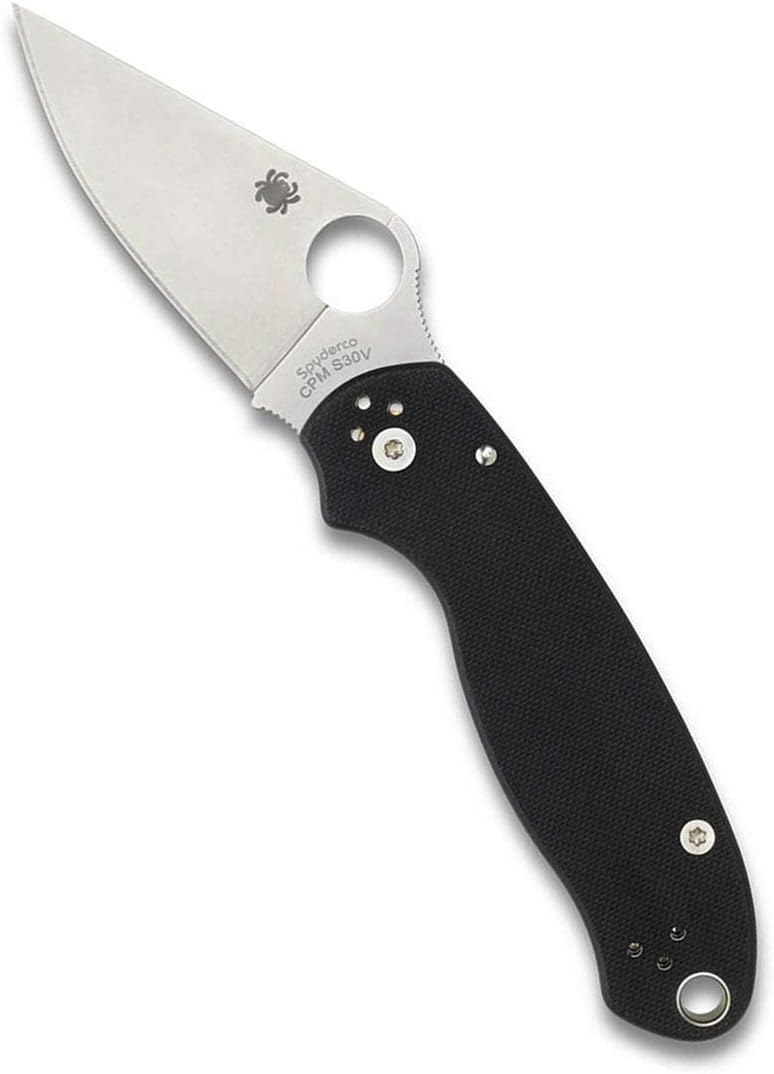
Spyderco Paramilitary 2: 3.42″ blade, 4.82″ closed length, 3.75 oz weight. Wider profile due to the signature Spyderco leaf-shaped blade and opening hole. Takes up notably more pocket real estate than the Blur.
Benchmade 940 Osborne: 3.4″ blade, 4.47″ closed length, 2.9 oz weight. Slimmer and lighter than the Blur, but typically costs $50-70 more. The aluminum handles are smooth rather than textured.
Zero Tolerance 0350: 3.25″ blade, 4.8″ closed length, 6.2 oz weight. Significantly heavier and thicker than the Blur. Excellent for hard use but noticeably bulky for everyday pocket carry.
For users who carry their knife in the same pocket as their smartphone, the Blur’s slim profile is a significant advantage. The smooth aluminum scales won’t scratch phone screens, and the knife’s narrow width means it occupies minimal space alongside a modern large-format smartphone. This seemingly minor detail makes a substantial difference in daily comfort and convenience.
Blade Geometry: Understanding the Recurve Advantage
The Kershaw Blur’s recurve blade shape is one of its most distinctive features, but it’s also one of the most misunderstood aspects of the knife’s design. A recurve blade features a gentle S-curve along the cutting edge, with the belly of the blade curving outward before sweeping back toward the tip. This geometry creates a longer cutting edge within a given blade length, effectively increasing the amount of sharpened steel available for cutting tasks. But the benefits of the recurve extend far beyond simple edge length.
The physics of cutting with a recurve blade are fundamentally different from cutting with a straight edge or a simple drop point. When you draw a recurve blade through material, the curved portion of the edge acts like a hawkbill, pulling the material into the cutting path. This prevents the common problem of material sliding off the tip of the blade during draw cuts—a frustration familiar to anyone who has tried to cut rope or cordage with a straight-edged knife. The recurve essentially creates a “capture zone” where material is guided and held against the cutting edge, dramatically improving cutting efficiency in fibrous materials.
However, the recurve blade shape does present challenges in certain applications. Food preparation tasks that require cutting against a flat surface, such as chopping vegetables on a cutting board, are more difficult with a recurve blade because only the forward portion of the edge contacts the board. Similarly, detailed carving tasks that require precise control of the cutting edge can be more challenging because the recurve makes it harder to predict exactly where the edge will contact the material. These limitations are worth considering based on your intended use case.
The Hollow Grind: Slicing Efficiency Explained
The Kershaw Blur S30V features a hollow grind, which means the blade’s primary bevel is ground with a concave radius rather than a flat or convex profile. This grind style has specific advantages and trade-offs that are worth understanding. A hollow grind creates an extremely thin edge geometry behind the cutting bevel, which dramatically reduces the resistance encountered when slicing through materials. This is why hollow-ground blades are often described as “slicey” or “laser-like” in their cutting performance. The thin cross-section behind the edge minimizes friction and material displacement, allowing the blade to glide through even tough materials with minimal effort.
The trade-off with hollow grinds is reduced durability at the edge. Because the steel behind the cutting edge is thinner than it would be on a flat or convex grind, hollow-ground blades are more susceptible to chipping and edge deformation under hard lateral loads. This isn’t a defect; it’s an inherent characteristic of the geometry. For most everyday carry tasks—opening packages, cutting rope, stripping wire, breaking down cardboard—this thin edge geometry is an advantage, not a liability. However, users who anticipate heavy-duty prying, batoning, or other abusive cutting tasks might prefer a knife with a thicker convex grind like the Zero Tolerance 0350 or a fixed blade designed for bushcraft applications.
Ergonomics and Grip Security: The Trac-Tec Innovation
Knife handle design is a subtle art that balances comfort, grip security, and pocket-friendliness. A handle that’s too aggressive in texture will abrade pockets and cause discomfort during extended use. A handle that’s too smooth becomes dangerously slippery when wet, turning a precision tool into a liability. Kershaw’s Trac-Tec insert system represents one of the most successful solutions to this ergonomic challenge in the production knife world.
The Trac-Tec inserts are rubberized polymer panels that are mechanically embedded into the aluminum handle scales. Unlike simple adhesive grips that can peel or degrade over time, the Trac-Tec inserts are physically captured within recesses machined into the aluminum, ensuring they remain securely in place for the life of the knife. The texture of these inserts is carefully calibrated: aggressive enough to provide confident grip in wet, oily, or gloved conditions, but smooth enough to slide in and out of a pocket without excessive friction or wear.
From an ergonomic perspective, the Blur’s handle shape accommodates a wide range of hand sizes. The forward choil—the unsharpened portion of the blade near the handle—allows users with larger hands to choke up on the knife for detailed cutting tasks. The index finger naturally falls into this choil, providing excellent control for precision cuts while keeping fingers safely away from the sharpened edge. The thumb ramp on the spine of the blade provides a natural platform for applying downward pressure during push cuts, and the jimping (notched texturing) on this ramp prevents the thumb from sliding forward under heavy pressure.
Glove Compatibility: Tactical and Work Applications
For users who wear gloves regularly—whether for tactical applications, construction work, or cold-weather activities—the Kershaw Blur offers excellent compatibility. The angled thumb stud is large enough to engage even with heavy winter gloves, and the SpeedSafe assisted opening mechanism requires minimal fine motor control to deploy. Once the thumb stud is pushed past the initial resistance, the torsion bar takes over and completes the opening sequence automatically. This feature is particularly valuable for first responders and military personnel who may need to deploy their knife quickly while wearing protective equipment.
The Trac-Tec inserts also provide crucial grip feedback through gloves. Many smooth-handled knives become difficult to control when wearing gloves because the user cannot feel the handle’s orientation and texture. The Trac-Tec inserts transmit enough tactile information through most glove materials to maintain confident control, even when visual attention is directed elsewhere. This makes the Blur an excellent choice for law enforcement officers, EMTs, and search-and-rescue personnel who rely on their knives as emergency tools.
Lock Mechanism: Inset Liner Lock Engineering
The locking mechanism is arguably the most critical safety feature on any folding knife. A lock failure during use can result in serious injury, which is why understanding how your knife’s lock works—and its limitations—is essential for safe operation. The Kershaw Blur employs an inset liner lock, which is a variation of the classic liner lock design that’s been optimized for use with aluminum handle scales.
In a traditional liner lock, one side of the handle (the “liner”) is made from spring-tempered steel. When the blade opens, this liner moves inward to rest against the back of the blade tang, preventing the blade from closing. The liner lock’s strength comes from the geometry of this interface: the end of the liner is cut at an angle that matches a corresponding angle on the blade tang, creating a wedge effect that becomes more secure under pressure. However, traditional liner locks rely on the handle material itself for structural support, which can be problematic when the handle is made from materials like aluminum that lack the spring properties of steel.
Kershaw’s inset liner lock solves this problem by integrating a dedicated steel liner plate into the aluminum handle, specifically at the lock interface. This steel liner provides the necessary spring tension and wear resistance for reliable lockup, while the aluminum handle body provides lightweight structural support. The result is a lock that combines the strength and reliability of a steel-on-steel interface with the weight savings of aluminum construction. When properly executed, as it is on the Blur, this lock design provides secure, reliable lockup with minimal blade play in any direction.
Lock Testing and Safety Considerations
While Kershaw does not publish specific lock strength ratings for the Blur, independent testing by knife reviewers and enthusiasts has demonstrated that the inset liner lock can withstand significant force before failure. In standardized spine-whack tests—where the back of the blade is struck against a hard surface to test lock engagement—properly manufactured Blur models consistently maintain lockup without disengagement. This is particularly impressive given the assisted opening mechanism, which generates additional momentum during deployment that must be arrested by the lock.
It’s worth noting that no folding knife lock is indestructible. Liner locks, including the inset design used on the Blur, can potentially disengage if the user’s grip pressure inadvertently pushes the lock bar away from the blade tang. This is sometimes called “lock rock” or “grip-induced failure” and is a known limitation of all liner lock designs. The Blur mitigates this risk through careful placement of the lock bar access cutout, which is positioned to minimize the likelihood of accidental disengagement during normal use. Users should always maintain awareness of their grip position when using any folding knife for heavy cutting tasks.
Complete Maintenance Guide: Keeping Your Kershaw Blur S30V in Peak Condition
Investing in a premium knife like the Kershaw Blur S30V warrants an investment in proper maintenance. While S30V steel is highly stain-resistant and the aluminum handles are corrosion-proof under normal conditions, all mechanical devices benefit from regular care and attention. A well-maintained Blur will provide decades of reliable service, while a neglected one may develop issues that compromise performance and safety.
Cleaning Your Kershaw Blur
Pocket knives accumulate debris through normal use. Pocket lint, dust, food particles, and tape adhesive residue can all find their way into the pivot area, the lock interface, and the SpeedSafe mechanism. Regular cleaning prevents this debris from causing gritty action, lock stick, or corrosion. For routine cleaning, start by opening the blade and using compressed air to blow out loose debris from the pivot area and the cavity around the torsion bar. A can of compressed air designed for electronics cleaning works perfectly for this purpose.
For more thorough cleaning, the knife can be disassembled, though this requires some mechanical aptitude and the correct Torx drivers. The Kershaw Blur uses T6 and T8 Torx screws for assembly. Before disassembling any folding knife, take photographs of each step to ensure correct reassembly. Pay particular attention to the orientation of the torsion bar—installing it backwards will prevent the SpeedSafe mechanism from functioning. If you’re uncomfortable with disassembly, many knife retailers and knife makers offer professional cleaning and sharpening services.
Lubrication Best Practices
Proper lubrication is essential for smooth action and corrosion protection. The pivot area—where the blade rotates around the pivot pin—requires periodic lubrication to minimize friction and wear. The detent track, where the detent ball rides along the blade tang during opening and closing, also benefits from a thin film of lubricant. For the Kershaw Blur, a light machine oil or dedicated knife lubricant works best. Nano-Oil, KPL (Knife Pivot Lube), and Tuf-Glide are all excellent options that provide long-lasting lubrication without attracting excessive dirt and debris.
Apply lubricant sparingly—a single drop at the pivot is usually sufficient. Work the blade open and closed several times to distribute the lubricant throughout the pivot mechanism. Wipe away any excess lubricant that emerges from the pivot, as this excess will attract and hold dirt. The torsion bar cavity should also receive occasional lubrication to prevent rust formation on the spring and to ensure smooth, consistent deployment. A drop of oil applied to the torsion bar once every month or two is usually sufficient for moderate-use knives.
Sharpening S30V: Tools and Techniques
Sharpening S30V steel requires more patience and better equipment than sharpening simpler steels, but the process is entirely manageable with the right approach. The key is understanding that S30V’s wear resistance—the very property that makes it hold an edge so well—also makes it resistant to abrasive sharpening. Standard aluminum oxide whetstones, which work fine for 440C or 8Cr13MoV, will struggle to cut S30V effectively. Diamond abrasives or ceramic stones are essentially mandatory for efficient sharpening of this steel.
The recurve blade shape adds another layer of complexity to the sharpening process. Flat bench stones cannot reach into the concave portion of the recurve, making traditional freehand sharpening difficult or impossible. The most effective sharpening solutions for the Blur include guided rod systems like the Spyderco Sharpmaker, which uses triangular ceramic rods that can follow the recurve profile; the Lansky controlled-angle system, which maintains consistent angle throughout the sharpening stroke; or the Wicked Edge precision sharpener, which provides the ultimate in angle control and repeatability. Freehand sharpening on the edge of a bench stone or on a narrow slip stone is possible but requires significant skill and practice.
For routine edge maintenance, a ceramic honing rod or a leather strop loaded with diamond compound can extend the time between full sharpenings significantly. These maintenance tools realign the microscopic edge without removing significant amounts of steel, preserving blade geometry while restoring cutting performance. A quick session on the strop once a week can keep your S30V Blur performing at its peak for months between actual sharpening sessions.
Competitive Landscape: How the Blur S30V Stacks Up Against Alternatives
The $100-150 folding knife market is fiercely competitive, with excellent options available from virtually every major manufacturer. Understanding where the Kershaw Blur S30V fits within this landscape helps potential buyers make informed decisions based on their specific needs and preferences.
Kershaw Blur S30V vs. Benchmade Griptilian
The Benchmade Griptilian is perhaps the Blur’s most direct competitor in terms of price point and intended use case. The Griptilian features Benchmade’s AXIS lock mechanism, which many users prefer over liner locks for its ambidextrous operation and exceptional strength. The standard Griptilian uses 154CM steel, which offers slightly less edge retention than S30V but is easier to sharpen. The Griptilian’s handle uses glass-filled nylon (or G10 on upgraded models) rather than aluminum, providing excellent grip texture at the cost of a thicker overall profile. The Benchmade typically costs $20-30 more than the Blur S30V, and Benchmade’s warranty and customer service are widely regarded as industry-leading.
Kershaw Blur S30V vs. Spyderco Manix 2
The Spyderco Manix 2 represents an interesting alternative to the Blur, particularly for users who prioritize lock strength above all else. The Manix 2 uses Spyderco’s Ball Bearing Lock, a derivative of the classic AXIS lock that provides exceptional strength and ambidextrous operation. The standard Manix 2 uses CPM-S30V steel (matching the Blur’s blade material), and the full-flat grind provides excellent slicing performance. The Manix 2 is significantly larger and heavier than the Blur when closed, occupying substantial pocket real estate, but the ergonomics are outstanding for extended cutting sessions.
Kershaw Blur S30V vs. Cold Steel American Lawman
The Cold Steel American Lawman targets a similar market segment but takes a fundamentally different approach to design. Where the Blur emphasizes speed and precision, the American Lawman emphasizes brute strength and durability. The Tri-Ad lock used by Cold Steel is widely considered the strongest folding knife lock on the market, capable of supporting hundreds of pounds of static weight. The American Lawman uses CPM-S35VN steel, a direct evolution of S30V that adds niobium for improved toughness and ease of sharpening. The handle uses G10 laminate rather than aluminum, providing aggressive grip texture at the cost of pocket-friendliness.
Kershaw Blur S30V vs. Zero Tolerance 0450
For buyers willing to stretch their budget slightly, the Zero Tolerance 0450 offers a compelling upgrade path. ZT is Kershaw’s premium brand, and the 0450 reflects this elevated positioning with titanium handle scales, a flipper opening mechanism, and exceptional fit and finish. The 0450 also uses CPM-S35VN steel, and the frame lock design provides superior strength compared to the Blur’s liner lock. The trade-off, beyond the $50-80 price premium, is that the 0450 lacks the assisted opening that makes the Blur so fast and satisfying to deploy.
Knife Laws: Legal Considerations for Kershaw Blur Owners
Understanding the legal landscape surrounding knife carry is essential for responsible ownership. While the Kershaw Blur is legal to own and carry in most jurisdictions, knife laws vary dramatically between states, counties, and even municipalities. The assisted opening mechanism, blade length, and locking mechanism can all affect legal status depending on local regulations.
Assisted Opening vs. Automatic Knives: The Legal Distinction
A critical legal distinction exists between assisted opening knives like the Kershaw Blur and automatic knives (switchblades). In an automatic knife, the user pushes a button or switch, and the blade deploys without any additional manual input. In an assisted opening knife, the user must first apply manual pressure to the blade itself—typically through a thumb stud or flipper tab—and the spring mechanism only engages after this manual initiation. This distinction is recognized in federal law and in most state statutes, though some jurisdictions have crafted their laws more broadly.
The federal Switchblade Knife Act of 1958, which governs interstate commerce in automatic knives, explicitly excludes assisted opening knives from its definition of switchblades. However, state and local laws can be more restrictive. New York State, for example, has historically interpreted its knife laws in ways that have caused legal problems for assisted opening knife owners, though recent court decisions have begun to clarify and narrow these interpretations. California’s knife laws are generally favorable to assisted opening knives, with restrictions primarily focused on blade length and carry method rather than deployment mechanism.
Blade Length Restrictions
The Kershaw Blur’s 3.4-inch blade places it in the most commonly regulated size category. Many jurisdictions that restrict blade length set the limit at 3 inches or 3.5 inches, meaning the Blur falls close to these thresholds. Cities with 3-inch blade limits, such as Boston and Chicago, technically prohibit carry of the Blur, though enforcement varies. Before carrying any knife, research your local ordinances and consider consulting with local law enforcement or legal counsel for definitive guidance.
Knife Law Quick Reference
This information is for educational purposes only and does not constitute legal advice. Laws change frequently and enforcement varies by jurisdiction.
- Generally Favorable States: Arizona, Alaska, Texas, New Hampshire, Kentucky
- Notable Restrictions: California (no fixed blades carried openly in incorporated areas), New York (gravity knife concerns), Illinois (municipal variations), Massachusetts (blade length limits)
- Federal Facilities: Knives are generally prohibited in federal buildings, courthouses, and on commercial aircraft
Collector’s Perspective: The Kershaw Blur as an Investment
While most buyers purchase the Kershaw Blur S30V as a user knife, the model has developed a following among collectors who appreciate its design significance and manufacturing quality. Understanding the collector’s perspective provides insight into the knife’s lasting value and potential appreciation over time.
The Kershaw Blur has been in continuous production since its introduction, but numerous variations and limited editions have appeared over the years. These include sprint runs with different steel types, handle colors, and blade finishes. The S30V variant, while not the rarest Blur configuration, represents the premium standard that collectors often seek. The stonewashed blade finish on the S30V model is particularly appreciated by collectors because it hides wear effectively, allowing the knife to maintain its appearance even after extended use.
From an investment perspective, production knives rarely appreciate significantly unless they become discontinued and highly sought after. The Blur S30V is more likely to hold its value well than appreciate dramatically, but the Made in USA designation and premium materials ensure that it will remain desirable on the secondary market. Limited edition and sprint run Blurs can appreciate substantially—some rare configurations have sold for double or triple their original retail price years after being discontinued. If you encounter a Blur with unusual steel, handle material, or blade finish, it may be worth acquiring as a potential collector’s item.
Real-World User Scenarios: The Blur S30V in Action
Scenario 1: The Warehouse Worker
Marcus works in a large distribution center, processing incoming shipments and preparing outgoing orders. His day involves breaking down hundreds of cardboard boxes, cutting plastic strapping, and opening shrink-wrapped pallets. Before upgrading to the Kershaw Blur S30V, Marcus used a budget folding knife with 8Cr13MoV steel. He found himself sharpening his knife every three days to maintain acceptable cutting performance. The edge would roll and dull quickly when cutting through cardboard’s abrasive silica content and the occasional staple or piece of tape.
After switching to the Blur S30V, Marcus’s sharpening frequency dropped from twice weekly to once monthly. The S30V steel’s vanadium carbides resist the abrasive wear that quickly dulls budget steels, and the hollow grind slices through cardboard with noticeably less effort. The SpeedSafe assisted opening allows Marcus to deploy his knife quickly with one hand while holding a box with the other, improving his workflow efficiency. The Trac-Tec inserts provide confident grip even when his hands are sweaty or dusty from handling packages all day.
Scenario 2: The Outdoors Enthusiast
Sarah is an avid hiker and camper who carries a folding knife as part of her essential outdoor gear. She needs a knife that can handle a diverse range of tasks: cutting paracord and webbing, preparing kindling for campfires, slicing food during meal preparation, and serving as an emergency tool if equipment fails. Her previous knife used AUS-8 steel, which performed adequately but required frequent touch-ups during extended trips and showed noticeable corrosion spotting after exposure to rain and humidity.
The Kershaw Blur S30V addressed Sarah’s primary frustrations. The S30V steel’s superior edge retention means she can complete week-long backpacking trips without needing to sharpen her knife, even when processing significant amounts of cordage and wood. The corrosion resistance of S30V has eliminated the rust spotting issues she experienced with her previous knife. The Blur’s lightweight aluminum construction doesn’t add unnecessary weight to her pack, and the secure pocket clip ensures the knife stays put even when navigating rough terrain. While Sarah acknowledges that the Blur isn’t a dedicated bushcraft knife—she carries a fixed blade for heavy wood processing—it handles 90% of her cutting needs admirably.
Scenario 3: The First Responder
David is a firefighter and EMT who carries a folding knife as part of his daily equipment loadout. His knife needs are specific and demanding: he must be able to deploy the blade quickly while wearing structural firefighting gloves, the knife must be capable of cutting through seatbelts and heavy clothing in rescue scenarios, and the lock must be absolutely reliable under stress. David previously carried a variety of knives but found that many lacked the combination of gloved deployability and secure grip that his profession requires.
The Kershaw Blur S30V has become David’s preferred duty knife. The large, angled thumb stud is easily engaged even with thick firefighting gloves, and the SpeedSafe mechanism ensures reliable deployment regardless of fine motor control limitations. The Trac-Tec inserts provide the grip security David needs when working with wet or bloody gloves, and the inset liner lock has proven reliable through extensive use. David appreciates that the S30V steel maintains a working edge through multiple rescue calls, and the stonewashed finish doesn’t show the wear and tear that would make a coated blade look prematurely aged. While David also carries dedicated rescue tools like shears and a glass breaker, the Blur serves as his primary cutting implement for the wide range of tasks that don’t require specialized tools.
Frequently Asked Questions (Extended)
Is the Kershaw Blur S30V spring assisted?
Yes, it utilizes Kershaw’s patented SpeedSafe assisted opening mechanism. You manually start the blade opening with the thumb stud, and a torsion bar spring finishes the action. This mechanism is legal in most jurisdictions because it requires manual initiation—unlike automatic knives that deploy at the push of a button.
Is S30V steel hard to sharpen?
It is harder to sharpen than basic carbon steels or 420HC, but it is not impossible. It holds an edge for a very long time, so you sharpen it less often. We recommend using diamond stones or ceramic rods for the best results. A Spyderco Sharpmaker or similar guided system is ideal for the recurve blade profile.
Is the Kershaw Blur made in the USA?
Yes, the standard Kershaw Blur and the S30V model are manufactured in Tualatin, Oregon, USA. This distinguishes them from many of Kershaw’s budget lines which are made overseas. The USA manufacturing ensures higher quality control standards and supports American workers.
Is the Kershaw Blur legal to carry?
The Blur is an “Assisted Opening” knife, not a Switchblade (Automatic). It is legal in most US states. However, you should always check your local municipal laws regarding blade length and assisted mechanisms. Cities with 3-inch blade limits may restrict the Blur’s 3.4-inch blade.
Does the Blur have a glass breaker?
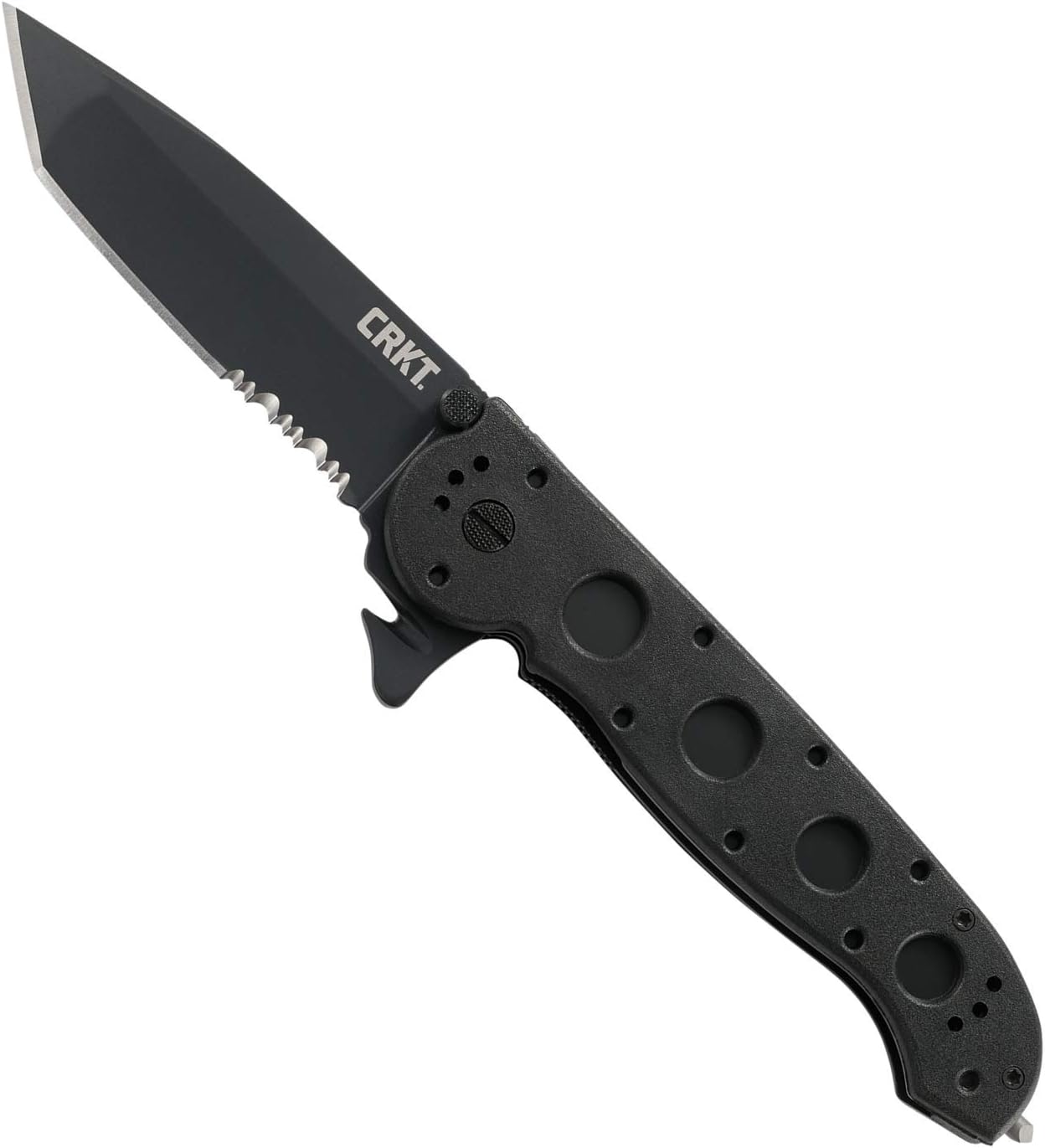
No, the standard S30V Blur model uses a rounded glass-filled nylon backspacer and does not feature a carbide glass breaker. For that feature, you would look more towards the Smith & Wesson tactical series or dedicated rescue knives.
How does the Kershaw Blur compare to the Kershaw Leek?
The Kershaw Leek and Blur are both Ken Onion designs, but they serve different purposes. The Leek is slimmer, lighter, and more office-friendly with its 3-inch wharncliffe blade. The Blur is larger, more robust, and better suited for heavier cutting tasks. The Leek uses 14C28N steel (standard) or CPM-154 (upgraded versions), while the Blur S30V offers superior edge retention to both. The Leek is tip-down carry only, while the Blur offers tip-up or tip-down options. Choose the Leek for discreet everyday carry in professional environments; choose the Blur for more demanding cutting tasks.
Can I replace the torsion bar if it breaks?
Yes, Kershaw has an excellent warranty and customer service program. They will typically replace a broken torsion bar free of charge—you just need to contact their customer service department and request a replacement. Some users prefer to keep spare torsion bars on hand, which can be ordered directly from Kershaw. The torsion bar is designed for longevity, and failures are relatively uncommon under normal use. However, the spring will eventually fatigue after thousands of deployment cycles.
What is the Rockwell hardness of the S30V on the Kershaw Blur?
Kershaw typically heat treats their S30V to 58-60 HRC (Rockwell C scale). This represents an optimal balance for a production folding knife: hard enough for excellent edge retention, but not so hard that the blade becomes brittle or difficult to sharpen. Some custom knife makers push S30V to 60-61 HRC, but Kershaw’s slightly softer target improves toughness and makes the knife more user-serviceable for the average owner.
Is the Kershaw Blur suitable for left-handed users?
Unfortunately, the Kershaw Blur is designed primarily for right-handed users. The pocket clip can be configured for tip-up or tip-down carry on the right side only, and the thumb stud is positioned for right-hand deployment. Left-handed users can operate the Blur with practice, but it’s not ideal. Left-handed knife users might prefer ambidextrous designs like the Benchmade Griptilian with AXIS lock or the Spyderco Paramilitary 2 with compression lock, both of which offer fully ambidextrous operation.
How does the Blur S30V perform for food preparation?
The Kershaw Blur S30V can handle basic food preparation tasks—slicing apples, cutting sandwich ingredients, slicing meat—but it’s not optimized for kitchen use. The recurve blade shape makes it difficult to cut against a flat cutting board, as only the forward portion of the edge contacts the surface. The hollow grind provides excellent slicing performance but may wedge slightly in dense foods like hard cheese. For dedicated kitchen use, a purpose-designed kitchen knife will always outperform a folding pocket knife. However, for camping, picnics, or impromptu food prep situations, the Blur performs adequately with some technique adjustment.
What accessories are available for the Kershaw Blur?
While Kershaw doesn’t offer extensive factory accessories for the Blur, the aftermarket community has developed several popular upgrades. Custom pocket clips from makers like MXG Gear offer deeper carry and improved aesthetics. Aftermarket hardware kits with titanium or anodized screws allow for cosmetic customization. Some custom scale makers produce replacement handle scales in materials like carbon fiber or micarta, though these are typically made-to-order and expensive. The standard Blur configuration is excellent out of the box, but enthusiasts who enjoy personalizing their knives have options available.
Does the assisted opening mechanism affect the knife’s reliability?
The SpeedSafe assisted opening mechanism is generally very reliable. Kershaw has been manufacturing assisted opening knives for over two decades and has refined the design through millions of units produced. The torsion bar spring is the component most likely to eventually fail, but this typically takes thousands of deployment cycles. Even if the torsion bar breaks, the Blur can still be opened and closed manually—it simply loses the spring-assisted action. For users who are particularly concerned about long-term reliability in remote environments, some knife enthusiasts prefer manual opening knives specifically because they have fewer potential failure points. However, the Blur’s SpeedSafe mechanism has proven itself reliable enough for military, law enforcement, and first responder use worldwide.
Final Verdict: Who Should Buy the Kershaw Blur S30V?
After extensive analysis, testing, and comparison against competitors, the Kershaw Blur S30V emerges as one of the most compelling values in the premium EDC knife market. It successfully bridges the gap between budget-friendly work knives and high-end collector pieces, delivering genuine premium performance at a price that remains accessible to serious knife users. The combination of American manufacturing, CPM-S30V steel, and Ken Onion’s proven design language creates a knife that outperforms its price point in multiple categories.
This knife is ideal for the user who wants to step up from budget knives into the world of premium materials without spending $200 or more. It’s perfect for the practical EDC enthusiast who values cutting performance and deployment speed above all else. It’s an excellent choice for professionals who rely on their knives daily—warehouse workers, first responders, tradespeople—and who will genuinely benefit from the S30V steel’s extended edge retention. And it’s a worthy addition to any knife collector’s lineup, representing an important chapter in the history of production knife design.
However, the Blur S30V isn’t for everyone. Left-handed users should look elsewhere due to the right-handed-only design. Users who prioritize ease of sharpening over edge retention might prefer a knife in 14C28N or VG-10. Those who frequently cut against flat surfaces will find the recurve blade geometry frustrating. And users who demand the absolute strongest locking mechanism might gravitate toward knives with frame locks, compression locks, or Cold Steel’s Tri-Ad lock.
But for the majority of right-handed EDC knife users seeking a reliable, high-performance cutting tool, the Kershaw Blur S30V represents a near-perfect balance of attributes. It’s fast, it’s sharp, it stays sharp, and it carries comfortably all day. At its price point, it’s genuinely difficult to find a better combination of blade steel quality, deployment speed, and American manufacturing excellence.
Whether you’re upgrading from a budget beater, expanding your collection with an iconic design, or simply looking for a reliable daily companion that won’t let you down, the Kershaw Blur S30V deserves a place at the top of your shortlist. It’s a knife that earns its legendary status every time it deploys with that satisfying SpeedSafe thwack and glides through whatever cutting task awaits.