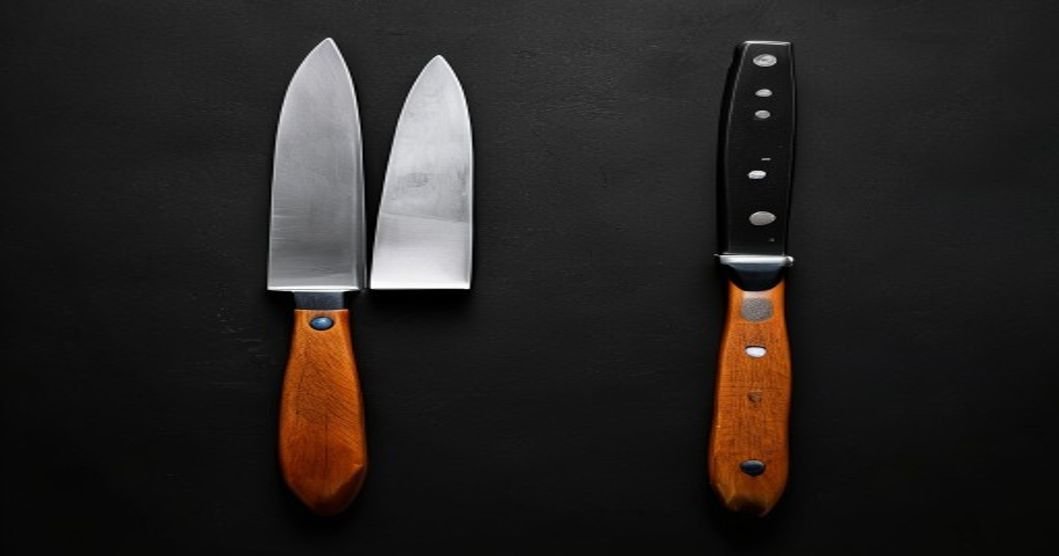
When it comes to vegetable cutting, both nakiri and santoku knives are excellent choices, but the nakiri’s straight edge and flat blade make it more suitable for precise, high-volume vegetable prep, while the santoku’s curved edge and balanced design make it more versatile for everyday cooking tasks.
The debate between nakiri and santoku knives for vegetable cutting has been ongoing among chefs and home cooks alike. Both types of knives have their own unique characteristics, advantages, and disadvantages, making them suited for different tasks and preferences. In this article, we will delve into the details of each knife type, comparing their specs, attributes, and use cases to help you decide which one is best for your vegetable cutting needs.
The nakiri knife, with its straight edge and flat blade, is specifically designed for cutting vegetables. Its unique shape allows for smooth, even cuts and makes it ideal for high-volume vegetable prep. On the other hand, the santoku knife, with its curved edge and balanced design, is a more versatile knife that can handle a variety of tasks, including slicing, dicing, and mincing. While it may not be as specialized as the nakiri for vegetable cutting, it is a great all-around knife that can handle everyday cooking tasks with ease. For more information on the best nakiri knives for vegetable prep, check out our Buying Guides Best Nakiri Knives For Vegetable Prep.
Specs Comparison
🔪 Recommended
Shop: nakiri
As an Amazon Associate I earn from qualifying purchases.
| Knife Type | Steel | HRC | Edge Angle | Weight | Price | Best For |
|---|---|---|---|---|---|---|
| Nakiri | VG-10 | 60-62 | 20-25 | 6-8 oz | $100-$300 | High-volume vegetable prep |
| Santoku | VG-MAX | 60-62 | 20-25 | 8-10 oz | $150-$400 | Everyday cooking tasks |
Blade Material
The blade material of a knife is crucial in determining its performance and durability. Both nakiri and santoku knives are typically made from high-carbon stainless steel, such as VG-10 or VG-MAX. These steels offer excellent edge retention, corrosion resistance, and durability. However, the nakiri knife’s straight edge and flat blade make it more prone to chipping and cracking than the santoku knife’s curved edge.
Edge Retention
Edge retention refers to a knife’s ability to maintain its sharpness over time. Both nakiri and santoku knives are known for their excellent edge retention, thanks to their high-carbon stainless steel construction. However, the nakiri knife’s straight edge and flat blade make it more susceptible to micro-chipping and edge wear, which can affect its edge retention.
Sharpening Ease
Sharpening ease is an important consideration for any knife. The nakiri knife’s straight edge and flat blade make it relatively easy to sharpen, as it can be sharpened using a standard sharpening stone or steel. The santoku knife’s curved edge, on the other hand, requires a bit more skill and technique to sharpen, but can still be sharpened using a standard sharpening stone or steel.
Durability
Durability is a critical factor in determining a knife’s overall performance and value. Both nakiri and santoku knives are known for their durability, thanks to their high-carbon stainless steel construction. However, the nakiri knife’s straight edge and flat blade make it more prone to chipping and cracking than the santoku knife’s curved edge.
Ergonomics
Ergonomics play a crucial role in determining a knife’s comfort and usability. The nakiri knife’s straight edge and flat blade make it well-suited for precise, high-volume vegetable prep, but can be uncomfortable to hold and use for extended periods. The santoku knife’s curved edge and balanced design make it more comfortable to hold and use, but can be less precise than the nakiri knife.
Value
Value is an important consideration for any knife. Both nakiri and santoku knives offer excellent value, thanks to their high-quality construction and performance. However, the nakiri knife’s specialized design and limited versatility make it a more niche product, while the santoku knife’s versatility and adaptability make it a more valuable addition to any kitchen.
Who Should Choose Each
Nakiri Knife
The nakiri knife is ideal for chefs and home cooks who specialize in high-volume vegetable prep. Its straight edge and flat blade make it perfect for cutting, slicing, and dicing vegetables with precision and ease. For more information on the uses of a nakiri knife, check out our Knife Knowledge Basics Nakiri Knife Uses High Volume Vegetable Prep.
Santoku Knife
The santoku knife is ideal for chefs and home cooks who need a versatile knife for everyday cooking tasks. Its curved edge and balanced design make it perfect for slicing, dicing, and mincing a variety of ingredients, including vegetables, meat, and fish. For more information on the uses of a santoku knife, check out our Knife Knowledge Basics Santoku Knife Uses 3 Virtues Vegetable Prep.
FAQ
What is the difference between a nakiri and a santoku knife?
The main difference between a nakiri and a santoku knife is their blade shape and design. The nakiri knife has a straight edge and flat blade, while the santoku knife has a curved edge and balanced design.
Can I use a nakiri knife for meat and fish?
While the nakiri knife is primarily designed for vegetable prep, it can be used for cutting and slicing meat and fish. However, its straight edge and flat blade make it less suitable for these tasks than a santoku knife.
What is the best way to sharpen a nakiri knife?
The best way to sharpen a nakiri knife is using a standard sharpening stone or steel. The straight edge and flat blade of the nakiri knife make it relatively easy to sharpen, but require a bit more precision and technique than a santoku knife. For more information on the best nakiri knives for vegetable prep and how to sharpen them, check out our Buying Guides Best Nakiri Knives For Vegetable Prep. Additionally, you can also check out our Knife Type Comparison Santoku Vs Nakiri Best Veg Prep for a more detailed comparison between the two knives.
Ultimately, the choice between a nakiri and a santoku knife for vegetable cutting comes down to your specific needs and preferences. If you specialize in high-volume vegetable prep and need a knife that can handle precise, delicate cuts, the nakiri knife is the better choice. However, if you need a versatile knife that can handle a variety of everyday cooking tasks, the santoku knife is the better choice. For more information on the best santoku knives for everyday cooking, check out our Buying Guides Best Santoku Knives For Everyday Cooking. Additionally, you can also check out our Advanced Knife Profiles Bunka Vs Santoku K Tip Geometry Prec for a more detailed comparison between the bunka and santoku knives.
🔪 Recommended
Shop: nakiri
As an Amazon Associate I earn from qualifying purchases.