
1. The Chris Reeve Lineage — Where Inkosi and Sebenza Diverge
Few production folding knives command the reverence of a Chris Reeve. The Sebenza—derived from the Zulu word for “work”—set the bar for modern frame-lock precision in 1987. It was the first knife to combine a hardened steel lock interface with tight tolerances that rivaled customs. The Inkosi, introduced in 2016, is not a replacement but a deliberate reinterpretation. It borrows the ceramic-ball lock interface and oversized pivot from the larger Umnumzaan, packages them into a Sebenza-sized chassis, and throws in a finger-choil that the Sebenza never had. Understanding the Inkosi means first understanding why the Sebenza dominated for three decades.
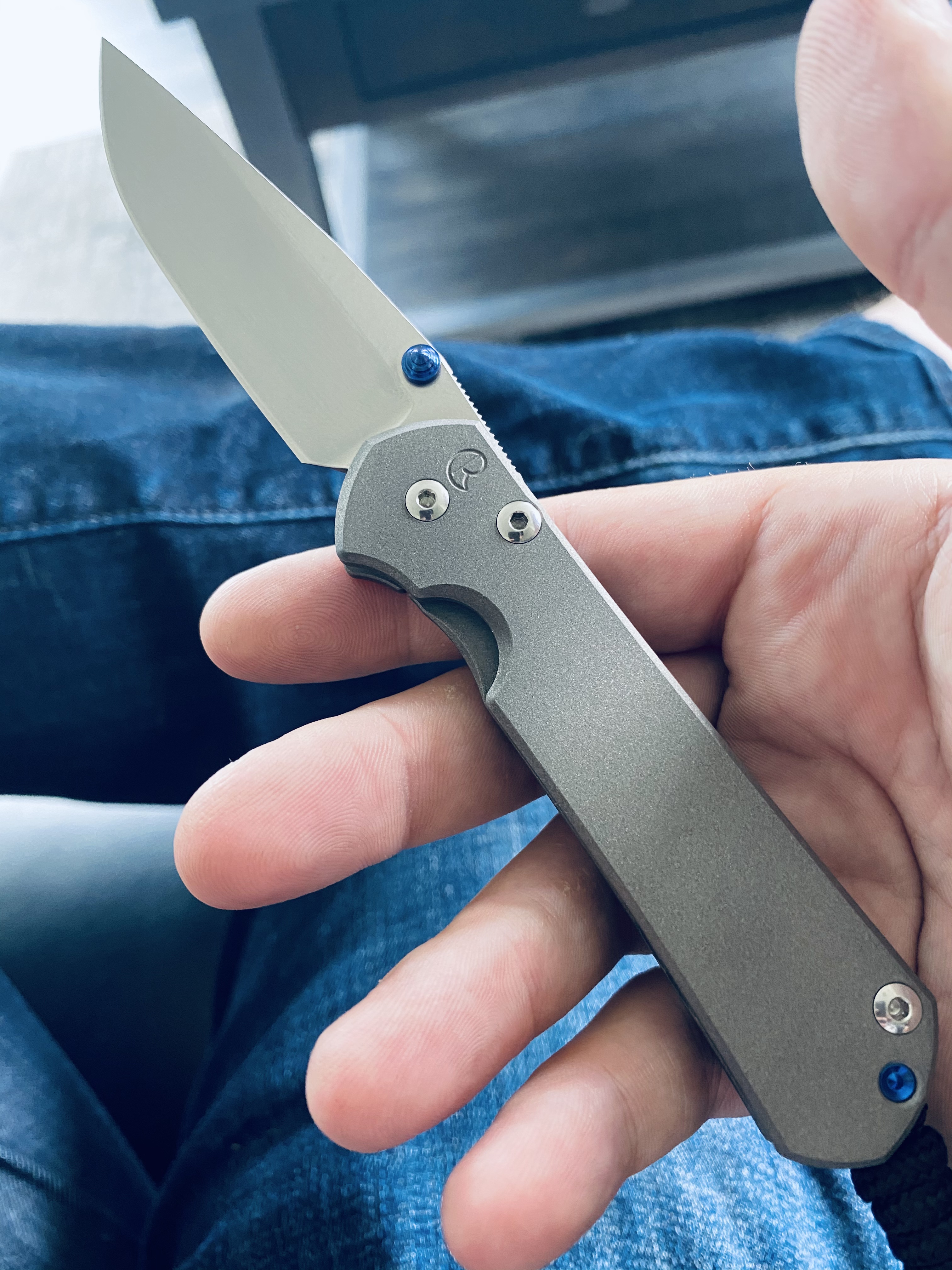
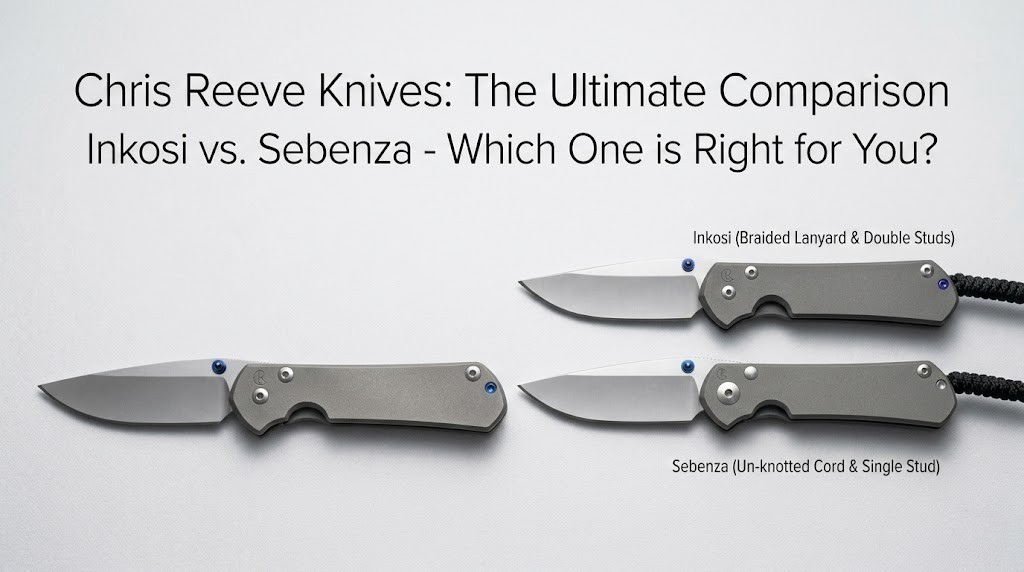
Both knives come out of Boise, Idaho, from a shop that machines titanium to aerospace-grade tolerances. Both use the integral frame lock pioneered by Chris Reeve himself. But the Inkosi tweaks the formula in four critical ways: a floating stop pin that increases lock-bar security, ceramic-ball detent for a smoother open, an angled pocket clip that tucks deeper, and that forward finger choil which changes the entire grip dynamic. The Sebenza, by contrast, holds to its original philosophy—simpler lines, a flat clip, a traditional stop pin, and a grip that assumes you’ll hold the knife further back.
On paper the differences seem minor. In hand, they produce two distinct personalities. The Sebenza feels airy, elegant, almost jewel-like. The Inkosi feels dense, planted, and purposeful. If the Sebenza is a dress watch, the Inkosi is a field chronograph. Neither is wrong. This deep dive exists to help you figure out which one fits your hand, your pocket, and your daily cutting life.

Chris Reeve Sebenza 31 — The Icon
Drop-point CPM-S35VN blade, sandblasted titanium handle. The benchmark folder that defined the modern frame lock.
View on Amazon2. Blade Geometry & Steel — S35VN, S45VN, and the Drop-Point Truth
For most of the Inkosi and Sebenza’s shared history, CPM-S35VN was the steel. Chris Reeve Knives (CRK) was one of the first production shops to adopt S35VN after working closely with Crucible to refine its heat treatment. Today, both models have transitioned to CPM-S45VN. The change brought a slight bump in edge retention and corrosion resistance, but the real story is the blade geometry hiding behind the steel spec.
The Sebenza’s hollow grind is shallower, producing a blade that’s slightly thinner behind the edge. This makes the Sebenza glide through cardboard and soft materials with less wedging. The Inkosi’s blade stock is identical in thickness—0.140 inches—but the grind is different, leaving more material behind the edge. The result is a tougher tip and a blade that pries better, but one that demands a bit more force in deep, fibrous cuts. Neither knife is a slicer in the kitchen-knife sense; both are built to survive hard use.
| Blade Spec | Small Inkosi | Small Sebenza 31 | Large Inkosi | Large Sebenza 31 |
|---|---|---|---|---|
| Blade Length | 2.8″ | 2.94″ | 3.6″ | 3.61″ |
| Blade Stock | 0.140″ | 0.125″ | 0.140″ | 0.140″ |
| Blade Shape | Drop Point | Drop Point | Drop Point | Drop Point |
| Steel (2026) | CPM-S45VN | CPM-S45VN | CPM-S45VN | CPM-S45VN |
| HRC Target | 58–59 | 58–59 | 58–59 | 58–59 |
The Sebenza’s blade-to-handle ratio is marginally better: 0.79 versus the Inkosi’s 0.76. That translates to a slightly longer cutting edge for the same overall length. But numbers don’t tell the whole story. The Inkosi’s forward choil pushes the sharpened edge further back into the handle, which shortens the effective cutting edge but improves control for fine work. It’s the classic trade-off between reach and precision, and CRK forces you to decide which one matters more in your daily carry.
3. Lockup & Frame Feel — Ceramic Ball vs. Carbide Lock Interface
The Inkosi’s defining upgrade is the ceramic ball lock interface, borrowed directly from the Umnumzaan. Instead of a flat, hardened steel tang against a carburized titanium lock bar, the Inkosi places a ceramic sphere between the lock bar and the blade tang. This does two things: it eliminates lock stick almost entirely, and it provides a glassy smooth lock disengagement that makes the knife feel far more refined than its rugged exterior suggests. The ceramic ball also self-adjusts over time, maintaining consistent lockup as the titanium wear-plate beds in.
The Sebenza 31 uses a carbide lock interface—a small ceramic or carbide disc embedded in the end of the titanium lock bar—that similarly prevents galling. But the Sebenza’s lockbar cutout is a single horizontal slit, while the Inkosi’s floating stop pin is captured in elongated recesses in both the titanium scale and the lock side. This floating design lets the lock bar geometry remain consistent even as the knife wears, where a fixed stop pin can, over decades, allow slight shifts in lock engagement percentage.
In practical terms, the Inkosi’s lockup feels vault-solid from day one and stays that way. The Sebenza requires a brief break-in period—usually a week of opening and closing—before the lock bar settles into its final position. Some users find this break-in ritual charming; others find it unnecessary friction when the Inkosi works perfectly out of the box.
Both knives lock up with zero blade play in any direction. Both produce an audible, confident click when the lock bar engages. The difference is tactile: the Inkosi’s ceramic ball gives a muted, cushioned feel; the Sebenza’s carbide engagement is sharper and distinctly metallic. It’s the auditory equivalent of a BMW door closing versus a Mercedes door closing—both luxury, different flavor.
4. Ergonomics & Handle Design — The Choil That Changes Everything
The Inkosi’s forward finger choil is the single feature that most sharply divides loyalties. For those with large hands or a preference for a choked-up grip, the choil transforms the knife into a precision tool. You can wrap your index finger into the recessed groove ahead of the pivot, bringing the cutting edge closer to your hand and dramatically improving control for detail work. The Sebenza has no such choil. Its straight, unbroken spine forces your hand further back, which increases the effective cutting reach but reduces fine-point control.
The trade-off is handle real estate. The Inkosi’s choil consumes about 0.3 inches of the handle’s grip length, which means the knife feels shorter despite having a nearly identical overall profile. If you wear size XL gloves, the Large Inkosi’s grip might feel cramped; the Large Sebenza, by contrast, gives you the full handle to hold. Small-handed users often prefer the Inkosi’s security; large-handed users gravitate toward the Sebenza’s spaciousness.
Both knives use titanium handle slabs with a subtle chamfering around all edges. The Sebenza 31 added a slightly thicker handle profile and a ceramic-ball lock interface, but the overall contour remained unchanged from the 21. The Inkosi’s handle has a more pronounced radius on the spine side, which makes it feel fuller in the palm. The machined pocket clip slot on the Inkosi also doubles as a grip index point, while the Sebenza’s clip sits flush against a flat scale surface.
5. Carry & Pocket Clip — Angled Tuck vs Classic Flat Clip
The Inkosi’s pocket clip is angled. It follows the contour of the handle, curving inward and tucking the knife deeper into the pocket. The result is a knife that sits lower and prints less, with only the very top of the clip visible above the pocket hem. For office carry or environments where discretion matters, the Inkosi wins outright. The Sebenza’s clip is straight, flat against the scale, and sits higher in the pocket. It’s easier to grab quickly but more visible in a professional setting.
Tip-up carry is the default—and only—orientation for both models. Neither knife offers left-handed configurations without ordering a dedicated left-handed model from CRK. The clip screws are titanium and match the handle finish; they’re not decorative but functional, and both knives provide enough tension to resist slipping out of even loose pockets.
6. Disassembly & Maintenance — Floating Stop Pin vs. Single-Pivot Simplicity
Chris Reeve encourages users to take their knives apart. Both the Inkosi and Sebenza disassemble with a single hex driver (typically 2.5mm or 3/32″). But the Inkosi’s floating stop pin turns a simple job into a mildly fussy one. Because the pin floats in elongated cutouts, it can shift during reassembly, requiring you to align both the pivot and the stop pin simultaneously. It’s not difficult, but it’s less forgiving than the Sebenza’s straightforward, drop-in assembly.
The Sebenza’s maintenance ritual has been refined over 35 years into the simplest possible sequence: remove one screw, pull the pivot, separate the scales, clean, reassemble. The Inkosi adds exactly two extra alignment steps, which experienced users barely notice but newcomers should expect. Both knives ship with fluorinated grease for the pivot, and both reward periodic cleaning of the lock interface with continued smooth action.
7. Aesthetics & Finishing — Sandblast, Glass-Blast, and the Luxury Factor
CRK offers both knives in sandblast and glass-blast finishes. The sandblast is the classic—a matte, slightly textured surface that hides scratches well and develops a uniform patina over time. Glass-blast is shinier, more refined, and shows finger oil less readily. The Inkosi’s lines are more aggressive: the choil, the angled clip slot, and the heavier chamfer give it a tactical posture. The Sebenza is smoother, rounder, and visually quieter. If the Inkosi looks like it was milled for military service, the Sebenza looks like it belongs in a wood-and-leather study.
Inlays add another dimension. Both models offer micarta and exotic wood inlays set into milled pockets in the titanium. On the Sebenza, the inlay is prominent and covers most of the show-side scale. On the Inkosi, the inlay is smaller and framed by more exposed titanium, which shifts the visual balance toward metal. Neither choice affects structural integrity; both are purely aesthetic upgrades that also improve grip.
8. Cutting Performance — Real-World Use Across Materials
We tested both knives across five common EDC materials: corrugated cardboard, nylon strapping, paracord, plastic clamshell packaging, and hardwood dowel. The Sebenza’s thinner edge geometry consistently required less force to initiate cuts in cardboard and clamshells. The Inkosi’s thicker primary grind resisted binding in deeper cuts and showed zero edge deformation after prying through plastic welds. On paracord, both knives performed identically—the factory edge on S45VN is polished enough to bite without snagging.
The Inkosi’s finger choil proved its worth during detail cutting: trimming loose threads, scoring tape on packages, and fine-push-cutting against a cutting board felt more controlled and less fatiguing than the Sebenza’s rearward grip. For extended cutting sessions—breaking down dozens of boxes—the Sebenza’s longer effective edge and neutral grip were less tiring overall. The ergonomic difference is not a gimmick; it changes which knife you reach for based on the day’s expected tasks.
9. Pros, Cons, and the Final Verdict
Chris Reeve Inkosi
- Ceramic ball lock — glassy smooth, zero stick
- Forward choil improves precision control
- Angled clip carries deeper and prints less
- Tougher blade geometry with thicker behind-edge
Inkosi Trade-offs
- Choil shortens effective cutting edge
- Floating stop pin complicates reassembly
- Slightly more drag through deep cuts
- Grip can feel cramped for XL hands
Chris Reeve Sebenza 31
- Thinner grind — glides through cardboard
- Simpler field maintenance and disassembly
- Full handle grip — no choil interference
- Iconic, timeless design with 35-year refinement
Sebenza Trade-offs
- No forward choil — less precise tip control
- Higher pocket carry with flat clip
- Break-in period required for smooth lock
- Less tip durability in prying tasks
Verdict: Choose the Inkosi if you value precision grip, deep carry, and a lock that’s flawless from day one. Choose the Sebenza if you prefer a lighter cutting feel, easier maintenance, and the long, storied legacy of the original frame-lock icon. Both are lifetime knives; your call is about personality, not quality.
If you’re comparing blade retention traits across steels, the Zwilling vs Henckels blade hardness piece offers a useful cross-section of how heat treatment affects edge life. For those looking at top-tier chef knives alongside their Chris Reeve, the top chef knife brands for 2026 guide frames the same quality-first mindset in a kitchen context.

Chris Reeve Inkosi — The Tactical Evolution
CPM-S45VN drop point, ceramic ball lock, deep-carry angled clip. A modern take on the CRK formula.
View on Amazon10. Frequently Asked Questions
Is the Inkosi just an updated Sebenza?
No. The Inkosi shares the Sebenza’s footprint but uses a different lock interface, stop pin, pivot, ergonomics, and clip geometry. It’s a parallel model, not an upgrade.
Which knife has better edge retention?
Both use the same CPM-S45VN steel at the same target hardness, so edge retention is nearly identical. The Sebenza’s thinner behind-the-edge grind makes it feel sharper longer in slicing tasks.
Can I swap clips between Inkosi and Sebenza?
No. The clip screw patterns and scale recesses are different. Each knife requires its own specific clip hardware.
Which one is better for large hands?
The Large Sebenza 31 generally fits larger hands better because it lacks the finger choil that reduces effective grip length on the Inkosi.
Do both knives have the same pivot bushing system?
Both use a bushing pivot, but the Inkosi’s bushing is paired with a larger pivot screw and floating stop pin, requiring slightly different assembly alignment.
Are Inkosi and Sebenza washers interchangeable?
No. The washer dimensions and thickness differ between the two models. Always order replacement washers specific to your knife.
Which is easier to sharpen?
Both have similar S45VN steel and a full-flat grind. The Sebenza’s slightly shallower hollow grind makes it marginally easier to clamp in guided sharpening systems.
Does the Inkosi feel heavier?
Yes. The Inkosi is about 0.2 ounces heavier in both small and large sizes due to the thicker handle profile and ceramic ball interface.
Can I add aftermarket thumb studs to either knife?
CRK thumb studs are press-fit and not designed for user replacement. Aftermarket studs exist but risk damaging the blade finish and voiding the warranty.
Which knife holds its resale value better?
Sebenza models, especially limited editions and older 21s, often appreciate over time. The Inkosi has a strong secondary market but hasn’t yet developed the collector fervor of the Sebenza.
Is the Inkosi available in Damascus?
CRK offers both models with Devin Thomas and Chad Nichols stainless Damascus blades, typically as dealer exclusives or limited runs.
Can I carry either knife in a saltwater environment?
S45VN has excellent corrosion resistance. Rinse the knife with fresh water and lubricate the pivot after saltwater exposure. The titanium handles are unaffected.
The Blade That Fits Your Hand Is the One You’ll Carry
The Inkosi and Sebenza are not competitors; they’re siblings with different strengths. The Inkosi feels modern and protective—like a tool that wants to be gripped hard. The Sebenza feels open and refined—like a tool that wants to be used with finesse. Both will outlast you. The question isn’t which is better, but which one matches how you hold a knife in your hand when no one is watching.
If you’re weighing steel options, read about Shun vs Wusthof edge chipping for kitchen parallels. And if you’re building a broader EDC rotation, why the Victorinox Fibrox is the best knife for students explains how simplicity wins in the long run.
Shop Chris Reeve Knives on Amazon