Benchmade Bugout Review: The Undisputed King of Ultralight EDC?
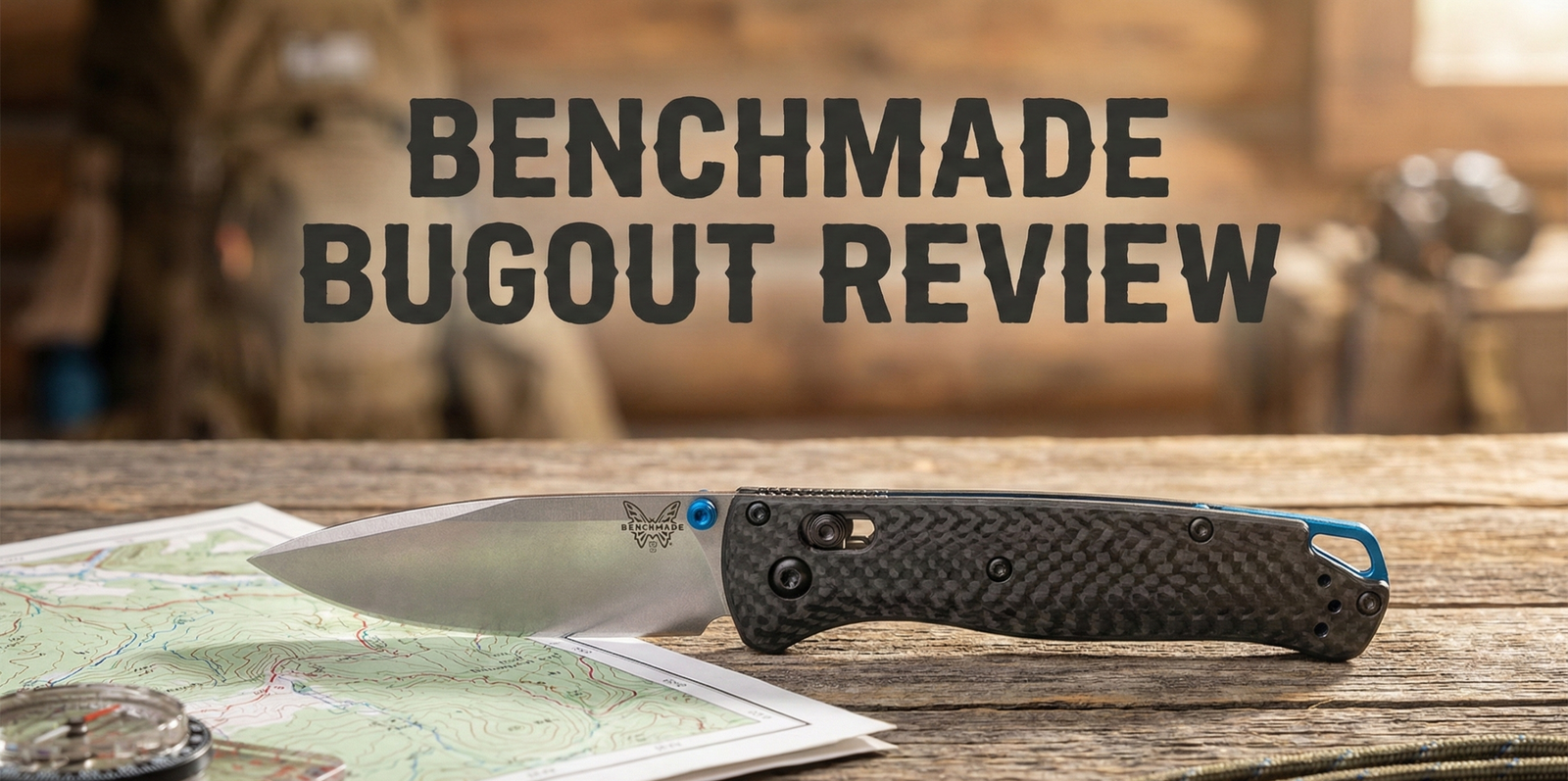
If you have spent any time in the Everyday Carry (EDC) community over the last five years, you’ve likely heard the name “Bugout” whispered with a mix of reverence and controversy. The Benchmade 535 Bugout didn’t just enter the market; it disrupted it entirely. Originally designed for backpackers counting every ounce, it accidentally became the gold standard for general EDC knives.
But does it still hold up? With a price tag that has crept up over the years and competitors flooding the market with lightweight folders, is the Bugout still the king of the ultralight hill? In this comprehensive review, we strip the Bugout down to its screws, test the S30V steel, and determine if this featherweight fighter deserves a spot in your pocket today.
Whether you are opening Amazon packages, whittling by the campfire, or prepping a survival kit, understanding the capabilities of your tool is paramount. We will explore everything from blade geometry to the reliability of the AXIS lock.
This edition of the review has been substantially expanded to answer the questions we see most often from readers: how the Bugout came to exist, how it stacks up against every major rival in Benchmade’s own lineup and beyond, how to maintain and disassemble it, what the LifeSharp program actually covers, and which version of the knife is right for your hand size, climate, and legal jurisdiction. Consider this the deep-dive companion to the shorter buying-guide version of the review.
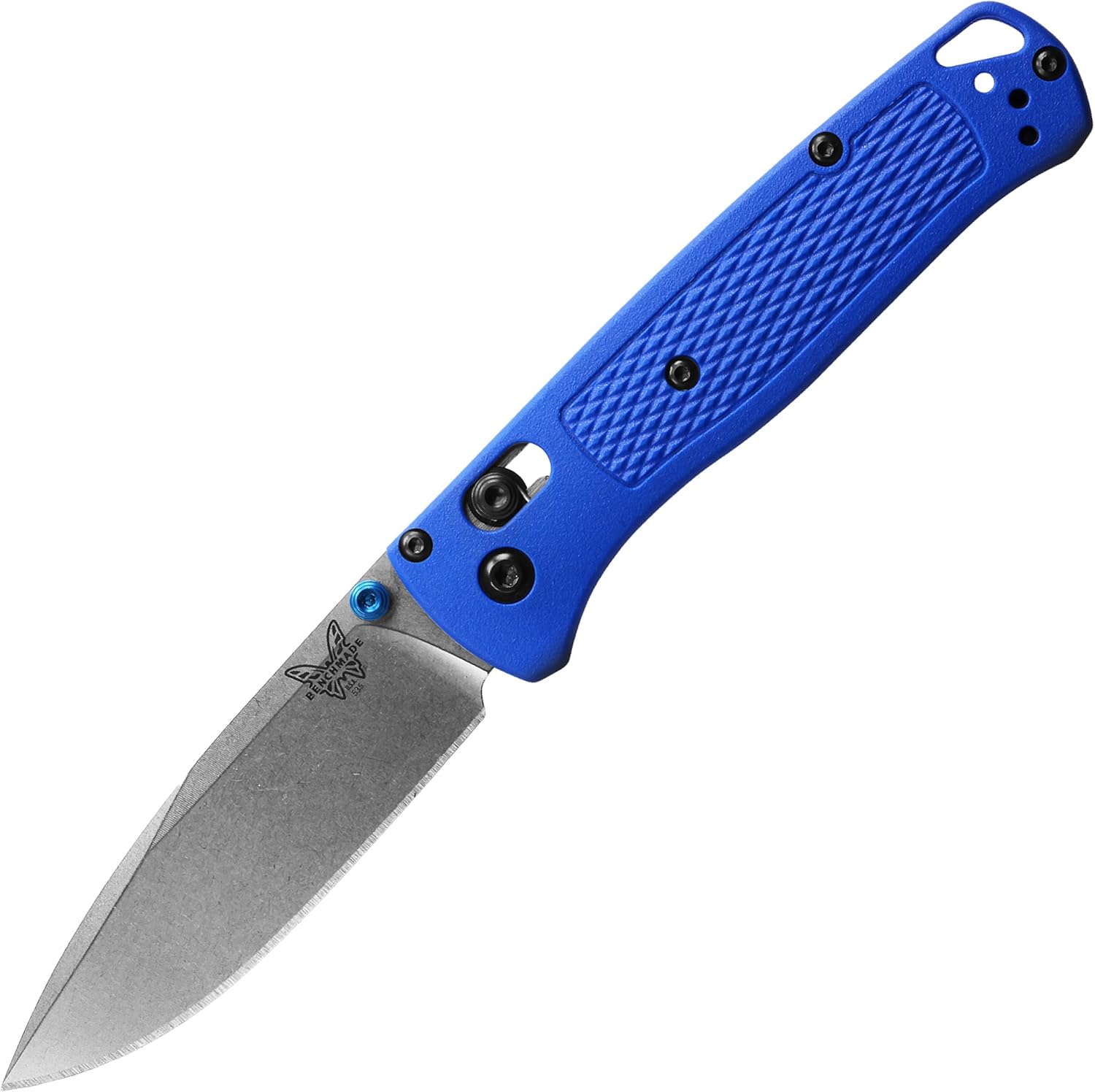
Looking for the ultimate lightweight EDC? The Bugout disappears in your pocket but performs like a beast.
Check Price on AmazonTechnical Specifications
Before we dive into the subjective experience, let’s look at the raw numbers. Understanding these specs is crucial, much like knowing the difference between stamped and forged knives when equipping a kitchen—details matter.
| Blade Length | 3.24 inches (8.23 cm) |
|---|---|
| Blade Thickness | 0.090 inches (2.29 mm) |
| Open Length | 7.46 inches (18.95 cm) |
| Closed Length | 4.22 inches (10.72 cm) |
| Weight | 1.85 ounces (52.45 g) |
| Handle Thickness | 0.42 inches (10.67 mm) |
| Blade Steel | CPM-S30V Premium Stainless Steel |
| Handle Material | Grivory |
| Lock Type | AXIS Lock |
The Design Origin Story: How the Bugout Came to Be
Most gear reviews treat a product’s backstory as an afterthought, but the Bugout’s origin actually explains almost every design decision baked into the knife. Benchmade did not set out to build “the internet’s favorite EDC knife.” The brief was much narrower: build a dedicated lightweight blade for backpackers and thru-hikers who count grams the way accountants count dollars. That ultralight-backpacking mindset shaped the entire silhouette, from the skeletonized internals to the decision to skip steel liners across most of the handle.
The classic drop-point profile wasn’t chosen arbitrarily either. Benchmade’s design team wanted a shape that read as “clean and no-frills,” deliberately distancing the Bugout from the more tactical, spear-point heritage of knives like the Benchmade 530 Pardue. Where the 530 telegraphs a hard-use, tactical pedigree, the Bugout was meant to look and feel like a purpose-built outdoor tool — something you’d trust to process kindling and slice a summer sausage on the same trip.
Why No Jimping?
One detail that surprises new owners is the complete absence of jimping (the grooved traction cuts) on the spine. Most premium folders add jimping as a default feature, so its absence on the Bugout looks like an oversight to some buyers. In practice, it’s a deliberate choice. A smooth spine keeps pocket lint and fabric from catching, reduces hot spots during long slicing sessions, and keeps the knife’s profile as slim and snag-free as possible — all priorities for a knife whose entire reason for existing is to disappear into a pocket.
Why Grivory Instead of Steel Liners?
The single biggest lever for cutting weight was eliminating full steel liners from the handle. Grivory — a glass-reinforced nylon compound also used in demanding automotive and firearm applications — let Benchmade build a handle that’s rigid enough to trust with an AXIS lock, yet a fraction of the weight of G10-over-steel construction. The tradeoff, as we cover in the handle section below, is the now-famous “flex” that ignited years of forum debate. Benchmade has been candid that the decision to drop the full liners was made specifically to hit that sub-2-ounce target and to let the knife sit lower and flatter in the pocket for better concealment.
Understanding this origin story reframes a lot of the “complaints” leveled at the Bugout. The handle flex, the missing jimping, the thin blade stock that can’t be used as a pry bar — these aren’t manufacturing shortcuts. They’re the direct, intentional consequences of a design brief that prioritized weight above almost everything else, and that context matters when deciding whether the Bugout fits your own use case.
The Blade: CPM-S30V Performance
The heart of the Bugout is its blade. Benchmade opted for CPM-S30V steel for the standard 535 model. For years, S30V was the “super steel” of the industry. While newer steels like MagnaCut and S45VN have entered the chat, S30V remains a powerhouse for EDC tasks.
Edge Retention and Toughness
In our testing, the Bugout held a working edge through weeks of cardboard cutting, zip-tie slicing, and food prep. S30V offers a fantastic balance between edge retention and corrosion resistance. It is significantly harder than budget steels, meaning you won’t need to sharpen it every few days.
Blade Shape and Grind
The blade features a classic drop-point shape with a high flat grind. This geometry is where the Bugout truly shines. Because the blade stock is so thin (0.090 inches), it is an absolute laser beam through material. It slices apples without wedging and glides through heavy-duty cardboard.
However, users should note the distinction in maintenance. Unlike softer steels, S30V can be tricky to sharpen if you let it get completely dull. Knowing the difference between a sharpening stone and a honing steel is vital here; you’ll want to hone regularly to maintain that razor edge.
Warning: This is a slicing tool, not a prying tool. Do not try to pry open paint cans with a tip this thin; it will snap. Use the right tool for the job.
How Much Steel Do You Actually Need?
A common question from newer buyers is whether S30V is “enough” steel for daily use, or whether it’s worth chasing the newer premium alloys used on the upgraded Bugout variants. The honest answer depends entirely on your cutting diet. If your daily tasks are limited to breaking down cardboard, opening mail, trimming loose threads, and prepping the occasional piece of fruit, S30V will comfortably outlast your patience for touch-ups. Reviewers who put the standard Bugout through weeks of continuous cardboard and paper cutting found the edge degraded gradually rather than catastrophically, remaining usable well past the point where a budget stainless steel would have rolled or chipped.
Where S30V starts to show its age is against harder, more chemically aggressive tasks — cutting through zip ties packed with dirt and grit, or repeated contact with drywall and rope with embedded sand. In those environments, buyers increasingly gravitate toward the CPM-S90V or M4 versions of the Bugout, both of which trade a bit of ease-of-sharpening for dramatically higher wear resistance. For the vast majority of EDC users, though, S30V remains the sensible default: it sharpens up quickly on standard ceramic or diamond stones, resists corrosion well enough for humid or coastal climates, and has over a decade of proven track record in the field.

Need a blade that stays sharp longer? The S30V steel on the Bugout is an industry favorite for edge retention.
Check Price on AmazonHandle & Ergonomics: The “Grivory” Debate
Here lies the most controversial aspect of the Benchmade Bugout: the handle scales. They are made from Grivory, a glass-filled nylon thermoplastic. It is incredibly lightweight, durable, and weather-resistant.
The “Flex” Issue
If you squeeze the handle scales hard in the middle, you can feel them flex slightly. When the knife first launched, internet forums exploded with complaints about this. In reality? It doesn’t matter. During actual cutting tasks, your hand pressure reinforces the scales. The flex is a trade-off for achieving that sub-2-ounce weight.
Ergonomics
The ergonomics are surprisingly neutral and comfortable. The handle accommodates a four-finger grip for most hand sizes. There is aggressive jimping (texture) on the spine of the liners and the handle, providing a secure thumb ramp for detailed cuts. It feels secure, even when wet.
If you are used to the heavy, substantial feel of carbon steel fixed blades, the Bugout might feel “toy-like” at first. Give it a week. The lack of weight prevents hand fatigue during extended use.
Does the Flex Actually Weaken the Knife?
It’s worth unpacking the engineering logic behind the flex, because it’s counterintuitive to anyone raised on the idea that “stiffer is stronger.” Benchmade’s internal reasoning is that a handle which flexes slightly under lateral pressure is dissipating energy rather than concentrating it at a stress point. A perfectly rigid handle scale, when pushed past its limit, tends to crack suddenly and catastrophically. A handle with some designed-in give bends before it breaks, which in Benchmade’s testing translated into a more forgiving failure mode under abuse the knife was never meant to see in the first place, like being used as a pry bar or dropped onto concrete.
That said, plenty of long-term owners still find the flex psychologically unsettling even once they understand the engineering rationale — it simply doesn’t match the “solid as a brick” feeling premium buyers expect from a $150-plus folder. This is precisely why the aftermarket scales market (covered in detail later in this review) has become such a massive business around this single knife. If the flex bothers you more than the weight savings please you, swapping to titanium or carbon fiber scales solves the complaint entirely while keeping every other component stock.
The AXIS Lock Mechanism
Benchmade’s patented AXIS lock is the star of the show. It is fully ambidextrous, allowing you to open and close the knife without your fingers ever crossing the path of the blade—a huge safety plus.
The action on the Bugout is addictive. Pull back the lock bar, and the blade swings freely. With a little practice, you can flick it open and closed with pure kinetic energy. It’s one of the best “fidget” factors in the knife world.
Reliability: The lock is rated for significant force. While the Bugout isn’t a hard-use tactical folder, the lock is far stronger than the handle itself. It will not fail under normal EDC use.
A Quick Word on Patent History
The AXIS lock was under patent protection for roughly two decades, which meant Benchmade held an effective monopoly on this exact locking mechanism for most of the knife industry’s modern era. When that patent expired, competitors were finally free to release their own spring-bar locks — Kershaw’s version is branded “Blade-Assist Cross Bar,” CJRB uses “Ellipse,” and Civivi calls theirs “Trek Lock,” among others. The Bugout’s release essentially coincided with this shift in the competitive landscape, which is part of why it landed at exactly the right moment: it combined a newly-unlocked-from-patent-pressure design philosophy with a completely fresh, ultralight execution of a lock mechanism buyers already trusted from years of exposure to Benchmade’s tactical lineup.
Carry Experience: The Disappearing Knife
This is why you buy a Bugout. Weighing in at just 1.85 ounces, it is lighter than many car key fobs. You can clip it into gym shorts, dress slacks, or hiking pants, and you will forget it is there until you need it.
The Deep Carry Pocket Clip is excellent. It is a “fold-over” design that allows the knife to sit completely flush inside your pocket, showing nothing but the clip. This makes it discreet and office-friendly.
For those interested in other minimal carry options, you might compare this experience to the best neck knives, which also prioritize weight and accessibility, though the Bugout offers far more utility in a folding package.
Jacket Pockets, Bags, and Alternative Carry Positions
Most reviews focus exclusively on pants-pocket carry, but the Bugout’s slim 0.42-inch handle thickness and low overall weight make it an unusually good candidate for jacket-pocket and bag-pocket carry too. Bulkier lightweight folders can become a nuisance riding in a jacket’s inner pocket, printing through fabric or banging around when you sit down. The Bugout, by contrast, tends to sit quietly and stay out of the way, which is one reason it’s frequently recommended as an “always in the bag” backup blade in addition to a primary pocket-carried EDC knife.
One minor carry quirk worth flagging: because the knife is so light and the clip tension is tuned for comfortable insertion and removal, some owners in very high-motion jobs (warehouse work, manual labor involving a lot of crouching and stretching) occasionally report the knife working its way loose over a full shift. If your work involves constant bending, a slightly deeper or more aggressive aftermarket clip may be worth considering; for typical office or outdoor recreational carry, the stock clip is more than secure.

Tired of heavy knives dragging down your pants? Experience the 1.85oz featherweight champion.
Check Price on AmazonThe “AR-15 of Knives”
Because the Bugout is so popular, the aftermarket support is insane. You are not stuck with the flexible Grivory scales. You can buy scales in:
- Titanium (adds rigidity and a premium feel)
- Carbon Fiber (keeps it light but stiff)
- Brass or Copper (adds heft and patina)
- G10 (classic grip)
You can swap the thumb studs, the backspacers, and the screws. Buying a Bugout is often just the beginning of building your perfect custom knife.
Why the Aftermarket Ecosystem Exploded
Comparing the Bugout’s modification culture to firearms customization isn’t just a cute headline — it’s a pretty accurate description of how the community actually behaves. Because Benchmade sells the Bugout as a modular platform (separate screws holding scales, backspacer, pocket clip, and pivot together, rather than a riveted or bonded construction), small machine shops and boutique knife-parts makers were able to design drop-in replacement parts almost immediately after release. Within a couple of years, dozens of small manufacturers were producing anodized titanium scales, custom pivot collars, oversized thumb studs, and decorative backspacers specifically cut to Bugout tolerances.
Popular Aftermarket Categories
Titanium scales are the most popular single upgrade, because they solve the flex complaint entirely while only adding a modest amount of weight — typically bringing the total knife weight from 1.85 ounces up to somewhere in the 2.3 to 2.8 ounce range, depending on the milling pattern and whether the maker used steel liners underneath.
Carbon fiber scales split the difference, adding meaningfully more rigidity than Grivory while keeping the total weight increase to a fraction of an ounce, which is why weight-obsessed backpackers who still want to eliminate the flex tend to land here rather than on titanium.
Brass and copper scales go the opposite direction entirely, deliberately adding weight and heft for buyers who actually preferred a more substantial-feeling knife and only bought the Bugout for the blade geometry and AXIS lock rather than the ultralight carry weight. These metals also patina attractively over time, which has made them popular among collectors who enjoy a knife that visibly ages and develops character.
Tritium and glow inserts for the thumb studs and lanyard holes are another popular small-dollar upgrade. Beyond the aesthetic appeal, a tritium-illuminated thumb stud genuinely helps you locate a dropped knife in low light or find it by feel in a dark pocket or bag pouch.
One important caveat: swapping stock parts, especially by stripping factory screws or damaging the pivot, can complicate warranty claims down the line. Benchmade’s LifeSharp program (detailed further down this review) is generally forgiving of light modification, but heavily modified knives with non-factory pivots or backspacers may be asked to be reassembled with stock parts before certain repairs are covered. Keep your original hardware in a small bag in case you ever need to revert the knife to factory condition.
The Bugout Family: Sizes, Steels, and Special Editions
What started as a single SKU has grown into an entire family of related knives. Understanding the differences helps you pick the exact variant that matches your hand size, budget, and steel preferences.
Standard Bugout 535 (S30V)
The knife covered throughout most of this review. Full-size 3.24-inch blade, S30V steel, available in black, blue, and ranger green Grivory handles, with a street price generally landing in the $140 to $170 range depending on retailer and colorway.
Mini Bugout 533
A scaled-down version with a blade around 2.82 inches, designed both for smaller hands and for buyers in jurisdictions with sub-3-inch blade length restrictions. The Mini keeps the same drop-point profile, AXIS lock, and Grivory construction, just proportionally smaller and correspondingly lighter, typically landing around 1.5 ounces. For most adult users the full-size Bugout remains the more comfortable everyday grip, but the Mini is a genuinely excellent option for smaller-framed users, for pocketing inside already-full EDC loadouts, or for strict urban carry environments.
Bugout with CPM-S90V or M4 Steel
Benchmade periodically releases upgraded Bugout runs using premium powder steels like S90V or CPM-M4 instead of the standard S30V. These versions carry a meaningful price premium — often $60 to $100 more than the standard model — in exchange for substantially higher wear resistance. S90V in particular is prized for extreme edge retention, though it comes at the cost of being noticeably harder to sharpen without diamond abrasives. These upgraded runs are worth considering primarily for buyers who cut abrasive materials frequently (cardboard warehouses, rope with embedded grit, fibrous yard work) rather than typical light EDC users, who will rarely notice a practical difference over standard S30V.
Bugout Trainer and Balisong Bugout
Benchmade has also released a butterfly-knife (balisong) version built around the Bugout’s blade profile and Grivory handle construction, aimed at the flipping and trick community rather than pure utility carry. It shares the blade geometry and general aesthetic DNA of the standard folder but functions on an entirely different mechanical platform and is not a substitute for the AXIS-locking EDC version.
Colorways and Limited Editions
Beyond the standard black, blue, and ranger green Grivory options, Benchmade has released a rotating cast of limited colorways over the years, including OD green, tan/FDE, and various dealer-exclusive or anniversary-edition color combinations, sometimes paired with unique blade coatings like black-oxide or cerakote finishes. Limited colorways typically command a modest premium over standard black and tend to sell out faster, so if you have your heart set on a specific shade, it’s worth checking availability regularly rather than waiting.
Sheepsfoot Blade Variant
A less common but notable variant swaps the classic drop-point for a sheepsfoot blade shape, with a straighter edge and a spine that curves down to meet the tip rather than a traditional belly. The sheepsfoot geometry is favored by some EDC users specifically because the straight cutting edge is easier to control for detail work and reduces the risk of accidental tip punctures, at the cost of a slightly less aggressive piercing tip compared to the standard drop point.
Maintenance, Lubrication, and Disassembly
One of the most underrated aspects of Bugout ownership is just how easy the knife is to maintain relative to more complex flippers with bearing systems and multiple pivot washers. Below is a practical maintenance routine along with a full disassembly walkthrough for owners comfortable doing their own work.
Routine Cleaning
Because the pivot area and lock mechanism naturally accumulate pocket lint, dust, and dried lubricant residue over weeks of carry, a quick monthly cleaning goes a long way. Open the knife fully, and use a can of compressed air or a soft-bristled toothbrush to clear debris from around the pivot, the lock bar, and the omega spring area. For a deeper clean, a few drops of isopropyl alcohol on a cotton swab worked around the pivot dissolves old lubricant and grime before you re-oil.
Lubrication
The Bugout doesn’t use ball bearings in its pivot, so it doesn’t require specialized bearing oils — a standard, thin knife-specific lubricant (or even a light machine oil) applied sparingly to the pivot and the lock bar contact points is sufficient. Over-lubricating is a common mistake; a drop or two, worked in by opening and closing the blade several times, followed by wiping away the excess, is all the knife needs. Re-lubricate roughly every one to three months depending on carry frequency and environment, more often if you carry the knife in dusty, sandy, or wet conditions.
Step-by-Step Disassembly Guide
Full disassembly voids nothing as long as you don’t strip a screw, and Benchmade is generally understanding about light home maintenance. Here’s the process:
- Step 1: Lay the knife blade-down on a soft cloth or mat to avoid scratching the handle scales.
- Step 2: Using the correct size Torx driver (typically T6 for the handle screws and T8 for the pivot on most Bugout models), remove the handle screws on the show side first, keeping them organized by position since screw lengths can differ.
- Step 3: Gently lift the show-side scale away. The lock bar, omega spring, and internal liner will now be visible.
- Step 4: Note the orientation and position of the omega spring before removing anything further — this is the single most common point of confusion during reassembly.
- Step 5: Clean all exposed components with isopropyl alcohol and a soft brush, then apply fresh lubricant to the pivot and lock bar contact points.
- Step 6: Reassemble in reverse order, taking care to reseat the omega spring correctly before closing up the second scale.
- Step 7: Tighten screws gradually and evenly rather than fully tightening one at a time, to keep the scales seated flat and avoid warping the assembly.
- Step 8: Test the action. The blade should drop freely under its own weight when the lock is disengaged, with no excessive side-to-side blade play.
If you’re not comfortable with this process, Benchmade’s own sharpening and maintenance service (part of the LifeSharp program) will handle deep cleaning and re-lubrication for you at no charge beyond return shipping, which is a reasonable fallback for owners who’d rather not open up the knife themselves.
Sharpening Recommendations
Because S30V is a relatively hard, wear-resistant steel, a cheap pull-through kitchen sharpener will struggle to put a lasting edge on it. A guided sharpening system, or a set of diamond stones/plates, is the more reliable route. Maintain the factory edge angle (roughly 15 to 17 degrees per side) for the best balance of sharpness and edge durability. Regular honing on a ceramic rod between full sharpening sessions will extend the interval between stone work considerably.
LifeSharp: What Benchmade’s Warranty Program Actually Covers
Benchmade’s LifeSharp program is frequently cited as one of the best reasons to buy into the brand, but the specifics are worth spelling out rather than taking on faith.
What’s Included
LifeSharp covers free sharpening for the life of the knife, along with cleaning, lubrication, and general tune-ups. If a factory defect surfaces — a lock that develops excessive play, an omega spring that fails prematurely, or a pivot that loosens under normal use — Benchmade will repair or replace the affected part at no cost, provided the damage isn’t the result of abuse or unauthorized heavy modification.
What’s Not Included
Damage from prying, dropping, misuse, or intentional abuse generally falls outside standard warranty coverage, though Benchmade’s customer service has a reputation for being lenient on borderline cases, especially for first-time claims. Heavily modified knives — non-factory pivots, aftermarket scales installed with incorrect hardware, or knives that have been visibly altered structurally — may need to be returned to a stock configuration before certain repairs are processed.
How the Process Works
Owners typically register or simply mail the knife directly to Benchmade’s service center with a description of the issue. Turnaround time varies seasonally, often running anywhere from two to six weeks depending on service volume, and the only cost to the owner is typically outbound shipping. This kind of ongoing service commitment is a meaningful part of the Bugout’s total value proposition and is one reason many owners feel comfortable paying a premium over cheaper alternatives from newer overseas brands.
Real-World Use Cases: Who Should Actually Buy a Bugout
Specs and lock mechanisms only tell part of the story. Here’s how the Bugout performs across the specific scenarios readers ask about most.
Backpacking and Thru-Hiking
This remains the Bugout’s original and arguably best-suited environment. Ultralight backpackers who obsess over every gram in their kit consistently rank the Bugout among the few “luxury” items worth the weight penalty, precisely because that penalty is so small. It handles food prep, cordage cutting, minor gear repairs, and kindling processing without meaningfully adding to pack weight.
Office and Everyday Carry
For opening mail, breaking down boxes, and general desk-drawer utility, the Bugout is close to overkill in the best possible way — it’s discreet, quiet to open compared to flipper-style knives with audible detents, and unlikely to alarm coworkers unfamiliar with knives, given its slim, unassuming profile.
Camp Kitchen and Food Prep
The thin blade stock genuinely excels here. Reviewers consistently note that the Bugout slices vegetables, fruit, and cured meats more cleanly than thicker “tactical” folders, which tend to wedge and tear rather than glide through food. It’s not a substitute for a proper kitchen knife at home, but as a camp or trail food-prep tool it punches well above its weight class — pun intended.
Hunting and Fishing
Opinions here are more mixed. The Bugout can handle light field-dressing and general camp tasks, but its thin tip and lack of a dedicated gut hook or more aggressive belly make it a secondary tool at best for serious hunters, who are generally better served by a purpose-built fixed-blade hunting knife. As a backup or a knife for handling fishing line, bait, and general camp chores around a hunting trip, it performs admirably.
Job Sites and Manual Labor
This is the Bugout’s weakest use case. The thin blade stock and flexible handle were never designed for prying, twisting cuts, or the kind of abuse a job-site knife regularly absorbs. Users in construction, warehouse, or trade work are generally better served by a heavier-duty Benchmade like the Bailout or Freek, both of which trade some weight savings for significantly more structural robustness.
Knife Law Considerations Before You Buy
Because blade length and locking mechanisms are the two variables most commonly regulated, it’s worth understanding where the Bugout stands relative to typical restrictions, while recognizing that laws vary widely and this section is general information rather than legal advice.
United States
In the majority of US states, a manual-opening folder with a blade around 3.24 inches and a locking mechanism is legal for open carry. Some cities and counties impose stricter local limits, and certain jurisdictions — parts of New York City among them — have historically treated certain lock types or blade lengths more restrictively than state law alone would suggest. If you’re in a jurisdiction with a sub-3-inch limit, the Mini Bugout’s shorter blade is the safer choice.
International Considerations
Countries like the United Kingdom impose considerably tighter restrictions on locking folders carried in public without a specific justifiable reason, regardless of blade length. Travelers should never assume a knife legal to carry at home will be legal to carry, or even to pack in checked luggage internationally, without checking current regulations for the specific country and mode of travel.
Air Travel
Like virtually all folding knives, the Bugout cannot be carried in TSA carry-on luggage in the United States and must be packed in checked baggage if you intend to travel with it by air.
Pros & Cons Cheat Sheet
The Good
- Insanely lightweight (1.85 oz)
- Premium S30V steel slices perfectly
- Ambidextrous AXIS lock is safe and fun
- Deep carry clip is standard
- Massive customization potential
- Strong LifeSharp warranty and service program
The Bad
- Grivory handles feel “cheap” to some
- Price has increased significantly ($160+)
- Omega springs in the lock can break (rarely)
- Not suitable for heavy prying
- No jimping on the spine, which some users miss
Bugout vs. The World
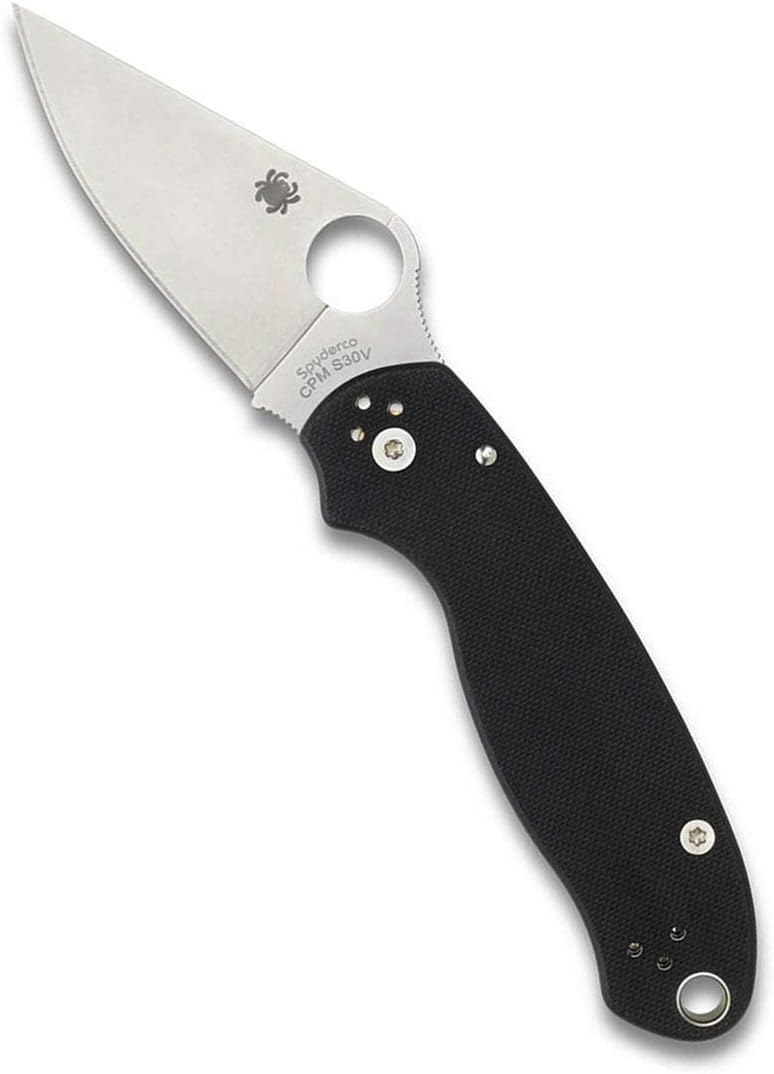
Benchmade Bugout vs. Spyderco Para 3 Lightweight
The Para 3 Lightweight is the Bugout’s main rival. The Para 3 has a better finger choil and arguably better ergonomics for hard cuts. However, the Bugout is slimmer in the pocket and has a longer cutting edge relative to its handle size. If you want sliciness, go Bugout. If you want hard-use ergonomics, go Para 3.
Benchmade Bugout vs. Mini Bugout
The Mini Bugout is… well, smaller. It’s great for people with smaller hands or restrictive local knife laws (sub-3-inch blade). However, for most adults, the full-size Bugout is the sweet spot. It isn’t a large knife to begin with.
Just as you would evaluate different types of knives and their uses for specific tasks, the choice between the Mini and Standard comes down to your hand size and legal restrictions.
Benchmade Bugout vs. Benchmade Bailout
Within Benchmade’s own lineup, the Bailout is the closest sibling, but the two knives serve different missions. The Bailout uses a tanto blade shape and CPM-3V steel, a tougher but less wear-resistant alloy than S30V, paired with an integrated pommel for glass-breaking or striking tasks. At roughly 2.05 ounces, it’s still light, but it’s built with a first-responder, hard-use mindset rather than a pure backpacking-ultralight one. If your priority is toughness and a striking tip over pure slicing performance and minimal weight, the Bailout is the better pick; if slicing efficiency and the lowest possible carry weight matter more, stick with the Bugout.
Benchmade Bugout vs. Benchmade Freek
The Freek shares some design language with the Bugout but is built noticeably heavier and more robustly, with a beefier lock bar and thicker blade stock. Owners who love the Bugout’s ergonomics and AXIS lock but who regularly abuse their knives — prying, twisting cuts, harder outdoor work — often graduate to the Freek as a “hard-use Bugout” once they’ve identified that the ultralight model’s thin blade stock isn’t holding up to their specific demands.
Benchmade Bugout vs. Budget Alternatives (CJRB Hectare, Kershaw Bel Air, Hogue Mysto)
The Bugout’s runaway popularity created an entire sub-market of budget-friendly imitators and philosophical cousins. The CJRB Hectare, in particular, mirrors the Bugout’s blade length, general profile, and lightweight construction at a fraction of the price, making it a popular recommendation for buyers who want to try the ultralight-EDC concept before committing to Benchmade’s price point. The Kershaw Bel Air offers USA manufacturing and a tougher, if less premium, blade steel at a noticeably lower cost. The Hogue Mysto, also USA-made, runs slightly larger and heavier than the Bugout but appeals to buyers who want a similar lightweight philosophy with a bit more structural heft for harder work. None of these fully replicate the specific combination of AXIS lock, S30V steel, and Benchmade’s LifeSharp support that the Bugout offers, but they’re legitimate options for buyers on a tighter budget or those wanting a beater knife to carry in harsher conditions.
Frequently Asked Questions
Is the Benchmade Bugout worth the high price tag?
Yes, primarily for the warranty (LifeSharp) and the weight-to-performance ratio. You are paying for American manufacturing, premium steel, and a knife that disappears in the pocket but performs like a full-size tool. However, value is subjective, and many budget knives now offer good performance for less.
Can the Bugout handle heavy-duty tasks?
It can handle heavy cutting (thick cardboard, rope, wood carving) easily. It cannot handle abuse like prying, batoning through logs, or serving as a screwdriver. It is a slicing tool, not a pry bar.
Does the Bugout rust?
The S30V blade is stainless and highly resistant to rust. However, the internal liners and springs are steel and can corrode if exposed to saltwater without cleaning. Maintenance is key.
Is the Bugout hard to sharpen?
S30V is a hard steel. It takes longer to sharpen than cheap kitchen knives, but it holds that edge much longer. We recommend diamond plates or a guided sharpening system for best results.
What happens if the Omega Springs break?
The Omega springs in the AXIS lock are a known weak point, though failure is statistically rare. If they break, Benchmade will replace them for free under their warranty. You can also buy aftermarket springs online and replace them yourself easily.
Is the Benchmade Bugout legal to carry?
In most US states, yes. It is a manual folder with a blade usually around 3.24 inches. However, laws vary by city and country (especially strict in the UK/NYC). Always check your local regulations.
Is it good for food prep?
Surprisingly, yes. The thin blade stock makes it an excellent camp kitchen knife for slicing veggies or meat. It works better than many thick “tactical” knives.
Can I replace the scales myself?
Absolutely. The Bugout is designed to be disassembled (though doing so technically voids the warranty if you strip a screw, Benchmade is usually lenient). There are hundreds of tutorials on YouTube.
What’s the difference between the standard Bugout and the S90V or M4 versions?
The blade steel is the main difference. S90V and M4 offer significantly higher wear resistance than the standard S30V, at the cost of being harder to sharpen and a noticeably higher purchase price. Most everyday users won’t notice a practical difference; buyers who cut abrasive materials frequently will.
How often should I lubricate the pivot?
Roughly every one to three months under typical carry conditions, more frequently if the knife is regularly exposed to dust, sand, or moisture. A drop or two of a thin knife-specific lubricant is sufficient; the Bugout does not use bearings and doesn’t require specialized bearing oil.
Is the Mini Bugout better than the full-size version?
Not objectively better, just different. The Mini suits smaller hands, tighter EDC loadouts, and jurisdictions with sub-3-inch blade restrictions. Most average-size adult hands find the full-size Bugout equally comfortable and more versatile for general cutting tasks.
Can I take a Bugout on a plane?
Not in carry-on luggage. Like virtually all folding knives, it must be packed in checked baggage if traveling by air in the United States, and international travelers should check destination-specific knife regulations before packing one at all.
Ready to upgrade your EDC? Join thousands of satisfied users who trust the Bugout daily.
Check Price on AmazonFinal Verdict
The Benchmade Bugout is a modern classic for a reason. It redefined what we expect from a lightweight knife. It isn’t perfect—the price is high and the handles feel plasticky to some—but functionally, it is nearly flawless.
It cuts better than knives twice its weight. It carries better than knives half its size. If you want one knife to do it all—hike, office carry, camp, and work—the Bugout is the one to beat. And if the stock configuration doesn’t quite match your taste, the sprawling aftermarket ecosystem, the range of sizes and steels within the Bugout family, and Benchmade’s LifeSharp support mean you can tune the knife to your exact preferences and keep it running for decades rather than years.