Milwaukee Fastback 2 vs 3: The Ultimate Utility Knife Showdown
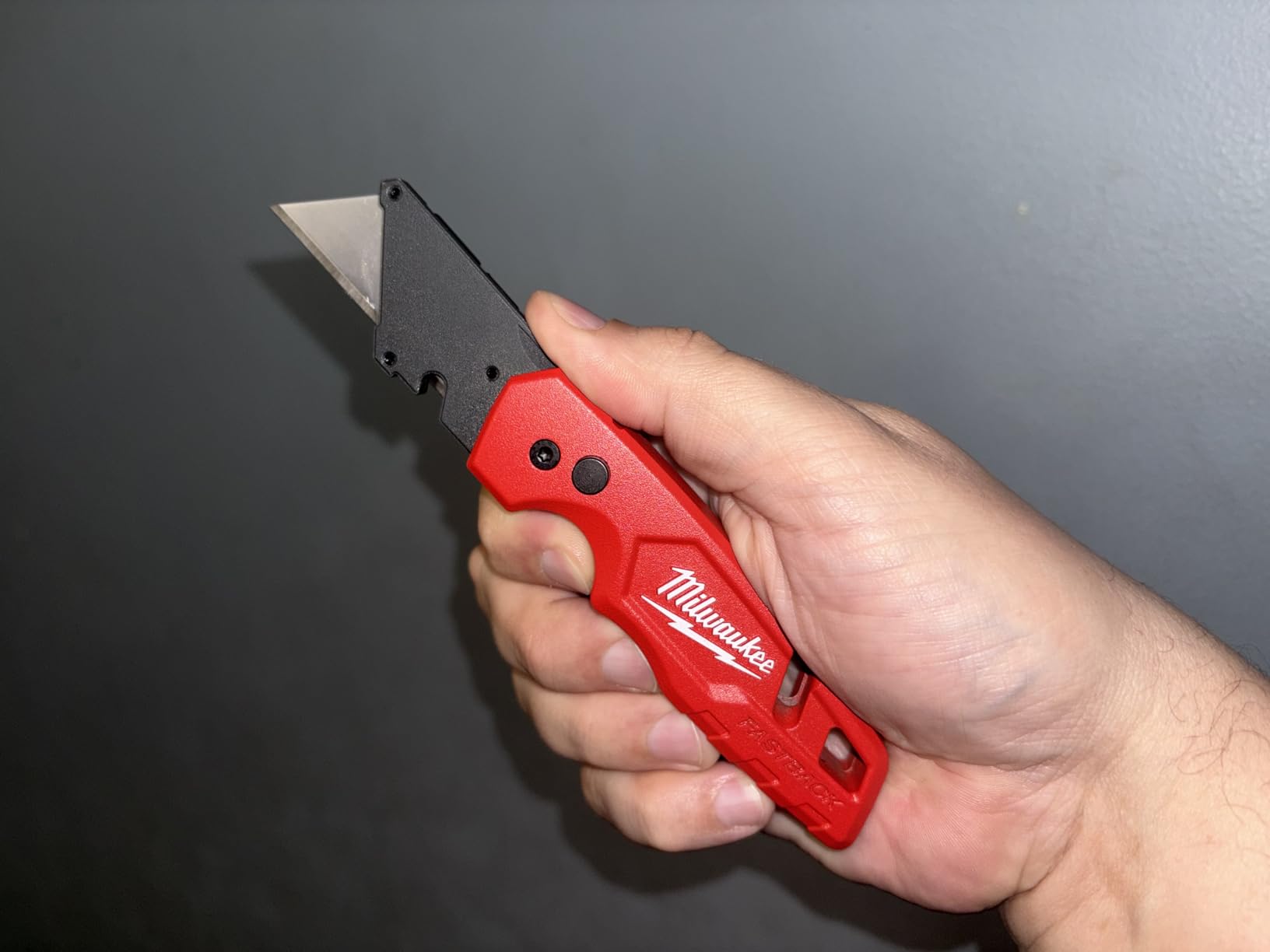
If you work in the trades, tackle heavy-duty DIY projects, or simply appreciate a well-engineered tool, you know that not all utility knives are created equal. The days of the stiff, two-handed retractable box cutter are over. Today, the “Red” dominance of Milwaukee has taken over the job site, specifically with their iconic Fastback line. The Milwaukee Fastback series has become synonymous with jobsite efficiency and one-handed operation, a stark contrast to the bulky, screw-operated utility knives of the past that required two hands and a flat surface to change a blade. This evolution isn’t just about convenience; it’s about safety, productivity, and the relentless pursuit of a better tool. The ergonomic design reduces hand fatigue during repetitive cutting tasks like breaking down cardboard boxes or slicing through thick plastic banding on lumber deliveries. The tactile feedback of the metal handle provides a reassuring sense of durability, instantly communicating that this is a professional-grade tool, not a disposable piece of plastic. For anyone who has ever fumbled with a retractable blade while holding a sheet of plywood with the other hand, the Fastback’s revolutionary “press-and-flip” mechanism is a revelation. It has fundamentally changed expectations for what a utility knife can be, transforming it from a simple blade holder into a finely tuned piece of everyday carry equipment that rivals the satisfaction of deploying a high-end pocket knife.
The Milwaukee Fastback series revolutionized the utility knife game with its “press-and-flip” one-handed opening mechanism. But within this legendary lineup, a debate rages on: Milwaukee Fastback 2 vs. Fastback 3. Is the slim, magnetic Fastback II the superior EDC (Everyday Carry)? Or does the bulkier, storage-heavy Fastback III reign supreme for heavy users? This debate is more than just a matter of personal preference; it’s a fundamental discussion about the balance between portability and on-board functionality. The Fastback 2 advocates champion its sleekness, arguing that the best tool is the one you have on you, and its slim profile ensures it’s always in your pocket. On the other side, proponents of the Fastback 3 argue that a tool’s primary purpose is to be useful, and the added bulk is a small price to pay for the convenience of a full blade magazine and a screwdriver. This decision forces the user to honestly assess their daily workflow: do you need a scalpel always at the ready, or a mobile workstation that can handle multiple tasks without a trip back to the toolbox? Understanding this core philosophy is the first step in making the right choice, as the answer often reveals less about the knife and more about the user’s daily reality.
If you are browsing M-Tech knife reviews or looking at high-end folders like the Kershaw Blur, you might wonder why a utility knife deserves such deep analysis. The answer is simple: you will likely use this tool more than any other knife you own. Unlike a collectible pocket knife that might be used for light cutting tasks and then admired, a utility knife is a consummate workhorse. It is designed to be abused, to have its blade replaced daily, and to withstand environments that would destroy a fine edge. The blade is a consumable, meaning you always have a razor-sharp cutting surface without the tedious need for sharpening stones or strops. This makes the Fastback the ultimate pragmatic tool for anyone who values function over form, from the warehouse floor to a residential construction site. The Fastback exists in the nexus where tool and knife culture meet, providing the fidgitable action that enthusiasts crave with the brute-force utility that professionals demand on a minute-by-minute basis. It’s the tool you reach for when you don’t want to ruin your 30-degree bevel on a staple or a piece of aluminum siding.
In this comprehensive guide, we will dissect the mechanics, ergonomics, blade storage, and durability of these two titans of the trade. Whether you are an electrician, a roofer, or a warehouse warrior, by the end of this post, you will know exactly which shade of red belongs in your pocket. We will go beyond the basic spec sheet to explore the real-world implications of the design choices Milwaukee made, from the materials used in the frame to the specific engineering of the blade release button. We’ll examine how each model handles common jobsite materials like drywall, roofing shingles, floor underlayment, and heavy-gauge cardboard. We’ll also tackle the subtle but critical differences in the pocket clip design, the long-term durability of the flip mechanism after months of heavy use, and even how they feel during those long, 10-hour shifts where every gram in your pocket becomes a nagging presence. By analyzing user experiences from electricians, HVAC technicians, drywall installers, and everyday DIY enthusiasts, we’ll paint a complete picture of each tool’s personality, helping you navigate the marketing hype to make a genuinely informed decision that matches your hand size, your workload, and your need for speed.
1. The Evolution of the Flip: Why Fastback?
Before we pit them against each other, we must understand the shared DNA. The Milwaukee Fastback series solved the biggest pain point of traditional utility knives: speed. The ability to pull the knife, flick it open, make a cut, and flip it closed—all with one hand—is invaluable when you are holding a ladder or a sheet of drywall. The original Fastback set a new standard, making all other folding utility knives feel slow and cumbersome. This mechanical advantage stems from the precision bearing system that allows the blade to swing freely under centrifugal force once the release button is pressed. This mechanism, often compared to a high-quality butterfly knife in its smoothness, has become the hallmark of the Fastback identity. The sound of the blade locking into place is a distinct, confidence-inspiring “thwack” that tells you it’s ready for work. The evolution didn’t stop there, as Milwaukee incorporated user feedback to refine the geometry of the handle, improving the grip texture for use with gloved hands in wet or oily conditions. The strategic placement of jimping on the spine and choil area ensures that even during a forceful pull cut, your hand won’t slip forward onto the cutting path. This holistic approach to the ergonomics of speed is what separates the Fastback from lesser competitors who merely added a spring to a standard folding design, failing to capture the seamless integration of motion and user intent.
This fidget-friendly action has made the Fastback a crossover hit, appealing to knife enthusiasts who usually buy brands like Smith & Wesson or Blue Ridge Knives. But as the series evolved from the Gen 1 to the Gen 2 and Gen 3 (often distinguished by blade storage capacity), the design philosophy split. The platform began to branch out from a single, streamlined concept to a family of tools catering to vastly different ends of the trades spectrum. This divergence was a direct response to the demands of specific trades who loved the core mechanism but needed it to do more, or to be less intrusive. The Fastback 2 became the refined expression of the original vision: a minimalist, perfectly balanced cutting tool with just enough onboard storage for a quick blade refresh. The Fastback 3, however, became a platform for expanding capability. Milwaukee engineers realized that the handle could house not just more blades, but entirely new tool sets. This decision transformed the Fastback from a dedicated utility knife into a modular multi-tool chassis, capable of being a screwdriver, a wire stripper, and a cutting machine all in one. This fundamental shift is what makes the comparison so compelling: it’s a battle between a master of one trade versus a jack of several.
External Review
Want to see the action in real-time? Watch this detailed video breakdown comparing the opening mechanisms and storage features. The visual demonstration highlights the difference in handle thickness and how the blade magazine operates in the Fastback 3.
2. Head-to-Head: The Specs Breakdown
Let’s clarify the models. Usually, when people say “Fastback 2,” they refer to the model with magnetic storage for 1 extra blade (Model 48-22-1902). When they say “Fastback 3,” they refer to the bulkier model with a blade magazine holding 4-5 blades (Model 48-22-1903 or similar 6-in-1 variants). However, the Milwaukee lineup can be confusing because the terms “Gen 2” and “Gen 3” sometimes overlap with the model numbers. A true Gen 2 mechanism might be found on a knife with no blade storage at all, but the defining feature of the 1902 is the magnetic swing-arm. Conversely, the “Fastback 3” identity is typically reserved for the thicker-handled, magazine-equipped versions, regardless of whether they include the 6-in-1 screwdriver bits. This distinction matters because when you’re ordering online or standing in a supply house, you need to know if you’re getting the slim, pocket-friendly carry or the chunky, belt-clip-bound workhorse. It’s also worth noting that both models feature Milwaukee’s signature wire-form pocket clip, which is designed for deep carry and quick access without tearing up your pants pockets like some stamped metal clips. The uncoated metal construction on both knives is chosen for its durability and resistance to chemicals and glues that would melt rubberized overmolds, ensuring the chassis remains intact even as the exterior picks up scratches and patina from hard use.
| Feature | Fastback 2 (II) | Fastback 3 (III) |
|---|---|---|
| Blade Storage | 1 Extra Blade (Magnetic Arm) | 4-5 Blades (Internal Magazine) |
| Profile | Slim, Pocket Friendly | Thick, Heavy Duty |
| Construction | Metal Body / Wire Form Clip | Metal Body / Often 6-in-1 Tools |
| Opening Mechanism | Press-and-Flip (Bearing) | Press-and-Flip (Bearing) |
| Extra Tools | Wire Stripper, Gut Hook | Often includes Screwdriver bits |
| Best Use Case | Electricians, EDC, Light Trade | Roofing, Drywall, Heavy Install |
Beyond these primary features, the weight difference is a critical factor that the spec sheet only partially conveys. The Fastback 2, while sturdy, is light enough to clip onto a t-shirt collar or a thin pair of athletic shorts without dragging them down. This makes it a genuinely viable option for after-hours work around the house or for hobbyists who might be working on model building or 3D print finishing, where a heavy tool is cumbersome. The Fastback 3, on the other hand, has a reassuring heft that translates to momentum during a cut. When you’re bearing down on a thick piece of corrugated plastic or leather, the extra mass of the tool works with you, requiring less muscular force from your hand. The internal magazine also affects the balance point. The Fastback 2 balances near the pivot pin, making it agile for detail cuts, while the Fastback 3 is handle-heavy, which provides stability for long, straight cuts against a straight edge. These subtle physical properties mean the experience of using them is radically different, almost like comparing a racing scalpel to a cleaver, even though they both use the exact same blade.
3. Deep Dive: The Milwaukee Fastback 2
The Fastback 2 is the refinement of the original. It kept the slim profile that users loved but added two critical features: a gut hook and magnetic blade storage. This model represents Milwaukee’s understanding of the “Everyday Carry” movement within the trades. It’s not just a tool; it’s a constant companion. The development team clearly focused on minimizing the footprint while maximizing the tool’s capability. The gut hook, for instance, is a seemingly small addition, but it transforms the closed knife into a safety tool. You can cut string, zip ties, or even open plastic packaging without ever exposing the razor-sharp main blade. This feature is particularly useful for those who work in attics or crawlspaces where a sudden slip of a full blade could damage wiring or plumbing. The magnetic storage arm is another stroke of genius. By integrating the spare blade into the spine of the knife, Milwaukee avoided the bulky, sliding magazine design that plagues other knives. The magnet is strong enough to hold the blade securely, even during the aggressive flicking motion that opens and closes the tool. It’s a minimalist solution that feels elegant in a world of over-engineered gadgets, proving that smart design can often outperform complex mechanics.
The “Magnetic” Advantage
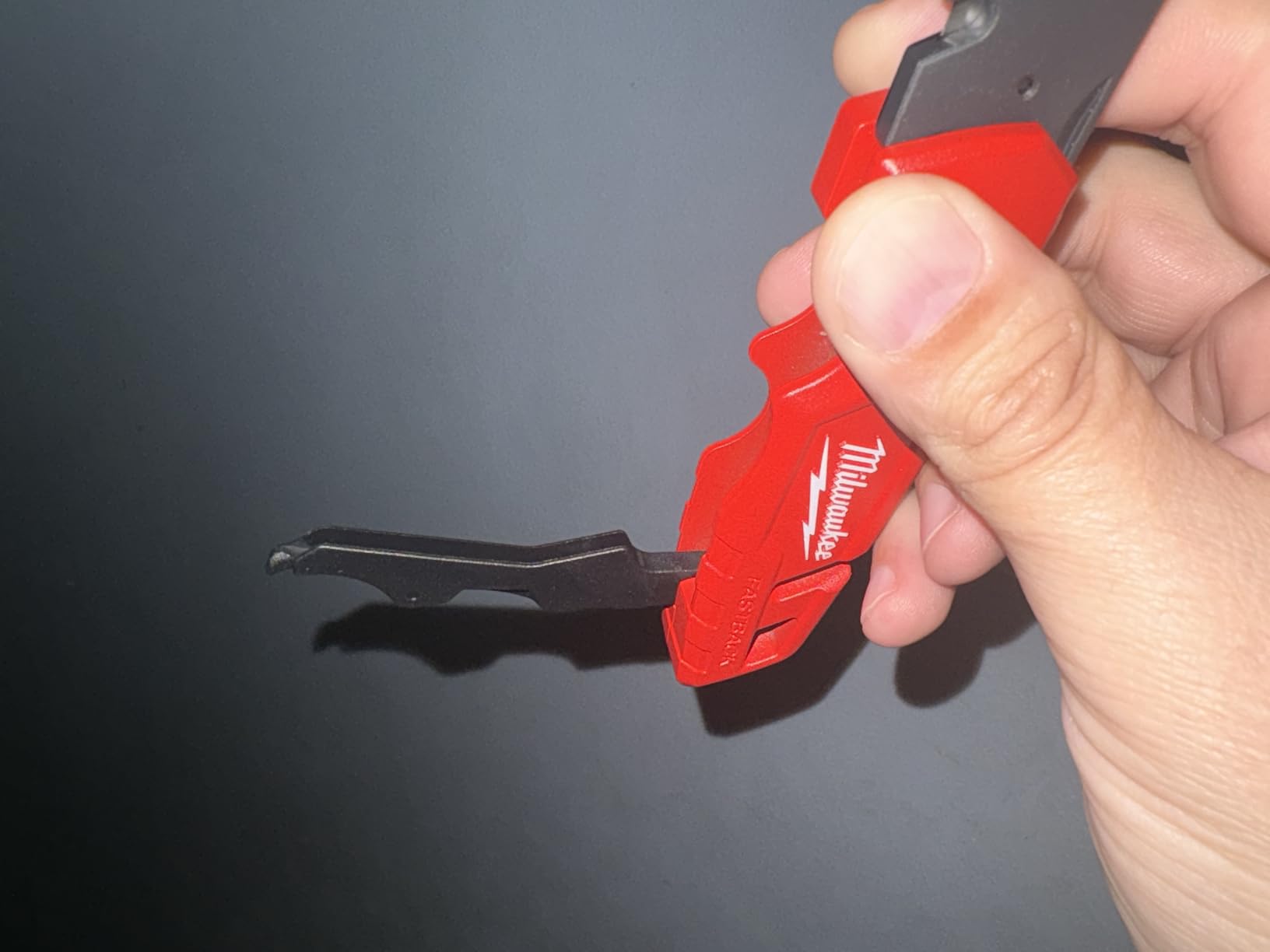
The storage on the Fastback 2 is ingenious. A small arm flips out from the spine, holding one extra blade via a magnet. It keeps the knife incredibly thin. If you are used to carrying slim pocket knives (like those seen in M-Tech reviews), this will feel natural in your pocket. The magnet serves a dual purpose. Not only does it hold the blade in storage, but it also allows you to retrieve a dropped blade from a tight spot or pick up small metal screws and fasteners in a pinch. This magnetic property is a lifesaver when you’re on a ladder and drop a small screw onto a cluttered floor below. However, it is worth noting that this magnetic arm can attract fine metal dust if you are doing a lot of metal grinding or working with iron filings. A quick wipe down at the end of the day is all that’s needed to maintain its function. The arm itself is robust, but like any precisely machined moving part, it can be damaged if you use it as a pry bar. Treat it with the same care you would any other precision instrument, and it will provide years of trouble-free service, always having that fresh blade ready at a moment’s notice without the bulk of a full magazine.
The Wire Stripper & Gut Hook
This model is often favored by electricians. Why? Because even when the knife is closed, the gut hook allows you to cut twine or strip wire without exposing the main razor edge. This safety feature prevents accidental cuts when reaching into a pouch. For electricians, the ability to strip Romex cable jacket cleanly without nicking the conductor insulation underneath is a highly practiced skill. The integrated wire stripper on the Fastback 2 is shaped to perform this specific task with surprising efficiency. It’s not a replacement for a dedicated pair of wire strippers, but for a quick 12 or 14-gauge strip during a fixture install, it’s perfectly adequate. This feature alone elevates the Fastback 2 from a simple cutting tool to a bona fide electrical trade tool. The geometry of the notch prevents the blade from biting too deep, which is a common failure point on multi-tool plier heads that claim to strip wire. By placing this feature on a solid metal frame, Milwaukee gave it the stability needed for a clean, circular cut around the jacket. Beyond electrical work, the gut hook is a favorite among warehouse workers who deal with high-volume plastic banding and shrink wrap. The controlled hook prevents the wild, upward slashing motion that leads to damaged products or personal injury, channeling the force into a safe, downward pull.
Pros of the Fastback 2
- Slim Profile: Disappears in the pocket, making it the ultimate EDC utility knife.
- Speed: The lighter weight makes the “flick” action snappier and more responsive.
- Ergonomics: Fits better in smaller to medium hands, providing excellent control for detail work.
- Gut Hook Safety: Performs cutting tasks in the closed position, drastically reducing accidental blade contact.
- Magnetic Retrieval: The spare blade holder doubles as a retrieval tool for dropped metal items.
The Fastback 2’s simplicity is its greatest strength. It has no complex magazine to jam, no loose driver bits to lose. It is a pure expression of the modern utility knife, designed for those who value compactness and speed above all else. The unibody metal construction provides a rigid platform that doesn’t flex under pressure, a common complaint with plastic-bodied competitors. This rigidity means that when you start a cut, the blade tracks exactly where you intend it to, without wandering. For detail-oriented tasks like trimming wallpaper, cutting delicate foam gaskets, or scoring acrylic, this precision is paramount. The clip, while sometimes criticized for its potential to bend, is designed for rapid deployment and secure deep-pocket carry. It slides easily over thick denim but can be less secure on thinner synthetic materials. Ultimately, the Fastback 2 is the philosophical successor to the classic folding pocket knife, re-engineered for the disposable blade era. It appeals to the purist who wants a tool that does one thing exceptionally well, without any unnecessary frills or added weight.
4. Deep Dive: The Milwaukee Fastback 3 (and 6-in-1)
The Fastback 3 (often associated with the 6-in-1 Utility Knife) is the tank of the family. Milwaukee looked at the Fastback 2 and asked, “What if we put a toolbox inside it?” The answer was a utility knife that aggressively blurs the line between a blade holder and a full-fledged multi-tool. It is the Swiss Army Knife for the modern construction worker, consolidating the most frequently accessed tools into a single, albeit bulky, chassis. This consolidation is a direct time-saver. The psychology behind the Fastback 3 is that the best tool is the one that keeps you on task. Every time you have to walk to your toolbox for a screwdriver or a fresh blade, you lose momentum and time. The Fastback 3 aims to eliminate those micro-interruptions. This is why it’s so popular with roofers who are working on a steep pitch, where every movement requires planning and balance. Having a magazine of 5 blades and a bit driver in your pocket means you can re-shingle an entire section without changing position. The Fastback 3 is not just a tool; it’s a mobile workstation strategy. It accepts the trade-off of pocket comfort for the sheer operational efficiency that comes from having an integrated resource hub clipped to your belt. The weight and size are a conscious compromise, a negotiation between the user’s physical comfort and the relentless demands of high-intensity trade work.
The Storage Magazine
The defining feature is the internal magazine. Depending on the specific sub-model, it can hold up to 5 blades. For a roofer who changes blades every 20 minutes, this is a godsend. No more walking back to the truck for a fresh pack. The magazine mechanism is a spring-loaded, push-button affair that feeds blades reliably. To load it, you typically release a latch on the side, allowing the magazine to slide open like a drawer. You stack the blades, close it, and you’re ready for the day. The engineering tolerances are tight enough that the blades don’t rattle excessively, a common and annoying problem with early-generation quick-load knives from other brands. The silent, solid feel of the loaded magazine contributes to the overall sense of quality. However, this mechanism is not entirely immune to the harsh environment of a job site. Drywall dust is the mortal enemy of any tightly fit mechanical system. Over time, gypsum powder can infiltrate the magazine channel, causing the blade follower to stick. Regular cleaning with an air compressor is essential to maintain the silky-smooth blade dispensing. Furthermore, when loading, it’s critical to ensure the blades are perfectly stacked and not separated by oil or debris, as a stuck blade can be difficult to extract. Users who primarily cut fiberglass insulation should be particularly vigilant, as the tiny glass shards can act like sand in the gears of any moving parts.
The Multi-Tool Aspect
Many Gen 3 models include a fold-out bit driver (Phillips and Flathead). While it won’t replace your impact driver, it saves you a trip down the ladder to tighten a loose screw. It pushes the utility knife into the realm of multi-tools. The bit driver is integrated into the spine of the handle, a clever use of the extra space created by the blade magazine. It typically houses a reversible 2-inch bit, offering both a #2 Phillips and a 3/16-inch slotted head. The magnetic retention for the bit is strong, preventing it from falling out during the aggressive flicking motion. The driver’s position on the spine provides a decent, albeit not perfect, angle for applying torque. It’s ideal for low-torque applications like face plates on switches, small appliance screws, or the covers on HVAC units. Trying to use it for a heavily torqued structural screw is a recipe for a stripped screw head or a damaged bit holder. It’s a convenience feature, a “get out of jail free” card for a loose hinge or a small bolt. In addition to the screwdriver, many versions include a bottle opener stamped into the frame. While it might seem frivolous, it’s a celebrated feature among the trades after a long, hot day. It serves as a reminder that even the most hardcore tools are designed by people who understand the culture of the job site, where a cold drink at the end of the shift is a sacred ritual.
Cons of the Bulk
The trade-off is size. The Fastback 3 is thick. It bulges in the pocket. If you wear fitted jeans, this might be uncomfortable. It feels more like a tool than a knife. This bulk is the primary deal-breaker for the EDC crowd. When you sit in a vehicle with the Fastback 3 in your front pocket, you know it’s there. For someone who spends more time walking, driving, and meeting clients than actually cutting, this constant presence can become a nuisance. The weight can also cause “pocket sag,” where your pants start to pull down on the side you carry it, requiring a belt to be cinched tighter than usual. For this reason, many Fastback 3 users prefer to carry it in a dedicated tool pouch slot, a cargo pocket, or even a hammer loop. Once you accept that it is a “pouch carry” or “belt carry” item rather than a true pocket knife, its advantages far outweigh its heft. It’s a mental shift: you are not carrying a knife; you are carrying a compact board of essential tools that happens to have a razor blade. Another consequence of the bulk is that it’s slightly harder to manipulate for fine, scroll-like cuts in thin material. The sheer size of the handle in the palm reduces the “feel” for the cut, making it less ideal for crafts and hobby work, and perfectly suited for the rough, straight-line cuts of construction.
5. Top Product Recommendations
 Milwaukee Fastback II (48-22-1902)
The perfect balance of utility and portability. Features magnetic storage for 1 extra blade, wire stripper, and gut hook. Ideal for daily carry.
Check Price on Amazon Milwaukee Fastback 6-in-1 (48-22-1505)
The ultimate jobsite companion. Features massive blade storage, a screwdriver bit holder, and a bottle opener. A toolbox in your pocket.
Check Price on AmazonChoosing between these two specific models often comes down to the Amazon price point and availability. The 1902 is frequently cited as the gold standard for EDC utility knives due to its widespread distribution and iconic design. The 1505, on the other hand, is a newer iteration of the 6-in-1 concept, often featuring updated materials and a slightly refined blade release. When purchasing, always verify the exact model number to ensure you’re getting the features you expect. Counterfeit Milwaukee products are a known issue on some online marketplaces, and the Fastback line is often copied. Genuine tools will have consistent red coloring, sharp and clean laser etching, and a precise, wobble-free fit between the handle halves. A fake will often have a gritty opening action, a duller red color, and a cheap-feeling pocket clip. Investing in the genuine article not only guarantees performance but also supports the warranty and the engineering behind the tool. Whether you opt for the minimalist 1902 or the feature-rich 1505, you are investing in a tool that represents the pinnacle of a product category that Milwaukee has largely defined and dominated for over a decade.
6. Performance Comparison: Durability and Ergonomics
When we move beyond features and into the hand-feel, the differences between the Fastback 2 and 3 become visceral. The Fastback 2, with its narrower profile, nestles into the palm like a natural extension of the index finger. It encourages a “pinch grip” for delicate cuts, providing exceptional control. The Fastback 3, however, demands a “power grip.” Its thickness fills the palm, creating a large, stable contact patch that is perfect for applying downward force. For a roofer, this means less fatigue when making hundreds of long, straight cuts against a shingle’s edge. The ergonomics are also reflected in the jimping placement. On the 2, the jimping is concentrated near the pivot for precise control. On the 3, it extends further down the spine to accommodate the lower grip of a power cut. The texture of the bare metal handle, while visually uniform, provides a surprisingly effective non-slip surface, especially when it gets a bit of jobsite dust on it. It’s a design that doesn’t rely on rubber overmolds that will eventually peel, tear, or dissolve in contact with solvents like acetone or PVC primer. The all-metal design is a long-term play, a guarantee that the tool’s ergonomics won’t degrade over time as add-on materials fail. This is a knife that is built for a decade of hard labor, not a season of light gardening.
The Button Lock Mechanism
Both knives utilize a button lock (similar to a plunge lock) that releases the blade to swing freely. This is superior to liner locks found on cheaper knives because your fingers never cross the blade path when closing it. Both are incredibly durable, but debris can get stuck in the mechanism if you are cutting drywall all day. Blow it out with compressed air to keep the “flick” smooth. The internal mechanism relies on a small, precisely tensioned spring that pushes the locking bar into the tang of the blade holder. This spring is the heart of the Fastback’s safety. A failure of this spring would cause the blade to unlock under pressure, a catastrophic and dangerous event. Milwaukee uses high-quality spring steel, and failures are extraordinarily rare, but it’s a reminder that even the best tools need occasional inspection. If you notice the blade has excessive play or the locking button feels “mushy” rather than snapping into place with a definitive click, it’s time to clean the mechanism. The buildup of tape adhesive residue from opening thousands of boxes is a common culprit. A cotton swab dipped in isopropyl alcohol can dissolve this sticky film and restore the crisp action. The design also allows for the knife to be opened and closed with heavy gloves on, a critical feature for cold-weather construction or insulated electrical work where dexterity is already compromised.
Blade Retention
Both use a quick-change button. However, some users report the Gen 3 holder being slightly tighter. This is good for heavy cutting but can make blade swaps slightly slower than the Gen 2. Compared to a standard Smith & Wesson tactical folder, the blade retention on a utility knife is less about “lockup” and more about preventing blade wobble—Milwaukee excels at this. The blade holder grips the utility blade at two points, utilizing the standard notches on the blade. The tolerances are so tight that a properly seated blade will have absolutely zero side-to-side play. This rigidity is what makes the Fastback feel like a fixed-blade knife. Any blade wobble instantly makes a cutting tool feel cheap and imprecise, and it can cause the blade to chatter or skip across the surface you’re trying to cut. The blade release button is strategically placed to prevent accidental actuation while holding the knife in a standard cutting grip. You have to deliberately move your thumb to a specific, recessed area to press it. This is a thoughtful safety feature that has prevented countless emergency room visits. Swapping a blade is a simple, tool-free process: press the release, pull out the old blade (using pliers if it’s broken), slide in a new one until it clicks, and you’re back to work in under 15 seconds.
The Clip
Both use a wire pocket clip. This is a love-it-or-hate-it feature. It is less likely to snag on paint or car doors than a solid metal clip, but it can bend if caught on a ladder rung. Replacement clips are generally not sold separately, which is a downside for both. The wire clip’s philosophy is one of deep carry and minimal visual profile. It’s designed so that only a small red line is visible above the pocket seam, a discreetness that many professionals appreciate. The clip’s tension can be adjusted by carefully bending it, but this is a delicate operation best done with padded pliers to avoid marring the finish. If the clip does bend outwards and lose tension, the knife is much more likely to fall out of your pocket, a critical risk when you’re climbing scaffolding or working over a drop ceiling. One trick to maintain clip tension is to always hook it over the thickest part of your pocket seam, not a thin edge. Despite its wire construction, it is remarkably tough, and most failures occur from an extreme, one-time snag rather than gradual metal fatigue. The common desire for Milwaukee to sell a replaceable clip is one of the most persistent and justified complaints from the user community, as a simple, replaceable part could extend the life of these otherwise incredibly durable knives by years.
7. Which One Should You Buy?
Still on the fence? Let’s break down the decision based on specific trades and daily scenarios. This is not a one-size-fits-all verdict. Your choice is a direct reflection of your workflow, your carry style, and even your body type. A larger person with big hands might find the Fastback 2 feels like a toy, while someone with a smaller frame might find the Fastback 3 feels like a brick. It’s also about your primary work environment. If you are constantly moving between different floors of a high-rise construction site, traveling light with a Fastback 2 in your pocket might be the key to agility. If you are stationed on a roof all day or working in a single workshop bay, the heft of the Fastback 3 on a nearby bench or in a side pouch becomes an asset, not a hindrance. Consider, too, the psychological factor. Are you a minimalist who detests pocket clutter, or are you a pragmatist who wants every possible function within arm’s reach? The knife you choose becomes a part of your professional identity. It’s the tool you hand to a colleague when they ask for a knife, and their reaction—”Wow, this is light!” or “Sweet, it has a screwdriver!”—often reinforces your own choice. Let’s drill down into the scenarios that will guide your hand to the right model.
Choose the Fastback 2 If:
- You carry it every day (EDC): The slim profile is much more comfortable for constant pocket carry.
- You are an Electrician: The dedicated wire stripping notch works better on the slimmer frame.
- You prioritize speed: The lighter weight makes it faster to deploy in rapid-cut situations.
- You want a backup: It pairs well with a primary folder like a Kershaw Blur without weighing you down.
- You value discretion: It’s far less noticeable in dress pants or casual wear when you’re off the clock.
Choose the Fastback 3 If:
- You are a Heavy User: Roofers, carpet layers, and drywallers need the 5-blade capacity.
- You hate carrying a screwdriver: The 6-in-1 functionality saves steps and tool-belt space.
- You have large hands: The thicker handle fills the palm better for heavy, downward pressure cuts.
- You lose blades: Having a magazine means you are never stuck with a dull edge.
- You work in a stationary zone: If the tool lives in a pouch or on a bench, pocket comfort is irrelevant.
The reality is that many serious Milwaukee fans eventually end up owning both. The Fastback 2 becomes the off-duty, weekend-warrior, and around-the-house knife, while the Fastback 3 is the dedicated workhorse that goes to the job site Monday through Friday. They are complementary tools in a larger ecosystem. If your budget only allows for one, you must brutally assess your daily cutting volume. If you change a blade once a week, you don’t need a magazine. If you change a blade twice a day, you absolutely do. It’s a simple equation of cutting volume versus carry time. The more time the tool spends in your hand versus in your pocket, the more the Fastback 3’s advantages pull ahead. The more time it spends dormant in your pocket, the more the Fastback 2’s comfort and discretion win the day. This calculus is why there is no universal “winner,” only a “winner for you.”
8. Alternatives and Competitors
While Milwaukee dominates, they aren’t alone.
Dewalt: Makes a similar retractable knife, but the “flick” isn’t as smooth. The Dewalt mechanism often relies on a thumb stud and a more traditional liner lock, which lacks the gravity-assisted centrifugal opening of the Fastback. While Dewalt knives are durable, they don’t offer the same fidget-friendly, rapid one-handed operation that has become the Fastback’s signature. Their blade storage solutions, while present, often feel like an afterthought compared to the integrated Milwaukee magazine.
Sheffield: Offers budget options, often compared in Blue Ridge Knives reviews, but they lack the durability of the Fastback. The steel used in Sheffield handles tends to be thinner, and the locking mechanisms can develop play over time. For a homeowner who uses a utility knife twice a year to break down Christmas boxes, a Sheffield might be sufficient. For any kind of professional use, the difference in build quality becomes immediately apparent under load.
Tactical Brands: If you need self-defense capability, a utility knife isn’t it. Look at dedicated tactical brands found in our M-Tech reviews. Utility knives, by their nature, have brittle blades that can snap under lateral pressure, making them a poor choice for any application beyond material cutting. The blade is designed to be a sacrificial edge, not a structural one.
Other competitors include the Lenox Gold Quick-Change, which boasts a titanium-coated blade out of the box but a less engaging deployment mechanism. The Klein Tools Folding Utility Knife is a direct competitor for electricians, often featuring a more pronounced wire stripper saddle, but it lacks the magnetic spare blade storage of the Milwaukee. The Husky Folding Lock-Back Utility Knife from Home Depot is a budget contender that mimics the Fastback’s shape but uses inferior materials and a crude pivot, resulting in a gritty action that worsens with dirt. In the world of utility knives, the Fastback has become the benchmark that all others are measured against. The main reason to choose a competitor is usually price, but the Fastback’s longevity and sheer user satisfaction often justify the slight premium. A tool that fails on the job can cost you time, which is far more valuable than the few dollars saved on a cheaper knife. This is why, despite the crowded market, you see a sea of red when you walk onto any major construction site in North America. The brand loyalty is earned through field-tested, consistent performance.
Frequently Asked Questions (FAQ)
Yes. Both the Fastback 2 and 3 accept standard 2-point utility blades from any brand (Stanley, Lenox, Irwin). You do not need to buy Milwaukee branded blades, though their “General Purpose” blades are quite good. The versatility extends to specialty blades as well. If you are cutting carpet, you can use a hooked carpet blade. If you are cutting roofing felt, you can use a serrated edge blade. The quick-change mechanism is designed to accommodate the slight tolerance variations between different blade manufacturers. However, it is strongly advised to avoid the cheapest, no-name blades found in bulk bins. These can have inconsistent notches that may not lock securely, or uneven heat treating that causes the edge to shatter on the first tough cut. A good utility blade is still extremely inexpensive compared to the time and frustration a bad one causes.
No. The standard Fastback 2 (48-22-1902) does not. It focuses on being a dedicated knife. If you want the screwdriver, you must upgrade to the Fastback 6-in-1 (Gen 3 style). This is a deliberate design choice to keep the Fastback 2’s profile as thin as possible. Some users have tried to use the butt end of the Fastback 2 or the magnetic arm as an improvised screwdriver, a practice that is strongly discouraged. Doing so can damage the magnetic arm’s hinge or bend the frame, and the lack of a properly shaped bit can easily strip a screw head, creating a much larger problem. Milwaukee offers other models, like the Fastback 10-in-1, for those who want even more multi-tool functionality, proving that the Fastback platform is highly scalable based on the user’s need for auxiliary tools. The purity of the Fastback 2 is its selling point; adding a poor-quality driver would compromise that mission.
In some jurisdictions, yes. Because it opens with centrifugal force while a button is depressed, strict laws (like those formerly in NYC) might classify it as a gravity knife. However, for tradespeople, it is generally recognized as a tool. Always check local laws. The legal definition of a gravity knife is often based on the specific wrist action required to open it. The Fastback’s button must be fully depressed before a wrist flick will deploy the blade, a nuance that sets it apart from classic switchblades or illegal gravity knives that deploy with simple inertia. While NYC famously updated its gravity knife laws to be more sensible after years of advocacy, other cities or countries may have different interpretations. If you are traveling with your tools across state lines or internationally, it is prudent to keep the Fastback in a toolbox or a checked bag. When challenged, calmly explaining that it is a standard tradesperson’s utility tool with a lock-open safety mechanism usually clarifies the situation, but the ultimate responsibility for knowing the law rests with the carrier.
Construction dust often clogs the bearing. Do not use WD-40 (it attracts more dust). Instead, blow it out with compressed air and use a dry lubricant like graphite or a PTFE spray. WD-40 is a solvent and a water displacer, not a long-term lubricant. Its sticky residue will trap fine particles, creating a lapping compound that actually wears down the pivot pin and bushing over time. A dry PTFE-based lubricant, like the ones used for bicycle chains or lock mechanisms, is ideal. It goes on wet so it can penetrate the tight pivot, and then dries to a slick film that dust won’t adhere to. If the knife is extremely stiff, you might need to soak it in warm, soapy water first to dissolve any dried soda or adhesive residue, then dry it completely with a hairdryer or compressed air before applying the dry lube. Never disassemble the pivot pin, as it is press-fitted and not designed for user-serviceable disassembly.
There is a smaller version (Fastback Compact) that does not store any extra blades. It is even smaller than the Fastback 2. It is great for keychain carry or ultra-light EDC. This model (often designated the 48-22-1501) shrinks the handle length and removes all blade storage in favor of a minimalist frame. It is incredibly lightweight and literally fits on a keychain. This tool is perfect for office workers, hobbyists, or as a secondary backup knife. It provides the same crisp “flick” action in a package that is less intimidating to carry in non-trade environments. However, the reduced handle length means you lose the leverage needed for heavy cutting, and your pinky finger will likely dangle off the end. It’s a specialty tool for those who want the absolute minimum carry weight and size while retaining the Fastback deployment feel.
Absolutely not. While the metal handle is strong, the Fastback is a precision cutting tool, not a demolition tool. The frame can be bent or the pivot compromised if subjected to significant lateral prying force. Use a dedicated flat bar or a heavy-duty screwdriver for prying tasks.
Conclusion: The Verdict
The battle of Milwaukee Fastback 2 vs 3 isn’t about which tool is “better” in a vacuum; it’s about volume.
Winner for 80% of People: The Fastback 2. Its slim profile, magnetic retention, and sufficient 1-blade backup make it the perfect balance of utility and comfort. It disappears in the pocket until you need it.
Winner for Pros: The Fastback 3. If you are cutting shingles all day, comfort in the pocket doesn’t matter—blade supply does. The ability to store 5 blades and drive a screw makes it a mobile workstation.
Whichever you choose, you are getting the best mechanism in the industry. The “Fastback Flick” is satisfying, efficient, and reliable. Just don’t lend it to your coworker—you might not get it back. Ultimately, the Milwaukee Fastback in either form is a declaration. It says you value efficiency, you expect your tools to perform, and you understand that the right tool changes how you work. It’s more than a blade holder; it’s a symbol of a mindset that refuses to struggle with inferior equipment. The debate between the 2 and the 3 is a luxury of choice within a product line that has no weak links. So, pick the one that fits your daily reality, clip it to your pocket, and experience the confidence of knowing that the next cut, whatever it is, will be clean, fast, and safe.